
Japan Spouse Visa After Marriage Application Guide

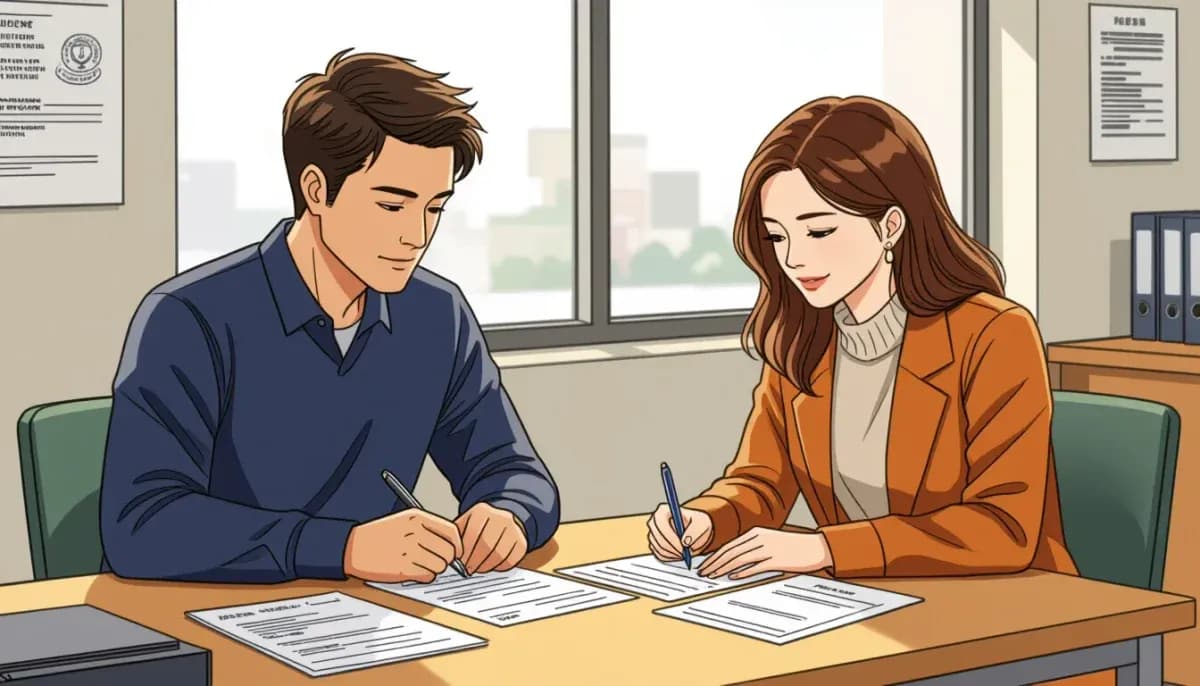
Step-by-step guide to applying for a Japan spouse visa after marriage. Learn the COE process, required documents, timeline, and how to avoid common rejection reasons.
Japan Spouse Visa After Marriage: Complete Application Guide
Getting married in Japan is a joyful milestone, but navigating the immigration system afterward can feel overwhelming. Whether your Japanese spouse is waiting in Japan or you are both abroad, securing a spouse visa is the essential next step to building your life together in the country. This guide walks you through every stage of the Japan spouse visa application process — from understanding the requirements to avoiding common pitfalls — so you can reunite with your partner as smoothly as possible.
For a broader overview of all Japan visa categories, see our Complete Guide to Japan Visa and Immigration. And if you haven't registered your marriage yet, our International Marriage Registration in Japan Guide covers that process in detail.
What Is the Japan Spouse Visa?
The Japan Spouse Visa — officially called the "Spouse or Child of Japanese National" status of residence (日本人の配偶者等) — is a long-term residency category issued to foreigners who are legally married to a Japanese citizen. It is one of the most sought-after visa categories in Japan because it comes with almost no restrictions on employment: holders can work in any profession, change jobs freely, or even start their own business.
The visa is granted for one of four durations: 6 months, 1 year, 3 years, or 5 years. First-time applicants almost always receive a 1-year visa. After demonstrating a stable, genuine marriage and settled life in Japan, renewals can be extended to 3 or 5 years. After residing in Japan on this visa for at least 3 continuous years, you may become eligible to apply for permanent residency.
It is important to distinguish the spouse visa from the Dependent Visa (家族滞在). The Dependent Visa is for spouses and children of work visa holders and comes with significant work restrictions (a maximum of 28 hours per week with a separate work permit). The Spouse Visa, by contrast, carries no such cap.
For more context on marriage, relationships, and legal life in Japan, visit the Complete Guide to Marriage and Relationships in Japan.
Eligibility Requirements
Before applying, you must confirm that your situation meets all the baseline requirements set by the Japanese immigration authorities:
- Legal marriage recognized in both countries. The marriage must be officially registered in Japan (via the Kon'in Todoke, the marriage notification) and also recognized or registered in your home country. You must complete both registrations before submitting your visa application.
- Genuine relationship. Immigration officials evaluate whether the marriage is authentic. They look at how long you have known each other, your communication history, whether you have lived together, and whether the relationship is consistent. Marriages that appear rushed, involve large age differences without supporting context, or lack documentation of shared life are flagged for extra scrutiny.
- Financial stability. You or your Japanese spouse must demonstrate sufficient and stable income to support your life in Japan. There is no fixed income threshold, but immigration officers look at employment certificates, tax records, and bank statements to assess whether the household can sustain itself.
- No disqualifying history. Past criminal convictions in Japan or abroad, immigration violations such as overstays, or prior visa refusals can complicate your application. These do not automatically disqualify you, but they must be disclosed and explained.
If you married outside Japan, you will also need to ensure the Japanese marriage registration is completed through the nearest Japanese embassy or consulate in your home country before starting the visa application.
The Two-Stage Application Process
The Japan spouse visa application follows a two-stage process. Understanding this structure is critical because skipping or rushing either stage leads to delays.
Stage 1: Certificate of Eligibility (COE)
The Certificate of Eligibility (在留資格認定証明書, COE) is a document issued by Japan's Immigration Services Agency that confirms a foreign national meets the requirements for a specific residence status. Think of it as immigration's pre-approval before the visa itself is issued.
Who applies for the COE? The COE application is submitted in Japan at the nearest Regional Immigration Services Bureau. The Japanese spouse (or a licensed immigration lawyer acting on their behalf) submits all documents. The foreign spouse cannot apply for the COE from abroad.
How long does it take? COE review typically takes 1 to 3 months, though backlogs occasionally push this to 4 months or longer. Once issued, the COE is valid for 3 months. The Japanese spouse mails the original COE document to the foreign partner overseas — email scans are insufficient for visa applications at most consulates.
For a detailed technical guide on the COE process, the team at ACROSEED / VisaJapan.jp offers an authoritative English-language resource.
Stage 2: Visa Application at the Embassy or Consulate
Once the foreign spouse receives the original COE, they apply for the actual spouse visa at the nearest Japanese embassy or consulate in their country. This stage is much faster — most consulates process the application within 5 to 15 business days.
After the visa is stamped in the passport, the foreign spouse enters Japan and receives their Residence Card (在留カード) at the port of entry. This card is the day-to-day proof of residency status in Japan.
Total timeline: Allow 3 to 5 months from when you begin preparing documents to the day you enter Japan.
For guidance on life after arrival, including setting up housing and banking, see the Complete Guide to Moving to Japan as a Foreigner.
Required Documents Checklist
Gathering the correct documents is the most time-consuming part of the application. Missing or inconsistent paperwork is the leading reason for COE rejections. Below is a comprehensive checklist:
| Document | Who Provides It | Notes |
|---|---|---|
| Family Registry (戸籍謄本, Koseki Tohon) | Japanese spouse | Must show the foreign spouse's name registered on it |
| Resident Certificate (住民票, Juminhyo) | Japanese spouse | Shows current registered address in Japan |
| Tax certificate (課税証明書) | Japanese spouse | Issued by the local municipal office; shows income for the prior year |
| Tax payment certificate (納税証明書) | Japanese spouse | Confirms taxes have been paid |
| Employment certificate | Japanese spouse | Letter from employer stating position, salary, and employment period |
| Letter of guarantee (身元保証書) | Japanese spouse | Declares financial responsibility for the foreign spouse |
| Marriage certificate | Foreign spouse | Official certificate from home country, with certified Japanese translation |
| Valid passport (copy + original) | Foreign spouse | Must have at least 6 months remaining validity |
| Recent passport-style photo | Foreign spouse | Taken within 6 months |
| Statement of relationship history | Both | Written explanation of how you met, courted, and decided to marry |
| Couple photographs | Both | A range of photos over time — not just wedding photos |
| Communication records | Both | Email printouts, chat logs, call logs, video call history |
| Cohabitation proof (if applicable) | Both | Rental contract, utility bills, or joint bank account statements |
| COE application form | Japanese spouse | Form available from Immigration Services Agency |
For cases where the couple lives in different countries or has never cohabited, documentation of communication and visits becomes especially important. The immigration office wants to see a lived relationship, not just a legal one.
The Ministry of Foreign Affairs of Japan publishes the official visa requirements. Always cross-reference with the specific consulate your application will go through, as requirements can differ slightly by country.
Common Reasons for Rejection and How to Avoid Them
Understanding why applications fail helps you build a stronger submission from the start.
1. Incomplete or inconsistent documentation The most frequent cause of rejection. Every document must tell a consistent story. If your application form says you met in 2022 but your photos only start from 2024, officers will question the timeline. Review every form carefully before submitting.
2. Insufficient proof of genuine relationship Sparse documentation of your communication history or a very short courtship period (especially if followed quickly by marriage) raises red flags. Supplement your application with diverse evidence: screenshots of regular video calls, travel itineraries showing you visited each other, and a detailed, heartfelt letter describing your relationship.
3. Large age gaps without context Age differences of 15 years or more prompt additional scrutiny. This does not mean rejection is automatic, but your relationship statement and supporting evidence need to clearly explain the nature of your bond.
4. Insufficient financial documentation If the Japanese spouse has irregular income, is self-employed, or recently started a new job, the financial picture looks less stable. In these cases, supplement with bank balance statements showing adequate savings, or consider whether the foreign spouse's own income abroad can be documented.
5. Prior immigration violations Overstays or visa violations in any country — not just Japan — must be declared. Hiding them and having them discovered is far worse than disclosing them upfront with an explanation.
6. Applying too early after marriage While there is no minimum waiting period, applying immediately after a civil ceremony with very little shared history can appear suspicious. If possible, wait until you have spent some time together and have richer documentation.
For help navigating the unique challenges of being an international couple in Japan, see Common Challenges for International Couples in Japan.
After Arrival: What Comes Next?
Once you enter Japan on your spouse visa, several important steps follow immediately:
- Register your address at your local municipal office (市区町村の役所) within 14 days of arriving. You will receive your My Number notification and be enrolled in the national health insurance system.
- Enroll in National Health Insurance (国民健康保険) if your spouse is not already a company employee covering dependents. The spouse visa gives you full access to Japan's public healthcare system.
- Obtain a Residence Card. This is issued automatically at the port of entry at major international airports. Keep it with you at all times — you are legally required to present it on demand.
For healthcare setup after arrival, the Complete Guide to Healthcare in Japan for Foreigners is an essential resource. For financial setup including opening a bank account, see Banking and Finance in Japan for Foreigners.
Renewing Your Spouse Visa
Spouse visas must be renewed before they expire. The renewal application is submitted at the Regional Immigration Services Bureau in Japan (or online via the Immigration Agency's e-application system). You can apply up to 3 months before your current visa expires.
At renewal, immigration reassesses whether your marriage is still genuine and ongoing. They may ask for updated proof of cohabitation, continued financial stability, and evidence that you are living as a couple. Couples who are separated, have filed for divorce, or are living apart without a clear reason risk non-renewal.
Upgrading to a longer validity (3 or 5 years): After one or more renewals, and once you have demonstrated sustained stability in your marriage and life in Japan, you can request a longer-validity residence card. The Ishinagi Administrative Scrivener Office guide on 3 and 5-year spouse visa conditions provides detailed criteria for qualifying for these extended terms.
Pathway to Permanent Residency
Living in Japan on a spouse visa for 3 continuous years makes you potentially eligible to apply for permanent residency (永住者), provided you also meet all other requirements (good conduct, tax compliance, sufficient income, etc.). This is one of the fastest pathways to permanent residence in Japan — most other visa categories require 10 years of continuous residence.
The spouse visa thus serves not only as a tool for immediate family reunification but also as a long-term immigration strategy for those planning to settle in Japan permanently.
For more details on long-term planning in Japan, Living in Nihon's guide to Japan Visa and Residency Status provides a comprehensive English-language overview of all residency options. Additionally, For Work in Japan covers employment rights and career options available to spouse visa holders. The Ittenshoku IT career platform is useful if you or your spouse works in the tech sector and wants to explore job opportunities.
Frequently Asked Questions
Can I work immediately after receiving my spouse visa? Yes. The spouse visa grants unrestricted work rights from day one. No separate work permit is needed.
Can I apply for the spouse visa while already in Japan on a tourist or student visa? In most cases, you must apply for a COE from abroad, meaning one partner needs to be outside Japan to apply at an embassy or consulate. However, in some circumstances, you can apply for a change of status from within Japan. Consult an immigration lawyer if your situation is complex.
What happens if my Japanese spouse passes away or we divorce? Your spouse visa is tied to the marriage relationship. You have 6 months to report the change to immigration and decide on your next steps — either applying for a different visa status or departing Japan.
How much does it cost? The government fees are minimal: the COE application is free, and the visa stamp typically costs around 3,000 yen. However, if you use an immigration lawyer or administrative scrivener (行政書士), professional fees typically range from ¥50,000 to ¥200,000 depending on complexity.
Can I apply without a lawyer? Yes, many couples successfully handle the application themselves. However, if your situation is complex — prior visa issues, unusual relationship circumstances, or incomplete documentation — professional help significantly improves your chances.
The Japan spouse visa process requires patience, careful documentation, and attention to detail — but it is entirely manageable with the right preparation. Start gathering documents well in advance, communicate openly with your Japanese spouse about what is needed, and don't hesitate to seek professional guidance if your situation is unusual. Once approved, you'll have the freedom to build a full life in Japan alongside your partner.

Originally from Vietnam, living in Japan for 16+ years. Graduated from Nagoya University, with 11 years of professional experience at Japanese and international companies. Sharing information about living in Japan for foreigners.
View Profile →Related Articles
Managing Long Distance Relationships When Moving to Japan
Moving to Japan doesn't have to end your relationship. Learn how to manage a long-distance relationship after relocating to Japan: communication tools, time zone tips, visit planning, and visa pathways to close the gap.
Read more →
LGBTQ Life and Rights in Japan for Foreigners
A comprehensive guide to LGBTQ life and rights in Japan for foreigners. Covers legal status, partnership certificates, community life in Shinjuku Ni-chome, workplace rights, visa challenges, and practical tips for LGBTQ expats living in Japan.
Read more →
Cultural Differences in Japanese Romantic Relationships
Discover the key cultural differences in Japanese romantic relationships: kokuhaku confessions, amae dependence, gift-giving customs, gender roles, PDA norms, and family expectations — a complete guide for foreigners dating in Japan.
Read more →
Marriage Registration Documents Required in Japan
Complete guide to marriage registration documents required in Japan for foreigners. Learn what documents you need, how to get the Certificate of No Impediment, and the step-by-step registration process at city hall.
Read more →
Common Law and Domestic Partnership in Japan Explained
Learn everything about common law partnerships (jijitsu-kon) and domestic partnership certificates in Japan. Understand visa implications, legal rights, inheritance, and what foreigners need to know.
Read more →
Wedding Ceremony Options in Japan for Foreign Couples
Discover all wedding ceremony options in Japan for foreign couples: Shinto shrine rituals, chapel ceremonies, and civil weddings. Compare costs, legal requirements, and tips for planning your Japan wedding.
Read more →