
Common Challenges for International Couples in Japan

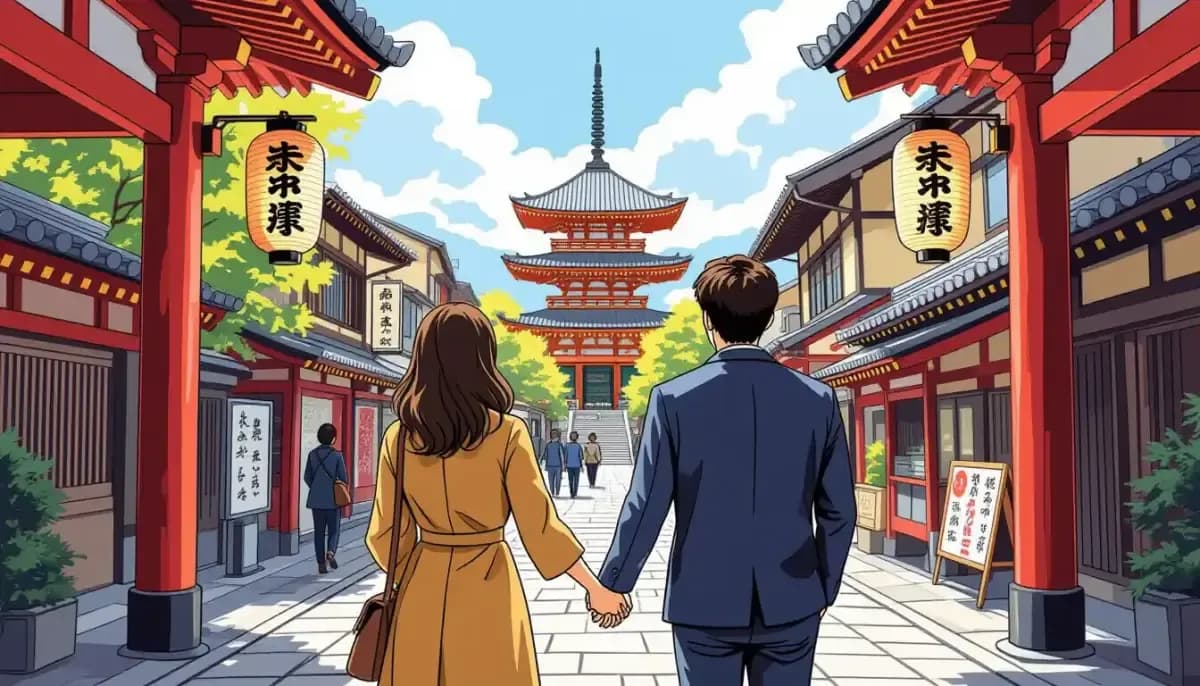
Discover the most common challenges international couples face in Japan — from language barriers and visa complexity to cultural differences and family pressure — with practical strategies to overcome them.
Common Challenges for International Couples in Japan
Living and loving across cultures is one of life's great adventures — and few places make that adventure more vivid than Japan. International couples in Japan face a unique set of obstacles that go well beyond the usual relationship hurdles: language gaps, bureaucratic complexity, in-law expectations rooted in centuries of tradition, and a society that can still feel puzzled by cross-cultural unions. Understanding these challenges in advance is the best way to face them together.
This guide breaks down the most common difficulties international couples encounter in Japan, with practical strategies for navigating each one — whether you are newly arrived or have been building a life here for years.
1. The Language Barrier: More Than Just Words
Language is the backbone of any relationship, and when partners speak different native languages the stakes become especially high. In Japan, daily life demands Japanese: reading apartment contracts, understanding medical instructions, communicating with schools, or simply following a neighborhood meeting. Even couples who are both fluent in English may find that daily life in Japan operates almost entirely in Japanese.
The strain is real. Research on international marriages consistently identifies language as one of the top predictors of relationship stress. When one partner is fluent in Japanese and the other is not, an imbalance of power can develop quietly: the fluent partner becomes the permanent translator, social guide, and bureaucratic fixer, while the non-fluent partner may feel dependent and isolated.
Practical strategies:
- Set a shared language-study schedule and hold each other accountable
- Use JLPT N3 or N4 as a realistic intermediate goal for handling daily tasks
- For important documents (leases, medical forms, tax filings), use a certified translation service rather than relying solely on one partner
- Join expat communities where both partners can socialize comfortably
For a comprehensive approach to Japanese language study, see our guide on learning Japanese as a foreigner.
2. Cultural Differences: Communication Styles and Expectations
Japan is a classic high-context culture: meaning is conveyed through context, silence, and subtle cues rather than direct statement. Many Western cultures, by contrast, are low-context — directness and explicit communication are valued. When a Japanese partner says nothing rather than complaining, a Western partner may interpret the silence as acceptance; the Japanese partner may see the other's bluntness as rude or aggressive.
This mismatch shows up everywhere:
- Conflict resolution: Japanese culture often prizes avoiding direct confrontation (wa, or harmony). A partner accustomed to "clearing the air" may push for discussions that feel overwhelming to their Japanese spouse.
- Expressing affection: Public displays of affection remain uncommon in Japan. Partners from more demonstrative cultures may feel unloved; Japanese partners may feel embarrassed.
- Decision-making: Many Japanese families make decisions collectively. A partner from an individualistic culture may find this slow or intrusive.
- Work-life balance: Japan's work culture values long hours and company loyalty. The foreign partner may feel secondary to their spouse's job obligations.
The divorce rate for international couples in Japan is estimated at around 50%, according to Japan Today's research on international marriages,, compared to roughly 35% for same-nationality couples — a gap that researchers largely attribute to these unresolved cultural communication differences.
3. Family Pressure and In-Law Dynamics
In Japan, marriage is traditionally seen as a union between two families, not just two individuals. Japanese parents often expect a say in major life decisions: where the couple lives, how children are raised, even career choices. For a foreign partner whose own family is far away, this can feel overwhelming.
Common in-law challenges include:
- Pressure to live near or even with the Japanese partner's parents
- Expectations about gender roles (especially for women — the role of ryosai kenbo, "good wife, wise mother," remains culturally persistent)
- Language barriers with in-laws who speak no English
- Holiday and ceremony obligations that the foreign partner may find exhausting or unfamiliar
Tips for managing family dynamics:
- Have open conversations with your partner about family expectations before conflicts arise
- Learn at least basic Japanese greetings and phrases to show respect to in-laws
- Establish clear couple boundaries together, then present them as a united front
- Consider couples counseling from a therapist familiar with cross-cultural relationships
Our guide on Japanese culture and etiquette can help you understand the family dynamics and social expectations you may encounter.
4. Visa and Legal Complexity
The legal framework for international couples in Japan is detailed and unforgiving. Couples must navigate:
| Challenge | Details |
|---|---|
| Marriage registration | Both Japanese and home-country procedures required; documents must often be translated and notarized |
| Spouse visa approval | Requires proof of authentic relationship (photos, messages, financial records) and minimum ~¥3 million annual income |
| Processing time | Spouse visa can take 2 weeks to 3 months; document preparation typically adds 1–3 months |
| Visa renewal | Must demonstrate ongoing cohabitation and financial support; suspicious gaps can trigger denial |
| Post-divorce status | Spouse visa holders have 6 months to change status or leave Japan after divorce |
| Same-sex couples | Same-sex marriages are not recognized for spouse visa purposes; couples must rely on work visas |
| Permanent residency | Available after 3+ years of genuine marriage plus 1+ year of Japan residency — significantly faster than the standard 10-year track |
The process of obtaining a spouse visa involves far more scrutiny than many couples anticipate. Immigration officers look at the full picture of your relationship: inconsistent documentation, short courtship periods, large age gaps, or a history of visa violations can all trigger additional review or refusal.
For more on navigating Japan's immigration system, see our Japan visa and immigration guide.
You can also find detailed guidance on international marriage procedures at Living in Nihon's international marriage guide.
5. Social Isolation and Building a Support Network
Japan remains one of the world's most homogeneous societies. While major cities like Tokyo and Osaka have vibrant international communities, many foreign partners — especially those who move to rural areas for their Japanese spouse's work or family — can feel deeply isolated.
Isolation compounds every other challenge. Without friends nearby, a foreign partner may become entirely dependent on their spouse for social connection, which strains the relationship. Without community, small frustrations about cultural differences have no outlet.
Building your support network:
- Join international spouse groups (many Japanese cities have foreigner spouse circles)
- Connect with expat communities through platforms like Meetup, Facebook groups, or Internations
- Use apps like HelloTalk to practice Japanese and meet locals
- If you have children, school parent communities (PTA) can be an entry point to local social life
- Consider online therapy with English-speaking therapists who specialize in expat life
The For Work in Japan family life guide offers practical resources for foreigners building daily life infrastructure in Japan.
For broader social strategies, our guide on making friends and building social life in Japan covers community-building in detail.
6. Parenting Across Cultures
If you have children — or plan to — international couples face a distinct set of parenting challenges:
- Education system: Japan's school system emphasizes conformity, group identity, and intensive study. Foreign parents accustomed to more child-led or creative educational approaches may struggle with this.
- Language identity: Children in bilingual households need intentional support to develop both languages. The dominant language of the environment (Japanese) can gradually displace the other parent's language.
- Cultural identity: Mixed-heritage children (hāfu in Japanese) navigate complex identity questions. Japan's society, while becoming more accepting, can still make mixed-heritage children feel "different."
- Decision-making disagreements: Partners from different cultural backgrounds often have genuinely different views on discipline, independence, and academic pressure — and these views are hard-wired by their own upbringing.
Our guide to raising children in Japan as a foreigner covers schooling, bilingual development, and family registration in detail.
For insights into multicultural family life in Japan, Visit Inside Japan's article on multicultural families is an excellent resource.
7. Financial Stress and Money Management
Financial differences between cultural backgrounds can be a significant source of conflict in international couples. Common points of friction include:
- Remittances: Many foreign partners send money to family in their home country. Japanese partners may not be accustomed to this obligation.
- Different savings philosophies: Some cultures prioritize saving aggressively; others value present-day spending and experiences.
- Tax obligations: International couples may face double-taxation risks, especially if one partner has income or assets in another country.
- Joint finances: Japan still commonly operates on cash and separate accounts. Establishing joint finances may require more effort than in other countries.
Our guides on banking and finance in Japan and taxes in Japan for foreigners can help you build a solid financial foundation as a couple.
What Successful International Couples Do Differently
Research and anecdotal evidence from long-term international couples in Japan consistently point to the same success factors:
- Proactive communication: Don't assume your partner understands your expectations — especially on culturally loaded topics like family obligations, money, and gender roles.
- Cultural curiosity, not cultural judgment: Approach differences with genuine interest rather than frustration or superiority.
- Shared language investment: Both partners invest in the other's language — the Japanese partner practices English (or your language), the foreign partner studies Japanese.
- Building a community: Couples who maintain both individual friendships and couple friendships report significantly higher relationship satisfaction.
- Professional support: Couples counselors experienced in cross-cultural relationships can help normalize conflicts that aren't personal failures but cultural collisions.
- Legal preparedness: Understanding your visa status, marriage registration, and rights before a crisis makes every other challenge easier to face.
For IT professionals in Japan navigating career and life decisions, Ittenshoku provides resources specifically for career transitions in the Japanese market.
Conclusion
International couples in Japan face challenges that same-nationality couples simply do not encounter: a second language to master, two bureaucracies to navigate, and two sets of cultural assumptions to reconcile. The roughly 50% divorce rate for international couples in Japan is a sobering statistic — but it is not a destiny.
The couples who thrive are those who treat their differences as a foundation for growth rather than a source of conflict. Japan, for all its complexity, rewards patience and respect. So does love.
If you are building a life in Japan with your partner, make use of every resource available: community groups, legal advisors, bilingual therapists, and the wealth of experience shared by the international community that has made Japan home before you.
See our main guide on marriage and relationships in Japan for foreigners for the complete picture on making your international relationship thrive in Japan.

Originally from Vietnam, living in Japan for 16+ years. Graduated from Nagoya University, with 11 years of professional experience at Japanese and international companies. Sharing information about living in Japan for foreigners.
View Profile →Related Articles
Managing Long Distance Relationships When Moving to Japan
Moving to Japan doesn't have to end your relationship. Learn how to manage a long-distance relationship after relocating to Japan: communication tools, time zone tips, visit planning, and visa pathways to close the gap.
Read more →
LGBTQ Life and Rights in Japan for Foreigners
A comprehensive guide to LGBTQ life and rights in Japan for foreigners. Covers legal status, partnership certificates, community life in Shinjuku Ni-chome, workplace rights, visa challenges, and practical tips for LGBTQ expats living in Japan.
Read more →
Cultural Differences in Japanese Romantic Relationships
Discover the key cultural differences in Japanese romantic relationships: kokuhaku confessions, amae dependence, gift-giving customs, gender roles, PDA norms, and family expectations — a complete guide for foreigners dating in Japan.
Read more →
Marriage Registration Documents Required in Japan
Complete guide to marriage registration documents required in Japan for foreigners. Learn what documents you need, how to get the Certificate of No Impediment, and the step-by-step registration process at city hall.
Read more →
Common Law and Domestic Partnership in Japan Explained
Learn everything about common law partnerships (jijitsu-kon) and domestic partnership certificates in Japan. Understand visa implications, legal rights, inheritance, and what foreigners need to know.
Read more →
Wedding Ceremony Options in Japan for Foreign Couples
Discover all wedding ceremony options in Japan for foreign couples: Shinto shrine rituals, chapel ceremonies, and civil weddings. Compare costs, legal requirements, and tips for planning your Japan wedding.
Read more →