
Kindergarten Yochien vs Hoikuen in Japan Compared

Compare yochien and hoikuen in Japan for foreign families. Learn about costs, enrollment process, age requirements, and tips for expat parents choosing the right Japanese kindergarten or daycare.
Kindergarten in Japan: Yochien vs Hoikuen — The Complete Guide for Foreign Parents
If you're raising a child in Japan as a foreigner, one of the first big decisions you'll face is choosing between yochien (幼稚園) and hoikuen (保育園). Both are early childhood education options, but they serve very different needs. Understanding the differences is essential for making the right choice for your family — and for successfully navigating Japan's enrollment system as a non-Japanese resident.
This guide breaks down everything you need to know about yochien vs hoikuen in Japan: how they work, how much they cost, how to enroll, and what to expect as a foreign parent.
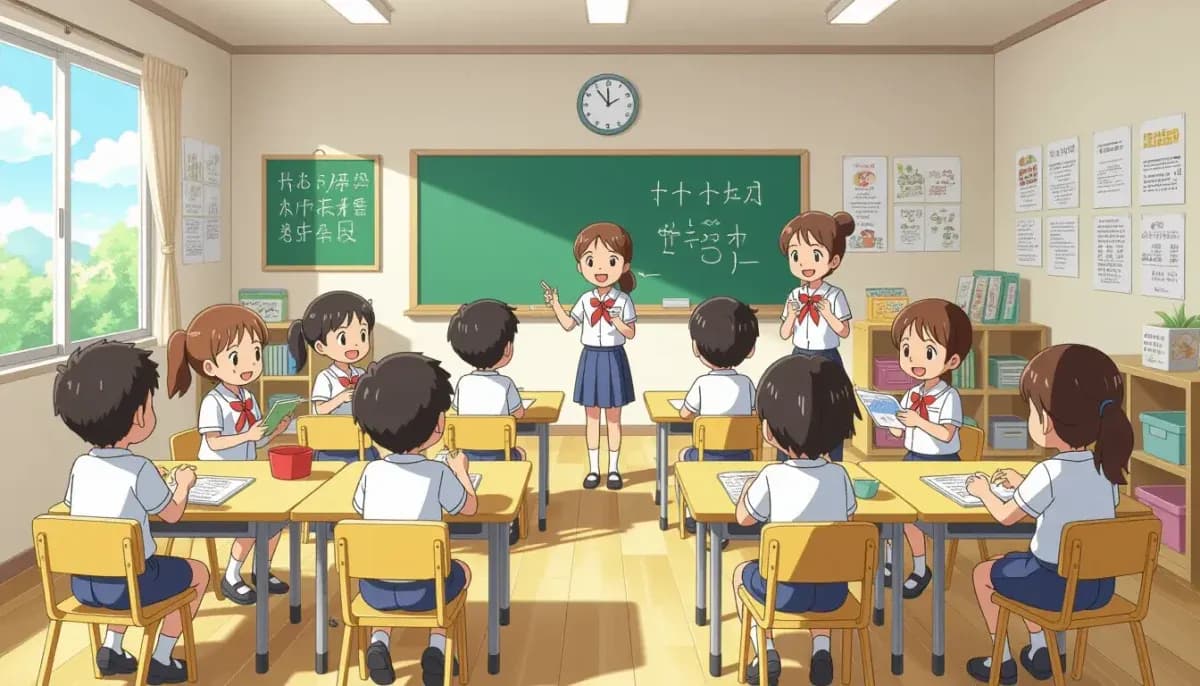
!Japanese kindergarten children in uniforms doing activities in a classroom

What Is Yochien? (幼稚園)
Yochien is a kindergarten program in Japan designed for children aged 3 to 5 years old. It falls under the Ministry of Education and focuses on early childhood education to prepare kids for elementary school. Classes typically run for about 4 hours per day, following a school-year calendar similar to elementary schools — with long summer, winter, and spring breaks.
Yochien places a strong emphasis on structured learning and school readiness. Children learn basic literacy, numeracy, arts and crafts, music, and develop social skills through group activities. Many yochien require children to wear uniforms, carry specific bags, and follow structured daily routines.
Key characteristics of yochien:
- Age range: 3 to 5 years old
- Hours: Approximately 9:00 AM to 2:00 PM (4-5 hours)
- Focus: Education and school preparation
- Ministry: Ministry of Education, Culture, Sports, Science and Technology (MEXT)
- Holidays: Long breaks matching the school calendar
- Uniforms: Usually required
Because of the shorter hours, yochien is typically suited for families where at least one parent is at home or works part-time. Extended care (延長保育, enchō hoiku) is available at many yochien for an additional fee, but it is not always sufficient for full-time working parents.
What Is Hoikuen? (保育園)
Hoikuen — also called nursery school or daycare — is a childcare facility administered by the Ministry of Health, Labour and Welfare. It accepts children from infancy (as young as 57 days old) up to age 5. Hoikuen operates with extended hours, typically from 7:00 AM to 7:00 PM, making it ideal for working parents.
Hoikuen focuses on childcare and holistic development — including play, health, and social growth — rather than strictly academic preparation. However, modern hoikuen facilities do incorporate structured learning activities as children approach school age.
Key characteristics of hoikuen:
- Age range: 0 to 5 years old (sometimes up to age 6)
- Hours: 7:00 AM to 7:00 PM (full-day)
- Focus: Childcare and overall development
- Ministry: Ministry of Health, Labour and Welfare (MHLW)
- Holidays: Limited to national holidays; open most of the year
- Uniforms: Usually casual, play-appropriate clothing
Enrollment in licensed hoikuen (認可保育園) is limited and competitive, especially in urban areas. Priority is given to families based on a point system (保育の必要性の認定) that considers both parents' work status, health conditions, and other circumstances.
Yochien vs Hoikuen: Side-by-Side Comparison
| Feature | Yochien (幼稚園) | Hoikuen (保育園) |
|---|---|---|
| Age Range | 3–5 years | 0–5 years |
| Daily Hours | ~4–5 hours (9 AM–2 PM) | Up to 11 hours (7 AM–7 PM) |
| Primary Focus | Education / School prep | Childcare / Development |
| Ministry | MEXT (Education) | MHLW (Health & Welfare) |
| Working Parent Requirement | Not required | Generally required |
| Holidays | Long school-year breaks | Open most of the year |
| Monthly Fees (Ages 3–5) | Free (subsidized up to ¥25,700) | Free (subsidized, licensed facilities) |
| Monthly Fees (Ages 0–2) | Not applicable | ¥0–¥77,500 (income-based) |
| Uniforms | Usually required | Casual clothing |
| Enrollment Competition | Moderate (lottery in popular areas) | Very competitive (points system) |
| Application Timing | September–October (for April entry) | October–December (for April entry) |
Fees and Government Subsidies
One of the most welcome developments for families in Japan is the free preschool policy introduced in October 2019. Under this program, children aged 3 to 5 enrolled in licensed facilities (both yochien and hoikuen) receive tuition free of charge. The government subsidizes fees up to ¥25,700 per month for yochien and fully covers fees for children in licensed hoikuen.
However, note that:
- Additional fees (lunch, materials, activity fees, bus service) still apply and can range from ¥5,000 to ¥30,000+ per month depending on the facility.
- Private yochien may charge tuition above the subsidy cap, with monthly fees ranging from ¥40,000 to ¥100,000 or more.
- Ages 0–2 in hoikuen are NOT covered by the free policy. Fees are income-based and can range from ¥0 (for low-income households) to ¥77,500 per month.
For foreign families, it's important to confirm your eligibility for subsidies based on your visa status. Contact your local municipal office (市区町村) to understand what financial support you qualify for as a foreign resident.
A Third Option: Nintei Kodomo-en (認定こども園)
In recent years, Japan has introduced a hybrid facility called Nintei Kodomo-en (Certified Child Development Center). This combines the educational curriculum of a yochien with the extended hours and childcare focus of a hoikuen.
Nintei Kodomo-en accepts children regardless of whether their parents work, and fees are capped similarly to yochien (ages 3–5 are free). These facilities are increasingly popular and can be an excellent option for families who want the best of both worlds.
Types of Nintei Kodomo-en include:
- 幼保連携型 (Yoho Renkei-gata): Integrates both yochien and hoikuen functions
- 幼稚園型 (Yochien-gata): Based on yochien with extended childcare hours
- 保育所型 (Hoikusho-gata): Based on hoikuen with educational programs
- 地方裁量型 (Chiho Sairy-gata): Regional discretion facilities
!Nintei Kodomo-en hybrid childcare facility Japan

How to Enroll as a Foreign Parent
Enrolling your child in either a yochien or hoikuen as a foreigner in Japan involves some additional steps compared to Japanese families. Here's what you need to know:
General Requirements
- Residence card (在留カード): Your child must be registered as a resident. Ensure you register your child with your local municipal office after birth or arrival.
- My Number (マイナンバー): Required for subsidy applications.
- Proof of parental work status: For hoikuen, you'll typically need to provide employment certificates (就労証明書) from your employer.
For Yochien Enrollment
- Research yochien in your area (public and private options available)
- Attend open house events (説明会) in September–October
- Submit application and required documents
- If oversubscribed, a lottery (抽選) determines admission
- Trial enrollment sessions often occur in February–March before the April start
For Hoikuen Enrollment
- Contact your ward/city office (区役所/市役所) to understand the application process and deadlines
- Gather information about available facilities: May–July
- Submit applications: October–December
- Receive results: January–February
- Enrollment begins in April
Important: Hoikuen placements are determined by a "need points" system (保育の必要性の認定). Points are assigned based on:
- Full-time employment of both parents
- Single-parent households (higher priority)
- Health conditions or disabilities
- Siblings already enrolled at the facility
- Time spent on waiting list
Foreign parents with student visas or other non-work visas should verify whether their visa category qualifies for hoikuen priority points. Some visa types may require additional documentation or authorization.
For more guidance on navigating life in Japan as a foreigner, check out our Complete Guide to Raising Children in Japan and the Daily Life in Japan Guide for Foreigners.
Tips for Foreign Parents: Making the Most of Japanese Early Education
Navigating Japan's early education system as a foreign parent can feel daunting, but it is very manageable with the right preparation.
1. Learn key Japanese phrases and vocabulary While some urban yochien and hoikuen have English-speaking staff, most communication happens in Japanese. Knowing terms like 連絡帳 (renrakucho — the daily communication notebook), 行事 (gyoji — school events), and 給食 (kyushoku — school lunch) will help you stay informed. Consider our Complete Guide to Learning Japanese as a Foreigner to build your language skills.
2. Use translation apps for daily communications School notices, newsletters, and the daily communication notebook are almost always in Japanese. Translation apps like Google Translate (with camera function) are invaluable for keeping up with school communications.
3. Build relationships with other parents Japanese school culture places great importance on community participation. Attend PTA meetings, school events (運動会 — sports day, お遊戯会 — performance day), and volunteer activities. Other parents can be your best source of practical advice.
4. Prepare for Japanese school culture Both yochien and hoikuen have detailed requirements for supplies, clothing, and routines. Common items include:
- Specific bag types (designated school bags, indoor shoe bags)
- Indoor shoes (上履き)
- Bento boxes (弁ento) — for yochien that do not provide school lunch
- Hand towels and toothbrushes for after-meal routines
5. Start your research early For hoikuen especially, the competition in urban areas like Tokyo, Osaka, and Nagoya can be fierce. Research facilities a full year before your child's planned enrollment date. Consider visiting multiple facilities and checking online parent review sites.
For comprehensive information on Japan's healthcare and school systems for foreign families, also visit Living in Nihon, which provides helpful resources for expats navigating Japanese systems. If you're also managing work and childcare, For Work in Japan has useful guidance on work-life balance for foreigners, and Ittenshoku offers resources for families relocating across Japan.
The Reality of "Hoikuen Waiting Lists" (待機児童問題)
One of Japan's most discussed social issues is the taikijido mondai (待機児童問題) — the waiting list problem for hoikuen places. Despite government efforts to expand capacity, many urban areas still have significant waitlists, particularly for children under age 3.
Key facts about the waiting list situation:
- The problem is most severe in major cities: Tokyo, Osaka, Yokohama, and Nagoya
- Children under 1 year old are most affected due to limited infant care slots
- The Japanese government has invested heavily in expanding hoikuen capacity since 2016
- Waitlists have been decreasing nationally but remain significant in high-demand areas
If your child is placed on a waitlist, ask your ward office about:
- 認証保育所 (Ninsho Hoikusho): Tokyo-certified facilities that operate outside the national licensing system, often with slightly higher fees but more availability
- 認可外保育施設 (Ninkagai Hoiku Shisetsu): Unlicensed daycare facilities — less regulated but can fill the gap while waiting for a licensed spot
- Temporary care options: Some areas offer subsidized temporary care while you wait
Making Your Decision: Yochien or Hoikuen?
The "right" choice between yochien and hoikuen depends on your family's specific situation:
Choose Yochien if:
- You or your partner is not working or works part-time
- You want a focus on structured education and school preparation
- You prefer shorter days with more family time in the afternoon
- Your child is 3 years old or older
Choose Hoikuen if:
- Both parents work full-time
- You need childcare for a child under 3
- You need longer hours (early morning and evening coverage)
- You work in a role that requires consistent availability
Consider Nintei Kodomo-en if:
- You want the flexibility to change work status without switching facilities
- You want both educational structure and extended childcare hours
- You're unsure about your long-term work situation
Also consult your Complete Guide to Working in Japan as a Foreigner if balancing work and childcare arrangements is part of your decision.
Frequently Asked Questions
Can foreigners apply for hoikuen and yochien in Japan? Yes. As long as your child is registered as a resident and you have the required documentation (residence card, My Number, etc.), foreign families can apply for both facilities on equal terms with Japanese families.
Is there an English-language yochien or hoikuen in Japan? International schools and bilingual preschools exist in major cities. These are typically private, more expensive, and operate differently from standard Japanese facilities. If English-language education is a priority, look for international kindergartens (インターナショナルスクール).
Do I need to speak Japanese to enroll my child? Not necessarily, but it helps significantly. Many municipal offices and schools do not have English-speaking staff. Bringing a Japanese-speaking friend or professional interpreter to meetings is recommended.
What is the application process like for hoikuen as a single foreign parent? Single-parent households typically receive higher priority points in the hoikuen system. You will need to provide documentation of your single-parent status and income. Contact your local ward office for specific requirements.
When should I start the enrollment process? For April enrollment (the start of the Japanese school year), begin researching facilities by April–May of the previous year. Submit applications by October–December. The earlier you start, the better prepared you'll be.
For more detailed information about hoikuen vs yochien, see the comprehensive guide at That Japan Life and the official resource at Japan Living Guide.
Navigating Japan's early childhood education system takes time and patience, but it is very rewarding. Both yochien and hoikuen offer wonderful environments for children to grow, learn, and develop — and many foreign children thrive in these settings, gaining bilingual abilities and cultural fluency from an early age.
For more resources on raising children in Japan, see our Complete Guide to Raising Children in Japan, and explore the Healthcare Guide for Foreigners in Japan for information on your child's medical needs.

Originally from Vietnam, living in Japan for 16+ years. Graduated from Nagoya University, with 11 years of professional experience at Japanese and international companies. Sharing information about living in Japan for foreigners.
View Profile →Related Articles

Summer Activities and Programs for Kids in Japan
Complete guide to summer activities and programs for kids in Japan. Discover English camps, traditional festivals, water sports, theme parks, and indoor activities for expat families.
Read more →
Special Needs Education in Japan for Foreign Families
A complete guide to special needs education in Japan for foreign families. Learn about school types, support levels, enrollment process, international school options, and key resources for expat parents.
Read more →
Is Homeschooling Legal in Japan Guide for Foreigners
Is homeschooling legal in Japan for foreigners? Learn about the legal gray area, steps to homeschool your child, curriculum options, and support organizations for expat families in Japan.
Read more →
Japanese Education System Explained for Foreign Parents
A complete guide to Japan's education system for foreign parents. Learn about school types, enrollment steps, costs, language support, and tips for raising bilingual children in Japan.
Read more →
Dealing with Bullying Ijime in Japanese Schools
Learn how to recognize, report, and respond to ijime (bullying) in Japanese schools. A practical guide for foreign and expat parents in Japan, with key statistics and action steps.
Read more →
After School Activities and Juku in Japan for Kids
Complete guide to after-school activities (naraigoto) and juku cram schools in Japan for expat families. Learn about costs, enrollment, popular activities, and tips for foreign children.
Read more →