
Best Seasonal Travel Destinations in Japan by Month

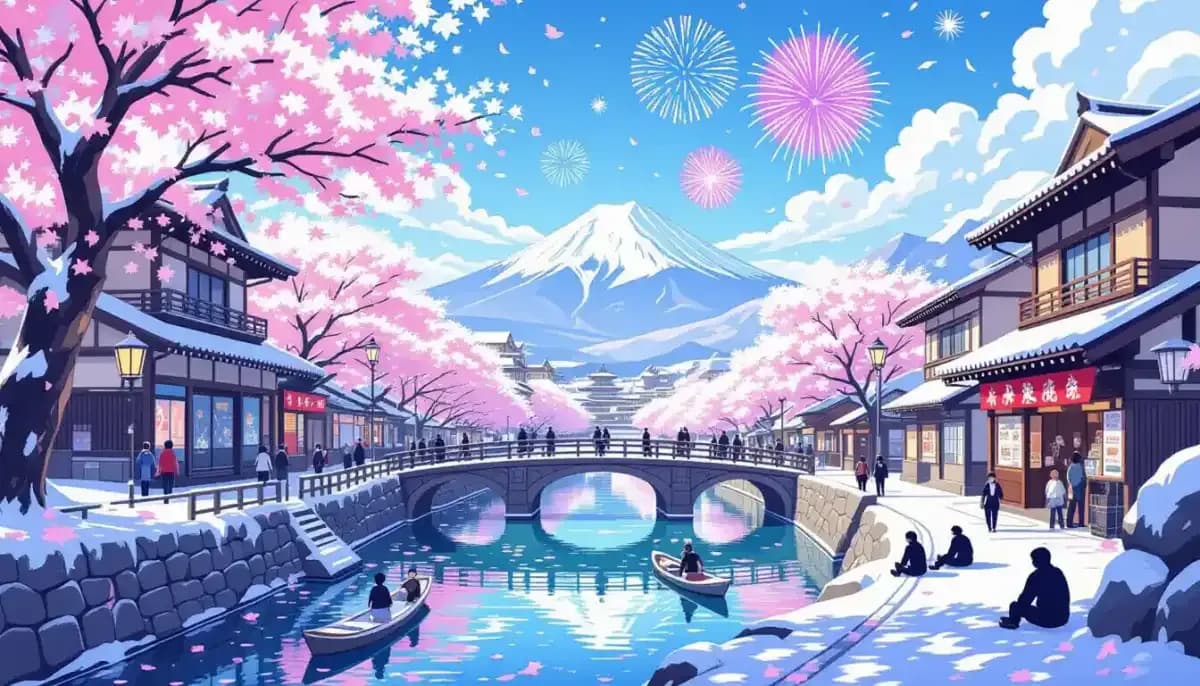
A month-by-month guide to the best travel destinations in Japan for foreigners: from snow monkeys in Nagano to cherry blossoms in Kyoto, festivals in Aomori, and autumn colors in Kanazawa.
Best Seasonal Travel Destinations in Japan by Month
Japan is a country that transforms with the seasons — cherry blossoms carpet the streets in spring, summer brings pulsating festivals and mountain adventures, autumn paints the country in fiery reds and golds, and winter reveals snow-covered landscapes straight out of a fairy tale. For foreigners living in Japan or visiting for an extended stay, knowing which destination to visit in which month can make the difference between a memorable experience and a crowded disappointment.
Japan welcomed a record 42.7 million international visitors in 2025, up from 36.9 million in 2024 — a 15.8% increase. Much of this tourism concentrates around peak seasons: cherry blossom season in March-April draws over 3 million visitors monthly. But Japan has so much more to offer beyond the obvious. This guide breaks down the best travel destinations month by month, so you can explore Japan's 47 prefectures like a seasoned resident rather than a rushed tourist.

January – Nagano: Snow Monkeys and Winter Wonderland
Why go: January is peak winter season, and Nagano Prefecture delivers one of the world's most iconic wildlife experiences — watching Japanese macaques (snow monkeys) bathing in natural hot springs at Jigokudani Yaen Koen. The sight of these red-faced primates soaking contentedly while snow falls around them is unforgettable.
Highlights:
- Jigokudani Yaen Koen – The only place in the world where wild monkeys bathe in hot springs. Arrive early (before 8am) to avoid tour groups.
- Zenkoji Temple – One of Japan's most important Buddhist temples, a short bus ride from Nagano city. Free to enter the main hall.
- Togakushi Shrine – A mystical complex of shrines connected by a cedar-lined path, particularly beautiful when snow-covered.
- Ski resorts – Nagano hosted the 1998 Winter Olympics. Hakuba and Shiga Kogen offer world-class skiing with English signage.
- Tsumago and Magome – Two exceptionally well-preserved Edo-period post towns along the Nakasendo trail. A 8km hike connects them through bamboo and cedar forests.
Practical tip: The Nagano Snow Monkey Pass (available at Nagano Station) bundles bus and admission. Book accommodation in Yudanaka Onsen village to stay near the park and soak in local baths after your monkey viewing.
For more on getting around Japan in winter, see our Complete Guide to Transportation in Japan.
February – Okinawa: Subtropical Escape from Winter
Why go: While the rest of Japan shivers, Okinawa's subtropical climate offers mild temperatures (around 18-22°C) and clear skies — the best conditions for exploring Japan's southernmost islands with minimal crowds.
Highlights:
- Ishigaki Island – Arguably home to Japan's best beaches, with powder-white sand and crystal-clear turquoise water. Don't miss Kabira Bay (no swimming, but stunning for kayaking and glass-bottom boats).
- Taketomi Island – A tiny island just 10 minutes by ferry from Ishigaki. Three traditional villages with red-tiled roofs and no cars — only water buffalo carts. Explore by rented bicycle.
- Churaumi Aquarium – One of the world's largest aquariums, with massive whale sharks. Worth the trip even in February.
- Shurijo Castle – The restored royal palace of the Ryukyu Kingdom, recently rebuilt after a 2019 fire.
- Kerama Islands – If you visit in late February, whale watching season begins. Humpback whales migrate through these waters from January to March.
Weather note: Okinawa's typhoon season runs June to November. March-May and October-November are technically "best," but February offers competitive advantages: fewer tourists, lower accommodation prices, and comfortable hiking temperatures.
Learn more about budget travel tips in our Complete Guide to Cost of Living in Japan.
March & April – Tokyo and Kyoto: Cherry Blossom Season
Why go: Sakura season is Japan's most celebrated time of year — and for good reason. The country transforms into a pastel dream as thousands of cherry trees bloom simultaneously. March to early April is the peak window, depending on region and year.
Highlights in Tokyo:
- Nakameguro Canal – Skip Ueno Park crowds. The 1.4km canal lined with cherry trees reflecting in the dark water is Tokyo's most photogenic blossom spot. Visit on weekday evenings for evening illuminations.
- Shinjuku Gyoen – A large park with multiple varieties of cherry trees, some blooming as late as April. ¥500 entry keeps crowds manageable.
- Yoyogi Park – Prime hanami (flower viewing) picnic territory. Bring food from Shibuya's department store basement food halls.
Highlights in Kyoto:
- Maruyama Park – The iconic weeping cherry tree lit at night is Kyoto's most photographed blossom scene.
- Philosopher's Path – A 2km canal-side walk through Higashiyama lined with hundreds of cherry trees.
- Uji – Just 15 minutes south of Kyoto by train, this small city offers beautiful blossom viewing at Byodoin Temple with far fewer crowds.
- Miyama – A rural village with traditional thatched-roof farmhouses. In early April, cherry blossoms frame the village in an otherworldly scene.
Timing tip: Blossom forecasts are released by Japan Meteorological Corporation from late January. Full bloom typically lasts only 1-2 weeks. Kyoto blooms slightly later than Tokyo (usually 1 week gap).
Read our Guide to Japanese Festivals and Traditions for more on hanami customs.
For resources on living in Japan as a foreigner, Living in Nihon offers comprehensive guides on navigating life in Japan — from seasonal events to daily practicalities.
May – Setouchi: Contemporary Art Among Island Scenery
Why go: May brings ideal weather — warm but not hot, with low humidity — perfect for exploring Setouchi's scattered art islands between Honshu and Shikoku. The Setouchi Triennale (held every 3 years) draws art lovers worldwide, but the islands are spectacular year-round.
Highlights:
- Naoshima – The flagship art island. The Benesse Art Site includes works by James Turrell and Walter De Maria embedded into the landscape. Don't miss the yellow pumpkin by Yayoi Kusama on the south shore pier.
- Teshima – The Teshima Art Museum is a concrete shell with a single opening in the roof, through which rain falls onto a surface that moves like breathing. One of the most meditative art experiences in Japan.
- Inujima – A former copper smelting island turned art space, with ruins integrated into installations.
- Onomichi – A hillside port city on the Hiroshima-side coast with excellent cycling access to the Shimanami Kaido — a 70km cycling route across six islands connecting Honshu to Shikoku.
Practical tip: Rent electric bicycles on Naoshima (¥1,200-2,000/day) to reach hilltop museums. Purchase the Benesse Art Site passport for access to multiple museums at a discount.
June – Niigata: Rice Country and Island Culture
Why go: June is Japan's rainy season (tsuyu) on most of Honshu, but Niigata's landscape is beautifully lush and atmospheric in the rain. The prefecture is famous for its rice (the basis of Japan's best sake and sushi rice), and Sado Island offers an experience completely unlike anywhere else in Japan.
Highlights:
- Sado Island – A large island off the Niigata coast, once Japan's gold-producing heart and an exile destination for emperors and criminals alike. Rich in culture, traditional Noh theater, and the taiko drumming group Kodo based here.
- Echigo Tsumari Art Field – One of the world's largest outdoor art festivals spanning 760 square kilometers of countryside. Hundreds of artworks integrated into rice fields, abandoned schools, and farmhouses.
- Terraced rice fields at Hoshi-toge – Among Japan's most scenic rice terraces, most beautiful in June when water reflects the sky before planting.
- Sake breweries in Niigata City – Home to Japan's highest concentration of sake breweries. Many offer tastings and tours.
Note: Hokkaido is the exception to rainy season — if you want clear summer skies and wide-open flower fields in June, Hokkaido is your destination (see Furano's lavender fields in July).
July & August – Aomori and Hokkaido: Festivals and Summer Freedom
Why go: Summer means festivals. Aomori's Nebuta Matsuri (August 2-7) is one of Japan's three greatest festivals — massive illuminated floats depicting warriors and mythological figures parade through the streets while dancers in colorful costumes leap and shout "Rassera!" alongside them.
Highlights in Aomori (August):
- Nebuta Matsuri – Book hotels 6-12 months ahead; they sell out completely. Purchase reserved viewing tickets from convenience stores.
- Towada Art Center – A contemporary art museum in a purpose-built street that's entirely outdoors, with enormous sculptures by Louise Bourgeois and Ron Mueck.
- Hirosaki Castle – One of Japan's few original castle towers, and the surrounding park has 2,600 cherry trees — stunning in spring but also beautiful with summer green.
- Oirase Gorge – A pristine river gorge with waterfalls, ideal for summer hiking with cool temperatures.
Highlights in Hokkaido (July-August):
- Furano Lavender Fields – Peak lavender bloom is July. The Farm Tomita fields are iconic, but dozens of smaller farms offer similar views with fewer crowds.
- Mount Fuji – Japan's iconic peak opens for climbing July 1 to mid-September only. Book mountain hut accommodation 3-4 months in advance for the popular Yoshida Trail.
- Biei Blue Pond – A surreal cerulean blue pond formed by volcanic minerals, surrounded by birch trees. Stunning in summer and autumn.

September – Kagoshima: Subtropical Islands After the Summer Rush
Why go: September sees crowds thin as summer school holidays end, while Kagoshima's southern islands remain warm and accessible. Yakushima Island — a UNESCO World Heritage Site — is among Japan's most unique landscapes.
Highlights:
- Yakushima – Ancient cedar forests with some trees over 7,200 years old (Jomon Sugi). The island inspired Studio Ghibli's "Princess Mononoke." Hiking permits required for the interior trails from July-August — September is easier to access.
- Ohko-no-taki Waterfall – Voted one of Japan's most beautiful falls, fed by Yakushima's famously high rainfall (the island receives up to 8,000mm annually in the mountains).
- Amami Oshima – A larger subtropical island between Kyushu and Okinawa with Ryukyu-influenced culture, mangrove forests, and excellent sea kayaking.
- Ibusuki Onsen – A unique hot spring town where you can be buried in naturally heated volcanic sand on the beach.
- Sakurajima – An active volcano looming over Kagoshima Bay, accessible by a 15-minute ferry from the city. Cycling the 36km perimeter road is a popular activity.
Travel note: September still falls within typhoon season. Check weather forecasts before island travel and have flexible plans.
October – Hokkaido: Autumn Foliage Begins Here First
Why go: Japan's autumn color season (koyo) starts in Hokkaido in late September/early October, spreading southward through November. Shiretoko Peninsula — Japan's most remote and wildlife-rich national park — is at its most dramatic in October.
Highlights:
- Shiretoko National Park – UNESCO World Heritage Site. Home to brown bears, white-tailed eagles, and Steller's sea eagles. October is the salmon-running season, when bears gather at rivers — incredible wildlife viewing.
- Lake Mashu – Said to be one of the world's clearest lakes, with visibility down to 41.6 meters. Surrounded by steep caldera walls of vivid autumn color.
- Daisetsuzan National Park – Japan's largest national park with the country's earliest autumn foliage. Cable cars ascend Asahidake for panoramic views.
- Sapporo – Hokkaido's capital offers world-class ramen, the Odori Park autumn festival, and a vibrant arts scene. The Sapporo Museum of Art showcases Hokkaido's artists.
Photography tip: Bring a telephoto lens (300mm+) for brown bear wildlife photography at Shiretoko's Rusha Bay ranger station.
For guidance on nature activities and outdoor safety in Japan, see our Safety and Emergency Preparedness Guide.
November – Kanazawa: Japan's Craft Capital in Autumn Colors
Why go: November brings peak autumn foliage to Honshu's north-facing coast. Kanazawa — often called "little Kyoto" — combines samurai and geisha district heritage with living craft traditions and one of Japan's three great gardens.
Highlights:
- Kenrokuen Garden – One of Japan's top three gardens (with Koraku-en and Kairaku-en), and arguably the most beautiful in autumn when the maple trees flame orange and red. Winter yukitsuri (rope supports for branches) are installed from November 1.
- Higashi Chaya District – Kanazawa's historic geisha quarter with teahouses operating since the Edo period. Book a teahouse visit in advance — these private venues require introductions or reservations.
- Nagamachi Samurai District – Preserved samurai residences with earthen walls and garden streams. Several houses are open to the public.
- 21st Century Museum of Contemporary Art – A remarkable circular museum with free outdoor artworks including the "Swimming Pool" by Leandro Erlich.
- Higashi Chaya Craft Shops – Kanazawa is Japan's undisputed craft capital: artisans here produce gold leaf (applied to 98% of Japan's production), lacquerware, Kutani porcelain, and Kaga silk. Buy directly from workshops.
Day trips: Shirakawa-go (UNESCO World Heritage thatched-roof village) is 90 minutes by bus from Kanazawa. Mid-November sees its gassho-zukuri farmhouses framed by maple trees.
December – Fukuoka: Winter Warmth on Kyushu
Why go: December in most of Japan means cold and winter illuminations. But Fukuoka — Japan's gateway to Asia, positioned in northern Kyushu — offers mild winter weather, no snow, and some of Japan's finest street food culture.
Highlights:
- Nanzoin Temple – Home to the world's largest bronze reclining Buddha statue, measuring 41 meters long and 11 meters high. The peaceful grounds are a short suburban train ride from Hakata.
- Dazaifu Tenmangu – Japan's most important Tenjin shrine, dedicated to the scholar-god of learning. Students visit before exam season (December-February) to pray.
- Canal City Hakata – A large shopping complex with an excellent food hall. Fukuoka is famous for ramen, mentaiko (spicy cod roe), and motsunabe (offal hot pot).
- Yatai Food Stalls – Fukuoka's distinctive outdoor food stall culture, concentrated along Nakasu island and Tenjin. Dozens of covered stalls serve hakata ramen, yakitori, and drinks from around 6pm until late. Winter makes them extra atmospheric.
- Mojiko Retro District – A well-preserved early 20th-century port town 40 minutes north of Fukuoka. The waterfront is beautifully lit in December.
Day trip: Take the Shinkansen to Nagasaki (1.5 hours) or Kumamoto (45 minutes) for day trips to historically significant cities with very different characters.
For guidance on living in Fukuoka or other cities in Japan, For Work in Japan provides detailed resources on housing, infrastructure, and daily life across Japanese cities.
Monthly Quick Reference Guide
| Month | Top Destination | Highlight | Crowds |
|---|---|---|---|
| January | Nagano | Snow monkey onsen bathing | Low |
| February | Okinawa (Ishigaki) | Subtropical beaches, whale watching | Low |
| March | Tokyo | Cherry blossom along Nakameguro Canal | Very High |
| April | Kyoto | Sakura at Maruyama Park and Philosopher's Path | Very High |
| May | Setouchi (Naoshima) | Contemporary art in island scenery | Medium |
| June | Niigata / Sado Island | Rice terraces, sake culture, taiko drumming | Low |
| July | Hokkaido (Furano) | Lavender fields; also Aomori Nebuta prep | Medium |
| August | Aomori | Nebuta Matsuri (book 6-12 months ahead) | Very High |
| September | Kagoshima (Yakushima) | Ancient cedar forests, UNESCO heritage | Low-Medium |
| October | Hokkaido (Shiretoko) | Brown bears, first autumn foliage | Medium |
| November | Kanazawa (Ishikawa) | Kenrokuen Garden autumn colors, craft culture | Medium-High |
| December | Fukuoka | Yatai food stalls, Nanzoin Temple | Low |
Planning Tips for Foreigners in Japan
Transportation: The JR Pass remains valuable for long trips, though it's worth calculating against individual ticket prices. For Setouchi island-hopping or Okinawa, local ferries are your main transport. The Transportation Guide covers everything from IC cards to overnight buses.
Accommodation booking windows:
- Cherry blossom season (March-April): Book 3-6 months ahead
- Nebuta Matsuri (Aomori, August): Book 6-12 months ahead
- Autumn foliage (November): Book 2-3 months ahead
- All other months: 1-4 weeks usually sufficient
Food and culture: Each region has distinct food specialties. Kanazawa: seafood from the Japan Sea and craft sake. Fukuoka: hakata ramen and mentaiko. Aomori: apples (80% of Japan's production) and fresh seafood. Embracing regional food is half the travel experience. Our Japanese Food Guide helps you navigate menus and markets.
Weather apps: Use the Japan Meteorological Agency app (tenki.jp) or Weathernews Japan — both offer hyper-local 3-hour forecasts. Typhoon tracking is essential from August through October.
Cultural etiquette: Japan has specific regional customs layered on top of national norms. Our Japanese Culture and Etiquette Guide covers temple behavior, onsen rules, and festival participation etiquette.
For additional resources on Japan life and culture for foreign residents, Ittenshoku provides career and lifestyle information relevant to foreigners building their lives in Japan.
Off-Season Hidden Gems Worth Knowing
Not every great destination has an obvious "best month." Here are some year-round alternatives worth knowing:
- Nikko (Tochigi) – Ornate Toshogu Shrine with elaborate wood carvings, stunning in any season. Autumn foliage here rivals Kyoto.
- Matsuyama (Ehime, Shikoku) – Home to Dogo Onsen, Japan's oldest hot spring bath. The castle is beautifully lit year-round.
- Takayama (Gifu) – A mountain town with beautifully preserved sake breweries and merchants' houses. The spring and autumn festivals are world-famous; winter is peaceful and snow-covered.
- Hiroshima and Miyajima – The Peace Memorial and its floating torii gate are powerful in any season. February-March sees plum blossoms before the cherry blossom rush.
- Hakone – Year-round access to outdoor art (Hakone Open Air Museum), volcano views, and ryokan onsen. A 90-minute escape from Tokyo.
Japan rewards the curious traveler who looks beyond the obvious. The tourists who discover Kanazawa's craft culture, Yakushima's ancient forests, or Sado Island's traditions often describe these as the most profound experiences of their time in Japan — more memorable than the famous sights everyone rushes to photograph. Use this guide as a starting point, then follow your interests into the specific corners of Japan that few visitors reach.
For detailed weather planning and seasonal conditions, Japan Guide provides comprehensive monthly weather data for all regions. Japan welcomed a record 42.7 million visitors in 2025 — planning ahead for peak seasons is more important than ever.
For a broader understanding of Japanese culture and seasonal celebrations, see our Guide to Japanese Festivals and Traditions — it covers matsuri, seasonal customs, and how to participate respectfully as a foreigner.

Originally from Vietnam, living in Japan for 16+ years. Graduated from Nagoya University, with 11 years of professional experience at Japanese and international companies. Sharing information about living in Japan for foreigners.
View Profile →Related Articles
Japan Island Hopping Guide Best Islands to Visit
Discover Japan's 14,125 islands with our complete island hopping guide for foreigners. Best islands, ferry routes, costs, and practical tips for Okinawa, Naoshima, Yakushima and more.
Read more →
Camping in Japan Complete Guide for Foreign Residents
Everything foreign residents need to know about camping in Japan: campsite types, booking tips, rules, top destinations, gear, and etiquette. Start your outdoor adventure in Japan.
Read more →
Budget Travel Tips for Exploring Japan as a Resident
Discover practical budget travel tips for foreign residents in Japan. Learn how to use the Seishun 18 Kippu, find cheap accommodation, eat well on a budget, and save tens of thousands of yen on domestic travel.
Read more →
Hokkaido Travel Guide for Foreign Residents of Japan
A complete Hokkaido travel guide for foreign residents of Japan. Covers transportation, seasonal highlights, top destinations, food, and practical tips for expats visiting Japan's northernmost island.
Read more →
Okinawa Travel Guide for Foreign Residents of Japan
A complete Okinawa travel guide for foreigners living in Japan. Discover beaches, islands, food, culture, and practical tips for visiting Okinawa from the mainland.
Read more →
Best Day Trips from Osaka for Residents
Complete guide to the best day trips from Osaka for foreign residents. Discover Kyoto, Nara, Kobe, Himeji, and hidden gems with transport tips, costs, and seasonal advice.
Read more →