
Japan Island Hopping Guide Best Islands to Visit

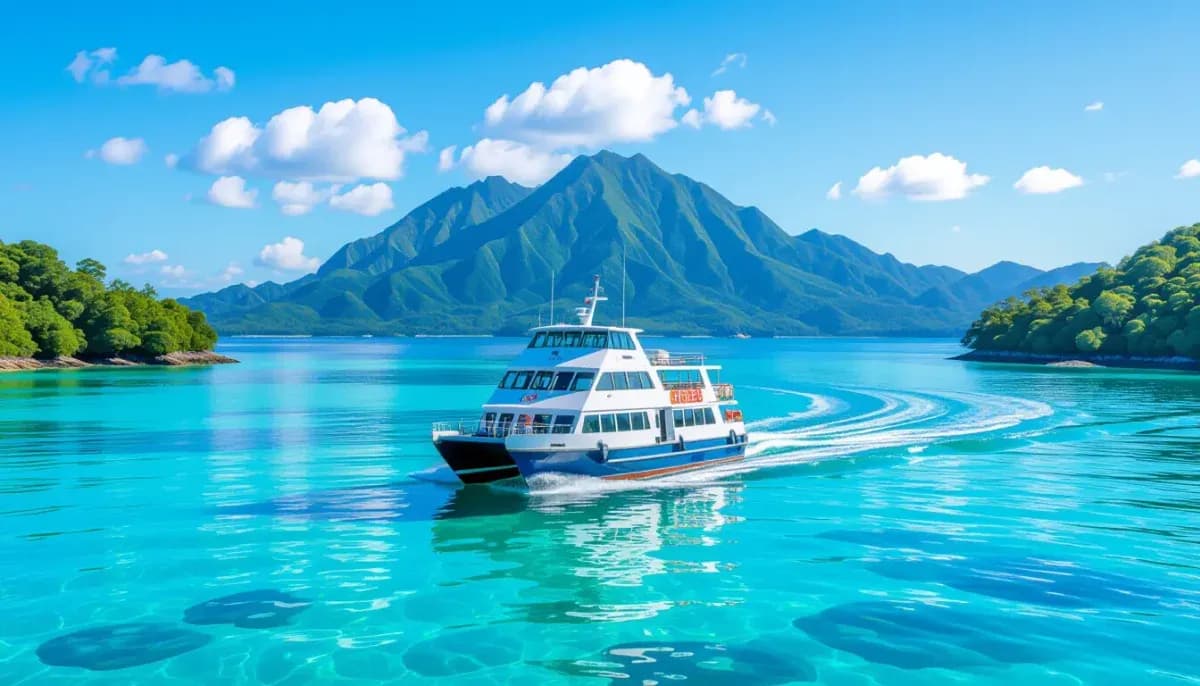
Discover Japan's 14,125 islands with our complete island hopping guide for foreigners. Best islands, ferry routes, costs, and practical tips for Okinawa, Naoshima, Yakushima and more.
Japan Island Hopping Guide: Best Islands to Visit for Foreigners
Japan is one of the world's great archipelago nations, comprising an astonishing 14,125 islands stretching from the frozen seas near Russia in the north to the subtropical waters near Taiwan in the south. This remarkable diversity means that island hopping in Japan is unlike anywhere else on earth — within a single country, you can swim in tropical coral reefs, hike ancient cedar forests, explore avant-garde art museums, and discover villages unchanged for centuries.
For foreigners living in or visiting Japan, island hopping opens up a side of the country that most tourists never see. Beyond Tokyo's neon lights and Kyoto's temples lies an island world of extraordinary beauty, culture, and adventure. Whether you have a long weekend or a few weeks, Japan's islands offer unforgettable experiences for every type of traveler.
This guide covers the best islands to visit, how to get there, practical transportation tips, budget advice, and insider knowledge to help you plan the perfect Japan island hopping adventure.
Why Japan's Islands Are Special
Japan's island geography has shaped its culture in profound ways. Isolated island communities developed unique dialects, cuisines, art forms, and traditions that differ markedly even from mainland Japan. Many islands were historically difficult to reach, preserving ancient customs that have since disappeared from urban Japan.
For foreigners, Japan's islands offer several distinct advantages. The slower pace of island life makes it easier to connect with locals. English signage, while less common than in major cities, is increasingly available at ports and tourist attractions. The natural scenery — pristine beaches, volcanic mountains, dense forests — provides a stunning contrast to Japan's urban landscape.
The sheer variety is astonishing. You can visit art islands in the Seto Inland Sea, dive world-class coral reefs in Okinawa, explore prehistoric cedar forests in Kagoshima, or follow the trail of Japan's "hidden Christians" in Nagasaki's offshore archipelago.
For practical tips on getting around Japan in general, check out our Complete Guide to Transportation in Japan.
The Best Island Regions for Island Hopping
1. Okinawa and the Ryukyu Archipelago
Okinawa is Japan's most famous island destination, and for good reason. This subtropical archipelago of 160 islands (only 47 of which are inhabited) offers some of the most spectacular beaches in Asia, with crystal-clear turquoise water, vibrant coral reefs, and a unique Ryukyuan culture distinct from mainland Japan.
Okinawa Main Island: The largest and most accessible island, home to Naha city. Rich in World War II history, including the harrowing Battle of Okinawa. Must-see sites include Shuri Castle (a UNESCO World Heritage Site), the Okinawa Churaumi Aquarium, and the American Village district. The main island serves as your base for exploring the surrounding archipelago.
Kerama Islands: Just 40km west of Naha, the Kerama Islands are accessible by a one-hour high-speed ferry. The four main inhabited islands — Zamami, Aka, Tokashiki, and Geruma — are legendary for their beach beauty. The waters around the Kerama Islands have been designated as Kerama Blue, a term for the impossibly clear, deep blue color of the sea. Excellent snorkeling and scuba diving. In winter, humpback whales pass through these waters.
Miyako Islands: Located about 300km southwest of Okinawa's main island, Miyako offers arguably the finest beaches in all of Japan. Yonaha Maehama Beach on Miyako Island regularly tops lists of Japan's best beaches. The surrounding waters are home to manta rays, sea turtles, and spectacular coral gardens.
Yaeyama Islands: The southernmost chain of the Ryukyu archipelago, centered on Ishigaki Island which has its own airport. Taketomi Island, just a 10-minute ferry from Ishigaki, preserves a traditional Ryukyuan village with star-sand beaches and water buffalo carts. Iriomote Island, larger and wilder, is covered with subtropical jungle and offers kayaking through mangrove rivers. Hateruma Island is Japan's southernmost inhabited island and one of the best places in the country for stargazing.
Best time to visit Okinawa: April to June (before the rainy season ends) or October to November. July and August are peak season — crowded and hot. Typhoon season runs from June to October.
2. The Seto Inland Sea Art Islands
The Seto Inland Sea (Setonaikai) between Honshu and Shikoku contains hundreds of islands ranging from heavily populated to completely uninhabited. A remarkable cultural phenomenon has transformed several of these islands into world-class art destinations, making this region one of the most unique island hopping routes in the world.
Naoshima Island: The crown jewel of the art island movement, Naoshima has been transformed by the Benesse Corporation and architect Tadao Ando into an outdoor gallery of extraordinary depth. Four museums — including the Chichu Art Museum built entirely underground — house permanent collections of Monet, James Turrell, and Walter De Maria. The famous Yayoi Kusama pumpkin sculptures dot the shoreline. Accessible by ferry from Okayama or Takamatsu (about 1 hour).
Teshima Island: Home to the Teshima Art Museum, an architectural masterpiece shaped like a water droplet that sits amid terraced rice paddies. Teshima's rolling hills and farming landscapes are among the most beautiful in western Japan. The island also hosts Teshima Yokoo House, a spectacular gallery by graphic designer Tadanori Yokoo.
Inujima Island: The smallest of the main art islands, Inujima centers on the Inujima Seirensho Art Museum built inside a former copper refinery. The juxtaposition of industrial ruins and contemporary art is striking. Much of the island's art incorporates themes of Japan's modernization and environmental impact.
Ogijima and Shiraishi Islands: Less visited than Naoshima, these islands offer authentic fishing village experiences alongside small art installations. Great for those who want the art island experience without crowds.
Getting around the art islands: The best way is the Setouchi Triennale ferry pass, available during the triennial art festival (next held in 2025). Outside festival periods, regular ferry services connect the islands from Uno Port (Okayama) and Takamatsu (Kagawa).
3. Yakushima and the Kagoshima Islands
The waters off Kagoshima Prefecture in southern Kyushu contain some of Japan's most dramatically beautiful islands.
Yakushima Island: A UNESCO World Heritage Site and one of Japan's most awe-inspiring natural destinations. The island is famous for its ancient cedar forests, including trees that are over 7,000 years old — the Jomon Sugi cedar is estimated to be the oldest living tree in Japan. Yakushima's misty, moss-draped forests were the inspiration for Studio Ghibli's Princess Mononoke. The island is also a nesting ground for loggerhead sea turtles (May to August). Accessible by high-speed jetfoil from Kagoshima (2 hours) or a 40-minute flight.
Tanegashima Island: A flatter, beach-focused island known for its surfing and as the home of Japan's space program. The Tanegashima Space Center — one of the world's most scenic rocket launch facilities — is open to visitors. The island also has historical significance as the place where Portuguese traders first introduced firearms to Japan in 1543.
Amami Oshima: A subtropical island between Kagoshima and Okinawa, Amami offers a fascinating middle ground between mainland Japan and Okinawan culture. UNESCO-listed for its biodiversity, the island is home to the Amami rabbit and the Amami woodcock — both found nowhere else on earth. Known for its traditional kasuri textile weaving and awamori (Ryukyuan liquor) culture.
4. Goto Islands and Nagasaki Prefecture
Nagasaki Prefecture's offshore islands contain some of Japan's most historically and culturally fascinating destinations.
Goto Islands: This chain of five main islands and numerous smaller ones off Nagasaki's coast holds a remarkable secret: the legacy of Japan's "hidden Christians" (kakure kirishitan). When Christianity was banned by the Tokugawa shogunate in the 17th century, thousands of believers fled to these remote islands and practiced their faith in secret for over 200 years. The islands are dotted with beautiful stone churches, and the hidden Christian heritage is now a UNESCO World Heritage Site. Beyond the churches, the islands offer excellent seafood, gorgeous beaches, and near-zero tourist crowds compared to mainland Japan.
Gunkanjima (Hashima Island): One of Japan's most haunting and fascinating destinations. This tiny island off Nagasaki was once one of the most densely populated places on earth, housing thousands of coal miners and their families in a forest of concrete apartment blocks. Completely abandoned in 1974, Gunkanjima — "Battleship Island," named for its silhouette — is now a UNESCO World Heritage Site accessible only on guided tours from Nagasaki.
Hirado Island: Connected to the mainland by bridge, Hirado has a rich history as one of Japan's first points of contact with Western traders. Dutch and British trading posts operated here in the early 17th century. The island features an unusual skyline where a European-style castle and a Christian church sit side by side.
5. Sado Island and the Sea of Japan Coast
Sado Island: Japan's sixth-largest island, accessible by ferry from Niigata (2.5 hours by high-speed ferry, 5 hours by car ferry). Sado has a complex history — it was historically used as a place of exile, receiving exiled nobility, warriors, and intellectuals who left remarkable cultural legacies. The island is famous for the Kodo taiko drumming group, whose annual Earth Celebration festival draws visitors from around the world. Sado also has a well-preserved gold mining history and offers tub boat experiences (traditional wooden tub boats still used by local fisherwomen).
Oki Islands: An archipelago in the Sea of Japan between Honshu and South Korea, the Oki Islands are part of the UNESCO San'in Kaigan Geopark. Stunningly beautiful and rarely visited by foreign tourists, these islands offer dramatic coastal scenery, Shinto shrine culture, and traditional bullfighting events unique to the islands.
How to Get Around: Transportation for Island Hoppers
Ferries: The Heart of Island Hopping
Ferries are the primary transportation for island hopping in Japan, and the network is extensive. Japan operates high-speed jetfoil ferries, conventional car ferries, and everything in between.
Japan Ferry Pass: For serious island hoppers, the Japan Ferry Pass 21 covers 6 journeys on 14 routes over 21 days for ¥21,000 — excellent value for covering long distances. Available to foreign visitors.
Booking tips:
- Book ferries in advance during Golden Week (late April to early May), Obon (mid-August), and summer weekends
- Bring cash for smaller ferry operations and onboard purchases
- Check timetables carefully — some routes operate only once or twice daily
- Typhoon season (June to October) can cause cancellations, especially in Okinawa and Kyushu
Sample ferry costs:
- Osaka to Beppu (Kyushu): from ¥10,400
- Tokyo to Kitakyushu: from ¥15,750
- Naha to Zamami (Kerama): around ¥3,140 (round trip)
- Okayama (Uno Port) to Naoshima: ¥580
For comprehensive guidance on using Japan's public transportation systems, see our Complete Transportation Guide.
Domestic Flights
For longer distances — particularly reaching Okinawa's more remote islands — domestic flights are often faster and sometimes cheaper than ferries. Japan Airlines (JAL) and ANA offer extensive domestic networks, and budget carriers like Peach Aviation and Jetstar Japan serve Okinawa routes.
Pro tip: The ANA Island Hopping plan and JAL's similar offers provide multi-island passes at reduced rates for international visitors arriving in Japan on their airlines.
Renting Cars on Islands
Public transportation is minimal on most Japanese islands, making car rental the practical choice for thorough exploration. Major islands like Ishigaki and Amami Oshima have multiple rental car agencies, often at the airport or ferry terminal.
Note: An International Driving Permit (IDP) is required to drive in Japan if your license was issued in most countries. Arrange this before traveling.
Practical Tips for Island Hopping in Japan
Budget Planning
Island hopping in Japan can range from budget backpacker to luxury resort depending on your choices. Accommodations range from guesthouses (minshuku) for ¥3,000-6,000 per night to luxury beach resorts for ¥50,000+.
Money-saving tips:
- Stay in minshuku (family-run guesthouses) for authentic local experiences at lower prices
- Book car ferries over high-speed ferries when time allows — significantly cheaper
- Visit during shoulder season (spring and fall) for lower prices and fewer crowds
- The Japan Ferry Pass 21 can save significant money for multi-island journeys
For more on managing finances in Japan, see our Complete Guide to Banking and Finance.
What to Pack
Island hopping in Japan requires thoughtful packing, especially for tropical southern islands:
- Reef-safe sunscreen (required in many Okinawan marine parks)
- Snorkeling gear (available to rent on most islands, but your own is better)
- Rash guard for sun protection
- Light rain jacket (even in summer, brief tropical downpours occur)
- Insect repellent (especially for jungle environments like Iriomote and Yakushima)
- Motion sickness medication if prone to seasickness on ferries
Language and Communication
English signage and English-speaking staff are less common on remote islands than in major cities. Learn key Japanese phrases for ferry terminals, accommodation check-in, and emergency situations.
For support with Japanese language learning, our Complete Guide to Learning Japanese can help you prepare for communication outside the major cities.
Health and Safety
Island environments present specific health considerations:
- Sun protection is critical, especially in Okinawa where UV levels are significantly higher than in Tokyo
- Habu snakes inhabit several southern islands including Amami Oshima and some Okinawan islands — stay on marked paths in jungle areas
- Jellyfish season runs approximately July to October in Okinawa waters — check conditions before swimming
- Box jellyfish (habu jellyfish) in particular can cause serious stings — most beaches have protective nets
For comprehensive health and safety information for foreigners in Japan, see our Complete Guide to Healthcare in Japan.
Island Comparison: Choose Your Perfect Island Destination
| Island/Region | Best For | Access From | Budget Level | Best Season |
|---|---|---|---|---|
| Okinawa Main Island | History, beaches, diving | Flights from major cities | ¥¥ | Apr-Jun, Oct-Nov |
| Kerama Islands | Snorkeling, clear water | Ferry from Naha (1 hr) | ¥¥ | Mar-Jun, Oct-Nov |
| Miyako Islands | Best beaches in Japan | Flight from Naha | ¥¥¥ | Apr-Jun |
| Ishigaki/Yaeyama | Diving, tropical nature | Flight from Naha | ¥¥¥ | Mar-May, Oct-Nov |
| Naoshima | Contemporary art | Ferry from Okayama/Takamatsu | ¥¥¥ | Spring, Fall |
| Yakushima | Ancient forests, hiking | Ferry/flight from Kagoshima | ¥¥ | May-Nov |
| Goto Islands | Hidden Christian heritage | Ferry/flight from Nagasaki | ¥¥ | Spring, Fall |
| Gunkanjima | Industrial history, photography | Tour boat from Nagasaki | ¥¥ | Year-round |
| Sado Island | Culture, taiko drums | Ferry from Niigata | ¥¥ | Jul-Sep (festival) |
| Tanegashima | Space center, surfing | Ferry/flight from Kagoshima | ¥¥ | Year-round |
Sample Island Hopping Itineraries
Long Weekend (3-4 Days): Okinawa Island Hop
Day 1: Arrive Naha, explore Shuri Castle and Kokusai Street Day 2: Ferry to Zamami Island (Kerama); snorkeling, beach Day 3: Return to Naha; afternoon flight to Miyako or Ishigaki Day 4: Beach day, return flight
Cost estimate: ¥50,000-80,000 per person including flights, accommodation, and activities
One Week: Seto Inland Sea Art Islands + Southern Islands
Days 1-2: Naoshima, Teshima, Inujima art islands Days 3-4: Hiroshima/Miyajima (technically an island in the Seto Inland Sea) Days 5-7: Fly to Okinawa or Yakushima for nature immersion
Two Weeks: The Grand Island Tour
Week 1: Okinawa Main Island → Kerama Islands → Yaeyama Islands (Ishigaki, Taketomi, Iriomote) Week 2: Fly to Kagoshima → Yakushima → Return via Nagasaki → Goto Islands day trip
External Resources for Island Hopping Planning
For comprehensive travel planning support, these resources are invaluable:
- Japan National Tourism Organization - Island Hopping Guide — Official guide with routes and transportation info
- Japan Experience Ferry Guide — Detailed ferry route and cost information
- Living in Nihon - Domestic Travel Japan Guide — Practical guide for foreigners navigating Japan's domestic travel options
- For Work in Japan - Living in Japan Guide — Comprehensive resource for foreigners building a life in Japan
- Ittenshoku IT Career Change Guide — For foreigners in Japan exploring career opportunities while enjoying island life
Conclusion: Start Your Japan Island Adventure
Japan's islands are one of the country's best-kept secrets, offering experiences as diverse as the country itself. From the tropical paradise of Okinawa to the eerie industrial ruins of Gunkanjima, from the ancient cedar forests of Yakushima to the world-class contemporary art of Naoshima, Japan's islands deliver extraordinary experiences for every kind of traveler.
For foreigners living in Japan, island hopping is one of the most rewarding ways to explore beyond the well-trodden tourist paths. The combination of natural beauty, unique culture, excellent ferry infrastructure, and (relatively) affordable travel makes Japan's islands accessible for day trips and extended adventures alike.
Start with a weekend trip to the Kerama Islands from Okinawa or a day on Naoshima from Okayama. Once you experience the magic of Japan's island world, you'll find yourself planning ever more ambitious island hopping itineraries.
For more on daily life and travel as a foreigner in Japan, explore our Complete Guide to Daily Life in Japan and our Guide to Japanese Food and Cooking to discover what culinary delights await on each island.

Originally from Vietnam, living in Japan for 16+ years. Graduated from Nagoya University, with 11 years of professional experience at Japanese and international companies. Sharing information about living in Japan for foreigners.
View Profile →Related Articles
Best Seasonal Travel Destinations in Japan by Month
A month-by-month guide to the best travel destinations in Japan for foreigners: from snow monkeys in Nagano to cherry blossoms in Kyoto, festivals in Aomori, and autumn colors in Kanazawa.
Read more →
Camping in Japan Complete Guide for Foreign Residents
Everything foreign residents need to know about camping in Japan: campsite types, booking tips, rules, top destinations, gear, and etiquette. Start your outdoor adventure in Japan.
Read more →
Budget Travel Tips for Exploring Japan as a Resident
Discover practical budget travel tips for foreign residents in Japan. Learn how to use the Seishun 18 Kippu, find cheap accommodation, eat well on a budget, and save tens of thousands of yen on domestic travel.
Read more →
Hokkaido Travel Guide for Foreign Residents of Japan
A complete Hokkaido travel guide for foreign residents of Japan. Covers transportation, seasonal highlights, top destinations, food, and practical tips for expats visiting Japan's northernmost island.
Read more →
Okinawa Travel Guide for Foreign Residents of Japan
A complete Okinawa travel guide for foreigners living in Japan. Discover beaches, islands, food, culture, and practical tips for visiting Okinawa from the mainland.
Read more →
Best Day Trips from Osaka for Residents
Complete guide to the best day trips from Osaka for foreign residents. Discover Kyoto, Nara, Kobe, Himeji, and hidden gems with transport tips, costs, and seasonal advice.
Read more →