
Japanese School Lunch Kyushoku System Explained

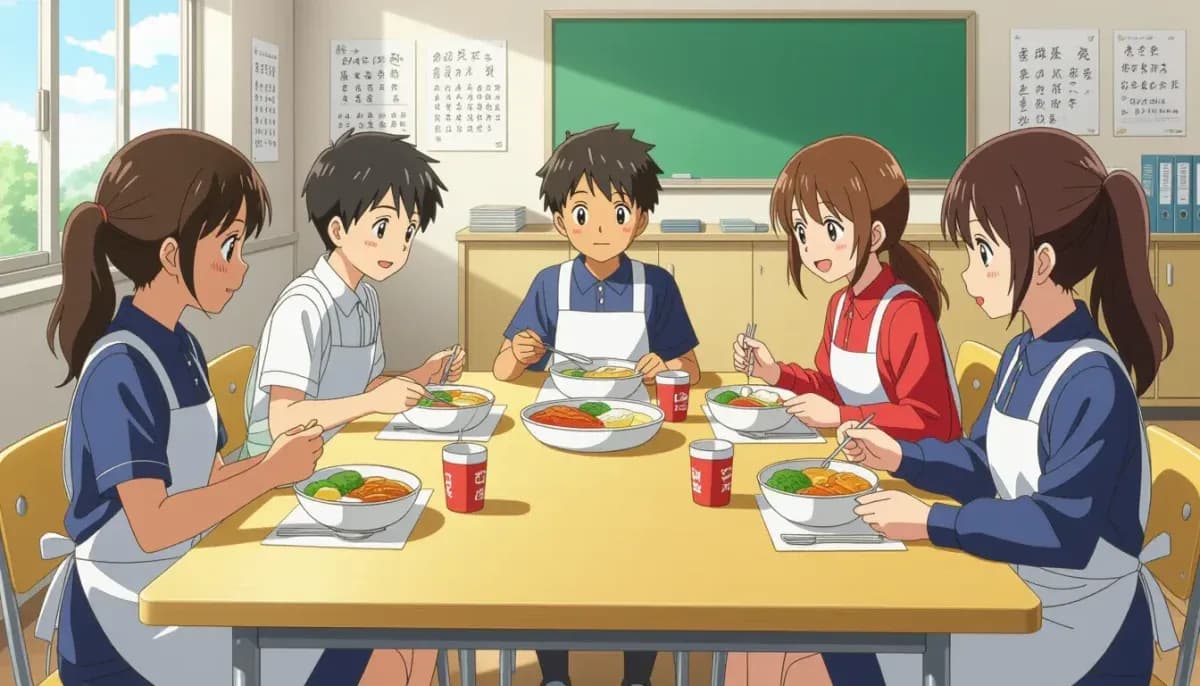
Everything foreign families need to know about Japan's kyushoku school lunch system: how it works, daily routine, costs, dietary restrictions, and practical tips for expat parents.
Japanese School Lunch (Kyushoku) System Explained: A Complete Guide for Foreigners
If you have children enrolled or soon to be enrolled in a Japanese public school, one of the first things that will surprise you is the school lunch system — called kyushoku (給食). Unlike the cafeteria lines or packed bento boxes you might expect, Japan's kyushoku is a structured, nutritionally balanced, and deeply educational ritual that takes place in the classroom every single day.
This guide explains everything you need to know about the kyushoku system: its history, how it works, what your child will eat, how much it costs, and what to do about dietary restrictions.
What Is Kyushoku? An Overview
Kyushoku (給食), literally meaning "provided food," is Japan's nationally coordinated school lunch program. It currently feeds over 10 million students per day, reaching approximately 94% of all public elementary and junior high schools in Japan.
What sets kyushoku apart from typical school lunch programs around the world is that it is not just a meal — it is considered part of the official curriculum. Known as shokuiku (食育), or "food education," kyushoku is designed to teach children about nutrition, hygiene, teamwork, responsibility, and gratitude for food.
The program is so successful that Japan consistently ranks among the lowest in childhood obesity rates among developed countries. If your child is entering a Japanese public school, understanding this system will help them — and you — adjust smoothly.
For a broader overview of raising children in Japan, see our guide: The Complete Guide to Raising Children in Japan.
A Brief History of Japanese School Lunches
The kyushoku system has deep roots going back over 130 years:
- 1889: The first school lunch program in Japan began at a private school run by a Buddhist temple in Tsuruoka City (present-day Yamagata Prefecture). Monks provided free lunches made from donated ingredients to children from poor families.
- Post-WWII (1946–1950s): Japan faced severe food shortages and widespread childhood malnutrition. With support from the United Nations and the United States, school meals were expanded nationwide to combat hunger.
- 1954: The national School Lunch Program Act (学校給食法) was passed, formalizing kyushoku as a legal requirement for public elementary schools.
- 1976: Junior high schools were added to the national program.
- 2005: The Basic Act on Shokuiku was enacted, embedding food and nutrition education more formally into the school curriculum.
- 2024–2026: A major policy shift is underway — Tokyo's 23 wards made school lunches free for all public school students in 2024, and nationwide free school lunches are planned to begin in 2026. As of now, roughly 30% of municipalities already provide free meals.
How the Daily Kyushoku Routine Works
One of the biggest surprises for foreign families is that Japanese students eat lunch in their classrooms, not in a cafeteria. Here is what a typical kyushoku day looks like:
12:15–12:30 PM — Preparation (haizen toban, 配膳当番) A rotating group of students (called the toban or lunch duty team) puts on white aprons, caps, and sometimes face masks. They collect insulated containers of food from a central kitchen cart, bring them to the classroom, and serve equal portions to every classmate. This rotation is a weekly responsibility that every student takes turns fulfilling throughout the school year.
12:30 PM — Itadakimasu Once everyone is served and seated, the class says "Itadakimasu" (いただきます) together — a traditional expression of gratitude for the food and those who prepared it. Then everyone eats.
~1:00 PM — Gochisousama & Cleanup After the meal, students say "Gochisousama deshita" (ごちそうさまでした) to signal the end of the meal. The lunch duty team collects trays and returns containers to the cart. All students then brush their teeth, a daily hygiene habit built into the school schedule.
The entire lunch period, from serving to cleanup, typically lasts about 45 minutes.
What Your Child Will Actually Eat
Japanese school lunch menus are created by certified nutritionists and change monthly. No dish is repeated within a single month. Menus are released in advance (often posted on school websites or sent home as a paper copy), so you can review what your child will be eating.
A typical kyushoku meal includes:
| Component | Examples |
|---|---|
| Staple carbohydrate | Rice (most common), bread, or noodles |
| Main protein dish | Fish (grilled, simmered), chicken, pork, tofu |
| Side dish / vegetables | Salad, stir-fried vegetables, pickles |
| Soup | Miso soup, vegetable soup, corn soup |
| Milk | 200ml carton of cow's milk (served every day) |
| Dessert (occasional) | Fruit, yogurt, small cake or pudding |
A real example menu might include: "Rice with furikake seasoning, cabbage and whitebait salad, tofu miso soup, mandarin orange, and milk."
About 56% of ingredients by value are locally sourced, which means seasonal and regional produce features heavily. This also means menus vary by prefecture — a school in Hokkaido may serve dairy-heavy dishes, while coastal schools might feature more seafood.
Each meal is carefully calibrated to provide approximately one-third of a child's daily nutritional requirements, with protein comprising 13–20% of lunch calories and fat 20–30%.
For more on Japanese food culture, visit: The Complete Guide to Japanese Food and Cooking.
How Much Does Kyushoku Cost?
One of the best aspects of kyushoku is that the cost is heavily subsidized by local governments. Parents pay only for food ingredients; staff salaries, kitchen equipment, and utilities are covered by the government.
| School Level | Average Monthly Cost |
|---|---|
| Public Elementary School | ~¥4,500–¥4,900/month |
| Public Junior High School | ~¥5,000–¥5,500/month |
| Per meal (approximate) | ~¥250–¥300/meal |
Payment is typically made via automatic bank transfer at the start of each month. You will set this up during the school enrollment process.
Good news for 2026 and beyond: Japan is moving toward making school lunches universally free. Tokyo's 23 wards already waived fees for all public school students in 2024. Roughly 547 municipalities (about 30%) now provide free lunches — a seven-fold increase since 2017. Confirm with your local school or ward office whether your area offers free lunches.
For more on managing costs and finances in Japan, see: The Complete Guide to Banking and Finance in Japan.
Dietary Restrictions and Allergies: What Foreigners Need to Know
This is one of the most important sections for foreign families. The short answer is: the system can accommodate some dietary needs, but it requires proactive communication and documentation.
Food Allergies
Japan takes food allergies seriously. Common allergens (eggs, dairy, wheat, peanuts, shellfish, etc.) are labeled on menu sheets. If your child has a documented allergy, the school can:
- Provide an allergen-free alternative for specific dishes
- Alert you in advance if a dangerous ingredient appears on the menu
- Prepare a separate meal in some cases
Action required: Submit a medical certificate (医師の診断書, ishi no shindansho) from your doctor stating your child's allergy immediately upon enrollment. The school's nutritionist and homeroom teacher will then coordinate accommodations.
Religious and Ethical Dietary Needs
This is more complex. Kyushoku menus are not designed with halal, kosher, vegan, or vegetarian diets in mind. Pork and beef regularly appear on the menu, as does milk.
- Halal/Kosher: Schools do not provide certified halal or kosher meals. You will need to discuss options with the school principal and nutritionist. Some schools allow you to send a packed bento as an exception.
- Vegetarian/Vegan: No standard accommodation exists. Again, discussion with the school is required.
- No pork (for health or religious reasons): Schools may be able to substitute the protein dish with advance notice.
Key advice: Contact the school before enrollment to discuss your child's needs. Be prepared for the possibility that a daily bento may be the only workable solution for strict dietary requirements. Japanese schools genuinely want to help, but the system-wide standardization makes individualized menus challenging.
For more guidance on navigating daily life in Japan as a foreigner, see: The Complete Guide to Daily Life in Japan for Foreigners.
The Educational Value of Kyushoku
Beyond nutrition, kyushoku is a powerful socialization tool. Through the daily routine of serving, eating together, and cleaning up, students develop:
- Responsibility: The lunch duty rotation teaches every student to serve others
- Teamwork: The class works together efficiently under a time limit
- Hygiene awareness: Daily handwashing and tooth-brushing become ingrained habits
- Food literacy: Monthly menus often include information cards about ingredients and their nutritional value
- Gratitude: The ritual phrases Itadakimasu and Gochisousama instill respect for food and those who produce it
- Equality: Every student eats the same meal — there are no "premium" options or social hierarchies at lunchtime
This philosophy is why kyushoku is frequently cited by international education researchers as a model worth emulating. Japan's school nutrition program is regularly recognized as a global leader in childhood food education.
Practical Tips for Foreign Families
Here's what you need to prepare before your child starts school:
Required lunch kit items (typically packed in a dedicated bag):
- Chopsticks in a case (or a spoon/fork set, depending on the school)
- A cup or tumbler for drinking
- A cloth placemat (ランチョンマット, ranchu-matto)
- A toothbrush and small cup for post-lunch brushing
- A white apron and cap for lunch duty weeks
These items need to be brought daily and washed regularly. Schools often specify the required size for the placemat (commonly A4 or B4 size).
Before the first day:
- Review the monthly menu with your child and explain any unfamiliar dishes
- Introduce Japanese foods at home so your child is not encountering new flavors for the first time at school
- Inform the school immediately of any food allergies or dietary restrictions
- Attend school orientation events where kyushoku is often explained in detail
Ongoing:
- Ask your child daily about what they ate — it's a great conversation starter and helps you spot any issues
- Look for "kyushoku no hi" (給食の日) special event lunches featuring seasonal or regional ingredients — these are especially fun for kids
Further Reading and Resources
For comprehensive information on raising children in Japan, including school enrollment and support systems for foreign families, these resources are highly recommended:
- Living in Nihon: Raising Children & Education in Japan for Foreigners — A detailed guide covering school enrollment, Japanese language support, and more.
- For Work in Japan: Family Life in Japan Guide — Practical advice for foreign workers with families navigating life in Japan.
- Japan's School Lunch Program: Food, Education & Culture — An in-depth look at how kyushoku functions as an educational tool.
- Japan Today: Helping Your Kids Adjust to Japan's School Lunches — Real experiences from expat families navigating the kyushoku system.
- GCNF: How Japan Leverages School Meals as a Living Textbook — Academic perspective on Japan's shokuiku philosophy.
- Ittenshoku: IT Career Resources in Japan — For foreign workers building careers in Japan.
Conclusion
Japan's kyushoku system is one of the most thoughtfully designed school meal programs in the world. For your child, it will be an immersive introduction to Japanese food culture, social norms, and communal responsibility. For you as a parent, the key steps are simple: communicate early about dietary needs, prepare the required lunch kit, and embrace the system's philosophy.
Kyushoku is not just lunch — it is one of the small but significant ways Japanese schools shape children into considerate, health-conscious members of society. Your child will almost certainly grow to love it.
For more guides on raising children and navigating daily life in Japan as a foreigner, explore our Complete Guide to Raising Children in Japan and our Daily Life in Japan Guide.

Originally from Vietnam, living in Japan for 16+ years. Graduated from Nagoya University, with 11 years of professional experience at Japanese and international companies. Sharing information about living in Japan for foreigners.
View Profile →Related Articles

Summer Activities and Programs for Kids in Japan
Complete guide to summer activities and programs for kids in Japan. Discover English camps, traditional festivals, water sports, theme parks, and indoor activities for expat families.
Read more →
Special Needs Education in Japan for Foreign Families
A complete guide to special needs education in Japan for foreign families. Learn about school types, support levels, enrollment process, international school options, and key resources for expat parents.
Read more →
Is Homeschooling Legal in Japan Guide for Foreigners
Is homeschooling legal in Japan for foreigners? Learn about the legal gray area, steps to homeschool your child, curriculum options, and support organizations for expat families in Japan.
Read more →
Japanese Education System Explained for Foreign Parents
A complete guide to Japan's education system for foreign parents. Learn about school types, enrollment steps, costs, language support, and tips for raising bilingual children in Japan.
Read more →
Dealing with Bullying Ijime in Japanese Schools
Learn how to recognize, report, and respond to ijime (bullying) in Japanese schools. A practical guide for foreign and expat parents in Japan, with key statistics and action steps.
Read more →
After School Activities and Juku in Japan for Kids
Complete guide to after-school activities (naraigoto) and juku cram schools in Japan for expat families. Learn about costs, enrollment, popular activities, and tips for foreign children.
Read more →