
Japan Traffic Rules and Road Signs Guide for Foreigners

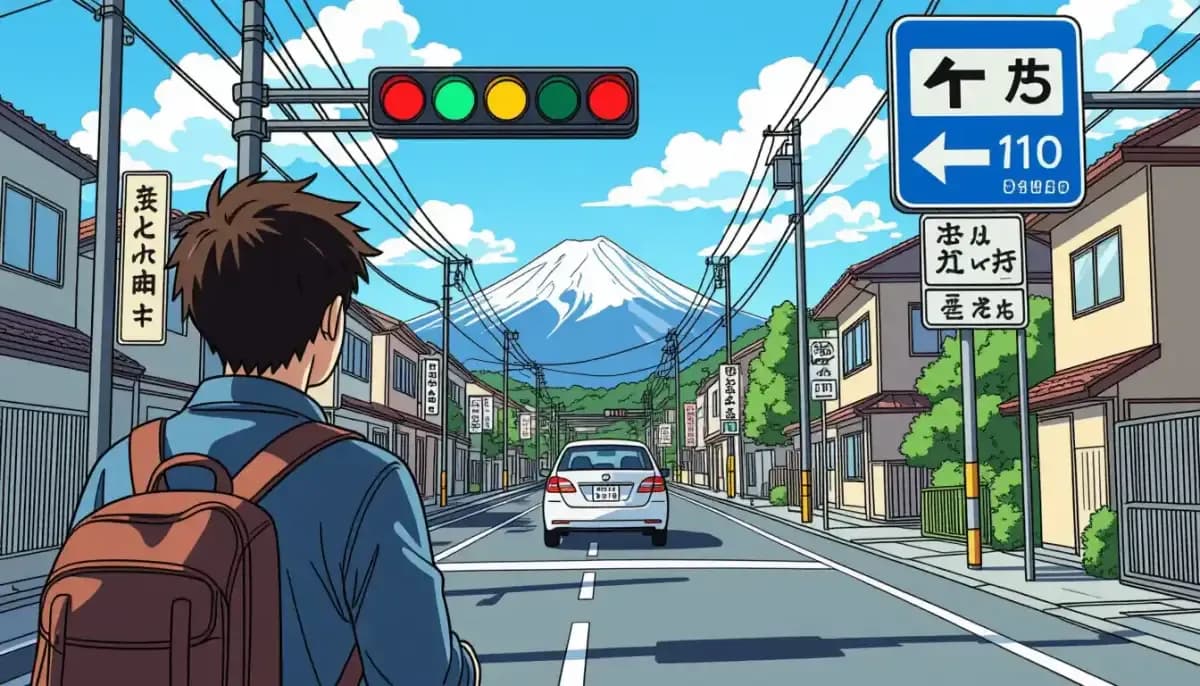
Complete guide to Japan traffic rules and road signs for foreigners. Learn speed limits, unique Japanese road signs, IDP requirements, and essential driving laws to stay safe and legal.
Japan Traffic Rules and Road Signs Guide for Foreigners
Driving in Japan can be both a rewarding and challenging experience for foreigners. Whether you're planning a road trip through scenic rural areas or need a car for your daily commute, understanding Japan's traffic rules and road signs is essential for staying safe and legal on Japanese roads. This comprehensive guide covers everything you need to know — from obtaining the right documentation to decoding Japan's unique road sign system.
!Foreigner driving in Japan looking at Japanese road signs

Getting Your Documentation Right Before You Drive
Before you even think about getting behind the wheel in Japan, you need to ensure you have the correct documentation. This is one area where many foreigners make costly mistakes.
International Driving Permit (IDP)
Most foreigners can drive in Japan using an International Driving Permit (IDP) issued under the 1949 Geneva Convention. This is the key distinction — Japan accepts IDPs from the 1949 Convention, but NOT from the 1968 Vienna Convention. If your country issues IDPs under the Vienna Convention (like France, Germany, Switzerland), you may need to convert your license to a Japanese one instead.
Your IDP must be:
- Obtained in your home country BEFORE arriving in Japan (IDPs are NOT issued in Japan)
- Accompanied by your original foreign driver's license at all times
- Valid — Japan allows foreigners to drive with an IDP for up to 1 year from the date of entry
Countries That Cannot Use IDP in Japan
Citizens of France, Germany, Switzerland, Belgium, Monaco, Taiwan, Estonia, and Slovenia cannot use an IDP. Instead, they must convert their foreign license to a Japanese license at the local licensing center (免許センター).
For everything related to your move and documentation needs, check out our Complete Guide to Moving to Japan.
Left-Side Driving: Adjusting Your Mindset
Japan is one of about 50 countries that drives on the left side of the road, with the steering wheel on the right side of the car. If you're from a right-side driving country like the United States, Canada, or most of continental Europe, this will require a significant mental adjustment.
Key Tips for Left-Side Driving:
- Roundabouts: Traffic flows clockwise (opposite from right-side countries)
- Overtaking: Always overtake on the right side
- Lane position: Stay in the left lane unless overtaking
- Turning: Left turns are the "safe" turns (like right turns in right-side countries)
- Wipers vs. Signals: Many expats accidentally activate wipers when trying to signal — the controls may be on opposite sides from what you're used to
Give yourself extra time and mental energy in the first few days of driving. Start with quieter roads before tackling city traffic or expressways.
Japan's Speed Limits: What You Need to Know
Speed limits in Japan are strictly enforced, and fines can be substantial. When no speed limit sign is posted, default limits apply:
| Road Type | Default Speed Limit |
|---|---|
| Residential streets | 30 km/h |
| Ordinary roads | 60 km/h |
| National highways (non-expressway) | 60 km/h |
| Expressways (高速道路) | 100 km/h |
| Some designated expressways | 120 km/h |
Important Notes on Speed:
- Speed cameras are widespread throughout Japan
- Traffic police use unmarked patrol cars on expressways
- Speeding by 30 km/h or more over the limit can result in license suspension
- In residential and school zones (ゾーン30), the limit is 30 km/h
The Japan Automobile Federation (JAF) provides comprehensive information at english.jaf.or.jp.
Decoding Japan's Road Signs
Japanese road signs follow a logical system, though they look quite different from what foreigners may be used to. Understanding the color and shape coding makes navigation much easier.
Sign Categories and Their Visual Codes
Regulatory Signs (規制標識)
- Round shape with red border on white background
- Blue pictograms inside
- Indicate prohibitions and restrictions (no entry, no U-turn, speed limits)
Instructional Signs (指示標識)
- Round shape with blue background
- White pictograms
- Tell you what you MUST do (proceed, keep left, etc.)
Warning Signs (警戒標識)
- Diamond or inverted triangle shape
- Yellow/orange background with black pictogram
- Warn of hazards ahead (sharp curves, intersections, railroad crossings)
Guide Signs (案内標識)
- Rectangular shape
- Blue background for expressways, green or blue for national routes
- Provide directional information
The Most Important Signs for Foreigners
止まれ (Tomare) — Stop Sign Japan's stop sign is one of the biggest surprises for foreign drivers. Instead of the octagonal red sign familiar in North America and Europe, Japan uses a red downward-pointing triangle with "止まれ" written inside. This looks like a yield sign to many foreigners, but it requires a complete stop.
進入禁止 — No Entry A red circle with a horizontal white bar. Do not enter — this is a one-way street going the opposite direction.
一方通行 — One Way Blue rectangular sign with a white arrow indicating the direction of travel.
駐車禁止 — No Parking Blue circular sign with a red diagonal line.
速度制限 — Speed Limit Round sign with red border, white background, and the speed in black numbers.
!Japanese road signs illustration

For comprehensive transportation guides including public transit options, see our Complete Guide to Transportation in Japan.
Key Traffic Rules Every Foreign Driver Must Know
Drunk Driving: Zero Tolerance
Japan has some of the strictest drunk driving laws in the world. The legal blood alcohol limit is technically 0.03%, but the practical standard is zero tolerance — the penalty for driving under any influence is severe:
- BAC of 0.03%-0.08%: Fine up to ¥300,000 + possible suspension
- BAC above 0.08%: Criminal charges, license revocation, possible imprisonment
- Causing death while drunk: Up to 20 years imprisonment
Critically, passengers can also be penalized if they allow a drunk driver to drive, or if they provide alcohol to someone who then drives. Even restaurants and bars can face penalties for serving alcohol to someone who drives home.
Seatbelts and Child Seats
- All occupants must wear seatbelts — no exceptions
- Children under 6 years old must be secured in an approved child safety seat
- Failure to use a seatbelt results in demerit points on the driver's license
- Child seat violations result in demerit points
Railroad Crossings (踏切 — Fumikiri)
This rule surprises many foreigners: all vehicles must come to a complete stop at every railroad crossing, regardless of whether the gates are down. Even if a crossing has no gate and appears clear, you must:
- Stop before the line
- Look left and right
- Listen for approaching trains
- Proceed only when completely clear
This applies even at small, rural crossings that may look abandoned.
Mobile Phone Use
Using a handheld mobile phone while driving is strictly prohibited and carries heavy fines. Hands-free devices (Bluetooth) are generally permitted. Even being stopped at a red light while using your phone can result in a fine.
Traffic Light Rules
- Green light: Proceed in any direction
- Yellow light: Stop if you can safely do so (not "speed up" as sometimes practiced elsewhere)
- Red light: Full stop — you cannot turn on red unless a green arrow signal is displayed
- Green arrow: You may proceed only in the direction of the arrow, even if the main light is red
Expressway Driving in Japan
Japan's expressway (高速道路) network is extensive and well-maintained but requires some specific knowledge:
ETCs (Electronic Toll Collection) Most expressways charge tolls. Rental cars typically come with an ETC transponder, which allows you to pass through toll gates without stopping. If driving your own car without ETC, use the designated cash lanes.
Lane Rules
- The left lane is the travel lane — stay here normally
- Right lanes are for overtaking only
- Do not drive continuously in the right (fast) lane
Emergency Stops If your vehicle breaks down, move to the left shoulder, turn on hazard lights, place a warning triangle behind the car, and call JAF (Japan Automobile Federation) roadside assistance at 0570-00-8139.
For foreigners dealing with insurance and financial aspects of car ownership, our Complete Guide to Banking and Finance in Japan has relevant information.
Parking Rules and Regulations
Parking rules in Japan are strictly enforced, with parking attendants (parking meters staff) and automated camera systems catching violations.
| Situation | Rule |
|---|---|
| Yellow line on road edge | No stopping |
| Double yellow line | No stopping even briefly |
| Blue P sign | Public parking available |
| 駐車禁止 sign | Parking prohibited |
| Residential areas without signs | Generally OK to park briefly, but verify |
| Coin parking (コインパーキング) | Pay at meter; overstaying results in lock-down plate |
Coin Parking Tips: Coin parking lots (コインパーキング) are abundant in cities. A metal plate rises under your car when you park. To exit, pay the displayed amount at the machine, which will lower the plate. Do NOT try to drive out before paying — you'll damage your car.
Road Safety Statistics: Why Japan's Rules Are Taken Seriously
Japan has achieved remarkable road safety improvements over the decades, and these numbers help explain why the rules are strictly enforced:
- In 2024, Japan recorded 2,663 traffic fatalities
- Between 2012 and 2022, road deaths decreased by 38.9%
- Japan's mortality rate was 2.6 deaths per 100,000 population (2022), ranking 4th best among OECD countries
- Pedestrians account for 36% of all road deaths
- Senior citizens (age 65+) account for over 50% of all traffic fatalities
These improvements came from strict law enforcement, improved road design, and better driver education. The system works — but only when drivers follow the rules consistently.
Useful Resources for Driving in Japan
Here are the most reliable resources for foreign drivers in Japan:
- JAF (Japan Automobile Federation): english.jaf.or.jp — Official English-language resource for traffic rules
- Refer Japan Driving Guide: referjapan.com/driving-in-japan-guide/ — Practical guide for tourists and expats
- Road Signs in Japan (Wikipedia): en.wikipedia.org/wiki/Road_signs_in_Japan — Complete visual reference for Japanese road signs
- Living in Nihon — Transportation Guide: livinginnihon.com — Comprehensive Japan transportation overview for foreigners
- For Work in Japan: forworkinjapan.com — Resources for working expats including commuting and transportation
- Ittenshoku: ittenshoku.com — Career and lifestyle resources for foreigners in Japan
Frequently Asked Questions About Driving in Japan
Q: Can I use my home country license to drive in Japan? A: Not directly. You need an International Driving Permit (IDP) from the 1949 Geneva Convention, which must be obtained before arriving in Japan. Some nationalities must convert their license instead.
Q: How long can I drive with an IDP in Japan? A: For up to 1 year from your date of entry into Japan. After that, you must obtain a Japanese license.
Q: Are speed cameras common in Japan? A: Yes, speed cameras are widespread on both regular roads and expressways. Japan also uses unmarked patrol cars.
Q: What should I do if I have a car accident in Japan? A: Stop immediately, call police (110) and ambulance (119) if needed, document everything with photos, and contact your insurance company and rental agency if applicable.
Q: Is it difficult to navigate without reading Japanese? A: Many major roads and expressways have English signage. GPS devices in rental cars often have English language settings. Apps like Google Maps work well in Japan.
Understanding Japan's traffic rules is just one part of thriving as a foreigner in Japan. For more comprehensive guides on life in Japan, explore our Complete Guide to Daily Life in Japan and stay safe on the roads!

Originally from Vietnam, living in Japan for 16+ years. Graduated from Nagoya University, with 11 years of professional experience at Japanese and international companies. Sharing information about living in Japan for foreigners.
View Profile →Related Articles
Best Cars for Foreigners Living in Japan
Discover the best cars for foreigners living in Japan, from kei cars like the Honda N-Box to electric options. Complete guide to buying, costs, and requirements for expats.
Read more →
Car Maintenance and Repair in Japan Guide
A complete guide to car maintenance and repair in Japan for foreigners. Learn about shaken inspections, costs, finding mechanics, seasonal care, and JAF membership.
Read more →
Getting a Motorcycle License in Japan as a Foreigner
Step-by-step guide for foreigners getting a motorcycle license in Japan. Learn about license types, driving camps, license conversion, costs, and requirements for expats.
Read more →
Japan Highway and Toll System Complete Guide
Everything foreigners need to know about Japan's highway toll system: ETC cards, toll rates, discounts, expressway passes, speed limits, and practical driving tips for expats and visitors.
Read more →
How to Sell a Car in Japan Complete Guide
Step-by-step guide to selling your car in Japan as a foreigner. Covers required documents, 4 selling methods, shaken tips, tax refunds, and how to get the best price.
Read more →
Renting a Car in Japan as a Foreign Driver
Everything foreigners need to know about renting a car in Japan: IDP requirements, which countries can drive, major rental companies, costs, road rules, and tips for first-time drivers.
Read more →