
Hiking in Japan Best Trails and Mountains Guide

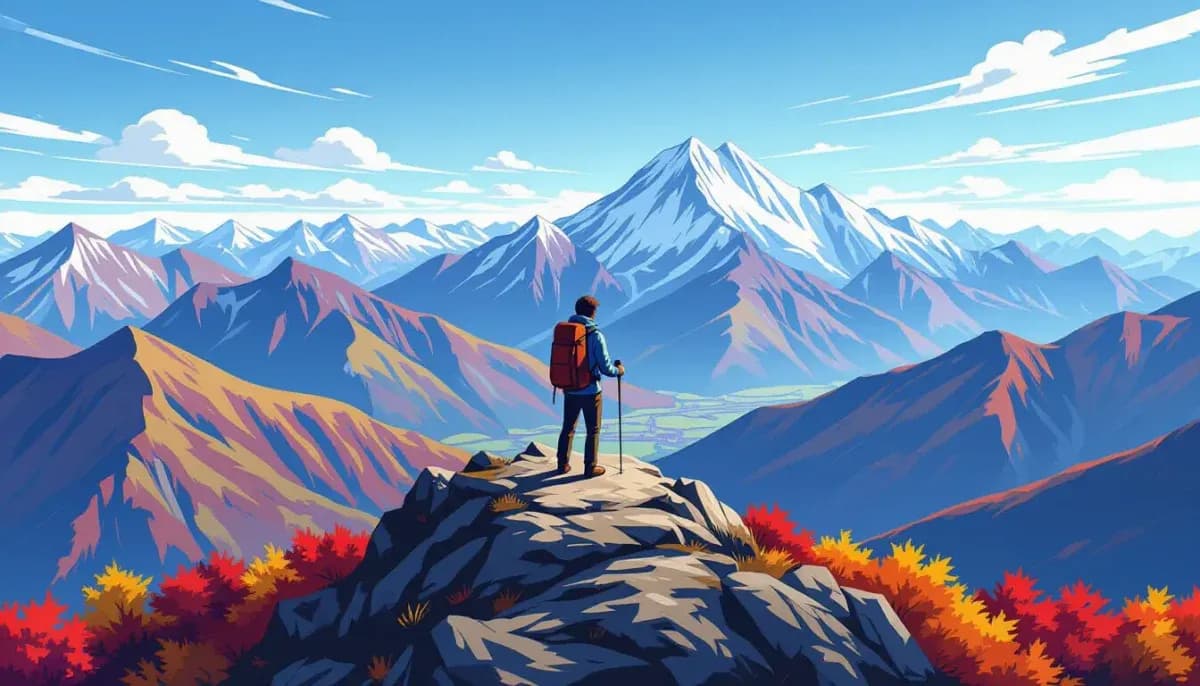
Discover the best hiking trails and mountains in Japan for foreigners. From Mount Fuji to the Kumano Kodo, our complete guide covers trails, seasons, gear, and practical tips for expat hikers.
Hiking in Japan: Best Trails and Mountains Guide for Foreigners
Japan is one of the world's great hiking destinations — a country where over 75% of the terrain is mountainous, encompassing 35 national parks and an extraordinary range of landscapes. From the iconic slopes of Mount Fuji to the ancient pilgrim paths of the Kumano Kodo, Japan offers trails for every ability level. Whether you are a seasoned trekker or a casual weekend hiker, this guide covers the best trails, essential tips, and practical advice to help you explore Japan's mountains with confidence.
!Hiker on Japanese Alps trail with panoramic mountain views

Why Japan Is a World-Class Hiking Destination
Japan's geography makes it a paradise for hikers. The Japanese Alps alone feature three distinct ranges — North, Central, and South — with peaks exceeding 3,000 meters. Add Hokkaido's vast wilderness, the cedar-clad islands of Yakushima, and the forested hills surrounding Kyoto and Tokyo, and you have a country that rewards outdoor enthusiasts throughout the year.
What sets Japan apart is the infrastructure. Major trails are well-maintained, with signposts in both Japanese and English on popular routes. A network of mountain huts (yamagoya) provides food, water, and accommodation, removing much of the logistical burden of long-distance trekking. The trail culture is also remarkably welcoming — fellow hikers exchange greetings, local volunteers maintain paths, and the tradition of treating mountains as sacred spaces creates a respectful atmosphere unlike almost anywhere else.
For foreigners living in Japan, hiking is also one of the most accessible ways to connect with Japanese culture and the natural world. You do not need a car for many popular trails — overnight buses from Tokyo and Kyoto serve many major trailheads.
For comprehensive information on living in Japan as a foreigner, including activities and lifestyle, visit Living in Nihon for practical guides.
The Best Hiking Trails and Mountains in Japan
Japan has an almost overwhelming number of hiking options. Here is a curated selection of the most rewarding trails, organized by region and difficulty.
| Trail / Mountain | Region | Difficulty | Highlights | Best Season |
|---|---|---|---|---|
| Mount Fuji | Shizuoka / Yamanashi | Hard | Japan's highest peak (3,776m), iconic sunrise views | July–August |
| Mount Takao | Tokyo area | Easy | 3 million+ visitors/year, views of Fuji on clear days | Year-round |
| Kamikochi | North Alps, Nagano | Easy–Medium | Alpine valley, crystal-clear Azusa River, mountain backdrop | May–November |
| Kumano Kodo | Wakayama (Kii Peninsula) | Medium | UNESCO pilgrimage trail, ancient cedar forests, shrines | Spring / Autumn |
| Nakasendo Way | Nagano / Gifu | Easy–Medium | Edo-period post towns, Kiso Valley, cultural history | Spring / Autumn |
| Daisetsuzan Traverse | Hokkaido | Hard | Japan's best multi-day trek (5 days), volcanic landscapes | July–September |
| Yakushima | Kagoshima | Medium–Hard | Ancient cedar forests, 7,000-year-old Jomon cedar | Year-round (Spring/Autumn best) |
| Mount Kitadake | South Alps, Yamanashi | Hard | Japan's second highest peak (3,193m), technical ridges | July–September |
| Fushimi Inari | Kyoto | Easy | Thousands of torii gates, popular at any time | Year-round |
| Mount Zao | Yamagata | Medium | Famous for "snow monsters" (juhyo), volcanic crater lake | Summer / Winter |
Mount Fuji — Japan's Most Iconic Climb
Mount Fuji (3,776 meters) is Japan's highest and most famous mountain. Each summer season, over 204,000 hikers make the ascent — a number that has led authorities to introduce an entry permit system and fee on the most popular Yoshida Trail to manage overcrowding. There are five routes to the summit, ranging from 2 to 10 hours of climbing time. Most hikers start from the 5th Station (around 2,300 meters) to reduce total elevation gain.
Practical tips for Fuji:
- The official climbing season runs July to early September. Attempting Fuji outside this window is dangerous.
- Book mountain hut accommodation months in advance if you plan to hike overnight for the sunrise.
- Pack warm layers even in summer — temperatures near the summit can drop below freezing.
- Fuji is classified as a difficult climb and is not recommended for those without prior hiking experience.
Mount Takao — The Perfect Tokyo Day Hike
If you live in or near Tokyo, Mount Takao (599 meters) is your gateway to hiking in Japan. Accessible by direct train from Shinjuku in under an hour, Takao draws over 3 million visitors annually — more than any other mountain in Japan. Trail 1 is a wide, paved path suitable for anyone, while Trail 6 follows a mountain stream for a more natural experience. The summit offers views of Mount Fuji on clear days, as well as a temple and small shops.
Kamikochi — Alpine Scenery at Its Finest
Kamikochi in the North Alps (Nagano Prefecture) is one of Japan's most breathtaking landscapes. The valley floor sits at around 1,500 meters, with towering peaks rising above. Casual hikers can follow the flat riverside path between the two main bus stops (around 90 minutes each way), while experienced trekkers can push higher into the Hotaka Range. The valley is only accessible by bus or taxi from Matsumoto — private vehicles are banned to protect the environment.
Kumano Kodo — Ancient Pilgrimage Through Sacred Forests
The Kumano Kodo is one of only two UNESCO World Heritage pilgrimage trails in the world, along with the Camino de Santiago in Spain. The network of routes crosses the forested Kii Peninsula, converging at the three Grand Shrines of Kumano. The most popular route, the Nakahechi, takes 3–5 days to walk and passes through ancient cedar forests, small farming villages, and traditional guesthouses (minshuku). For foreigners interested in Japanese history and spirituality, this trail offers a uniquely immersive experience.
For career guidance for foreigners in Japan that complements your lifestyle and outdoor exploration, For Work in Japan provides valuable resources.
Daisetsuzan Grand Traverse — Japan's Epic Multi-Day Trek
For serious hikers, the 5-day Daisetsuzan Grand Traverse in Hokkaido is widely considered Japan's finest long-distance hike. The route crosses the vast Daisetsuzan volcanic plateau, passing through some of the most remote and wildlife-rich landscapes in the country. Autumn arrives here first — the red and gold foliage typically peaks in September, weeks ahead of the rest of Japan. Mountain huts along the route provide accommodation, but booking ahead is essential.
Seasonal Guide to Hiking in Japan
Choosing the right season is critical for a safe and enjoyable hiking experience in Japan.
| Season | Conditions | Best For | Avoid |
|---|---|---|---|
| Spring (April–May) | Cool, cherry blossoms at lower elevations; Alps still wintry | Foothills, Kyoto mountains, Kumano Kodo | High alpine routes (snow risk) |
| Early Summer (June) | Rainy season begins; mountain leeches in forested areas | — | Forest trails, avoid if possible |
| Summer (July–August) | Hot at low elevations; ideal for alpine hiking; mountain huts open | Mt. Fuji, Japan Alps, Daisetsuzan | Coastal hikes in extreme heat |
| Autumn (Sept–Nov) | Best overall conditions; stunning foliage; reduced humidity | All trails, especially Nikko, Alps, Hokkaido | Typhoon season (September can be unpredictable) |
| Winter (Dec–March) | Heavy snow; avalanche risk at elevation | Snowshoeing, Mount Zao snow monsters | High alpine routes without winter experience |
Essential Gear and Preparation for Hiking in Japan
Whether you are planning a short day hike or a multi-day alpine trek, proper preparation makes a significant difference.
Gear essentials:
- Sturdy hiking boots with ankle support for medium and difficult trails
- Rain jacket — Japan's weather can change rapidly, especially in the mountains
- Trekking poles — particularly useful on steep descents and loose volcanic rock
- Layering system — temperatures drop quickly at elevation even in summer
- Headlamp — essential if you plan an early summit attempt or overnight hike
- First-aid kit with blister treatment
Navigation: Download the YAMAP app before you head out. YAMAP is the most popular hiking GPS app in Japan, with offline maps, trail conditions, and community reports. It offers an English interface and is free for basic use. Most trail signs on popular routes are in both Japanese and English, but off-the-beaten-path routes may only be in Japanese — note key place names in kanji before you start.
Water and food: Mountain huts sell food, drinks, and snacks at a premium. Many trails have natural water sources, but carry a filter or purification tablets for remote routes. On busy trails like Mount Fuji, vending machines are available at most trail stations.
For detailed information on apps and technology useful for living in Japan, see our Technology and Apps in Japan guide.
Mountain Huts (Yamagoya) — What to Expect
Japan's network of mountain huts makes multi-day hiking accessible even for those without camping gear.
- Cost: Typically ¥8,000–10,000 per person per night, including dinner and breakfast
- Booking: Reserve in advance, especially for popular huts on Fuji and in the Alps; many huts now accept online reservations
- Facilities: Shared dormitory sleeping (futon-style), communal meals, toilet facilities; showers are rare
- Arriving time: Aim to arrive by 4pm for dinner service; huts close their kitchens early
- Camping: Many huts have adjacent tent sites for ¥500–1,000 per person, allowing you to use the hut's toilet and water supply
Hiking Safety Tips for Foreigners in Japan
Japan's trails are generally safe and well-managed, but the mountains demand respect.
Register your climb: The Japanese mountain rescue system works partly through voluntary trail registration forms (tozan todoke) available at trailheads. Filing one improves rescue response if you do not return on schedule.
Weather awareness: Mountain weather changes rapidly. Check the Japan Meteorological Agency forecast for your specific mountain area before setting out. Thunderstorms can develop quickly in the Alps during summer afternoons.
Wildlife: Bears (both black bears and brown bears in Hokkaido) are present in many mountain areas. Carry a bear bell and make noise on the trail. Wild monkeys are common near Nagano and are generally harmless but do not feed them.
Emergency services: In an emergency, call 110 (police) or 119 (fire/ambulance). Mountain rescue in Japan is highly capable — rescue helicopters are available in most national park areas. Travel insurance that covers mountain rescue is strongly recommended.
For a broader overview of safety and emergency preparedness in Japan, see our Safety and Emergency Preparedness guide.
Day Hiking Near Major Cities
You do not need to travel far to enjoy excellent hiking in Japan. Every major city has accessible hiking within 1–2 hours.
Near Tokyo:
- Mount Takao (599m) — 1 hour from Shinjuku, suitable for all levels
- Mount Mitake — 2 hours from Tokyo, in the Chichibu-Tama-Kai National Park
- Tanzawa Range — Half-day to full-day hikes, views of Fuji and Sagami Bay
Near Osaka/Kyoto:
- Fushimi Inari — Famous torii gate network; hike to the mountain top takes 2–3 hours
- Mount Hiei — Overlooking Kyoto, accessible by cable car or on foot
- Minoh Falls — Short forested hike near Osaka with a beautiful waterfall
Near Fukuoka:
- Mount Aburayama — Easy forested hike on the edge of the city
- Itoshima Coast trails — Sea cliffs and coastal scenery
For more on exploring Japan by region, see our Domestic Travel in Japan guide and Daily Life in Japan guide.
Permits and Regulations
The vast majority of hiking in Japan requires no permit. Trails are generally open access, and Japan's tradition of mountain worship means even remote peaks are accessible without bureaucratic barriers. The key exception is Mount Fuji, where the Yoshida Trail (the most popular) now requires an entry permit and charges a ¥2,000 fee during the climbing season, implemented in 2024 in response to dangerous overcrowding.
Some national parks have restricted zones or require registration for specific routes — always check the relevant national park website before visiting a new area. The Japan National Tourism Organization hiking guide provides updated information on permits and trail conditions.
For foreigners interested in Japan's outdoor culture and how it connects to Japanese life, Ittenshoku is a helpful resource for career and lifestyle guidance in Japan.
Planning Your First Hike in Japan
If you are new to hiking in Japan, here is a recommended progression:
- Start with Mount Takao — Get comfortable with trail culture, etiquette, and Japanese signage
- Try a day hike in the Japanese Alps or near Kyoto — Kamikochi or Fushimi Inari are excellent next steps
- Plan a mountain hut overnight — A one-night hut stay on a medium trail gives you confidence for longer trips
- Attempt a multi-day route — Kumano Kodo or a traverse in Daisetsuzan for the full Japan hiking experience
- Summit Mount Fuji — The ultimate Japan hiking milestone, best done after some altitude experience
Japan's hiking community is welcoming to newcomers. Join local hiking groups (many have English-speaking members), check the AllTrails Japan page for community reviews and trail ratings, and explore Japan-Guide's hiking section for comprehensive trail information.
For guidance on making friends and building a social life in Japan, including outdoor activity groups, see our Making Friends and Social Life guide.
Conclusion
Hiking in Japan is an experience unlike anywhere else in the world — combining world-class mountain scenery, impeccable trail infrastructure, and a deep cultural reverence for nature. Whether you spend a morning on Mount Takao, walk ancient pilgrimage routes on the Kumano Kodo, or push your limits on a multi-day alpine traverse in the Japan Alps, the mountains of Japan will reward every step.
Start with what feels comfortable, invest in good gear, download YAMAP, and embrace the Japanese hiking ethos: respect the mountain, prepare thoroughly, and enjoy the journey as much as the destination.

Originally from Vietnam, living in Japan for 16+ years. Graduated from Nagoya University, with 11 years of professional experience at Japanese and international companies. Sharing information about living in Japan for foreigners.
View Profile →Related Articles
Best Seasonal Travel Destinations in Japan by Month
A month-by-month guide to the best travel destinations in Japan for foreigners: from snow monkeys in Nagano to cherry blossoms in Kyoto, festivals in Aomori, and autumn colors in Kanazawa.
Read more →
Japan Island Hopping Guide Best Islands to Visit
Discover Japan's 14,125 islands with our complete island hopping guide for foreigners. Best islands, ferry routes, costs, and practical tips for Okinawa, Naoshima, Yakushima and more.
Read more →
Camping in Japan Complete Guide for Foreign Residents
Everything foreign residents need to know about camping in Japan: campsite types, booking tips, rules, top destinations, gear, and etiquette. Start your outdoor adventure in Japan.
Read more →
Budget Travel Tips for Exploring Japan as a Resident
Discover practical budget travel tips for foreign residents in Japan. Learn how to use the Seishun 18 Kippu, find cheap accommodation, eat well on a budget, and save tens of thousands of yen on domestic travel.
Read more →
Hokkaido Travel Guide for Foreign Residents of Japan
A complete Hokkaido travel guide for foreign residents of Japan. Covers transportation, seasonal highlights, top destinations, food, and practical tips for expats visiting Japan's northernmost island.
Read more →
Okinawa Travel Guide for Foreign Residents of Japan
A complete Okinawa travel guide for foreigners living in Japan. Discover beaches, islands, food, culture, and practical tips for visiting Okinawa from the mainland.
Read more →