
Hidden Gems in Japan Off the Beaten Path Destinations

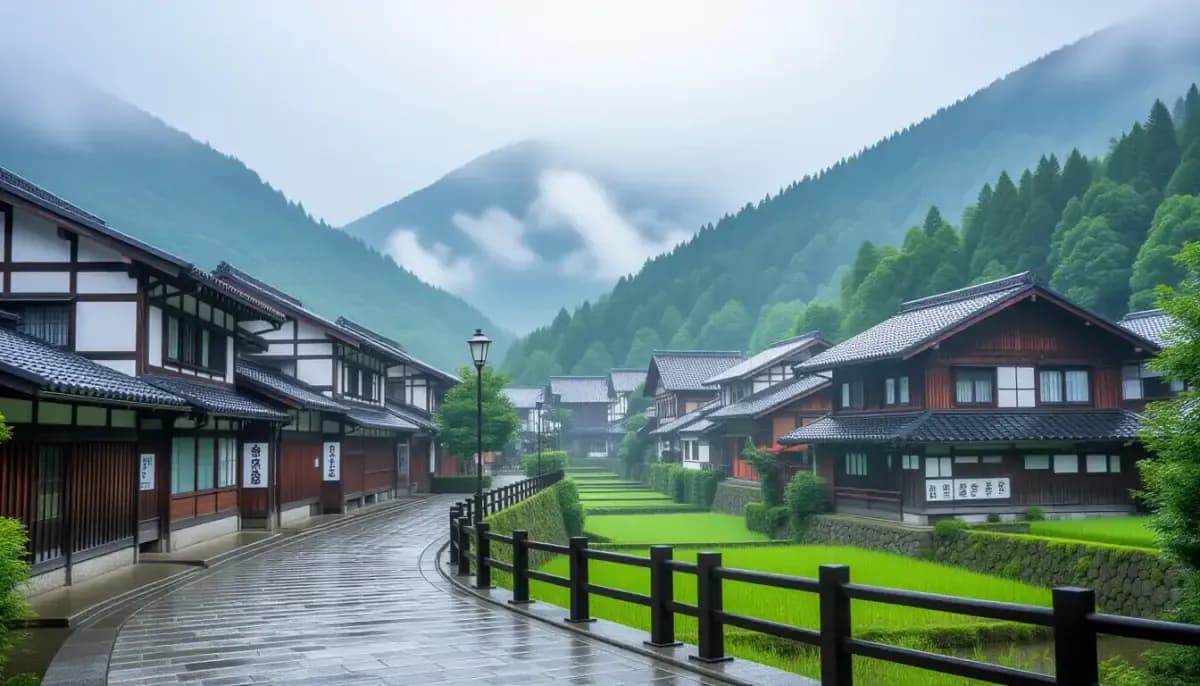
Discover Japan's best hidden gems and off the beaten path destinations. From Kanazawa's gold leaf district to Tottori's sand dunes — explore beyond Tokyo and Kyoto.
Hidden Gems in Japan: Off the Beaten Path Destinations
Japan receives a record 42.7 million foreign visitors annually, yet the vast majority crowd into the same handful of cities. If you've already explored Tokyo, Kyoto, and Osaka — or you simply want to escape the selfie sticks and queues — Japan's lesser-known destinations offer something priceless: authentic encounters with local life, uncrowded temples, and landscapes that haven't been Instagrammed into clichés. This guide reveals the country's best hidden gems for foreigners and expats ready to venture beyond the tourist trail.
Why Go Off the Beaten Path in Japan?
Japan's tourism is extraordinarily concentrated. According to recent data, 73% of overnight stays fall within just five prefectures: Tokyo, Osaka, Kyoto, Hokkaido, and Fukuoka. Meanwhile, entire regions receive almost no foreign visitors at all — Tokushima Prefecture, for example, sees a mere 0.2% of inbound tourist traffic despite containing the stunning Iya Valley and the famous Awa Odori Festival.
For foreigners living in Japan, exploring these quieter regions has practical benefits beyond scenic beauty:
- Lower costs: Accommodation in rural areas can be 30–50% cheaper than major cities
- Authentic interactions: Fewer English speakers means more genuine cultural exchange
- Avoid overtourism guilt: You'll be contributing economically to communities that rarely benefit from tourism
- Better photos: The landscapes are just as stunning without the crowds
The best months to explore off-the-beaten-path Japan are May (after Golden Week) and September, when even popular destinations see far fewer visitors. Use the affordable Seishun 18 Kippu rail pass to hop between small stations along JR lines — a favorite tool among budget travelers for discovering towns that most tourists zoom past on the shinkansen.
For more on getting around Japan affordably, see our Japan Train System Complete Guide for Beginners.
Chubu Region: Japan's Underrated Heartland
The mountainous Chubu region is home to some of Japan's most underappreciated destinations. Despite its extraordinary appeal, only 6% of visitors to Japan ever make it to Takayama — a remarkable statistic for a town with a well-preserved Edo-period old town, morning markets, and sake breweries rivaling anything in Kyoto.
Takayama — The Mountain Kyoto
Nestled in the Japanese Alps of Gifu Prefecture, Takayama (高山) is often called the "Little Kyoto" of the mountains. Its Sanmachi Suji district preserves rows of dark-timbered merchant houses dating to the Edo period, housing sake breweries, craft shops, and miso stores that have operated for centuries.
Highlights:
- Morning Jinya-mae and Miyagawa markets (daily)
- Hida Folk Village open-air museum
- Takayama Festival (spring and autumn) — one of Japan's most celebrated festivals
- Craft sake tasting at historic breweries
Takayama makes an excellent base for day trips to Shirakawa-go, the UNESCO World Heritage thatched-roof village, though the village itself is increasingly crowded. Nearby Gokayama offers the same architectural beauty with a fraction of the tourists.
Kanazawa — The City of Gold
Kanazawa is one of Japan's best-kept secrets, yet it supplies 20 tonnes of gold leaf annually to Kyoto's famous Kinkaku-ji temple. The city survived World War II largely intact, preserving its samurai and geisha districts, traditional crafts, and one of Japan's three celebrated gardens — Kenroku-en.
| Feature | Kanazawa | Kyoto |
|---|---|---|
| Preserved samurai district | Nagamachi | Fushimi |
| Annual visitors | ~8 million | ~50 million |
| Crowds at main sites | Light–moderate | Very heavy |
| Gold leaf craft heritage | Origin city | Buyer city |
| Shinkansen access | Yes (Hokuriku) | Yes (Tokaido) |
The Higashi Chaya geisha district rivals Kyoto's Gion for atmosphere but with almost no crowds. Visit 21st Century Museum of Contemporary Art for world-class modern art in a striking circular building, then explore the Omicho Market for fresh seafood — Kanazawa is famous for its proximity to the Sea of Japan.
Gujo Hachiman — Kyoto Without the Crowds
Nicknamed "Kyoto Without The Crowds" by Japanese travelers, Gujo Hachiman in Gifu Prefecture is a compact castle town built around pristine river water. The town is so serious about water quality that locals traditionally wash vegetables and dishes directly in the crystal-clear streams running through the streets.
Every summer, the town hosts the Gujo Odori Festival — Japan's longest bon dance festival, running for 33 nights. On four special nights, dancing continues literally until dawn and visitors are enthusiastically welcomed to join in.
For context on Japanese festivals as an outsider, read our Best Japanese Festivals to Attend as a Foreign Resident.
Chugoku Region: San'in Coast and Beyond
The San'in Coast — stretching along the Sea of Japan through Tottori, Shimane, and Yamaguchi prefectures — is one of Japan's most overlooked regions. The relative difficulty of access (no shinkansen runs along this route) keeps tourists away, which is exactly why it's worth visiting.
Tottori — Japan's Desert by the Sea
Tottori's sand dunes are unlike anything else in Japan. Stretching 16 kilometers along the Sea of Japan coastline with peaks reaching 50 meters in height, the Tottori Sand Dunes (Tottori Sakyu) are over 100,000 years old. You can ride camels, sand ski, or simply marvel at the sweeping views — all within minutes of a normal Japanese city.
Beyond the dunes, Tottori is famous for its Daisen-Oki National Park, fresh seafood (particularly crab in winter), and the Tottori Prefectural Flower Garden at Hanakairo. The prefecture has very few foreign tourists, making even basic interactions feel genuinely warm.
Matsue — City of Water and Samurai
Matsue in Shimane Prefecture calls itself the "City of Water" for the canals winding through its historic center. Matsue Castle is one of only 12 surviving original feudal castles in Japan — not a reconstruction, but the actual 1611 structure complete with original wooden interiors.
Surrounding the castle is the Shiomi Nawate samurai district, where historic residences, tea houses, and shrines line a canal-side path. Just outside the city lies Izumo Taisha, Japan's most ancient and revered shrine — so important that Japanese mythology credits it as the gathering place of all the country's deities each October.
Kurashiki — The Venice of Japan
Just 15 minutes from Okayama city by local train, Kurashiki is surprisingly overlooked by foreign tourists. Its Bikan Historical Quarter features canals lined with 17th-century white-walled storehouses (kura), weeping willows, and stone bridges — a genuinely picturesque scene.
The town is the birthplace of Japanese denim, and today hosts numerous denim boutiques and the Japan Rural Toy Museum. The Ohara Museum of Art, Japan's first Western art museum, houses works by Monet, El Greco, and Renoir in a neoclassical building beside the canal.
For travel planning resources, Living in Nihon's domestic travel guide offers excellent advice on planning regional trips across Japan.
Tohoku: The Forgotten North
Tohoku — the northeastern region of Honshu — was historically isolated by mountains and remains off most foreign travel itineraries. Yet it contains some of Japan's most dramatic landscapes, celebrated festivals, and traditional crafts.
Aomori — Cherry Blossoms and Apples
Aomori Prefecture is famous for two things: apples (it produces about 60% of Japan's supply) and the Nebuta Festival, one of Japan's most spectacular summer celebrations featuring enormous illuminated floats paraded through the streets.
But perhaps Aomori's most beautiful secret is the Hirosaki Cherry Blossom Festival. The moat around Hirosaki Castle turns pink from the reflected petals of 2,600 cherry trees, while the longest cherry blossom road in Japan — featuring 6,500 trees over 20 kilometers — creates a tunnel of pink that most foreign visitors never see.
Ginzan Onsen — The Ghibli Village
Ginzan Onsen in Yamagata Prefecture looks like a Studio Ghibli film set come to life. A narrow gorge shelters a cluster of Taisho-era wooden inn buildings rising four and five stories above a fast-running river. When snow falls and the gas lanterns come on at dusk, it's legitimately one of the most beautiful scenes in Japan.
The onsen is believed to have inspired the bathhouse in Spirited Away, though the Ghibli studio has never officially confirmed this. Regardless, the atmosphere is extraordinary — small, unpretentious, and genuinely magical.
Shikoku and Kyushu: Islands with Character
Naoshima — Japan's Art Island
Naoshima is a small island in the Seto Inland Sea with an extraordinary concentration of world-class contemporary art. The Chichu Art Museum, designed by architect Tadao Ando, is built almost entirely underground to avoid disrupting the island's natural scenery, yet houses major works by Claude Monet, James Turrell, and Walter De Maria.
Yayoi Kusama's Yellow Pumpkin sculpture has become iconic, but the entire island functions as an outdoor gallery — art installations appear in abandoned houses, on beaches, and across the hillsides. For art-lovers, Naoshima is unmissable.
Takachiho — Where Mythology Lives
In the mountains of Miyazaki Prefecture, Takachiho Gorge cuts through volcanic basalt columns carved by the Gokase River. The gorge is spectacular — row boats drift beneath 80-meter cliffs and a waterfall drops into an emerald pool — but what makes Takachiho truly special is its mythology.
Japanese legend holds that the sun goddess Amaterasu hid in a cave here, plunging the world into darkness until the other gods lured her out with a raucous celebration. The cave — Amano Iwato Shrine — is still an active religious site, and every night a troupe performs Yokagura, a traditional dance re-enacting these myths in a ceremony that begins at midnight.
For a broader understanding of Japanese spiritual culture, our Essential Japanese Manners Every Foreigner Should Know guide provides useful context.
Practical Tips for Off-the-Beaten-Path Travel
Visiting lesser-known Japan requires a slightly different approach than following standard tourist itineraries. Here's what experienced travelers recommend:
| Challenge | Solution |
|---|---|
| Limited English signage | Download Google Maps offline; use Google Translate camera |
| Infrequent public transport | Rent a car (international driving permit required); book taxis in advance |
| Cash-only businesses | Withdraw cash at convenience store ATMs before leaving major cities |
| Accommodation scarcity | Book ryokan well in advance; check local tourism board websites |
| Language barrier | Learn 10–20 key Japanese phrases; locals appreciate the effort |
| Dietary restrictions | Research restaurants in advance; carry a translation card |
Transportation hacks:
- Seishun 18 Kippu (青春18きっぷ): Five-day JR pass valid on local trains only; ideal for slow travel between small stations
- Local bus passes: Many rural prefectures offer affordable one-day or weekly bus passes
- Highway buses: Far cheaper than shinkansen for reaching regional cities; overnight buses save on accommodation costs
- Car rental: Strongly recommended for Shikoku, Tohoku, and San'in coast; international driving permit accepted
For more on navigating Japan's transport system, see our Japan Train System Complete Guide for Beginners.
Hidden Gems by Interest Type
Not every traveler wants the same thing. Here's a quick reference guide to Japan's hidden gems organized by travel interest:
| Interest | Destination | Prefecture | Why It's Special |
|---|---|---|---|
| History & samurai | Matsue | Shimane | Original 1611 castle, geisha town |
| Art lovers | Naoshima | Kagawa | World-class contemporary art island |
| Nature / outdoors | Takachiho | Miyazaki | Gorge, mythology, night ceremonies |
| Traditional crafts | Kanazawa | Ishikawa | Gold leaf, Kutani pottery, Nishide lacquer |
| Hot springs | Ginzan Onsen | Yamagata | Taisho-era wooden inns, gorge setting |
| Architecture | Kurashiki | Okayama | Edo warehouse district, canal scenery |
| Festivals | Gujo Hachiman | Gifu | 33-night summer dance festival |
| Mythology | Izumo | Shimane | Japan's most ancient and sacred shrine |
| Sand / unique landscapes | Tottori | Tottori | Only sand dunes in Japan |
| Cherry blossoms | Aomori / Hirosaki | Aomori | 6,500-tree road, spectacular moat reflections |
Planning Your Off-the-Beaten-Path Adventure
The most important mindset shift for traveling off the beaten path in Japan is slowing down. Rural Japan moves at a different pace — buses run once an hour, shops close early, and spontaneous decisions often don't work out. This isn't a flaw; it's what makes the experience so different from mainstream tourism.
Recommended resources:
- The Invisible Tourist's Japan Off the Beaten Path guide — comprehensive destination breakdown with responsible travel tips
- Boutique Japan's regional guides — curated experiences for Tohoku, Kyushu, Shikoku, Hokkaido, and Okinawa
- For Work in Japan's living guide — practical information for expats exploring Japan beyond the major cities
- Ittenshoku's regional career and lifestyle insights — helpful for expats planning extended stays in regional Japan
- Japan Times coverage of smaller cities — current reporting on how regional cities are managing new tourism attention
For foreigners living in Japan, off-the-beaten-path travel is one of the most rewarding ways to understand the country beyond the version presented to tourists. Japan's hidden gems aren't just beautiful places — they're living communities where traditional crafts, festivals, and ways of life continue largely unchanged, waiting to be discovered by travelers willing to step off the shinkansen and explore.
Ready to plan your trip? Check our Cost of Living in Tokyo Breakdown if you're budgeting your stay, or browse our Best Japanese Festivals Guide to time your regional adventures around local celebrations.

Originally from Vietnam, living in Japan for 16+ years. Graduated from Nagoya University, with 11 years of professional experience at Japanese and international companies. Sharing information about living in Japan for foreigners.
View Profile →Related Articles
Best Seasonal Travel Destinations in Japan by Month
A month-by-month guide to the best travel destinations in Japan for foreigners: from snow monkeys in Nagano to cherry blossoms in Kyoto, festivals in Aomori, and autumn colors in Kanazawa.
Read more →
Japan Island Hopping Guide Best Islands to Visit
Discover Japan's 14,125 islands with our complete island hopping guide for foreigners. Best islands, ferry routes, costs, and practical tips for Okinawa, Naoshima, Yakushima and more.
Read more →
Camping in Japan Complete Guide for Foreign Residents
Everything foreign residents need to know about camping in Japan: campsite types, booking tips, rules, top destinations, gear, and etiquette. Start your outdoor adventure in Japan.
Read more →
Budget Travel Tips for Exploring Japan as a Resident
Discover practical budget travel tips for foreign residents in Japan. Learn how to use the Seishun 18 Kippu, find cheap accommodation, eat well on a budget, and save tens of thousands of yen on domestic travel.
Read more →
Hokkaido Travel Guide for Foreign Residents of Japan
A complete Hokkaido travel guide for foreign residents of Japan. Covers transportation, seasonal highlights, top destinations, food, and practical tips for expats visiting Japan's northernmost island.
Read more →
Okinawa Travel Guide for Foreign Residents of Japan
A complete Okinawa travel guide for foreigners living in Japan. Discover beaches, islands, food, culture, and practical tips for visiting Okinawa from the mainland.
Read more →