
Cherry Blossom Hanami Season Complete Guide

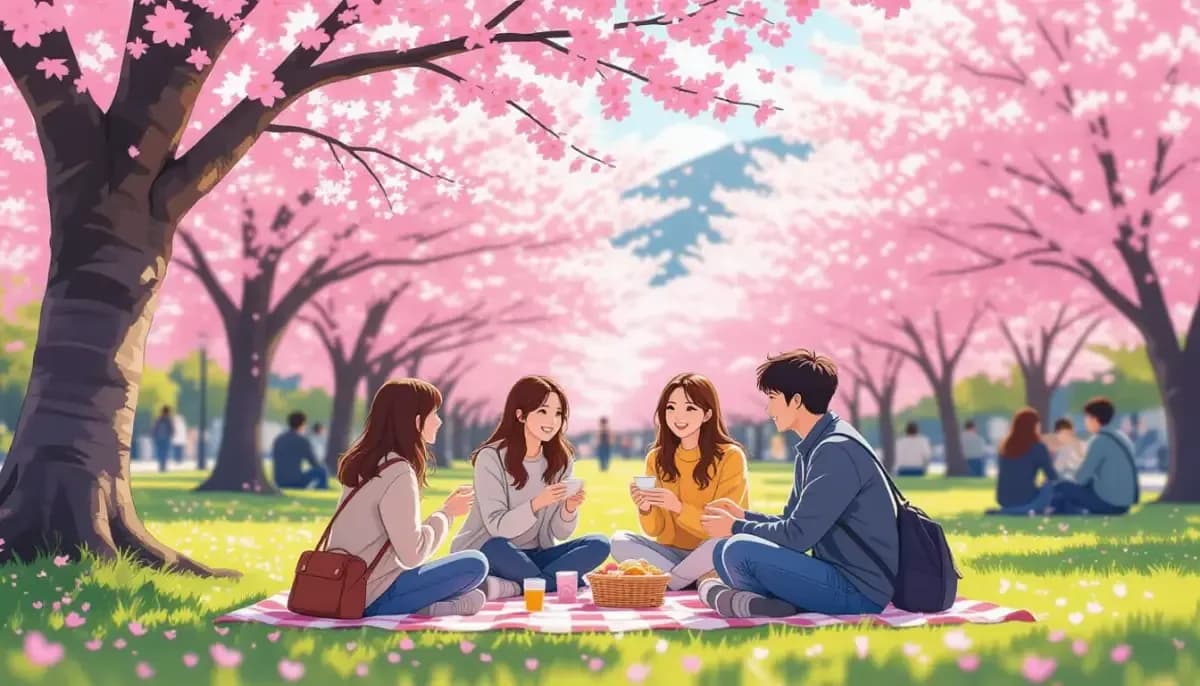
Your complete guide to cherry blossom hanami season in Japan: when to go, best spots in Tokyo and Kyoto, what to bring, etiquette tips, food guide, and practical advice for foreigners.
Cherry Blossom Hanami Season: A Complete Guide for Foreigners in Japan
Every spring, Japan transforms into one of the most breathtaking landscapes on earth. Millions of cherry trees burst into bloom, painting parks, riverbanks, and streets in shades of white and pale pink. For foreigners living in or visiting Japan, experiencing hanami — the centuries-old tradition of cherry blossom viewing — is one of the most memorable cultural events you can participate in.
This complete guide covers everything you need to know: the history and meaning behind hanami, when and where to see the best blossoms, what to bring, how to act like a local, and practical tips for making the most of sakura season.
!Cherry blossom hanami picnic in Japan with people sitting under pink sakura trees in full bloom
What Is Hanami? The Meaning Behind Cherry Blossom Viewing
Hanami (花見) literally means "flower viewing" in Japanese. While the word can technically refer to viewing any flowers, it has become synonymous with watching cherry blossoms (sakura) in spring.
The tradition is deeply rooted in Japanese culture. Cherry blossoms bloom briefly — typically lasting only one to two weeks — and their fleeting nature has long been seen as a metaphor for the transience of life. This concept, known as mono no aware (物の哀れ), or the bittersweet appreciation of impermanence, is central to the Japanese worldview.
Hanami isn't just about admiring flowers. It's a social event: families spread picnic sheets under blooming trees, friends gather to eat and drink, and coworkers hold office parties in parks. It's one of the most joyful and communal celebrations in the Japanese calendar.
A Brief History of Hanami
The origins of hanami date back over 1,200 years:
- Nara Period (710–794 CE): The word "sakura" first appeared in Japan's oldest poetry collection, the Manyoshu. Cherry blossoms were associated with the gods of rice paddies — "Sa" (god) + "Kura" (pedestal for offerings).
- 812 CE: Emperor Saga hosted the first imperial cherry blossom viewing at Jishu Shrine in Kyoto. From 831, it became a regular imperial court event.
- Heian Period: Hanami spread among the aristocratic class, with cherry blossom imagery appearing throughout The Tale of Genji.
- 1594: Shogun Hideyoshi Toyotomi threw an extravagant five-day hanami party for 5,000 guests at Yoshino, one of Japan's most famous blossom spots.
- Edo Period (1603–1868): Shoguns deliberately planted cherry trees throughout Edo (modern Tokyo) to allow common people to enjoy hanami. It became a nationwide tradition for all social classes.
- Today: Cherry blossom season attracts an estimated 63 million people each year, according to Kansai University.
When Do Cherry Blossoms Bloom? Understanding the Forecast
Cherry blossom timing varies by year and region. Japan's cherry blossom season generally runs from late January in Okinawa to early May in Hokkaido, moving northward as temperatures warm.
Regional Bloom Timeline
| Region | City | Typical Bloom Start | Peak Bloom |
|---|---|---|---|
| Okinawa | Naha | Late January | Early February |
| Kyushu | Fukuoka | Mid-March | Late March |
| Kansai | Osaka / Kyoto | Late March | Early April |
| Kanto | Tokyo | Late March | Early April |
| Tohoku | Sendai | Mid-April | Late April |
| Hokkaido | Sapporo | Late April | Early May |
For 2026, Tokyo cherry blossoms are forecast to begin blooming around March 18, with peak bloom expected around March 26 — slightly earlier than the historical average.
How to Follow the Forecast
The Japan Meteorological Corporation issues an official sakura forecast each year, which you can follow on sites like Japan Guide or Live Japan. The forecast tracks the "Yoshino" variety of cherry tree, which is the official reference point.
Key bloom stages to know:
- Kaika (開花): First blooms — about 5–10% open
- Mankai (満開): Full bloom — 80%+ of flowers open (the best time to visit)
- Chiri hajime (散り始め): Petals begin to fall — still beautiful, especially on water
The window from first bloom to full bloom is typically about one week, and peak bloom lasts 5–10 days before petals begin to fall.
Best Cherry Blossom Spots in Japan
Japan has over 490,000 cherry trees planted along roadsides and in parks nationwide. Here are the most celebrated locations:
Tokyo
Tokyo is the most accessible city for most visitors and has an extraordinary concentration of sakura spots:
| Spot | Number of Trees | Highlights |
|---|---|---|
| Shinjuku Gyoen | 1,500+ (75 varieties) | No alcohol allowed; great for families; longest season due to variety |
| Ueno Park | ~1,200 | Lively hanami atmosphere; museums and shrines nearby |
| Meguro River | ~880 | Pink arch over the river; food stalls; stunning for evening walks |
| Sumida Park | 1,000+ | Classic riverside hanami; accessible by Tokyo Skytree |
| Chidorigafuchi | ~260 | Moat-side promenade; iconic rowboat views under the blossoms |
| Yoyogi Park | ~600 | Spacious; families and picnic groups |
| Inokashira Park | ~500 | Boat rides; quieter than Ueno |
Pro tip: For yozakura (夜桜, night cherry blossom viewing), Tokyo Midtown and Meguro River offer stunning illuminated displays.
Kyoto
Kyoto combines cherry blossoms with traditional architecture for an unforgettable setting:
- Maruyama Park — Kyoto's most famous hanami spot, featuring the iconic weeping cherry tree
- Philosopher's Path (Tetsugaku-no-Michi) — A 2km canal walk lined with hundreds of cherry trees
- Nijo Castle — Royal garden with blossoms against castle walls
- Kiyomizudera Temple — Bird's-eye views over Kyoto with blossoms in the foreground
Osaka and Beyond
- Osaka Castle Park — Over 3,000 trees with the castle as a backdrop
- Yoshino (Nara Prefecture) — One of Japan's oldest and most famous hanami sites; over 30,000 trees across the mountain
- Lake Kawaguchiko (Yamanashi) — Cherry blossoms framing views of Mount Fuji
How to Enjoy Hanami Like a Local
Participating in hanami is one of the best ways to connect with Japanese culture as a foreigner. Here's how to do it right:
What to Bring
A successful hanami picnic requires some preparation:
- Blue tarp or picnic sheet — Available at convenience stores (100–500 yen). This marks your space and serves as your "floor."
- Food and drinks — Convenience store bento, supermarket sushi, beer, sake, wine, or tea. Vending machines near parks are also stocked seasonally.
- Sakura-themed snacks — Look for hanami dango (three-colored dumplings on a skewer), sakura mochi (pink rice cakes with bean paste), and sakura-flavored beverages.
- Trash bags — Most Japanese parks have no trash cans during hanami season due to volume. Pack out everything you bring in.
- Warm layers — Early April evenings can still be chilly (5–10°C). Bring a jacket.
- Wet wipes and hand sanitizer — Essential for outdoor eating.
Claiming Your Spot
Popular hanami spots fill up fast — sometimes days in advance for premium locations. In Japanese workplaces, it's common for the newest employee (or an intern) to be tasked with sitting on the tarp from early morning to reserve space for the team.
As a foreigner, arrive before 8:00 AM on weekend mornings to secure a good spot at busy parks like Ueno. Weekday afternoons are significantly less crowded.
Hanami Etiquette
| Rule | Details |
|---|---|
| Remove shoes on tarps | Treat the picnic sheet like an indoor space |
| Carry out your trash | No bins in most parks during hanami |
| Keep noise respectful | Avoid loud music in residential areas |
| Stay in designated areas | Don't walk on flower beds or private property |
| Check alcohol rules | Shinjuku Gyoen prohibits alcohol; many other parks allow it |
For more on navigating Japanese customs as a foreigner, check out our guide to Japanese Festivals and Traditions.
Cherry Blossom Varieties: Not All Sakura Are the Same
Most people picture the pale pink Somei-yoshino when they think of Japanese cherry blossoms — and for good reason. This single variety accounts for approximately 80% of Japan's cherry trees.
The Somei-yoshino was developed near the end of the Edo Period in the Komagome district of Tokyo. Because it's cloned rather than grown from seed, all Somei-yoshino trees are genetically identical — which is part of why the national forecast is so accurate. It also means the trees are vulnerable: a single disease could theoretically affect all of them.
Cherry Blossom Variety Guide
| Variety | Japanese Name | Color | Bloom Time | Notes |
|---|---|---|---|---|
| Somei-yoshino | 染井吉野 | Pale pink/white | Late March–Early April | Most common; 80% of trees |
| Yamazakura | 山桜 | White/pale pink | Late March–April | Wild variety; Yoshino mountain |
| Shidarezakura | 枝垂れ桜 | Deep pink | Mid-March | Weeping cherry; iconic |
| Kanzan | 関山 | Deep pink | Mid-April | Double blossoms; Shinjuku Gyoen |
| Shidare-yoshino | 白雪枝垂 | White | Late March | Elegant weeping variety |
Shinjuku Gyoen is the best place in Tokyo to see multiple varieties, as its 75 varieties extend the blooming season by several weeks.
Cherry Blossom Viewing for Foreigners: Practical Tips
Planning Your Visit
- Book accommodation 6+ months early — Hotels near popular spots sell out quickly. Consider staying slightly outside the center and taking trains.
- Check the forecast weekly — Bloom timing varies year to year based on winter temperatures. Use official forecasts rather than fixed calendar dates.
- Plan for weekday visits — Weekends during peak bloom are overwhelmingly crowded. Take a weekday off if possible.
- Allow time to linger — Don't try to rush through six spots in one day. Choose one or two locations and soak in the atmosphere.
Weather Considerations
Spring in Japan can be unpredictable. Cherry blossoms can be shortened by rain and wind. However:
- Hanafubuki (花吹雪) — A "petal blizzard" when wind blows petals through the air — is considered one of the most beautiful sights of the season.
- Hanaikada (花筏) — Petals floating on rivers forming "petal rafts" are also a cherished sight.
- Overcast days can actually make for better photography (no harsh shadows).
Using Cherry Blossom Apps and Websites
- Sakura Navi — Japan Meteorological Corporation's official forecast app
- Japan Guide (japan-guide.com) — Crowd-sourced bloom reports updated daily during season
- Weathernews — Japanese weather app with detailed sakura tracking
Hanami Food and Drink Guide
Food is central to the hanami experience. Here's what to look for:
Traditional Hanami Foods
- Hanami dango (花見団子) — Skewered tricolored mochi dumplings (pink, white, green). The quintessential hanami snack.
- Sakura mochi (桜餅) — Pink sticky rice cake filled with sweet bean paste, wrapped in a pickled cherry leaf. The leaf is edible.
- Bento boxes — Convenience stores (7-Eleven, Lawson, FamilyMart) release limited-edition spring bento during the season.
- Tamagoyaki — Rolled egg omelette; a classic bento staple.
- Onigiri — Rice balls; some with sakura-flavored fillings during the season.
Sakura-Flavored Seasonal Items
Every major food and beverage brand releases sakura-flavored products during the season. Look for:
- Sakura latte and sakura Frappuccino at Starbucks Japan
- Sakura KitKat and sakura Pocky
- Sakura-flavored beer (Sapporo, Kirin, and others)
- Sakura soft-serve ice cream at parks and food stalls
Golden Week and Back-to-Back Celebrations
Cherry blossom season often overlaps or leads into Golden Week (late April to early May), Japan's longest holiday period. For northern regions like Hokkaido, the blooms may coincide directly with Golden Week.
Spring is also a time of new beginnings in Japan: the school year and fiscal year both start in April. This is why hanami parties are often held as welcome events for new employees and incoming students. If you're starting a new job or school in Japan, there's a good chance your organization will hold a hanami party — embrace it as a perfect opportunity to bond with colleagues.
For more on Japan's seasonal celebrations, explore our guide to Japanese Seasonal Foods and the Best Japanese Festivals to Attend.
Resources for Cherry Blossom Planning
For additional information on living in Japan and navigating seasonal events as a foreigner, these resources are helpful:
- Living in Nihon — Comprehensive guides to life in Japan for foreigners
- For Work in Japan — Resources for foreigners working in Japan
- Ittenshoku — Career guidance for those working in Japan
- Japan Guide - Cherry Blossom Spots — Up-to-date bloom reports and location guides
- Live Japan - Sakura Forecast — Annual cherry blossom forecasts and updates
Conclusion: Making the Most of Sakura Season
Cherry blossom season is one of the most magical times to be in Japan. The combination of natural beauty, cultural tradition, festive atmosphere, and communal spirit makes hanami an experience unlike anything else.
For foreigners in Japan, it's also a genuine opportunity to participate in something deeply Japanese — to sit under the blossoms with neighbors, coworkers, or new friends, share food and drink, and appreciate the brief, beautiful moment together. The cherry blossoms remind everyone that the most precious things are often the most fleeting.
Plan ahead, check the forecast, pack your picnic sheet and your trash bag, and enjoy the show. Sakura season waits for no one — but when you're under those blooms, time seems to slow down just a little.

Originally from Vietnam, living in Japan for 16+ years. Graduated from Nagoya University, with 11 years of professional experience at Japanese and international companies. Sharing information about living in Japan for foreigners.
View Profile →Related Articles
Japanese National Holidays Calendar and Guide
Complete guide to Japan's 16 national holidays including Golden Week, Silver Week, and New Year. Essential calendar and practical tips for foreigners living in Japan.
Read more →
Japanese Gift Giving Seasons Ochugen and Oseibo Guide
Learn everything about Japanese gift giving seasons ochugen and oseibo. Timing, etiquette, gift ideas, and practical tips for foreigners living and working in Japan.
Read more →
Shichi Go San Children Festival Explained for Foreign Parents
Everything foreign parents need to know about Japan's Shichi-Go-San festival: which ages celebrate, kimono rental costs, shrine visits, chitose-ame candy, and participation tips.
Read more →
Setsubun Bean Throwing Festival Guide
Complete guide to Setsubun, Japan's February bean-throwing festival. Learn about mamemaki, eho-maki, where to watch public events, and how foreigners can participate in this beloved tradition.
Read more →
Japanese Seasonal Foods Calendar and Guide
Discover Japan's seasonal food calendar month by month. Learn about shun (旬), what to eat each season, cultural food traditions, and practical tips for expats living in Japan.
Read more →
Tanabata Star Festival in Japan Explained
Everything you need to know about Tanabata — Japan's Star Festival. Discover the legend of Orihime and Hikoboshi, how to write tanzaku wishes, the best festivals to attend (Sendai, Hiratsuka), and practical tips for foreigners joining the celebration.
Read more →