The Complete Guide to Pet Ownership in Japan for Foreigners
Japan is a country where cats outnumber children and pet cafés are a national institution — yet owning a pet here as a foreigner can feel surprisingly complicated. From strict import regulations to a rental market that largely turns its back on animal companions, the path to pet ownership in Japan requires careful planning. This guide covers everything foreigners need to know: legal requirements, housing challenges, veterinary care, cultural etiquette, and the true costs of keeping a furry friend in Japan.
!A happy cat and dog relaxing in a cozy Japanese apartment with a city view
The Pet Landscape in Japan
Japan is one of the world's great pet-loving nations. As of 2025, the country is home to approximately 6.82 million dogs and 8.85 million cats — a combined population that actually exceeds the number of children aged 14 and under. Despite this, Japanese pet culture operates under its own unique set of rules, shaped by small living spaces, strong community norms, and strict municipal regulations.
The most popular pets are cats and small dogs, largely because apartments in urban centers like Tokyo and Osaka average just 35–55 m². Larger breeds are rare in cities, and for good reason: most pet-friendly rentals impose weight limits, typically capping animals at under 10 kg. If you plan to bring or adopt a pet in Japan, understanding this landscape is step one.
For a broader look at daily life in Japan as a foreigner, see our guide on daily life in Japan.
Legal Requirements: Registration, Vaccination, and Microchipping
Japan takes pet registration and disease prevention seriously. Non-compliance can result in heavy fines — up to ¥200,000 in some cases.
Dog Registration
All dog owners must register their dog with the local municipal office (city hall or ward office) within 30 days of acquiring a dog that is 91 days of age or older. Registration is a one-time process costing approximately ¥3,000 and provides your dog with an official tag (鑑札, kanfuda). Your dog must wear this tag at all times.
Annual rabies vaccination is mandatory for dogs over 91 days old. Vaccinations typically take place between April 1 and June 30 each year. After vaccination, your dog receives a second tag (注射済票, chūsha-zumi-hyō) as proof. Both tags must be worn on the collar.
Cat Registration
Cats do not require annual vaccination or registration in the same way dogs do. However, since June 2022, any dog or cat sold by a breeder or pet store must have a microchip implanted for owner identification. This applies at the point of sale, so newly purchased pets will already be chipped.
Microchipping
Microchipping is now mandatory for commercially sold pets. If you adopt from a shelter or rescue, microchipping is strongly encouraged and often required by the shelter. The microchip number must be registered in Japan's national database.
Key Fines and Penalties
- Not registering your dog: up to ¥200,000 fine
- Dog injuring a person due to owner negligence: up to ¥300,000 fine plus liability for medical costs
- Dog death: owners must file a death report with the local authority within 30 days
For more on navigating Japanese bureaucracy as a foreigner, check our moving to Japan guide.
Importing a Pet from Abroad: The 180-Day Rule
If you are relocating to Japan and want to bring your pet, prepare for one of the most rigorous import processes in the world. Japan is rabies-free and intends to stay that way.
Requirements for Dogs and Cats from Non-Designated Countries
Most countries fall into the "non-designated" category (including the US, UK, Canada, Australia, and most of Europe), meaning the following full process applies:
- Microchip implantation (ISO 11784/11785 standard)
- Primary and secondary rabies vaccinations (at least 30 days apart, after microchipping)
- Rabies antibody titer test — blood drawn at least 180 days before entry
- 180-day waiting period after the antibody test result is confirmed
- Health certificate issued within 10 days of travel
- Advance notification to the Animal Quarantine Service (AQS) at least 40 days before arrival
The entire process takes a minimum of 7–8 months to complete properly. Starting early is critical.
Import Cost Estimates (2025)
| Route | Estimated Cost (JPY) |
|---|
| USA to Japan | ¥250,000 – ¥500,000 |
| Europe to Japan | ¥400,000 – ¥800,000 |
| Southeast Asia to Japan | ¥150,000 – ¥350,000 |
| Designated countries (UK, AU, NZ, etc.) | Reduced requirements, lower cost |
These costs include vaccinations, titer tests, health certificates, cargo fees, and quarantine inspections. Pets arriving without proper documentation face quarantine of up to 180 days at the owner's expense.
For comprehensive visa and relocation guidance, see our Japan visa and immigration guide.
Finding Pet-Friendly Housing in Japan
Housing is where many foreigners face their biggest pet-related shock. In most countries, pets are the norm in rentals. In Japan, they are the exception.
Only 10–20% of rental properties in Tokyo and Osaka allow pets. When you find a listing that does, it will typically be marked as ペット可 (petto ka, "pets allowed"). Always confirm specifics with the landlord or agent — even "pet-allowed" buildings may restrict you to one small dog or exclude cats entirely.
What to Expect in Pet-Friendly Rentals
- Higher security deposits: Instead of the usual one month's rent, landlords may require two to three months
- Size restrictions: Dogs are commonly capped at 10 kg; some buildings allow only cats
- Pet damage clauses: Tatami mat damage alone can cost ¥100,000+ in repairs — if your building has tatami, keep pets off it
- One-pet limits: Many buildings permit only a single animal
Tips for Finding Pet-Friendly Housing
- Use real estate portals and filter specifically for ペット可 listings
- Consider slightly older buildings or those farther from central stations — they are more likely to allow pets
- Disclose your pet honestly to agents; hiding it risks immediate eviction if discovered
- Ask about noise policies — barking complaints are the most common neighbor dispute
For a comprehensive overview of the Japanese rental market, see our guide on finding housing in Japan.
For additional guidance on living with pets in Japan, Living in Nihon has a dedicated pet ownership guide covering practical tips for foreigners.
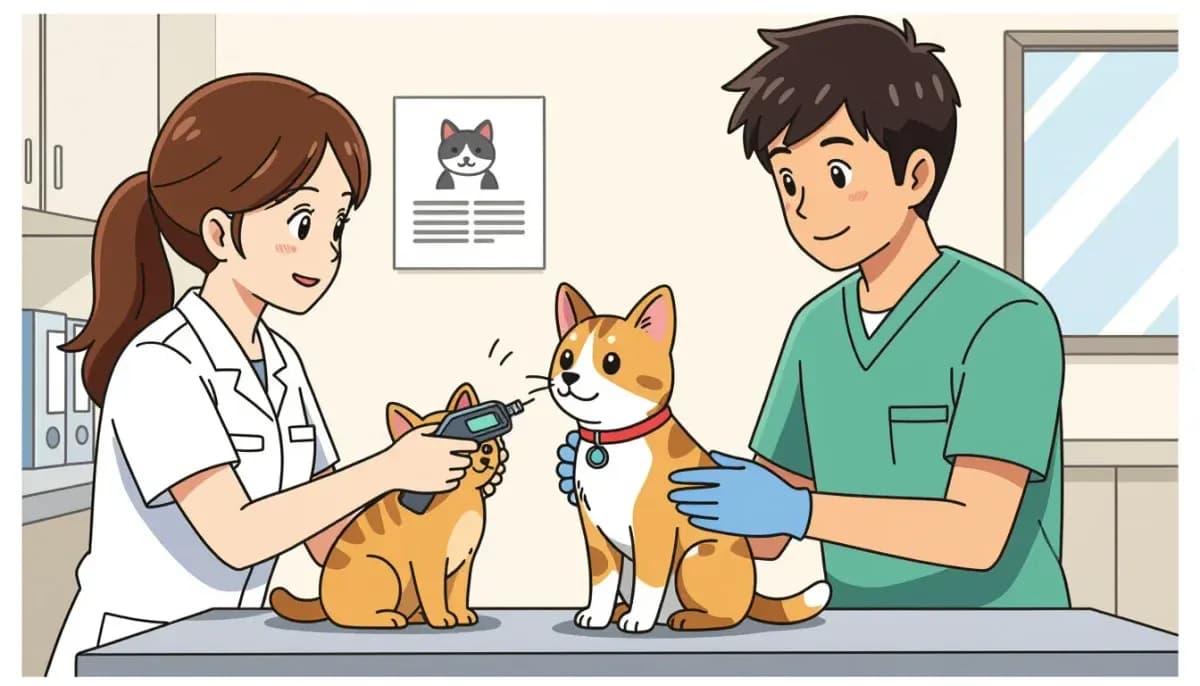
!Veterinarian examining a cat at a Japanese animal hospital
Veterinary Care and Health Costs in Japan
Japan has excellent veterinary care, but it comes at a cost. Animal clinics (動物病院, dōbutsu byōin) are widespread in cities, and services are generally of high quality. However, Japan has no public healthcare equivalent for pets — all costs are out-of-pocket unless you have pet insurance.
Typical Veterinary Costs in Tokyo (2025)
| Service | Cost (JPY) |
|---|
| Routine checkup | ¥3,000 – ¥7,000 |
| Rabies vaccination | ¥3,000 – ¥5,000 |
| General vaccination course | ¥5,000 – ¥10,000 |
| Dental cleaning | ¥30,000 – ¥80,000 |
| Spay/neuter surgery | ¥30,000 – ¥80,000 |
| Emergency surgery | ¥100,000 – ¥500,000+ |
Pet Insurance
Pet insurance is widely available and strongly recommended given emergency care costs. The market leader is Anicom Holdings, which holds the largest number of active contracts and offers direct payment to affiliated vet clinics. iPet is another major provider. Most plans cover 50–70% of treatment costs.
Foreigners are fully eligible to enroll in Japanese pet insurance — no special residency conditions apply beyond having a valid address.
English-Speaking Vets in Tokyo
Finding an English-speaking vet is possible but requires research:
- Westcross Veterinary Hospital (Meguro)
- Crown Animal Hospital (Bunkyo)
- Japan Animal Medical Center (Shibuya) — 24/7 emergency
- Toranomon Animal Hospital (Minato)
- Daktari Animal Hospital (multiple locations)
For clinics outside Tokyo, expat community groups and local Facebook groups are often the best resource for English-speaking vet recommendations.
The MailMate dog ownership guide for Japan provides a useful breakdown of registration costs and transport rules.
Daily Life with a Pet in Japan: Rules and Etiquette
Japanese culture places immense value on consideration for neighbors and public cleanliness. Pet owners are expected to embody this completely.
Walking Your Dog
- Always carry poop bags and a water bottle — you must pick up waste and wash away any urine from public areas
- Dogs must be on a leash at all times in public; off-leash walking is not permitted
- Avoid walking dogs late at night or early morning in residential areas where barking can disturb neighbors
- Most parks do not allow dogs off-leash; some parks have designated dog areas
Public Transportation with Pets
Small pets may travel on trains if placed inside a fully enclosed carrier. The combined weight of pet plus carrier must not exceed 10 kg. JR East charges a flat fee of approximately ¥290 per trip for pets.
Larger dogs are generally not permitted on trains or buses. Airlines allow domestic transport in the cabin for small pets (rules vary by airline). Always check in advance.
Shopping and Public Spaces
Pet cafés and certain pet-friendly shops exist, but most restaurants, convenience stores, and shopping malls prohibit animals. Outdoor areas and pet-specific retail stores (such as Pet Plaza and Cainz) are common spots where pets are welcome.
For tips on navigating Japanese social expectations, our guide on Japanese culture and etiquette is an excellent companion read.
See also: Foreigners Tokyo's guide on pet ownership in Japan for practical advice including English-speaking vet listings.
Monthly Costs of Pet Ownership in Japan
According to a Rakuten Insight survey, the average monthly cost of caring for a dog in Japan is approximately ¥9,360. Cats tend to be slightly less expensive. Here is a realistic monthly budget breakdown:
| Expense Category | Dogs (approx.) | Cats (approx.) |
|---|
| Food | ¥3,000 – ¥8,000 | ¥2,000 – ¥5,000 |
| Veterinary (monthly average) | ¥2,000 – ¥5,000 | ¥1,000 – ¥3,000 |
| Pet insurance premium | ¥2,000 – ¥5,000 | ¥1,500 – ¥3,500 |
| Grooming | ¥3,000 – ¥8,000 | ¥0 – ¥3,000 |
| Supplies, toys, treats | ¥1,000 – ¥3,000 | ¥500 – ¥2,000 |
| Total estimated monthly | ¥9,000 – ¥25,000 | ¥5,000 – ¥16,000 |
Pet food is widely available at home centers like Cainz and Nitori, supermarkets like AEON, and online via Amazon Japan. International brands such as Royal Canin, Purina One, and Blue Buffalo are stocked in major stores.
For broader financial planning as a foreigner in Japan, refer to our cost of living in Japan guide.
Adopting vs. Buying a Pet in Japan
Buying from a Pet Store or Breeder
Japan has one of the world's most developed pet retail sectors. Pet stores in shopping malls often display puppies and kittens in glass enclosures — a practice common in Japan but increasingly criticized by animal welfare advocates. If you buy from a store or breeder, microchipping and initial vaccinations are now legally required before the sale.
Adopting from a Shelter or Rescue
Adoption is a wonderful option and is growing in popularity. Organizations such as JSPCA (Japan Society for the Prevention of Cruelty to Animals) and local shelter groups facilitate adoptions. Many rescues will require:
- Proof of a stable home and income
- A home visit or interview
- Agreement to spay/neuter the animal
- Surrender of the animal if your situation changes significantly
Some rescues specifically work with foreign adopters and can assist with English paperwork.
What Happens When You Leave Japan?
This is a critical question. Exporting a pet from Japan requires documentation, a health certificate, and compliance with your destination country's import requirements. If you are relocating with a pet, plan the export process at least 6 months in advance. For more information, check the official Japan Animal Quarantine Service website.
For work-related planning in Japan, For Work in Japan provides resources to help expats navigate employment and lifestyle decisions, including long-term relocation planning.
Summary: Key Things to Know Before Getting a Pet in Japan
- Registration is mandatory for dogs — do it within 30 days of acquisition
- Microchipping is mandatory for pets sold commercially since 2022
- Only 10–20% of rentals allow pets — confirm before signing any lease
- Importing pets takes 7+ months — plan far in advance
- Pet insurance is highly recommended — emergency vet costs can reach ¥500,000+
- Be a considerate neighbor — barking and cleanliness are serious community concerns
- Monthly costs: budget ¥9,000–¥25,000/month for dogs, ¥5,000–¥16,000 for cats
Japan may present more hurdles for pet owners than many expats expect, but with proper preparation, living with a pet here can be deeply rewarding. Japanese society's love for animals runs deep — you will find fellow pet lovers everywhere, from morning dog walks in the park to the neighborhood cat café.
For more expat living resources, explore our guide on making friends and social life in Japan.
For even more comprehensive expat pet guides, visit Navigator Japan's 2025 expat pet guide and Ittenshoku for additional Japan lifestyle resources for foreigners.