
Japan Pet Registration and Microchip Requirements

Complete guide to pet registration and microchip requirements in Japan for foreigners. Learn about the 2022 microchip law, dog registration steps, import requirements, and costs.
Japan Pet Registration and Microchip Requirements: The Complete Guide for Foreigners
Moving to Japan with a beloved dog or cat—or adopting one after you arrive—is one of the most rewarding experiences of expat life. Japan is a country of pet lovers: as of 2023, approximately 9.1 million cats and 8.5 million dogs are kept as household pets across the country. But navigating Japan's pet registration system, mandatory microchipping laws, and annual vaccination requirements can feel overwhelming, especially in a second language. This guide walks you through everything you need to know about legally registering your pet in Japan, whether you are importing an animal from abroad or adopting one locally.
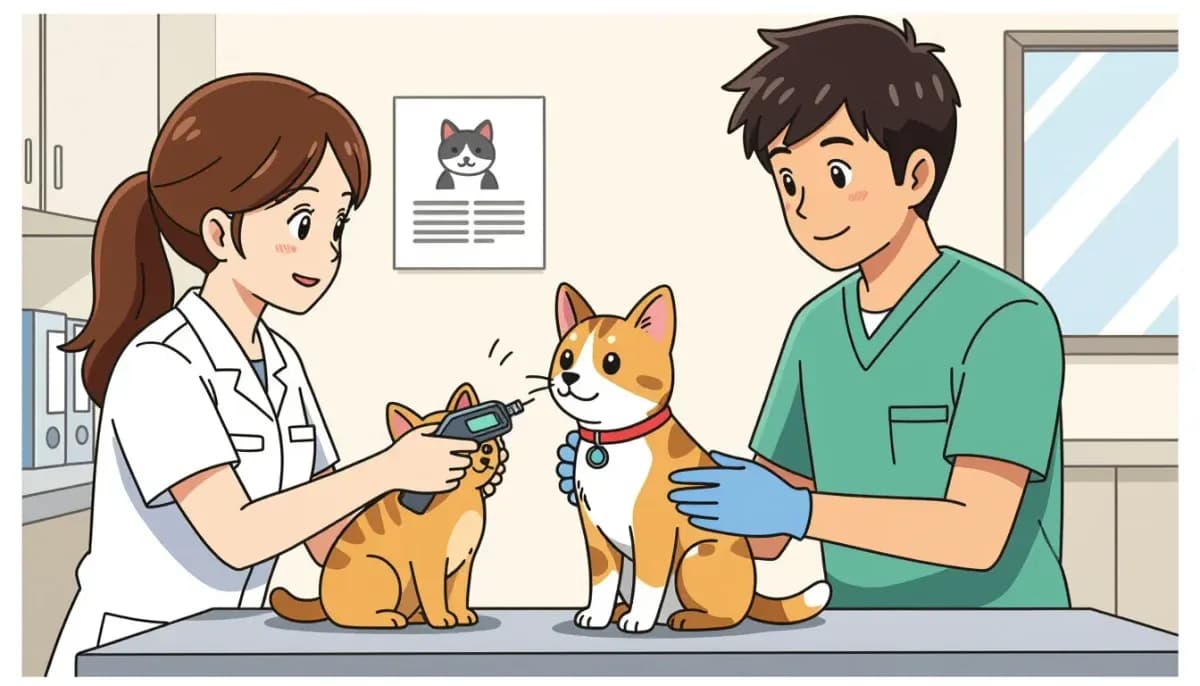
!Dog and cat at a Japanese veterinary clinic with a microchip scanner

Why Pet Registration Matters in Japan
Japan takes pet welfare and public health seriously. The country's mandatory dog registration system has been in place for decades as part of rabies prevention measures, and the rules were significantly strengthened in June 2022 when the revised Animal Protection Law came into effect. Under the new law, breeders and pet stores are required to microchip all dogs and cats before selling them, and buyers must transfer the registration to their own name within 30 days.
Failure to register your dog can result in fines of up to ¥200,000. Missing the annual rabies vaccination deadline carries the same financial penalty. These are not theoretical risks—municipal officers do conduct spot checks, especially after vaccination season. Getting your paperwork in order early protects both you and your pet.
For foreigners, the registration process is mostly straightforward and requires little more than a trip to your local city or ward office (市区役所) with your residence card. Most offices have basic English support, and some major cities like Tokyo and Osaka have multilingual staff or services available.
Understanding Japan's 2022 Microchip Law
The June 2022 revision to Japan's Animal Protection Law introduced mandatory microchipping requirements with the goals of reducing pet abandonment and reuniting lost animals with their owners. Here is what the law means in practice:
For pets sold by breeders and pet stores after June 1, 2022:
- Microchip implantation is mandatory before sale
- The seller must register the chip in the national database
- The buyer must update the registration to their own name within 30 days
For pets already owned before June 2022:
- Microchipping is strongly recommended but not legally required
- The government urges all owners to voluntarily register existing pets
For pets brought into Japan from abroad:
- The microchip must comply with ISO 11784/11785 standards (15-digit numeric code)
- The chip must be implanted before the first rabies vaccination
- Upon arrival, the microchip number can be registered using the import quarantine certificate
Microchip registration itself is free of charge and can be completed at your local city office when you bring your residence card.
Step-by-Step: Dog Registration in Japan
Dog registration is a legal requirement under Japan's Rabies Prevention Law. Here is how to complete it:
1. Register at Your Local City or Ward Office
Bring your residence card (在留カード) and your pet's paperwork (vaccination records, import documents if applicable). Registration must be completed within 30 days of acquiring a dog aged 91 days or older. The registration fee is approximately ¥3,000 and is valid for the dog's lifetime.
Upon registration, you will receive a dog license tag (鑑札), which your dog must wear on its collar at all times.
2. Get the Annual Rabies Vaccination
Rabies vaccination is mandatory every year and is typically administered between April and June. Your local municipality will send a notification postcard with the schedule. After vaccination, you receive an injection completion tag (注射済票), which must also be attached to your dog's collar alongside the license tag.
The vaccination fee is typically around ¥3,500–¥5,000 at a veterinary clinic, plus a ¥550 administrative certificate fee at the city office.
3. Register the Microchip
If your dog has a microchip (mandatory for dogs purchased from breeders/pet stores after June 2022), register the chip in the national database. This is free and can be done at the city office or through your vet.
4. Update Registration When You Move
If you move to a different municipality, you must notify both your old and new city offices. This is done in the same way as updating your resident registration (住民票).
!Expat walking their dog in a Japan neighborhood park

Cat Registration: What You Need to Know
Cats have fewer legal requirements than dogs in Japan, but microchipping and local registration are still strongly encouraged:
- Microchip registration: Free at your local city office; bring your residence card and the cat's microchip documentation
- Vaccinations: Not legally mandated for cats, but annual vaccinations for diseases like feline herpesvirus and calicivirus are strongly recommended by vets
- No cat tax: Unlike some countries, Japan does not impose a tax on cat ownership
For cats purchased from breeders or pet stores after June 2022, microchipping is mandatory at the point of sale. Adopted cats from shelters may or may not have chips—check with the shelter and register if a chip is present.
Importing Your Pet to Japan
If you are relocating to Japan and want to bring your dog or cat, be prepared for one of the strictest import processes in the world. Japan is a rabies-free country and is extremely careful about maintaining that status.
Import Requirements at a Glance
| Requirement | Details |
|---|---|
| Microchip | ISO 11784/11785 compliant, implanted before first rabies vaccination |
| Rabies vaccinations | Minimum 2 vaccinations; first after microchip implantation |
| Rabies antibody test | Must show neutralizing antibody titer ≥0.5 IU/ml |
| Waiting period | 180 days after antibody test confirmation |
| Pre-arrival inspection notice | Must notify Japan quarantine 40 days before arrival |
| Advance inspection | Recommended; can reduce facility quarantine time |
| Country designation | Designated countries (AU, NZ, IS, FJ, HI, GU) have simpler requirements |
From non-designated countries (US, UK, most of Europe, Southeast Asia): Plan for a minimum of 7 months from start to finish. The timeline cannot be shortened.
Estimated costs:
- From the United States: ¥250,000–¥500,000
- From Europe: ¥400,000–¥800,000
These figures include vet fees, certification, airline transport, and quarantine facility costs.
For the most current and official import requirements, always consult the Ministry of Agriculture, Forestry and Fisheries (MAFF) directly, as requirements can change.
Finding Pet-Friendly Housing
One of the biggest challenges for expat pet owners in Japan is not paperwork—it is finding a place to live. Only 10–20% of rental apartments in major cities like Tokyo and Osaka allow pets. Many landlords who do permit pets attach strict conditions:
- One pet maximum
- Weight limit (often under 10 kg)
- Breed restrictions (no large dogs)
- Deposit requirements for pet-related wear and tear
- Rules about pets on balconies
Start your apartment search well before you plan to move, and be transparent with landlords about your pet's size and breed. Using a real estate agency that specializes in foreigner-friendly and pet-friendly properties can save considerable time.
For more guidance on navigating the Japanese rental market, see our Complete Guide to Finding Housing in Japan.
Veterinary Care and Pet Insurance in Japan
Japan's veterinary care is generally of high quality, especially in urban areas. Costs are reasonable but can add up, particularly for specialist care:
| Service | Typical Cost |
|---|---|
| Routine checkup | ¥5,000–¥8,000 |
| Annual vaccinations (dogs) | ¥3,000–¥5,000 |
| Rabies vaccination + certificate | ¥4,000–¥5,500 |
| Microchip implantation | ¥3,000–¥5,000 |
| Emergency/specialist visit | ¥15,000–¥50,000+ |
Pet health insurance is widely available in Japan. Major providers include Anicom and iPet, both of which have English-language support. Many clinics in Tokyo and Osaka accept these insurers directly, meaning you pay only your copay at the time of the visit.
Note that Japan's national health insurance (国民健康保険) does not cover pets. Pet insurance is entirely private.
Daily Life Tips for Pet Owners in Japan
Living with a pet in Japan comes with its own set of cultural norms and practical considerations:
Apartment etiquette:
- Keep noise to a minimum—pet barking is one of the most common complaints in Japanese apartment buildings
- Use pet stairs or ramps to protect flooring from scratching
- When using shared elevators, always ask neighbors before entering if they are comfortable sharing the space with your pet
Public spaces:
- Most public parks technically allow dogs, but always check local rules
- Dogs must be on a leash in public areas
- Carry waste bags and a water bottle to clean up after your dog
- Most restaurants, shops, and public transport do not allow pets inside
Pet-friendly cafés and shops:
- Dog cafés and cat cafés are popular throughout Japan
- Many pet supply stores (ペットショップ) allow well-behaved dogs inside
- Outdoor mall areas like those in Tokyo's Daikanyama or Nakameguro sometimes have pet-friendly patios
For broader guidance on adapting to daily life in Japan, visit our Complete Guide to Daily Life in Japan for Foreigners.
Resources and Further Reading
Understanding Japan's pet registration and microchip system is just one part of the expat pet ownership journey. For comprehensive guidance on bringing and keeping pets in Japan, these resources are invaluable:
- Living in Nihon – Pet Ownership Guide for Foreigners: A detailed guide covering all aspects of pet life in Japan for foreign residents, from housing to veterinary care.
- For Work in Japan: Practical daily-life resources for foreign workers in Japan, including tips on navigating bureaucracy.
- Ittenshoku: Career and relocation information for foreigners moving to Japan.
- Navigator Japan – Expat Pet Guide 2025: An in-depth practical guide to living in Japan with dogs and cats.
- MailMate – Dog Ownership in Japan: Clear breakdown of registration, vaccination, and legal requirements for dog owners.
If you are planning to bring a pet into Japan from abroad, always verify the latest requirements with the official MAFF Animal Quarantine Service website before making travel arrangements.
Conclusion
Registering your pet and complying with Japan's microchip and vaccination requirements is not as daunting as it might initially seem. The key steps are manageable: visit your city office within 30 days, keep up with annual rabies vaccinations, and ensure your pet's microchip is registered in the national database. For those importing pets, advance planning of at least seven months is essential.
Japan is ultimately a country that genuinely cares about animals. The 2022 microchip law, while creating extra obligations for pet owners, reflects a serious commitment to reducing abandonment and helping lost pets return home. By following the rules, you and your pet can enjoy a full, happy life in Japan together.
For more on navigating expat life in Japan, explore our Complete Guide to Moving to Japan as a Foreigner and our resources on Healthcare in Japan.

Originally from Vietnam, living in Japan for 16+ years. Graduated from Nagoya University, with 11 years of professional experience at Japanese and international companies. Sharing information about living in Japan for foreigners.
View Profile →Related Articles

Pet Friendly Parks and Facilities in Japan
Complete guide to pet-friendly parks, dog runs, and facilities in Japan for foreigners. Learn about Yoyogi Park dog run, pet etiquette, rules, and the best neighborhoods for pet owners in Tokyo and beyond.
Read more →
How to Take Your Pet Out of Japan Export Guide
Complete guide to exporting your dog or cat from Japan. Learn the step-by-step process, required documents, AQS inspection requirements, destination country rules, and costs for taking your pet out of Japan.
Read more →
Exotic Pet Ownership Rules in Japan
Complete guide to exotic pet ownership rules in Japan for foreigners. Learn which animals are banned, which require permits, CITES regulations, import process, and safety tips.
Read more →
Pet Sitting and Boarding Services in Japan
Complete guide to pet sitting and boarding in Japan for foreigners and expats. Covers top platforms like HappyWanNyan and Pet Backer, pricing, tips, and English-friendly facilities.
Read more →
Cat Ownership in Japan Complete Guide
Everything foreigners need to know about owning a cat in Japan — pet-friendly apartments, microchipping laws, vet costs, adoption, and daily life tips for expat cat owners.
Read more →
Traveling with Pets in Japan Transportation Guide
A complete guide to traveling with pets in Japan. Learn the rules for trains, shinkansen, buses, flights, pet taxis and car rentals. Essential tips for foreigners with dogs and cats.
Read more →