
How to Bring a Pet to Japan Import Requirements

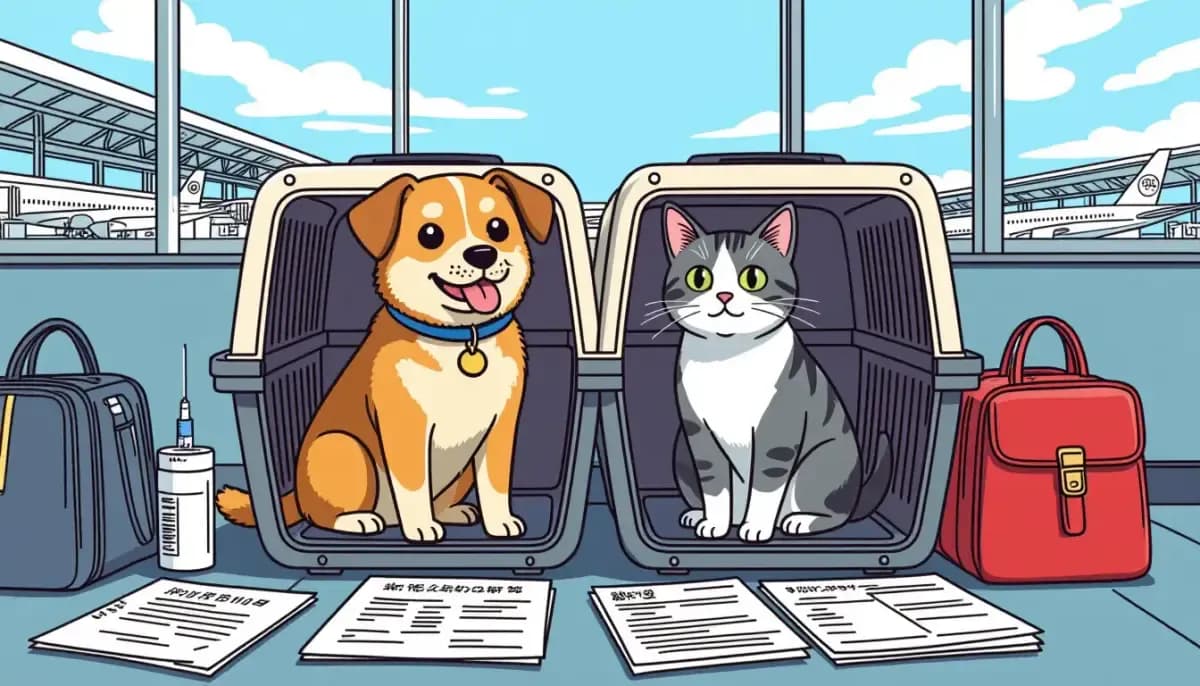
Complete guide to Japan's pet import requirements for dogs and cats. Learn about microchipping, rabies vaccinations, the 180-day waiting period, AQS notification, and what to expect at the airport.
How to Bring a Pet to Japan: Import Requirements Complete Guide
Bringing your pet to Japan is absolutely possible, but Japan has some of the strictest animal import regulations in the world. The country is rabies-free and works hard to stay that way. If you're moving to Japan and want to bring your dog or cat, you need to start planning at least 7 to 9 months in advance. Miss a step, and your pet could end up in quarantine for up to 180 days at your own expense.
This guide covers everything you need to know about Japan's pet import requirements — from microchipping and vaccinations to the mandatory waiting period and what to expect on arrival day.

Why Japan's Pet Import Rules Are So Strict
Japan is one of only a handful of countries in the world that is officially rabies-free. To maintain this status, the Japanese government enforces strict animal import rules through the Animal Quarantine Service (AQS), which operates under the Ministry of Agriculture, Forestry and Fisheries (MAFF).
Any dog or cat arriving without complete documentation is subject to detention quarantine of up to 180 days — at a facility chosen by the AQS, and at the owner's expense (approximately ¥3,000+ per day depending on pet size). This isn't a theoretical risk: pets arrive at Japanese airports every day with incomplete paperwork and face extended detention.
The good news? If you follow all the steps correctly and start early enough, your pet can clear quarantine in as little as 12 hours after landing.
Step-by-Step Requirements for Non-Designated Regions
Most countries fall into the "Non-Designated Region" category, which means the full process applies. This includes the United States, Canada, the UK, most of Europe, and most of Asia.
Designated regions with simplified requirements include: Iceland, Australia, New Zealand, Fiji Islands, Hawaii, and Guam. If your pet has lived in one of these places for at least 180 days, the process is considerably faster — no rabies vaccination or titer test is required, though microchipping and AQS advance notification are still mandatory.
Step 1: Microchip Your Pet
Your pet must have an ISO 11784/11785 compliant microchip implanted before receiving any rabies vaccinations. This is non-negotiable — the microchip must be in place first so it can be recorded on all subsequent documents.
- Chip must be 15-digit ISO standard
- Must be readable by standard scanners
- Must be implanted before the first rabies shot
Step 2: Administer Two Rabies Vaccinations
Japan requires two valid rabies vaccinations administered within specific intervals:
- Your pet must be at least 91 days old at the time of the first shot
- The second vaccination must be given at least 30 days after the first
- Only inactivated or recombinant rabies vaccines are accepted — no live vaccines
Both vaccinations must be documented with the microchip number, vaccine type, batch number, and veterinarian information.
Step 3: Rabies Antibody Titer Test (FAVN Test)
After the second rabies vaccination, your pet must undergo a blood test at a Japan-approved designated laboratory. The test must show a result of ≥0.5 IU/ml to be accepted.
The test result is valid for 2 years from the date of blood draw. The sample must be sent to a laboratory that is officially designated by Japan's AQS. Always confirm the lab's current approval status before submission — Japan periodically revokes lab approvals.
Important 2025 Alert: Biobest Laboratories in the UK was revoked from Japan's designated lab list for FAVN results issued between November 2024 and June 2025. If your pet's FAVN result was issued during this period from Biobest, contact the AQS office at your port of entry immediately.
Step 4: Mandatory 180-Day Waiting Period
This is where most people underestimate the timeline. After the blood is drawn for the FAVN test, your pet must remain outside Japan for a mandatory 180 days. The clock starts from the date the blood sample was collected — not the date you receive results.
If your pet arrives before 180 days have passed, the remaining days will be spent in AQS quarantine at your expense.
Step 5: File Advance Notification with AQS
At least 40 days before your pet's arrival, you must file an Advance Notification with the Animal Quarantine Service at your intended port of entry. This can be done by fax or mail, and you will receive an "Approval of Notification" once it's processed.
Accepted entry airports include: New Chitose, Narita, Haneda, Chubu (Nagoya), Kansai, Kitakyushu, Fukuoka, Kagoshima, and Naha.
Step 6: Pre-Export Health Certificate
Within 10 days of travel, your pet must be examined by an accredited veterinarian (USDA-accredited if coming from the US, or government-authorized in your country) and given a government-endorsed health certificate. This document must include:
- Microchip number
- Rabies vaccination records (both shots)
- FAVN test results
- Confirmation that the pet is free from clinical signs of infectious disease
Required Documents Checklist
| Document | Details |
|---|---|
| Microchip Record | ISO compliant, implanted before vaccinations |
| Rabies Vaccination Certificate x2 | Both shots documented with chip number |
| FAVN Blood Test Result | ≥0.5 IU/ml from designated laboratory |
| AQS Advance Notification Approval | Filed at least 40 days before arrival |
| Government-Endorsed Health Certificate | Issued within 10 days of travel |
| Import Quarantine Application Form | Completed at arrival airport |
What Happens at the Airport on Arrival Day
Upon landing, you'll bring your pet and all documents to the Animal Quarantine Service desk at your arrival airport. An AQS inspector will verify:
- Microchip reading matches all documents
- All vaccination and test records are complete
- 180-day waiting period has been met
- Advance notification was filed and approved
If everything is in order, your pet is typically released within 12 hours. During this time, they'll be held in an AQS facility at the airport. Plan for this wait and arrange transportation accordingly.
If there are any documentation issues, your pet will be moved to a detention facility and held for the time needed — potentially up to 180 days — while you work to resolve the issue with AQS inspectors.
Estimated Costs for Bringing a Pet to Japan
The total cost of importing a pet to Japan varies considerably depending on your country of origin, your pet's size, and whether you hire a professional pet relocation service.
| Cost Item | Estimated Cost |
|---|---|
| Microchipping | ¥5,000–15,000 |
| Two Rabies Vaccinations | ¥6,000–20,000 total |
| FAVN Titer Test (lab fee) | ¥15,000–40,000 |
| Government Health Certificate | ¥10,000–30,000 |
| Pet Airline Cargo/Cabin Fee | ¥30,000–150,000+ |
| AQS Quarantine Fee (if needed) | ¥3,000+/day |
| Professional Relocation Service | ¥150,000–300,000+ |
| Total (US to Japan, smooth process) | ¥250,000–500,000 |
| Total (Europe to Japan, smooth process) | ¥400,000–800,000 |
These figures are estimates based on expat reports in 2025. Actual costs will vary.
After Your Pet Arrives: Registration and Ongoing Requirements
Once your pet is in Japan, there are legal requirements you must fulfill.
Dog Registration
All dogs must be registered at your local city or ward office within 30 days of import. Bring your import quarantine certificate. Registration is free and you'll receive a license tag your dog must wear at all times.
Annual Rabies Vaccination
Annual rabies vaccination is legally required for all dogs in Japan. This is enforced, and violations can result in fines of up to ¥200,000. After vaccination, you'll receive a vaccination tag — dogs must wear both the license tag and vaccination tag.
Cat Requirements
Cats do not need to be registered, but annual vaccinations are strongly recommended by Japanese veterinarians. There is no legal vaccination requirement for cats, but keeping vaccinations current is important for their health.
Finding Pet-Friendly Housing
Before you arrive, be aware that only 10–20% of rental properties in Tokyo and Osaka allow pets. Pet-friendly apartments often impose strict rules: single pet limits, weight restrictions (often under 10kg), and no balcony access for bathroom needs. Start your housing search early and never misrepresent pet ownership on a rental application — landlords can evict immediately upon discovery.
For more on finding a place to live, see our guide to Finding Housing in Japan as a Foreigner.
Common Mistakes to Avoid
Many expats make costly mistakes that result in extended quarantine or having to leave their pets behind temporarily. The most common errors:
- Starting too late — The 180-day wait alone means you must begin the process nearly 7 months before your move date
- Using a non-designated lab — Always verify your lab is on Japan's current approved list before sending blood samples
- Wrong vaccine type — Live rabies vaccines are not accepted; only inactivated or recombinant
- Missing the 40-day AQS notification window — This must be filed separately from the health certificate
- Forgetting to record the microchip number — It must appear on every single document; inconsistencies cause delays
Bringing Other Animals to Japan
Japan's strict import rules are not limited to dogs and cats. Other animals have their own requirements:
- Birds: Require separate import permits and quarantine (7–14 days minimum)
- Rabbits, hamsters, and small mammals: Generally allowed but may require health certificates
- Reptiles and fish: Import may be restricted under CITES (Convention on International Trade in Endangered Species)
Always check with the AQS and your country's export authorities well in advance for any animal other than dogs and cats.
Helpful Resources for Pet Import to Japan
Navigating Japan's animal import rules can be overwhelming. Here are some resources to help:
- Japan Animal Quarantine Service (official): maff.go.jp/aqs — The authoritative source for all import rules
- Pet relocation guide: Japan Handbook - Bringing a Pet to Japan
- Expat pet guide: Navigator Japan 2025 Expat Pet Guide
- General expat life in Japan: Living in Nihon
- Working and relocating to Japan: For Work in Japan
- Job and relocation resources: Ittenshoku
Final Thoughts
Bringing your pet to Japan requires careful planning, patience, and attention to detail. The 7–9 month timeline is not an exaggeration — the 180-day mandatory waiting period after the FAVN blood test alone accounts for most of it. But thousands of expats successfully bring their pets to Japan every year, and with the right preparation, you can too.
Start early, keep meticulous records, use only approved veterinarians and laboratories, and file your AQS advance notification on time. If you're feeling overwhelmed, professional pet relocation services are available and can be worth every yen for the peace of mind they provide.
For related information on life in Japan as a foreigner, check out our Complete Guide to Daily Life in Japan and our articles on pet-friendly housing, finding an English-speaking vet in Japan, and pet registration and microchip requirements.

Originally from Vietnam, living in Japan for 16+ years. Graduated from Nagoya University, with 11 years of professional experience at Japanese and international companies. Sharing information about living in Japan for foreigners.
View Profile →Related Articles

Pet Friendly Parks and Facilities in Japan
Complete guide to pet-friendly parks, dog runs, and facilities in Japan for foreigners. Learn about Yoyogi Park dog run, pet etiquette, rules, and the best neighborhoods for pet owners in Tokyo and beyond.
Read more →
How to Take Your Pet Out of Japan Export Guide
Complete guide to exporting your dog or cat from Japan. Learn the step-by-step process, required documents, AQS inspection requirements, destination country rules, and costs for taking your pet out of Japan.
Read more →
Exotic Pet Ownership Rules in Japan
Complete guide to exotic pet ownership rules in Japan for foreigners. Learn which animals are banned, which require permits, CITES regulations, import process, and safety tips.
Read more →
Pet Sitting and Boarding Services in Japan
Complete guide to pet sitting and boarding in Japan for foreigners and expats. Covers top platforms like HappyWanNyan and Pet Backer, pricing, tips, and English-friendly facilities.
Read more →
Cat Ownership in Japan Complete Guide
Everything foreigners need to know about owning a cat in Japan — pet-friendly apartments, microchipping laws, vet costs, adoption, and daily life tips for expat cat owners.
Read more →
Traveling with Pets in Japan Transportation Guide
A complete guide to traveling with pets in Japan. Learn the rules for trains, shinkansen, buses, flights, pet taxis and car rentals. Essential tips for foreigners with dogs and cats.
Read more →