The Complete Guide to Japanese Workplace Culture
Starting a new job is always a challenge, but stepping into a Japanese workplace as a foreigner introduces a whole extra layer of complexity. The unwritten rules, the deeply ingrained hierarchy, the long hours, the after-work drinking sessions — Japanese workplace culture is unlike anything most Westerners have experienced. Understanding it not only helps you survive but can actually help you thrive professionally in Japan.
This guide breaks down everything you need to know about Japanese workplace culture, from core concepts and daily etiquette to navigating overtime expectations and building real relationships with your Japanese colleagues.
Core Values That Define Japanese Workplace Culture
To understand Japanese workplace behavior, you need to first understand the values that underpin it. These aren't arbitrary rules — they're deeply held beliefs about work, community, and identity.
Wa (和) — Harmony Above All
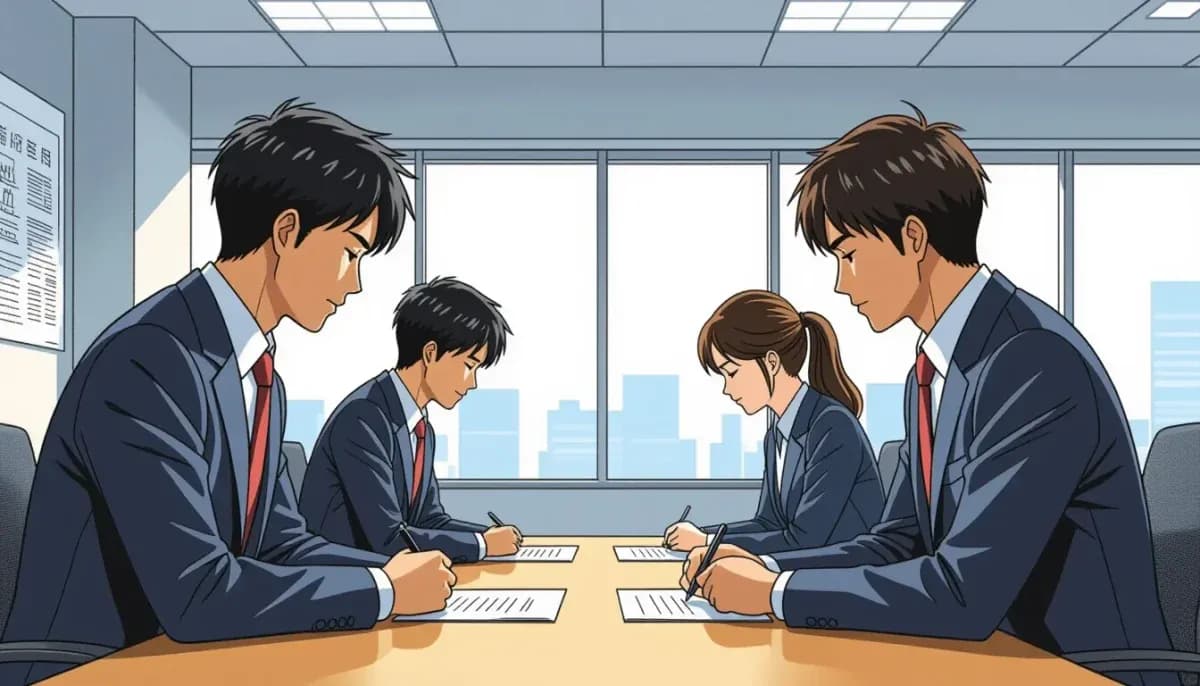
Wa, meaning harmony or group cohesion, is the cornerstone of Japanese professional life. In practice, this means the needs of the team almost always come before individual preferences. Voicing strong disagreement publicly, pushing your own agenda aggressively, or standing out for the wrong reasons can all disrupt wa and damage your professional relationships.
This doesn't mean you can never express your opinion — but how and when you do it matters enormously. In Japan, consensus-building happens through quiet, one-on-one conversations before formal meetings rather than dramatic public debates.
Nemawashi — Building Consensus Before the Meeting
Nemawashi (根回し) literally means "going around the roots" — a gardening metaphor for preparing the ground before transplanting. In business, it refers to the informal process of consulting stakeholders individually before a formal decision is made. If you bring a new idea to a meeting without having done your nemawashi, don't be surprised if it gets a lukewarm reception, even if the idea is brilliant.
Kaizen — Continuous Improvement Never Stops
Kaizen (改善) means continuous improvement, and it's woven into the DNA of Japanese business. Unlike Western workplaces that often celebrate hitting a goal, Japanese organizations set a new target the moment the old one is reached. There's always a better process to find, always room to improve.
Honne and Tatemae — Public vs. Private Feelings
Tatemae (建前) is the public face — what you say in formal situations. Honne (本音) is your true feelings. Japanese colleagues often say "yes" in meetings while privately disagreeing. Learning to read the signals (hesitation, vague answers like "it might be difficult") will save you from many misunderstandings.
Hierarchy, Seniority, and the Chain of Command
Japanese workplaces are highly hierarchical, and this hierarchy is visible in everything from seating arrangements to how business cards are exchanged.
Senpai and Kohai
The senpai (先輩) / kohai (後輩) relationship — senior and junior — governs many workplace interactions. As a newcomer, you're expected to be humble, ask questions, and learn from your senpai. In return, senpai are expected to mentor and guide their kohai. This system can feel rigid, but it also provides a built-in support network.
Business Card Protocol (Meishi Koukan)
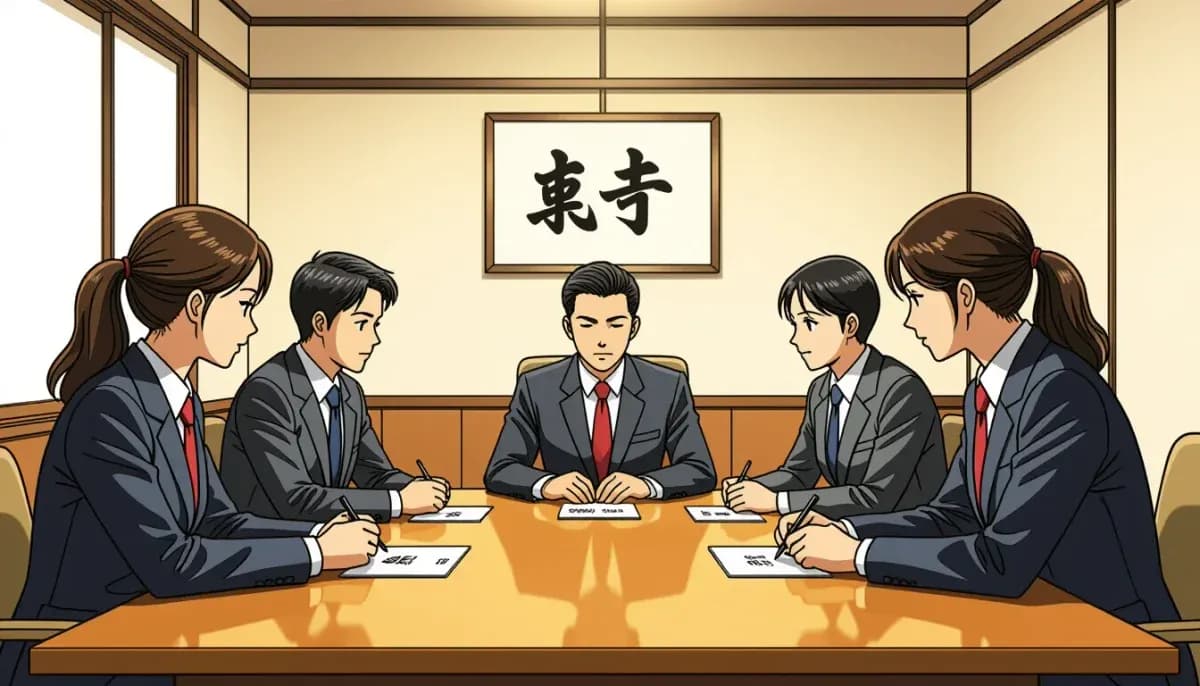
Business card exchange is a ritual that signals respect for the other person's professional identity. Always present your card with both hands, with the text facing the recipient. Receive cards with both hands, take a moment to read them carefully, and never write on or stuff them casually into your pocket. Treat every card like a small representation of the person who gave it.
Keigo — Polite Language
Japanese has an entire grammatical register — keigo (敬語) — dedicated to expressing levels of formality and respect. As a foreigner, you won't be expected to master keigo immediately, but basic polite phrases like "otsukaresama desu" (お疲れ様です, "thank you for your hard work") and "yoroshiku onegaishimasu" (よろしくお願いします, "I'm counting on you / nice to work with you") go a long way toward showing respect and fitting in.
Working Hours, Overtime, and Karoshi
Japan's relationship with work hours is one of the most discussed — and misunderstood — aspects of its culture. The reality is nuanced.
The Statistics Are Sobering
According to Japan's health ministry, 10.1% of male workers and 4.2% of female workers put in more than 60 hours per week in 2022. A government survey found that around 1 in 10 Japanese workers log more than 80 hours of overtime per month, and approximately 1 in 5 are at risk of karoshi — death from overwork, whether through stroke, heart attack, or work-related suicide.
In 2024, a white paper on overwork prevention recorded 883 people recognized as suffering from mental health disorders due to overwork — a record high, up 173 from the previous year.
Karoshi: A Very Real Risk
Karoshi (過労死) is not just a cultural curiosity — it's a recognized medical and legal category in Japan. The WHO and ILO jointly estimated that in 2021, approximately 750,000 deaths globally were linked to overwork-related cardiovascular conditions.
What the Law Says Now
Work Style Reform Laws enacted in 2019 cap overtime at 45 hours per month (360 hours per year) under normal circumstances, with special exceptions allowing up to 100 hours per month in busy periods. These reforms are a significant change, but cultural expectations can still lag behind legal requirements.
Practical Realities
The good news: overtime culture is changing, especially in international companies, startups, and tech firms. Tokyo's government began piloting a 4-day workweek model (80% hours for 100% pay) from April 2025, and only about 15% of companies have adopted it so far, but the direction is clear. In 2023, average annual working hours per worker were 1,636 — significantly lower than the ~1,900 recorded in the 1990s.
The key is to observe your specific workplace. Some Japanese companies are genuinely modernizing; others still operate on outdated expectations. Arrive on time, observe who stays late, and have honest conversations with your manager about expectations.
| Overtime Metric | Data |
|---|
| Workers logging 80+ hrs overtime/month | ~10% |
| Workers at karoshi risk | ~20% |
| Legal overtime cap (standard) | 45 hrs/month |
| Legal overtime cap (busy period) | 100 hrs/month |
| Annual leave usage rate (2018) | 52% of allocation |
| Average annual hours per worker (2023) | 1,636 hrs |
| Companies with 4-day workweek (2025) | ~15% |
For a broader look at your rights as a worker in Japan, see our guide on Working in Japan as a Foreigner.
Daily Office Etiquette: What You Need to Know
Day-to-day office behavior in Japan has its own set of unwritten rules. Getting these right early makes a strong impression.
Punctuality Is Non-Negotiable
Being late — even by a few minutes — is viewed as deeply disrespectful. Aim to arrive 5–10 minutes early for work and especially for meetings. If you're running late, notify your team immediately.
Greetings and Departures
Start every morning with "Ohayou gozaimasu" (おはようございます, good morning). When leaving before others, say "Osaki ni shitsurei shimasu" (お先に失礼します, "Excuse me for leaving before you"). When leaving together, "Otsukaresama deshita" is the right phrase. These greetings aren't optional small talk — they're social glue.
The Open Office Dynamic
Many Japanese workplaces use an open-plan office called an "island layout" (shima). There's little privacy, and keeping noise, personal calls, and strong odors to a minimum is expected. Some offices still have designated eating areas, and eating at your desk — especially fragrant food — can be frowned upon.
Dress Code
Conservative, professional attire is the norm, especially in larger corporations. Suits are standard for men. Women typically dress professionally but modestly. Visible tattoos may need to be covered in many traditional Japanese workplaces. Startups and tech companies are more relaxed.
For more on navigating daily life in Japan, check our Daily Life in Japan Guide.
Building Relationships: Nominication and After-Work Culture
One of the most foreign concepts for many expats is that building real professional relationships in Japan often happens outside the office.
Nominication: Drink Your Way to Belonging
"Nominication" (ノミニケーション) — a blend of "nomi" (drink) and "communication" — refers to the after-work drinking culture that's central to Japanese team bonding. These gatherings (nomikai, or drinking parties) are opportunities to speak more freely, say things you'd never say in the office, and genuinely connect with colleagues.
Attending these events — even occasionally and even if you don't drink alcohol — signals commitment to the group. Regularly declining every invitation can mark you as aloof or disinterested in being part of the team.
Practical Tips for Nomikai
- You don't have to drink alcohol — ordering soft drinks or saying you're driving is completely acceptable
- Pour drinks for others before filling your own glass
- Let the most senior person at the table give the first toast (kanpai!) before drinking
- Business topics are generally discouraged — this is social time
- Show up, stay for at least the first round, and be genuinely present
The 360-Degree Review of Work
Building trust with colleagues means investing in relationships both on and off the job. The connections you make at nomikai often translate directly into smoother collaboration at work, more candid feedback, and genuine support during difficult projects.
For more context on Japanese social customs, see our guide on Japanese Culture and Etiquette.
Communication Styles and How to Navigate Them
If there's one area where cultural gaps cause the most friction for foreigners in Japanese workplaces, it's communication.
Reading Between the Lines
Japanese communication is high-context — meaning a lot is communicated through tone, silence, body language, and what is not said. Direct refusals are uncommon; instead, you'll hear phrases like "sore wa chotto..." (that's a bit...) or "muzukashii desu ne" (that's difficult, isn't it?) which effectively mean "no."
Learning to decode these indirect signals takes time, but it's essential. If you respond to vague hesitation as though it's a "yes," you'll frequently be caught off guard when projects stall or approvals don't come.
Meeting Culture
Formal meetings in Japan are often not where decisions are made — they're where decisions already agreed upon through nemawashi are officially announced. Speaking out aggressively in meetings, especially as a junior employee or newcomer, can embarrass senior colleagues and damage relationships.
Silence in meetings is normal and not something to fill nervously. Nodding ("hai") means "I'm listening" — not necessarily "I agree."
Written Communication
Email communication in Japanese workplaces tends to be formal, structured, and deferential. Use formal salutations, avoid overly casual language, and be thorough — ambiguity in written communication can create uncertainty and slow decisions.
Adapting as a Foreigner: Practical Advice
Foreigners are increasingly common in Japanese workplaces, and many organizations genuinely welcome the perspectives they bring. Here's how to make the transition smoother.
Learn Some Japanese — Even a Little
You don't need to be fluent to make a strong impression. Using common phrases — ohayou gozaimasu, otsukaresama desu, yoroshiku onegaishimasu — shows respect and genuine effort. Even attempting Japanese, however imperfectly, is appreciated.
For structured language learning support, see our Complete Guide to Learning Japanese.
Observe Before You Act
Your first weeks are reconnaissance. Watch who speaks up in meetings, who leaves on time vs. who stays late, how people interact with managers. The more you observe before you form judgments or try to change things, the better equipped you'll be.
Set Expectations Early (and Honestly)
If you're unwilling to work excessive overtime, have that conversation early and professionally with your manager. Many modern Japanese companies are more flexible than their reputation suggests — but only if you communicate clearly rather than quietly resenting expectations.
Mental Health Matters
Working in a high-pressure environment with cultural and language stress layered on top is genuinely difficult. Recognizing when you're overwhelmed and seeking support — whether from colleagues, expat communities, or professional counseling — is essential. See our guide on Mental Health and Wellbeing in Japan for resources.
External Resources Worth Bookmarking
For detailed guidance on understanding Japanese work culture as a foreigner, Living in Nihon's work culture guide covers the nuances of professional life in Japan. For business culture and etiquette specifics, the For Work in Japan business etiquette guide is an excellent resource. For IT professionals considering career moves in Japan, Ittenshoku provides detailed career transition resources.
For real-world perspectives on adapting to Japanese work culture, read GoConnect's guide to thriving in Japan's work culture as a foreigner and Gerson Relocation's guide to navigating Japanese working culture.
What's Changing: The New Face of Japanese Work Culture
Japanese workplace culture is genuinely evolving, and it's worth distinguishing between the old stereotypes and current reality.
Work Style Reform Is Real
The 2019 Work Style Reform Laws weren't symbolic — they introduced enforceable caps on overtime, mandatory paid leave requirements, and new protections for non-regular employees. Companies that violate these rules face legal consequences.
The Rise of Remote Work and Flexible Hours
COVID-19 accelerated remote work adoption in Japan dramatically. While many companies have since returned to office-first policies, flextime and hybrid arrangements are now far more common than they were a decade ago.
Younger Workers Are Pushing Back
A new generation of Japanese workers — often called "satori sedai" (the enlightened generation) — place a much higher value on work-life balance than their parents did. Younger employees are more likely to leave jobs that demand excessive overtime and more willing to prioritize personal time.
International Companies Set Different Norms
If you're working at a foreign-headquartered company in Japan, expectations around hierarchy, overtime, and direct communication may differ significantly from traditional Japanese firms. Global companies often act as bridges between Japanese business norms and more Western work styles.
For broader context on your life in Japan, don't miss our pillar guides on Banking and Finance in Japan, Japanese Bureaucracy and Paperwork, and Japan Visa and Immigration.
Final Thoughts
Japanese workplace culture rewards patience, observation, and genuine effort to understand the unwritten rules. It can be demanding, confusing, and occasionally frustrating for foreigners — but it also offers real opportunities to develop deep professional relationships, learn extraordinary attention to detail, and be part of organizations that take quality and craftsmanship seriously.
The key is to go in with eyes open: understand what's genuinely non-negotiable (hierarchy, punctuality, respect), what's changing (overtime culture, work-life balance expectations), and where you have more room to be yourself than the stereotypes suggest. Japan's workplace culture is neither the dystopian overwork nightmare some portray nor the perfectly harmonious ideal others romanticize — it's a complex, evolving system that rewards those who take the time to understand it.