
Office Hierarchy and Seniority in Japanese Companies

Learn how office hierarchy, seniority, and the senpai-kohai dynamic work in Japanese companies. Practical guide for foreigners navigating corporate Japan.
Office Hierarchy and Seniority in Japanese Companies: A Complete Guide for Foreigners
If you've just started working at a Japanese company, one thing becomes clear very quickly: hierarchy is not just organizational structure — it's the foundation of daily interaction. From how you introduce yourself to where you sit in a meeting room, rank and seniority shape almost every aspect of working life in Japan.
This guide breaks down the Japanese corporate hierarchy system, explains the senpai-kohai dynamic, and gives you practical advice on how to navigate it successfully as a foreigner.
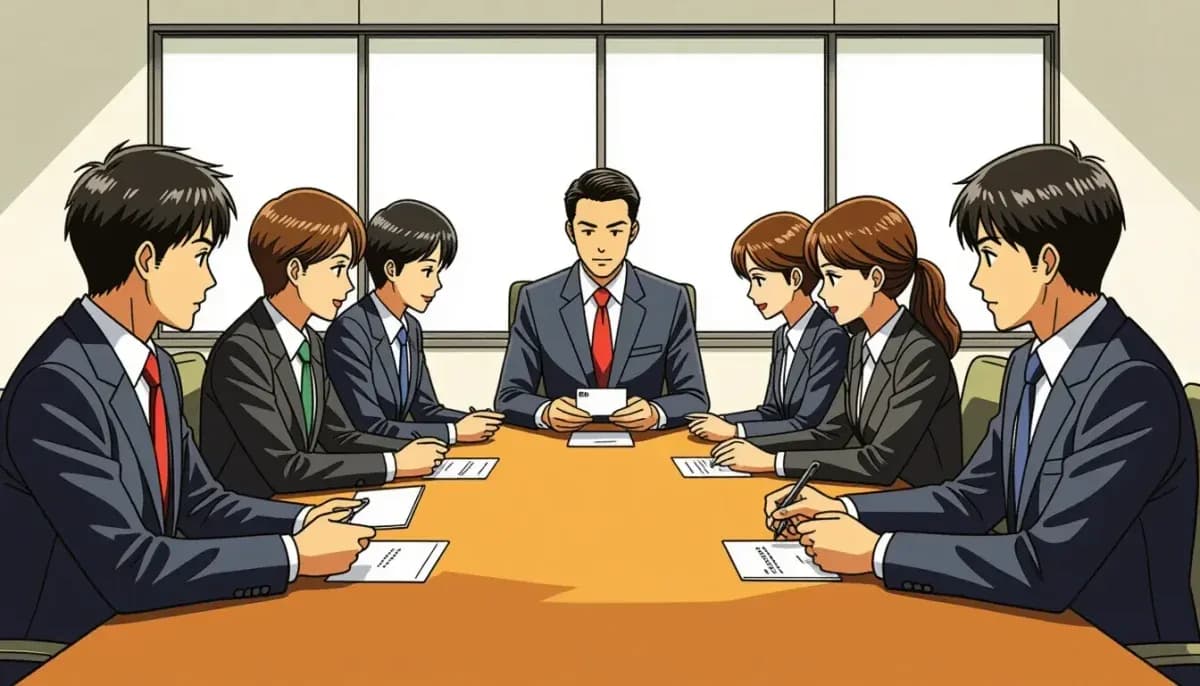
!Japanese office workers in a formal meeting, exchanging business cards with respectful bows

Understanding Nenkojoretsu: Japan's Seniority-Based System
At the heart of Japanese corporate culture is nenkojoretsu (年功序列) — a system where seniority, measured primarily by years of service rather than pure performance, determines an employee's rank, salary, and promotion opportunities.
Under nenkojoretsu:
- Entry date matters more than age — two employees hired the same year are equals, even if one is older
- Promotions are largely automatic for the first several years, based on tenure
- Salary increases follow a predictable curve, rising steadily with years of service
- Senior employees receive deference regardless of how talented junior employees may be
This system promotes loyalty and long-term employment. The expectation has historically been that employees join a company fresh out of university and stay for life. While this is changing — especially in tech and international companies — the seniority mindset still permeates most traditional Japanese organizations.
For foreigners, nenkojoretsu can feel frustrating. You might be highly skilled and outperform colleagues who have simply been around longer. But understanding that the system exists — and why it exists — helps you navigate it rather than fight against it.
For a broader look at how Japanese work culture operates, check out our Complete Guide to Working in Japan for Foreigners.
The Japanese Corporate Hierarchy: Titles and Roles
Japanese companies have a well-defined hierarchical structure with specific titles at each level. Here's a breakdown of the most common positions from top to bottom:
| Japanese Title | Romaji | English Equivalent |
|---|---|---|
| 会長 | Kaichou | Chairman of the Board |
| 社長 | Shachou | President / CEO |
| 副社長 | Fuku-Shachou | Executive Vice President |
| 専務取締役 | Senmu Torishimariyaku | Senior Managing Director |
| 常務取締役 | Joumu Torishimariyaku | Managing Director |
| 取締役 | Torishimariyaku | Director |
| 部長 | Bucho | Department Chief / General Manager |
| 課長 | Kacho | Section Chief / Manager |
| 係長 | Kakaricho | Team Leader / Supervisor |
| 主任 | Shunin | Senior Staff / Lead |
| 一般社員 | Ippan Shain | Regular Employee / Staff |
| 新入社員 | Shinnyuu Shain | New Employee / Recruit |
Key roles explained:
- Bucho (部長) — The department chief sits at the top of middle management. They bridge top executives and section-level staff, controlling budget and headcount decisions.
- Kacho (課長) — Section chiefs are the "field commanders" of Japanese companies. They manage day-to-day operations, approve leave requests, and are your most direct point of contact with management.
- Kakaricho (係長) — Team leaders often handle the practical oversight of small groups, acting as liaison between regular staff and the kacho.
When addressing colleagues, always use their title plus "-san" (e.g., "Tanaka-kacho" for a section chief named Tanaka). Never use first names unless explicitly invited to.
The Senpai-Kohai Dynamic: Mentorship Through Hierarchy
The senpai-kohai (先輩・後輩) relationship is one of the most important social structures in the Japanese workplace. "Senpai" refers to someone senior to you — either in years at the company, age, or experience — while "kohai" means someone junior.
This isn't just a title. It defines how you interact:
As a kohai (junior):
- Use keigo (honorific language, 敬語) when speaking to senpai at all times
- Show eagerness to learn and accept guidance without pushing back
- Don't outshine your senpai publicly — timing and subtlety matter
- Arrive before your senpai and leave after them (or at least check in before leaving)
As a senpai (senior):
- You're expected to guide and support your kohai
- Take responsibility for your kohai's mistakes to some degree
- Introduce your kohai to colleagues and help them integrate
For foreigners, the senpai-kohai system can feel hierarchical in a way that seems to suppress individual expression. However, most Japanese colleagues understand that foreigners won't follow every nuance perfectly. What matters is showing sincere effort and awareness of the system.
As noted in our guide on Japanese Culture and Etiquette, understanding social hierarchies is fundamental to building positive relationships in Japan.
For more detailed guidance on senpai-kohai dynamics from a foreigner's perspective, the Jobs in Japan guide to workplace hierarchies is an excellent resource.
!Japanese business professionals in an office setting showing respectful interactions

Practical Rules of Hierarchy: What You Need to Know Daily
Understanding the theory is one thing. Here are the practical situations where hierarchy shows up every single day:
Seating Arrangements
In Japan, where you sit is a statement of rank. The concept of kamiza (上座) and shimoza (下座) dictates seating:
- Kamiza (upper seat) — farthest from the door, reserved for the most senior person
- Shimoza (lower seat) — closest to the door, where the most junior person sits
This applies in meeting rooms, taxis, elevators, and even restaurants. As a newcomer, don't sit down until you understand the protocol. When in doubt, wait and observe.
Business Card Exchange (Meishi Koukan)
The business card ritual is serious in Japan. Rules:
- The lower-ranked person or visitor presents their card first
- Present with both hands, card facing toward the recipient
- Bow slightly as you present and receive
- Hold your card lower than the senior person's card when exchanging simultaneously
- Read the card you receive — don't pocket it immediately
- During meetings, arrange received cards respectfully on the table in front of you
Mishandling business cards — writing on them, bending them, or treating them carelessly — is a significant cultural offense.
Meetings and the Ringi System
Japanese decision-making doesn't happen in meetings. Meetings are where decisions are confirmed. The actual work happens before through:
- Nemawashi (根回し) — informal groundwork. Before any formal proposal, you discuss it individually with key stakeholders to build consensus. Going into a meeting without nemawashi is considered reckless.
- Ringi system (稟議) — formal written approval routed through all relevant levels of management. Documents pass from junior to senior until all necessary parties sign off.
This process is slow by Western standards. But it means that once a decision is made, implementation is smooth because everyone is already on board.
Horenso: The Reporting Culture
Horenso (報連相) is one of the most important concepts for anyone working in a Japanese company. It stands for:
- Hokoku (報告) — Reporting: Keep your superiors informed about progress and results
- Renraku (連絡) — Notification: Share information about changes or updates promptly
- Sodan (相談) — Consultation: Seek guidance from superiors before making important decisions
Neglecting horenso — especially failing to consult before acting independently — can damage your reputation quickly. Supervisors need to feel informed and in control. Even if you know the answer, checking in shows respect and keeps the team aligned.
For more on navigating the nuances of Japanese work culture, Living in Nihon's Work Culture Guide covers the fundamentals for foreigners in depth.
How to Navigate the Hierarchy as a Foreigner
Being foreign gives you a slight advantage: Japanese colleagues generally don't expect you to follow every cultural protocol perfectly. But the effort you show goes a long way. Here's how to navigate effectively:
Show respect early and consistently Bow when greeting, use titles when addressing people, and let seniors speak first in meetings. These small signals communicate that you're aware of and respect the system.
Master basic keigo phrases You don't need to speak perfect business Japanese. But learning a few keigo phrases — like "yoroshiku onegai shimasu" (I look forward to working with you), "osore irimasu ga..." (I'm sorry to trouble you, but...), and "go-kuro sama deshita" (thank you for your hard work) — shows cultural awareness.
Find a senpai to guide you In many companies, new employees are assigned a senpai mentor. If not, proactively build a relationship with a trusted senior colleague. They can navigate you through unwritten rules and social dynamics that no official onboarding covers.
Choose your battles In your home country, you might push back on decisions you disagree with. In Japan, timing and framing matter enormously. Rather than disagreeing in meetings, raise concerns privately with your direct manager through proper channels. Use nemawashi — bring your idea to people informally before the meeting.
Participate in after-work events Nomikai (drinking parties) and company outings aren't optional in spirit, even if they are technically optional. These events are where relationships are built and hierarchies relax slightly. Attending — even briefly — signals your commitment to being part of the team.
For broader context on social integration, see our guide on Making Friends and Social Life in Japan.
The For Work in Japan Business Culture Guide provides additional guidance specifically for foreigners working in corporate Japan.
Is the Seniority System Changing?
Yes — but slowly. Japan's workforce is evolving, driven by:
- Labor shortages forcing companies to compete for talent
- Younger workers who prioritize merit-based recognition and work-life balance
- Foreign companies and startups introducing flatter organizational structures
- Government work-style reform (hatarakikata kaikaku) pushing for overtime limits and flexible work
In tech companies especially, many firms now promote based on performance rather than tenure. Global companies operating in Japan tend to have hybrid cultures that blend Japanese hierarchy norms with more Western-style communication and advancement paths.
However, in traditional industries — manufacturing, finance, government-adjacent organizations — nenkojoretsu remains firmly in place. As a foreigner, assess your specific workplace before assuming how much flexibility exists.
Some signals that a company leans more merit-based:
- International teams or foreign leadership
- Stated values around diversity and inclusion
- Performance review systems tied to promotion
- Younger management at mid-levels
The IT Tenshoku career platform covers career transitions in Japan's tech sector, where merit-based hiring is increasingly standard for foreign professionals.
Summary: Key Takeaways for Foreigners
Working within Japan's hierarchy system doesn't mean abandoning your identity. It means developing cultural fluency — understanding when to adapt and when your foreign perspective is actually an asset.
Remember these core principles:
- Nenkojoretsu values tenure, but performance still matters for your reputation
- Senpai-kohai relationships are mentorship channels, not just power structures
- Nemawashi and ringi slow decisions but improve execution
- Horenso keeps you trustworthy in your manager's eyes
- Small daily gestures — bowing, seating, keigo — communicate respect more than grand gestures
Japan's office hierarchy can feel rigid at first, but for foreigners who take the time to understand it, it offers clear structure, mentorship opportunities, and a deeply supportive work environment once you earn your place within it.
For more on building your career in Japan, explore our Complete Guide to Working in Japan for Foreigners and our Japanese Culture and Etiquette Guide. You can also find useful advice on navigating Japanese work culture at WorkJapan.

Originally from Vietnam, living in Japan for 16+ years. Graduated from Nagoya University, with 11 years of professional experience at Japanese and international companies. Sharing information about living in Japan for foreigners.
View Profile →Related Articles

What It Is Like Working in a Japanese Company as a Foreigner
Discover what it's really like working in a Japanese company as a foreigner — workplace hierarchy, Horenso culture, long hours, communication challenges, and tips to thrive in Japan's corporate world.
Read more →
Women in the Japanese Workplace Guide for Foreign Women
A comprehensive guide for foreign women navigating the Japanese workplace — from gender dynamics and dress codes to legal rights, salary negotiation, and building professional networks in Japan.
Read more →
Japanese Business Email and Communication Etiquette
Master Japanese business email etiquette as a foreigner in Japan. Learn the 7-part email format, keigo honorifics, meeting protocols, business card exchange, and essential phrases for professional success.
Read more →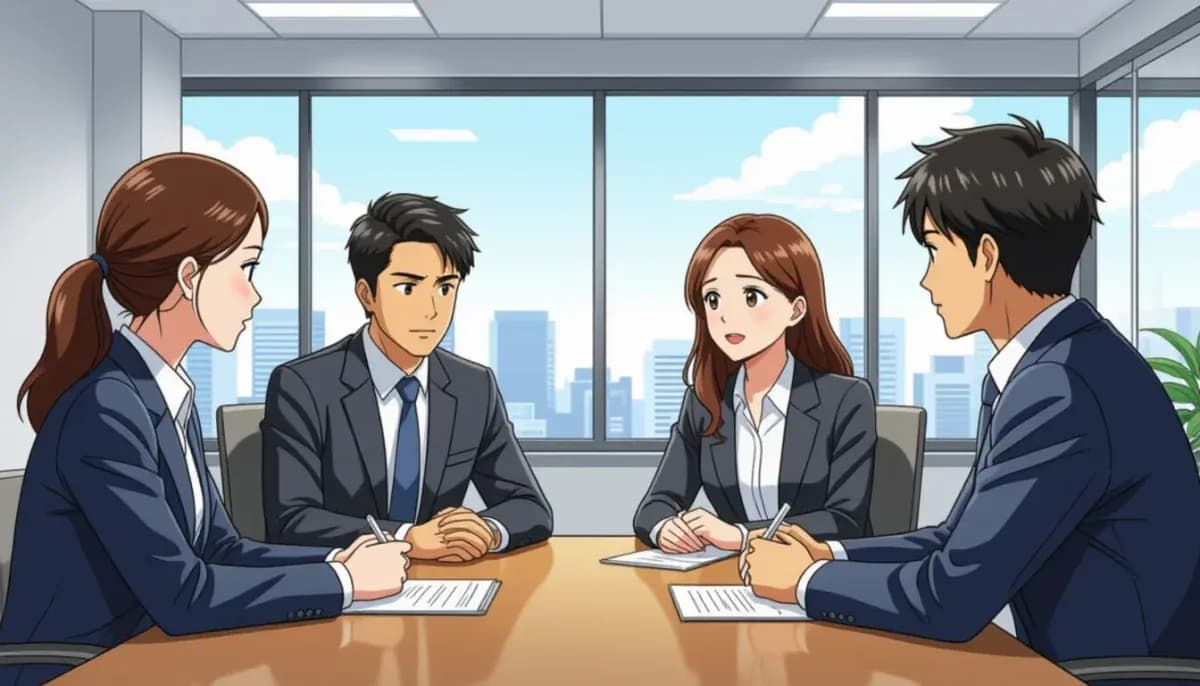
How to Handle Workplace Conflict in Japan
Learn how to navigate workplace conflict in Japan as a foreigner. Discover culturally-appropriate strategies including nemawashi, hourensou, and your legal rights against power harassment.
Read more →
Dress Code Guide for Japanese Offices
A complete guide to dress codes in Japanese offices for foreigners and expats. Learn what to wear, seasonal Cool Biz rules, industry differences, grooming standards, and common mistakes to avoid.
Read more →
Senpai Kohai Relationship in the Japanese Workplace
Understand the senpai kohai system in Japanese workplaces. This guide covers hierarchy rules, kohai expectations, senpai duties, and practical tips for foreigners navigating Japanese office culture.
Read more →