
Senpai Kohai Relationship in the Japanese Workplace

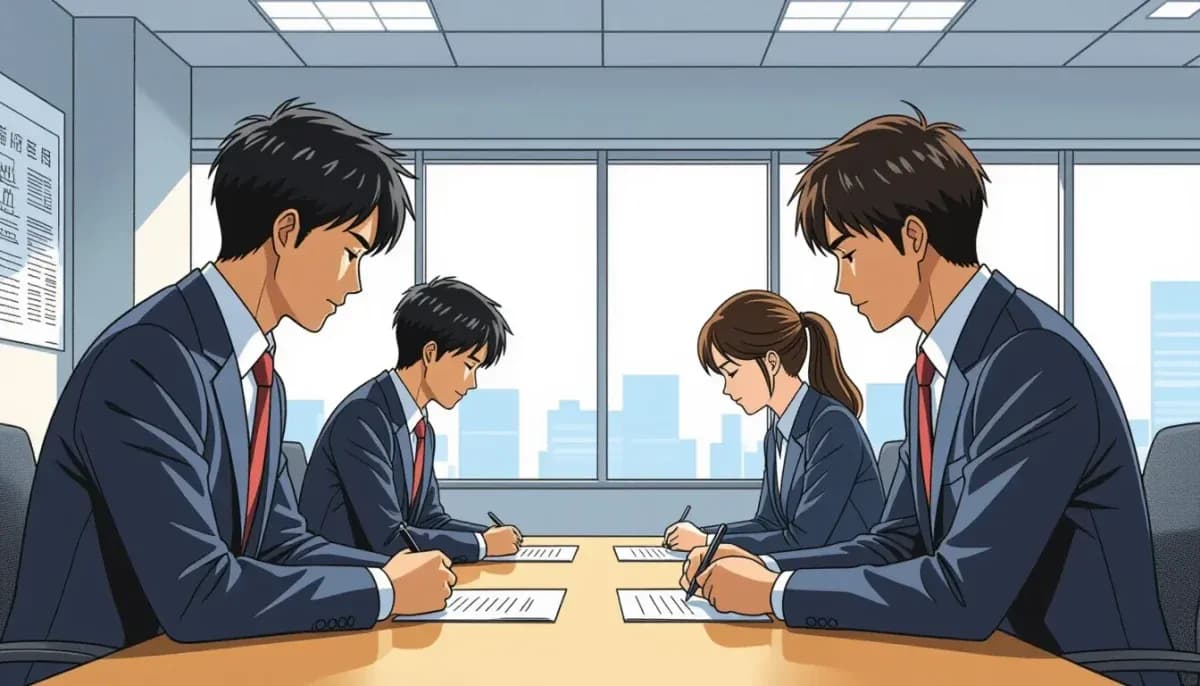
Understand the senpai kohai system in Japanese workplaces. This guide covers hierarchy rules, kohai expectations, senpai duties, and practical tips for foreigners navigating Japanese office culture.
Senpai Kohai Relationship in the Japanese Workplace: A Complete Guide for Foreigners
If you've just started working in Japan, you've probably heard the words senpai and kohai — perhaps your manager introduced you to your designated senpai, or a colleague pulled you aside to explain who's senior to whom. This hierarchical system is deeply woven into Japanese workplace culture, and understanding it can be the difference between thriving in your role and unintentionally causing offense. This guide will walk you through everything foreigners need to know about the senpai-kohai relationship at work.
!Japanese office workers in a modern Tokyo workplace showing hierarchical seating arrangements

What Is the Senpai-Kohai System?
The terms senpai (先輩) and kohai (後輩) refer to a vertical social hierarchy rooted in Confucian philosophy, which has shaped Japanese society for centuries. In its simplest form:
- Senpai = a senior person who joined before you, is older, or has more experience
- Kohai = a junior person who joined after you or has less experience
- Doki (同期) = colleagues who joined in the same cohort — treated as peers and near equals
What makes this system unique is that seniority in Japan is determined primarily by entry timing, not ability or performance. Even if you are far more skilled than your senpai, you are still expected to defer to them. This is a fundamental point that surprises many Western professionals working in Japan for the first time.
The system originates in school clubs and sports teams where students of different years form hierarchical mentoring bonds. It then carries directly into company life. When you start a new job in Japan, regardless of your prior experience or qualifications, you enter at the bottom of the hierarchy as a kohai.
How Seniority Is Determined in Japanese Workplaces
Unlike Western organizations where status is more fluid and based on role or merit, Japanese workplaces use a specific hierarchy of factors to establish rank:
| Factor | Priority Level | How It Works |
|---|---|---|
| Entry date | Highest | Joined one day before you = your senpai |
| Age | Secondary | Older employees generally hold higher informal status |
| Job title / position | Tertiary | Official title matters but can be overridden by tenure |
| Competence / skill | Lowest | Does NOT directly determine senpai-kohai ranking |
This means a 25-year-old who joined the company in April is the senpai of a 35-year-old career changer who joined in October of the same year — at least for their first years. For foreigners coming from merit-based cultures, this can be frustrating, but it is essential to respect the system while building your reputation.
For a comprehensive overview of how Japanese workplace culture works beyond just hierarchy, see the Complete Guide to Working in Japan for Foreigners.
Expectations for Kohai (Juniors)
As the newcomer — the kohai — the burden of adaptation falls largely on you. Here is what is expected:
Language and Communication
You must use keigo (敬語, honorific speech) when speaking to your senpai. This includes the polite desu-masu form and additional honorifics that elevate your senpai while humbling yourself. With your doki (same-year peers), casual speech is acceptable. Getting this right early signals cultural awareness and earns respect.
Attitude and Mindset
Think of your first year as a sponge phase. The expectation is that you:
- Listen far more than you speak
- Absorb information, procedures, and unwritten rules from your senpai
- Accept criticism gracefully without becoming defensive
- Demonstrate humility, even if you have more experience in a given area
This doesn't mean you should never contribute — your international perspective may be genuinely valued — but knowing when to speak up matters greatly.
Workplace Behavior
- Wait to be seated: In meetings, restaurants, and elevators, seating follows rank. The kamiza (上座, upper seat, farthest from the door) is for the most senior person. As a kohai, you sit at the shimoza (下座, nearest the door).
- Punctuality: Arrive before your senpai. Leaving after them is ideal in traditional companies.
- Small gestures: Offer tea or coffee, hold doors, and pay attention to these small acts of consideration.
For more context on Japanese etiquette beyond the workplace, see our guide on Japanese Culture and Etiquette for Foreigners.
Expectations for Senpai (Seniors)
The senpai-kohai relationship is not one-sided. Senpai carry significant responsibility for their kohai:
- Mentoring: Senpai are expected to guide kohai on job procedures, office culture, and career development
- Feedback: Offering constructive criticism privately and tactfully, never humiliating the kohai in public
- Social support: Inviting kohai to after-work gatherings and making them feel included
- Covering the bill: Traditionally, senpai pay for kohai's food and drinks when going out together, reflecting the expectation that senpai earn more and should support their juniors financially in social settings
When a senpai fails at these duties — showing indifference or even bullying behavior toward their kohai — it damages team morale and is increasingly recognized as a serious workplace problem in modern Japan.
!Senpai mentoring a kohai colleague at a Japanese company desk

Navigating the System as a Foreign Worker
Foreigners in Japan often receive some grace with senpai-kohai norms — Japanese colleagues may not expect you to follow every nuance perfectly. However, making a genuine effort goes a long way. Here are practical tips:
Do These Things
- Learn your senpai's name and respect their title: Address them with their last name plus -san or their job title until invited to use something more casual.
- Observe before acting: Watch how colleagues interact, who defers to whom in meetings, and let these cues inform your behavior.
- Show appreciation explicitly: Japanese culture values indirect communication, but as a foreigner, a sincere arigatou gozaimashita after receiving help from your senpai is always well received.
- Ask your senpai for advice: Even if you already know the answer, consulting your senpai shows respect and helps build the relationship.
- Mind the social drinking etiquette: At nomikai (drinking parties), refill your senpai's glass before your own, hold your glass slightly lower when toasting, and don't be the first to leave.
Avoid These Mistakes
- Don't challenge your senpai publicly: If you disagree, do so privately or through indirect channels. Public disagreement is seen as disrespectful.
- Don't skip formalities: Using casual language too soon signals arrogance or disregard for the culture.
- Don't outperform openly: If you're more skilled in an area, find ways to contribute without making your senpai look incompetent.
- Don't ignore the seating hierarchy: Especially in client meetings, ask where to sit rather than choosing freely.
For related advice on building social connections in Japan, check out our article on Making Friends and Social Life in Japan.
The Challenges and Modern Evolution of the System
The senpai-kohai hierarchy has genuine critics, and for good reason:
Innovation suppression: Because junior employees are discouraged from challenging seniors, companies can miss out on fresh ideas and better solutions. Talented employees may feel stifled.
Gender compounding: Women in Japanese workplaces face the double burden of senpai-kohai hierarchy plus gender-based expectations, which can limit their visibility and advancement.
Changing with Gen Z: Younger Japanese workers increasingly value meritocracy, work-life balance, and flat communication. Many startups and multinational firms in Japan have deliberately flattened hierarchies to attract this talent.
Remote work impact: The pandemic-accelerated shift to remote work weakened some of the physical and social rituals of the hierarchy, making the system more flexible in practice.
For more detail on how Japanese society is evolving alongside workplace culture, GaijinPot's first-hand account of experiencing Japan's senpai-kouhai system at work offers a practical perspective.
A well-researched academic study published by MDPI on senpai, kohai, and doki in Japanese organizations explores the structural dimensions of this system in depth.
Senpai-Kohai vs. Boss-Subordinate: Key Differences
Many foreigners confuse the senpai-kohai relationship with the manager-employee relationship. They overlap but are not the same:
| Aspect | Senpai-Kohai | Manager-Subordinate |
|---|---|---|
| Basis of relationship | Entry timing / seniority | Official job title |
| Formal authority | Informal only | Formal, binding |
| Social obligations | Strong mutual responsibility | Professional only |
| Can exist between same rank | Yes | No |
| Changes over time | Permanent — always your senpai | Changes with promotion |
Your senpai may not be your boss, but their informal influence on your reputation within the team can be just as powerful. Build these relationships thoughtfully.
For additional context on understanding Japanese corporate structures, Living in Nihon's guide to Japanese corporate hierarchy and For Work in Japan's senpai-kohai guide offer useful perspectives.
Practical Phrases for Senpai-Kohai Interactions
Learning a few Japanese phrases for navigating senpai-kohai dynamics can help you make a strong first impression:
| Situation | Phrase | Meaning |
|---|---|---|
| Asking for guidance | ご指導よろしくお願いします (Go-shidou yoroshiku onegaishimasu) | "Please guide me well" |
| Thanking your senpai | お世話になっております (Osewa ni natte orimasu) | "Thank you for your support" |
| At a drinking event toast | よろしくお願いします (Yoroshiku onegaishimasu) | "I look forward to working with you" |
| Receiving feedback | ありがとうございます、勉強になりました (Arigatou gozaimasu, benkyou ni narimashita) | "Thank you, I learned something" |
| Asking your senpai for advice | ご意見をいただけますでしょうか (Go-iken wo itadakemasu deshou ka) | "May I ask for your opinion?" |
For more on Japanese communication styles, our Complete Guide to Learning Japanese will help you build the language skills needed to navigate these interactions with confidence.
Conclusion: Embracing the System While Being Yourself
The senpai-kohai system can feel hierarchical and even rigid to foreigners used to more egalitarian workplaces. But at its best, it creates a culture of mentorship, mutual obligation, and continuous learning that many Western workplaces lack. Your senpai genuinely wants you to succeed — that is their role and responsibility.
As a foreigner, you won't be expected to perform every nuance perfectly, but showing genuine respect for the system will earn you goodwill, smoother working relationships, and deeper trust with your Japanese colleagues. Start as a humble, attentive kohai, build your reputation through results and respect, and you'll find that Japan's workplace culture — once understood — can be deeply rewarding.
For more resources on adapting to life and work in Japan, explore our Complete Guide to Daily Life in Japan for Foreigners and insights from Ittenshoku's resource hub for foreigners navigating Japanese professional culture.

Originally from Vietnam, living in Japan for 16+ years. Graduated from Nagoya University, with 11 years of professional experience at Japanese and international companies. Sharing information about living in Japan for foreigners.
View Profile →Related Articles

What It Is Like Working in a Japanese Company as a Foreigner
Discover what it's really like working in a Japanese company as a foreigner — workplace hierarchy, Horenso culture, long hours, communication challenges, and tips to thrive in Japan's corporate world.
Read more →
Women in the Japanese Workplace Guide for Foreign Women
A comprehensive guide for foreign women navigating the Japanese workplace — from gender dynamics and dress codes to legal rights, salary negotiation, and building professional networks in Japan.
Read more →
Japanese Business Email and Communication Etiquette
Master Japanese business email etiquette as a foreigner in Japan. Learn the 7-part email format, keigo honorifics, meeting protocols, business card exchange, and essential phrases for professional success.
Read more →
How to Handle Workplace Conflict in Japan
Learn how to navigate workplace conflict in Japan as a foreigner. Discover culturally-appropriate strategies including nemawashi, hourensou, and your legal rights against power harassment.
Read more →
Dress Code Guide for Japanese Offices
A complete guide to dress codes in Japanese offices for foreigners and expats. Learn what to wear, seasonal Cool Biz rules, industry differences, grooming standards, and common mistakes to avoid.
Read more →
Japanese Meeting Culture Protocols and Expectations
A complete guide to Japanese meeting culture for foreigners and expats. Learn meishi exchange, seating etiquette, nemawashi, decision-making, and key protocols to succeed in Japanese business meetings.
Read more →