
Japanese Meeting Culture Protocols and Expectations

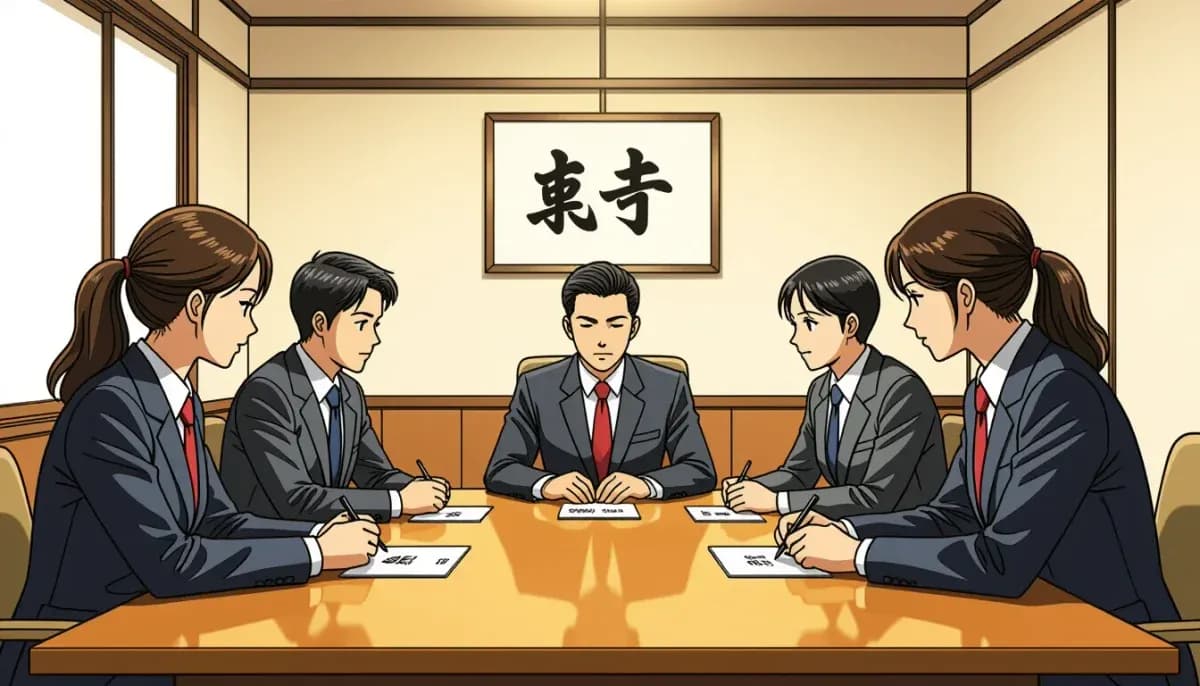
A complete guide to Japanese meeting culture for foreigners and expats. Learn meishi exchange, seating etiquette, nemawashi, decision-making, and key protocols to succeed in Japanese business meetings.
Japanese Meeting Culture: A Complete Guide for Foreigners
If you've ever sat in a Japanese business meeting and felt completely lost — wondering why no one speaks up, why decisions seem to happen before the meeting, or why your colleague just spent 10 minutes exchanging business cards — you're not alone. Japanese meeting culture operates by a distinct set of rules that differ dramatically from Western norms.
Whether you're a new expat starting a Japanese corporate job or a foreign business professional meeting Japanese clients, understanding the protocols and expectations of Japanese meetings is essential. This guide breaks down everything you need to know to navigate Japanese business meetings with confidence and respect.
Understanding the Purpose of Meetings in Japan
In Japan, meetings serve a different primary purpose than they do in many Western countries. While Western meetings often aim to make decisions, Japanese meetings often aim to announce decisions that have already been reached through a behind-the-scenes consensus-building process.
This process is called nemawashi (根回し), which literally translates to "turning the roots" — a gardening metaphor for carefully preparing the ground before transplanting a plant. In business, nemawashi means consulting key stakeholders individually and informally before a formal meeting, ensuring everyone is aligned and no one is surprised or embarrassed during the official session.
Related to this is ringi (稟議), the formal process of circulating written proposals for approval from multiple levels of management. By the time a meeting is called, the ringi document may have already been signed by all relevant parties.
Understanding these two concepts will help you make sense of why Japanese meetings can feel like formalities — because, in many ways, they are. The real work happens in the informal conversations beforehand.
For a broader perspective on navigating the Japanese workplace as a foreigner, see The Complete Guide to Working in Japan as a Foreigner.
Types of Japanese Business Meetings
Not all meetings in Japan are the same. Understanding the different formats will help you adjust your behavior and expectations accordingly.
| Meeting Type | Japanese Term | Purpose | Formality |
|---|---|---|---|
| Morning Briefing | 朝礼 (Chōrei) | Daily alignment, announcements | Semi-formal |
| Formal Meeting | 会議 (Kaigi) | Decision-making, project reviews | Very formal |
| Informal Consultation | 打ち合わせ (Uchiawase) | Discussion, brainstorming | Casual |
| Kickoff Meeting | キックオフ会議 | Project launch, goal-setting | Formal |
| Progress Meeting | 進捗会議 (Shinchoku Kaigi) | Status updates, obstacle review | Formal |
| Reflection Meeting | 反省会議 (Hansei Kaigi) | Post-project review, lessons learned | Formal |
| Client Meeting | 顧客会議 (Kokyaku Kaigi) | Relationship building, business development | Very formal |
Chōrei (朝礼) — morning meetings — are common in Japanese companies. These brief daily gatherings at the start of the workday set the tone, share announcements, and align team members. If you work at a Japanese company, expect to attend these regularly.
Uchiawase (打ち合わせ) are more informal consultations and are arguably where more substantive discussion happens. These can feel more relaxed and are a good opportunity to raise concerns or explore ideas before they go to a formal Kaigi.
Punctuality: The 5-Minute Rule
In Japan, punctuality is not just polite — it's mandatory. The concept of 5分前行動 (go-fun-mae kōdō), or "5-minute prior action," means that being on time is actually being late. You are expected to arrive at least 5 minutes before a meeting begins, ready to start.
Being late to a Japanese business meeting, even by a few minutes, is considered disrespectful and can seriously damage your professional reputation. If you are running late due to an unavoidable circumstance, you should contact the meeting organizer immediately and apologize sincerely upon arrival.
This emphasis on punctuality extends to meeting end times as well. Japanese meetings typically start and end at the scheduled times. Ending a meeting slightly early is considered considerate, as it gives attendees time to transition to their next commitment.
For tips on navigating Japanese culture and etiquette more broadly, check out The Complete Guide to Japanese Culture and Etiquette.
Seating Arrangements: Seki-Jun Etiquette
One of the first things you'll notice when entering a Japanese meeting room is that seating is not random. Japan follows a formal seating hierarchy called seki-jun (席順).
The key terms to know:
- Kamiza (上座) — the "upper seat," which is the seat farthest from the door. This is reserved for the highest-ranking or most honored person in the room.
- Shimoseki (下座) — the "lower seat," closest to the door. This is typically where junior staff or hosts sit.
As a general rule:
- Wait to be directed to your seat, especially in a client meeting
- If you're a guest, you'll usually be invited to sit at the kamiza
- If you're the host, seat yourself at the shimoseki closest to the door
- Arrange your team in descending order of rank from the kamiza
Ignoring seating etiquette in a formal meeting can cause confusion and discomfort, so it's worth paying attention even if it feels overly ceremonial.
Business Card Exchange (Meishi Koukan)
If there's one ritual that defines the start of a formal Japanese business meeting, it's the meishi kōkan (名刺交換) — the exchange of business cards.
Business cards in Japan are treated as an extension of the person they represent. Careless handling of a meishi is essentially disrespecting the person who gave it to you.
Rules for meishi exchange:
- Present your card with both hands, text facing the recipient, with a slight bow
- Receive the other person's card with both hands and take a moment to read it
- Make a brief, respectful comment about the card (e.g., acknowledging their title or company)
- Do not write on the card, fold it, or casually stuff it into your pocket
- During the meeting, arrange the received cards on the table in front of you, in the same order as the seating arrangement of those across from you
- Place cards in a proper meishi holder (名刺入れ) after the meeting
The exchange typically begins with the most senior person and proceeds down the hierarchy. If you are meeting a group, this process can take several minutes. Do not rush it.
Invest in a quality meishi holder before your first formal meeting. Pulling out a card from a wallet or pocket looks unprofessional.
For more guidance on Japanese workplace culture, Living in Nihon's Japanese Work Culture Guide is an excellent resource.
Meeting Conduct: Do's and Don'ts
Once a meeting begins, there are specific behavioral expectations you should be aware of.
Do:
- Take thorough notes. Note-taking signals engagement and respect. Japanese counterparts often reference notes from previous meetings.
- Raise your hand before speaking in formal settings to show respect
- Lead with your conclusion first, then provide supporting details — this aids efficient decision-making
- Nod periodically (called aizuchi — 相槌) to show you are listening. This is important; silence with no feedback can seem rude.
- Speak slowly and clearly if the meeting is in English, avoiding idioms, slang, and humor that may not translate
Don't:
- Interrupt speakers — wait until they finish, even if there are pauses
- Express direct, strong disagreement in front of the group (handle disagreements privately or through nemawashi)
- Put your hands in your pockets while speaking — this signals disinterest or arrogance
- Push for immediate decisions if consensus has not been reached
- Check your phone or appear distracted
Understanding silence: In Japanese meetings, silence does not necessarily signal agreement. It often indicates discomfort, uncertainty, or disagreement. A Japanese colleague who says "That's difficult" (それは難しいですね) may actually be saying "no." Learning to read these indirect signals takes time but is crucial.
For Work in Japan's Business Culture Guide offers additional insights on navigating Japanese professional norms.
Decision-Making: Consensus Over Speed
One of the most frustrating aspects of Japanese meetings for Westerners is the pace of decision-making. Japanese business culture strongly emphasizes consensus (合意 — gōi) over efficiency.
Decisions are rarely made on the spot during a meeting. Instead, they emerge through a multi-step process:
- Nemawashi — Informal pre-consultation with key stakeholders
- Kaigi — Formal meeting to discuss and present the proposal (often already agreed upon)
- Ringi — Circulating documents for formal approval through the management hierarchy
- Implementation — Only after all approvals are secured
This process can feel agonizingly slow, especially for foreigners from more direct business cultures. But there's a reason for it: by the time a decision is made in Japan, it usually has broad organizational buy-in and implementation tends to go smoother.
As a foreigner, trying to accelerate decision-making by pushing too hard in meetings can backfire — it can come across as aggressive and undermine the consensus you need. Instead, focus on building relationships outside of formal meetings to lay groundwork through nemawashi.
Also worth noting: only about 5% of Japanese workers reported being engaged at work in 2022 (compared to a global average of 23%), and meetings — particularly long, inconclusive ones — are often cited as a source of frustration. Being thoughtful about meeting efficiency is appreciated even within Japanese corporate culture.
Online and Hybrid Meeting Etiquette
Post-pandemic, virtual and hybrid meetings have become increasingly common in Japan. While many of the same principles apply, there are specific adaptations to be aware of:
For video meetings:
- Test your equipment at least 5 minutes before the scheduled start time
- Keep your camera on — this maintains the personal connection that Japanese business culture values highly
- Mute yourself when you are not speaking to eliminate background noise
- Look directly at the camera when speaking (the virtual equivalent of eye contact)
- Amplify your facial expressions and nods slightly to compensate for what digital format strips away — aizuchi (nodding) remains important even on screen
Technical setup matters: For Japanese clients and colleagues, appearing unprepared for a video meeting (poor lighting, messy background, audio problems) can negatively impact your professional image. A clean, neutral background and good audio quality are worth the investment.
For advice on IT industry jobs and career transitions in Japan, check out Ittenshoku's IT Career Resources.
Language Tips for Meetings in Japan
Even if meetings are conducted in English, understanding some key Japanese phrases and concepts will set you apart and show respect.
Useful phrases:
- 会議を始めましょう (Kaigi wo hajimemashō) — "Let us begin the meeting"
- ご意見をいただけますか?(Go-iken wo itadakemasu ka?) — "May I have your opinion on this?"
- 少々お時間をいただけますか?(Shōshō o-jikan wo itadakemasu ka?) — "Could I have a moment of your time?"
- 失礼ですが、質問してもよろしいですか?(Shitsurei desu ga, shitsumon shite mo yoroshii desu ka?) — "Excuse me, may I ask a question?"
- お疲れ様でした (Otsukaresama deshita) — "Thank you for your hard work" (said at meeting close)
If meetings are in Japanese and your language skills are limited, it's perfectly acceptable to bring an interpreter or to ask for written agendas and minutes in advance. Most Japanese professionals will appreciate the effort to communicate clearly rather than bluffing through.
For resources on improving your Japanese language skills, see The Complete Guide to Learning Japanese as a Foreigner.
After the Meeting: Follow-Up and Minutes
Japanese business culture places great importance on post-meeting documentation. 会議録 (kaigi-roku) — meeting minutes — are meticulously recorded and circulated to all attendees for review and reference.
As a foreigner, getting into the habit of sending a follow-up email after important meetings is an excellent practice. This serves multiple purposes:
- Confirms what was discussed and agreed upon
- Provides an opportunity to clarify anything that wasn't fully resolved
- Demonstrates professionalism and follow-through
- Creates a paper trail that Japanese colleagues appreciate
The follow-up should be concise, organized, and sent within 24 hours of the meeting. Include a summary of key discussion points, any decisions made, and next steps with responsible parties and deadlines.
Practical Tips for Foreigners
Here are some final, practical takeaways for foreigners navigating Japanese meeting culture:
- Prepare thoroughly — Research the attendees, their titles, and their company before any formal meeting. This information helps you tailor your approach and show respect.
- Bring more business cards than you think you need — Running out of meishi in a meeting is embarrassing.
- Dress conservatively — Business formal is the safe default. Avoid strong perfumes or colognes.
- Accept ambiguity — If a meeting ends without a clear decision, that's normal. The decision will come through proper channels.
- Build relationships outside meetings — The informal dinner, the after-work drinks (nomikai), and casual conversations in the hallway are where real rapport is built in Japan.
- Ask questions respectfully — Raising concerns or asking for clarification is appropriate, but frame questions politely and avoid making anyone look bad in front of the group.
Most Japanese business professionals are aware that foreigners may not know all the nuances of Japanese meeting etiquette and are genuinely accommodating. The effort you put into learning and respecting these norms will be noticed and appreciated.
For further reading on building social connections in Japan, see The Complete Guide to Making Friends and Social Life in Japan.
Japanese meeting culture may seem complex at first, but with patience and cultural sensitivity, you'll find it to be a rich and rewarding way of doing business — one built on respect, relationship, and consensus.

Originally from Vietnam, living in Japan for 16+ years. Graduated from Nagoya University, with 11 years of professional experience at Japanese and international companies. Sharing information about living in Japan for foreigners.
View Profile →Related Articles

What It Is Like Working in a Japanese Company as a Foreigner
Discover what it's really like working in a Japanese company as a foreigner — workplace hierarchy, Horenso culture, long hours, communication challenges, and tips to thrive in Japan's corporate world.
Read more →
Women in the Japanese Workplace Guide for Foreign Women
A comprehensive guide for foreign women navigating the Japanese workplace — from gender dynamics and dress codes to legal rights, salary negotiation, and building professional networks in Japan.
Read more →
Japanese Business Email and Communication Etiquette
Master Japanese business email etiquette as a foreigner in Japan. Learn the 7-part email format, keigo honorifics, meeting protocols, business card exchange, and essential phrases for professional success.
Read more →
How to Handle Workplace Conflict in Japan
Learn how to navigate workplace conflict in Japan as a foreigner. Discover culturally-appropriate strategies including nemawashi, hourensou, and your legal rights against power harassment.
Read more →
Dress Code Guide for Japanese Offices
A complete guide to dress codes in Japanese offices for foreigners and expats. Learn what to wear, seasonal Cool Biz rules, industry differences, grooming standards, and common mistakes to avoid.
Read more →
Senpai Kohai Relationship in the Japanese Workplace
Understand the senpai kohai system in Japanese workplaces. This guide covers hierarchy rules, kohai expectations, senpai duties, and practical tips for foreigners navigating Japanese office culture.
Read more →