
How to Handle Workplace Conflict in Japan

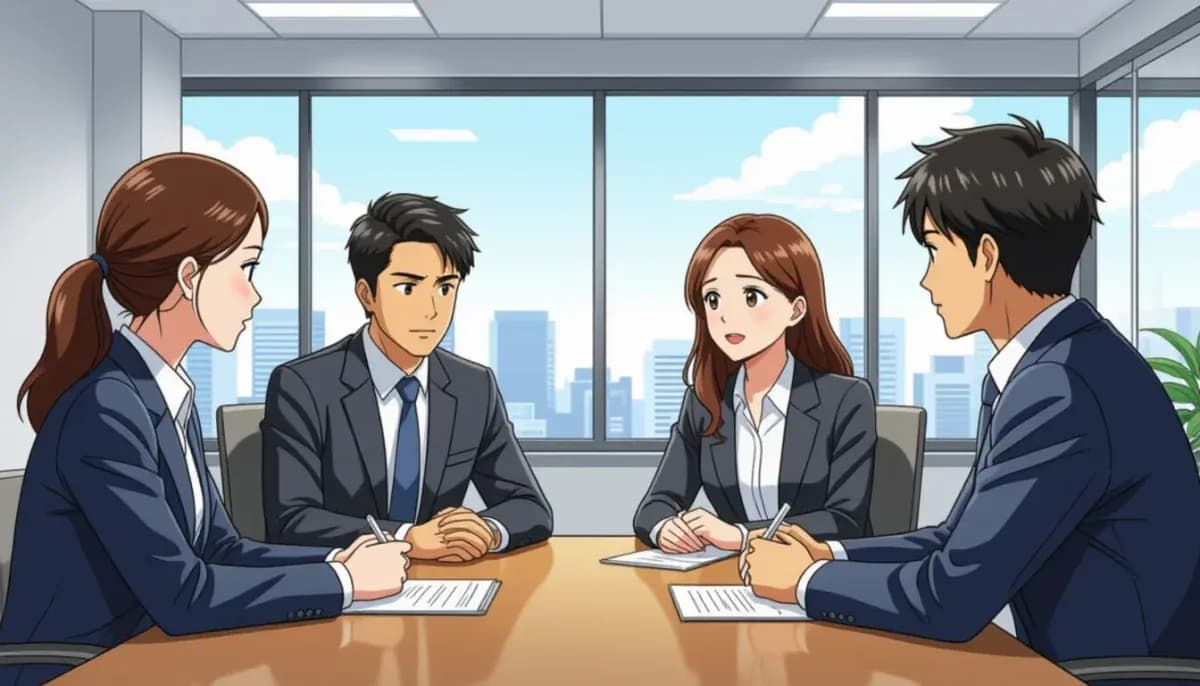
Learn how to navigate workplace conflict in Japan as a foreigner. Discover culturally-appropriate strategies including nemawashi, hourensou, and your legal rights against power harassment.
How to Handle Workplace Conflict in Japan: A Complete Guide for Foreigners
Working in Japan is a deeply rewarding experience, but the cultural dynamics of Japanese workplaces can be challenging—especially when conflicts arise. Whether you're a new expat or a seasoned professional, understanding how Japanese companies approach disagreements is essential for maintaining your career and wellbeing. This guide breaks down the cultural context of workplace conflict in Japan and gives you practical, actionable strategies to navigate it effectively.
Understanding the Japanese Workplace Culture Around Conflict
The foundation of Japanese workplace relationships is "wa" (和), meaning harmony. This concept permeates every aspect of professional life in Japan. Unlike Western work cultures where direct confrontation is often seen as healthy and productive, in Japan, openly challenging a colleague or manager can damage relationships and your professional reputation permanently.
Japanese workplaces are structured around hierarchy and seniority, and communication tends to be "high-context"—meaning much is conveyed implicitly rather than explicitly. When a manager says "ちょっと難しい" (chotto muzukashii, "it's a bit difficult"), they're almost certainly rejecting your proposal, not identifying a challenge to overcome together.
A 2024 Job Soken survey found that 58.1% of Japanese employees admitted to engaging in "sontaku" (忖度)—the practice of guessing and aligning with their superior's unspoken wishes—rather than expressing disagreement. For foreigners used to speaking their minds, this cultural norm can be disorienting and lead to unintended conflicts.
Understanding this context doesn't mean you should abandon your own values, but it does mean you'll need to adapt your approach to resolve issues effectively.
Common Types of Workplace Conflict for Foreign Workers in Japan
Foreign workers in Japan encounter several recurring types of conflict that are worth understanding:
| Conflict Type | Common Cause | Typical Japanese Response |
|---|---|---|
| Communication misunderstandings | High-context vs. low-context styles | Indirect hints, silence, or avoidance |
| Overtime expectations | Unwritten cultural norms about dedication | Colleagues staying late; judgment if you leave early |
| Power harassment (パワハラ) | Hierarchical abuse of authority | Often endured silently; 36.9% take no action |
| Exclusion from decision-making | Nemawashi done without your involvement | You're left out of informal consensus-building |
| Performance criticism | Direct feedback considered rude | Vague or indirect negative feedback |
| Credit and recognition disputes | Group achievement culture | Individual contributions often uncredited |
Power harassment (パワハラ) is particularly prevalent. According to the Ministry of Health, Labour and Welfare's 2024 survey, 19.3% of workers reported experiencing power harassment in the past three years. Consultation cases reached a record 72,789 cases in fiscal 2023, up 16% from the previous year.
Strategy 1: Use Hourensou (報連相) to Prevent Conflicts Before They Start
The single most effective tool for preventing workplace conflict in Japan is hourensou (報連相)—a combination of three Japanese words:
- 報告 (hokoku) – Regular reporting to your supervisor
- 連絡 (renraku) – Consistent communication with your team
- 相談 (sodan) – Consulting with others before making decisions
By over-communicating your progress, questions, and concerns through proper channels, you build trust, reduce misunderstandings, and ensure you're aligned with your team's unspoken expectations. Hourensou is especially important for foreign workers because it signals cultural awareness and respect for hierarchy.
Practical tips for hourensou:
- Report updates to your manager frequently—even minor ones
- Ask for guidance before taking independent action on important matters
- When in doubt, consult rather than decide alone
- Use email to create a documented trail of your communications
For more guidance on Japanese work culture fundamentals, Living in Nihon's Japanese Work Culture Guide provides an excellent overview of the unwritten rules of Japanese offices.
Strategy 2: Use Nemawashi and Indirect Approaches to Resolve Disagreements
When conflict does arise, nemawashi (根回し)—the practice of informal consensus-building—is your most culturally appropriate tool. Rather than raising issues in a formal meeting where everyone is put on the spot, nemawashi involves privately speaking with each stakeholder beforehand to understand their perspective and build consensus before any official discussion.
Steps to implement nemawashi for conflict resolution:
- Identify the key stakeholders involved in the conflict
- Have private, informal one-on-one conversations with each person
- Listen more than you speak—understand their position and concerns
- Propose solutions that allow all parties to save face (face-saving is crucial in Japan)
- Only bring the matter to a group meeting once you've already built consensus privately
This approach aligns with the Japanese emphasis on group harmony and ensures no one feels publicly embarrassed or attacked. Japanese people are taught from a young age that "kuki wo yomu" (空気を読む, "reading the air") is essential—being attuned to unspoken social dynamics rather than forcing direct confrontations.
Strategy 3: Navigate Power Harassment and Know Your Rights
Japan's Power Harassment Prevention Law (パワハラ防止法) became mandatory for ALL employers, including small businesses, in April 2022. Power harassment includes:
- Excessive workload demands beyond what is reasonable
- Personal attacks, insults, or verbal abuse
- Isolating an employee from team activities
- Forcing employees to perform degrading tasks
- Psychological manipulation through threats or humiliation
If you experience power harassment:
- Document everything: Keep detailed records with dates, times, witnesses, and specific words used
- Report internally first: Speak with your company's HR department or compliance hotline if available
- Seek external consultation: The Ministry of Health, Labour and Welfare operates a free multilingual consultation hotline at 0120-811-610
- Use the Labor Standards Inspection Office: Each prefecture has an office that investigates labor violations
- Consult a labor lawyer: Many offer free initial consultations; Legal Terraces offers consultations at 0570-078374
As a foreign worker, remember that you have the same legal protections as Japanese nationals. Article 3 of the Labor Standards Law explicitly prohibits discrimination based on nationality. Do not accept harassment as "just Japanese culture"—there are legal remedies available to you.
For a detailed breakdown of your labor rights, For Work in Japan's Labor Law Guide covers everything from overtime regulations to termination protections.
Strategy 4: Use an Intermediary When Direct Communication Fails
One of the most effective—and culturally accepted—ways to resolve interpersonal conflict in Japan is through a trusted intermediary. Rather than confronting a colleague or supervisor directly, you can ask a mutual colleague, trusted senior (先輩, senpai), or your manager's peer to facilitate the conversation.
This indirect approach:
- Allows both parties to maintain face (mentsu, 面子)
- Removes the pressure of direct confrontation
- Uses social hierarchy constructively
- Is seen as mature and culturally aware rather than weak
When choosing an intermediary:
- Select someone respected by both parties
- Brief them thoroughly on the situation and your desired outcome
- Allow them to guide the timing and format of the mediation
- Be prepared to compromise—Japanese conflict resolution leans toward moderation, not clear-cut victories
Company drinking events (nomikai, 飲み会) can also serve as informal venues for resolving tensions, as the relaxed atmosphere makes frank conversation more socially acceptable. While participation is optional, attending occasionally demonstrates team commitment and creates opportunities for informal relationship-building that can defuse conflict before it escalates.
Strategy 5: Escalating to External Resources
When internal resolution fails or you're facing serious violations, Japan offers several external resources:
| Resource | Purpose | Contact |
|---|---|---|
| MHLW Consultation Hotline | General labor issues (multilingual) | 0120-811-610 |
| Labor Standards Inspection Office | Overtime, unpaid wages, unsafe conditions | Local prefectural offices |
| Legal Terraces | Legal advice and referrals | 0570-078374 |
| People's Human Rights 110 | Rights violations and discrimination | 0570-003-110 |
| Japan Legal Support Center | Free legal assistance | 0570-078374 |
IT workers and tech professionals in Japan may also face "techara" (technology harassment)—where technical knowledge is weaponized to demean colleagues. Ittenshoku's guide on IT workplace harassment explains your specific rights and protections in the tech sector.
When escalating externally:
- Bring all documentation of incidents
- Retaliation for reporting is legally prohibited
- You can request an anonymous investigation in some cases
- Consulting external resources does not automatically trigger workplace consequences
Building Long-Term Conflict Prevention Habits
The best strategy for handling workplace conflict in Japan is preventing it from escalating in the first place. Here are habits successful foreign professionals develop over time:
Cultural investment:
- Learn Japanese beyond survival level—business Japanese shows commitment and eliminates misunderstandings
- Study Japanese etiquette, especially gift-giving, greetings, and business card exchange
- Read "Understanding Japanese Culture and Etiquette" to build your cultural foundation
Professional relationship-building:
- Join after-work activities (even occasionally) to build informal trust
- Find a mentor (先輩) who can guide you through unwritten workplace norms
- Observe how Japanese colleagues handle friction and adapt their methods
Self-awareness:
- Recognize when your direct communication style is perceived as aggressive
- Practice indirect suggestion rather than blunt rejection: "I wonder if we might also consider..." rather than "I disagree with this approach"
- Check your understanding of implicit messages by asking trusted colleagues to clarify
For broader guidance on working in Japan, see our Complete Guide to Working in Japan as a Foreigner and Guide to Making Friends and Social Life in Japan.
What to Do If You Decide to Leave
Sometimes, despite your best efforts, a workplace situation becomes untenable. Knowing how to exit professionally is also part of handling conflict in Japan. Japanese norms around resignation include:
- Giving 1-2 months' notice is standard (your contract may specify longer)
- Submitting a formal resignation letter (退職届, taishoku todoke)
- Completing thorough handover documentation for your replacement
- Maintaining professional relationships—Japan's business world is smaller than it appears
You are legally protected from retaliation during your notice period. Employers must provide 30 days' notice or equivalent pay when terminating employment, and dismissals require legitimate justification. If you're forced out illegally or face retaliation, the external resources listed above can help.
Understanding your rights and the cultural context of workplace conflict in Japan empowers you to navigate challenging situations with both effectiveness and grace. With patience, cultural sensitivity, and the right strategies, most workplace conflicts in Japan can be resolved while preserving important professional relationships.
For more information on working and living in Japan as a foreigner, explore our guides on Daily Life in Japan, Japanese Culture and Etiquette, and Healthcare in Japan.
External Resources:

Originally from Vietnam, living in Japan for 16+ years. Graduated from Nagoya University, with 11 years of professional experience at Japanese and international companies. Sharing information about living in Japan for foreigners.
View Profile →Related Articles

What It Is Like Working in a Japanese Company as a Foreigner
Discover what it's really like working in a Japanese company as a foreigner — workplace hierarchy, Horenso culture, long hours, communication challenges, and tips to thrive in Japan's corporate world.
Read more →
Women in the Japanese Workplace Guide for Foreign Women
A comprehensive guide for foreign women navigating the Japanese workplace — from gender dynamics and dress codes to legal rights, salary negotiation, and building professional networks in Japan.
Read more →
Japanese Business Email and Communication Etiquette
Master Japanese business email etiquette as a foreigner in Japan. Learn the 7-part email format, keigo honorifics, meeting protocols, business card exchange, and essential phrases for professional success.
Read more →
Dress Code Guide for Japanese Offices
A complete guide to dress codes in Japanese offices for foreigners and expats. Learn what to wear, seasonal Cool Biz rules, industry differences, grooming standards, and common mistakes to avoid.
Read more →
Senpai Kohai Relationship in the Japanese Workplace
Understand the senpai kohai system in Japanese workplaces. This guide covers hierarchy rules, kohai expectations, senpai duties, and practical tips for foreigners navigating Japanese office culture.
Read more →
Japanese Meeting Culture Protocols and Expectations
A complete guide to Japanese meeting culture for foreigners and expats. Learn meishi exchange, seating etiquette, nemawashi, decision-making, and key protocols to succeed in Japanese business meetings.
Read more →