
Japan Onsen Towns Guide for Foreign Visitors

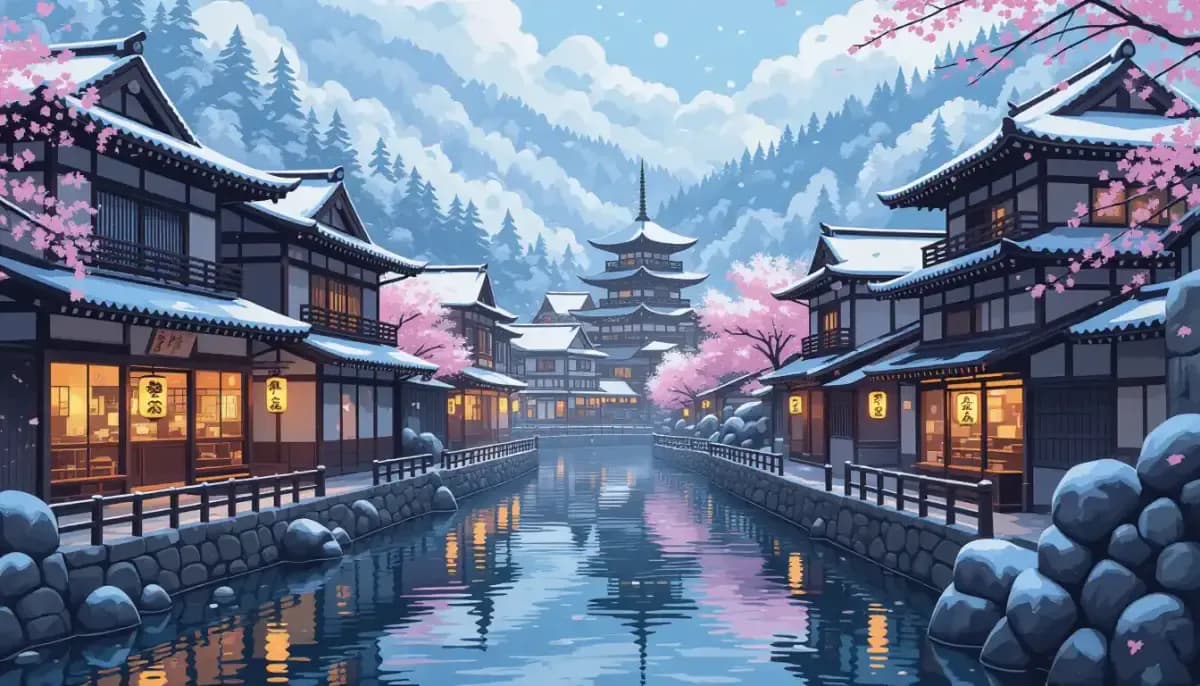
Complete guide to Japan's best onsen towns for foreigners. Discover top hot spring destinations like Kinosaki, Kusatsu, and Beppu, plus essential etiquette tips, tattoo policies, and ryokan recommendations.
Japan Onsen Towns Guide for Foreign Visitors
Japan's onsen (hot spring) culture is one of the country's most treasured traditions — and increasingly, one of the most accessible experiences for foreign visitors and expats. Whether you're a first-timer nervously clutching a towel or a seasoned resident looking for a weekend escape, the country's onsen towns offer an unmatched blend of relaxation, natural beauty, and cultural immersion. With approximately 25,000 hot spring sources and over 3,000 onsen areas scattered across every region, Japan is truly a hot spring paradise.
This guide breaks down the best onsen towns for foreigners, what to expect, how to follow etiquette, and practical tips so you can soak in comfort and confidence.
!Traditional Japanese onsen town with steam rising from hot springs and lantern-lit streets

What Is an Onsen Town and Why Visit One?
An onsen town (onsen-machi) is a community that has built its identity around natural hot spring bathing. Unlike a single spa facility, these towns typically feature multiple bathhouses, traditional ryokan inns, and winding streets made for strolling in yukata (lightweight kimono). The experience combines healing mineral baths with Japanese hospitality, seasonal scenery, and local cuisine.
For foreigners living in or visiting Japan, an onsen town trip is the ultimate cultural experience that's distinct from city life. You slow down, disconnect, and gain a deeper appreciation for Japanese wellness philosophy — which views bathing as both physical healing and spiritual purification.
The mineral compositions of onsen waters vary dramatically: some are sulfuric (great for skin conditions), others are alkaline or iron-rich, each offering different therapeutic properties. Many Japanese swear by regular onsen visits for everything from arthritis relief to stress reduction.
Top Onsen Towns for Foreign Visitors
Japan's onsen towns range from internationally famous destinations to hidden gems beloved mainly by locals. Here are the standout choices for foreign visitors:
Kusatsu Onsen (Gunma Prefecture)
Kusatsu has held the #1 spot in Japan's "Top 100 Hot Springs" ranking for 21 consecutive years. Located in the mountains of Gunma Prefecture about 200km from Tokyo, it's known for its highly acidic sulfur springs and the iconic yumomi ritual — a traditional method of cooling the water by stirring it with long wooden paddles, performed as a cultural show for visitors. Kusatsu is best enjoyed as a multi-day stay; the town center (Yubatake, or "hot spring field") is beautiful at night with steam rising from the source.
Kinosaki Onsen (Hyogo Prefecture)
If there's one onsen town that consistently tops recommendations for foreigners specifically, it's Kinosaki. Just 2.5 hours by train from Osaka or Kyoto, this historic town features seven public bathhouses (sotoyu), all of which are tattoo-friendly — a rarity in traditional Japan. Signs are in English, staff are experienced with international guests, and the whole town is designed for "onsen-hopping": check in to a ryokan, put on your yukata, grab wooden clogs, and wander between baths all evening. The willow-lined canal district is one of the most photogenic spots in all of Japan.
Beppu Onsen (Oita Prefecture, Kyushu)
Beppu is famous for volume: it produces the second-highest output of hot spring water of any place on Earth. The "Beppu Hatto" refers to the eight distinct onsen districts across the city, each with different mineral profiles. Beppu is also considered the onsen town with the most tattoo-friendly facilities in Japan, making it ideal for tattooed foreign visitors. Don't miss the "Jigoku" (Hell) tours — dramatic boiling pools in vivid red, blue, and green that you view (but don't bathe in!) as a sightseeing attraction.
Noboribetsu Onsen (Hokkaido)
Hokkaido's most famous onsen resort sits at the base of a volcanic mountain. Its signature attraction is "Jigokudani" (Hell Valley) — a sprawling volcanic crater with bubbling gray mud pools, steam vents, and sulfurous mist that creates an otherworldly atmosphere. Noboribetsu waters are exceptionally diverse, with 11 different types of spring water available. It's especially magical in winter when the snow-covered landscape contrasts with steaming outdoor baths.
Ginzan Onsen (Yamagata Prefecture)
One of Japan's most atmospheric onsen towns, Ginzan feels like stepping into a 1920s Taisho-era postcard. The Ginzan River runs through the center of town, flanked by multi-story wooden ryokan buildings with gas lanterns glowing at night. Snow in winter transforms it into something magical. It's remote (accessible by bus from Oishida Station), which keeps crowds manageable outside peak seasons.
Yunomine Onsen (Wakayama Prefecture)
For history lovers: Yunomine is the only hot spring in the world designated as a UNESCO World Heritage Site, dating back over 1,800 years. The tiny, peaceful village is part of the Kumano Kodo pilgrimage trail. The star attraction is Tsuboyu — a small stone bath in the middle of the river that changes color seven times a day. Only two people can enter at a time, and there's often a short wait, but the experience is extraordinary.
Dogo Onsen (Ehime Prefecture, Shikoku)
Dogo Onsen is Japan's oldest hot spring, referenced in literature dating back 1,300 years. It's widely believed to have inspired the bathhouse in Studio Ghibli's "Spirited Away." The main bathhouse building, Dogo Onsen Honkan, is an ornate three-story wooden structure from 1894 and is now a national important cultural property. Located in Matsuyama city on Shikoku Island, it's worth making a detour for the architectural experience alone.
Onsen Etiquette: What Every Foreign Visitor Must Know
Onsen culture comes with clear rules that are worth learning before your first visit. Most facilities post them in multiple languages now, but knowing in advance prevents awkward moments.
| Rule | What It Means |
|---|---|
| Wash before entering | Use the shower/wash station thoroughly before getting in any communal bath |
| No swimwear | Public baths require nudity — swimsuits are not permitted |
| Towel stays out | Small towels are for modesty but must not go into the water |
| No hair in the water | Tie up long hair before entering |
| No phones/cameras | Photography inside changing rooms and baths is strictly prohibited |
| Quiet atmosphere | Loud talking, splashing, or rough behavior is frowned upon |
| Rinse off after leaving | Briefly rinse before leaving the bath if sweaty or if there are other bathers |
| No alcohol in the bath | Don't drink alcohol or enter immediately after heavy drinking |
On tattoos: This is perhaps the biggest concern for many foreign visitors. Traditionally, tattoos were associated with yakuza (organized crime) in Japan, leading to widespread bans. The situation is slowly changing: more facilities, especially in tourist-heavy towns like Kinosaki and Beppu, now welcome tattooed guests. Private bath options (kashikiri rotenburo) are available at many ryokan for an additional fee and sidestep any policy entirely. Always check a facility's tattoo policy before visiting — many now clearly state their policy on English-language websites.
Types of Onsen Experiences
Public Bathhouses (Sento/Sotoyu)
These communal baths are typically inexpensive (¥300–¥1,500), open to anyone, and the most social form of onsen bathing. In onsen towns, public bathhouses are called sotoyu (outer baths) and are the heart of the "onsen-hopping" experience.
Ryokan Onsen
Staying at a ryokan typically includes access to the inn's private onsen facilities — and often the stay package includes dinner and breakfast (kaiseki cuisine). Prices range ¥15,000–¥50,000 per night with meals. This is the most immersive way to experience Japanese hot spring culture.
Day-Use Bathing (Higaeri Nyuyoku)
Many ryokan and onsen facilities offer day-use bathing (higaeri) without an overnight stay, typically for ¥1,000–¥3,000. Some include a meal package. This is ideal for day-trippers or those on a budget.
Private Baths (Kashikiri/Rotenburo)
Private outdoor baths can often be reserved by the hour at ryokan. These are perfect for families with young children, couples, or anyone who wants to enjoy onsen without the communal setting. Essential for tattooed guests at facilities with mixed policies.
Outdoor Baths (Rotenburo)
Open-air baths surrounded by nature — snow-covered trees in winter, autumn foliage in fall, mountain views year-round. These are considered the crown jewel of the onsen experience.
Planning Your Onsen Town Visit: Practical Tips for Foreigners
Getting There
Most major onsen towns are accessible by train from major cities. A JR Pass (available to tourists on a short-stay visa) covers Shinkansen travel. Foreign residents on long-term visas cannot purchase the standard JR Pass but can use the Seishun 18 Ticket during school holiday periods for extremely budget-friendly travel. IC cards (Suica/PASMO) work on local trains and buses throughout the country.
For transportation planning from your base city, see our Complete Guide to Transportation in Japan.
When to Visit
Each season brings a different onsen experience:
- Winter (Dec–Feb): Most dramatic — soaking outdoors while snow falls is a bucket-list experience, especially in Noboribetsu, Ginzan, or Kusatsu
- Autumn (Oct–Nov): Beautiful foliage; comfortable temperatures outside the bath
- Spring (Mar–May): Cherry blossom viewing combined with onsen is magical
- Summer (Jun–Sep): Less dramatic but outdoor baths feel refreshing; avoid peak Obon week (mid-August) if possible
Note: Peak Japanese holiday periods (Golden Week in late April/early May, Obon in August, New Year) can increase accommodation costs by 30–50% and require booking weeks or months in advance.
What to Pack
- Comfortable clothing for post-bath relaxation
- Flip-flops or sandals for walking between bathhouses
- Your own toiletries (though many ryokan provide them)
- Cash — many traditional ryokan and smaller bathhouses don't accept cards
For broader travel budgeting, the Complete Guide to Daily Life in Japan covers cost management strategies useful for residents and long-stay visitors.
Onsen Towns by Region: Quick Reference
| Region | Onsen Town | Distance from Major City | Best For |
|---|---|---|---|
| Kanto | Hakone | 1hr from Tokyo | Mt. Fuji views, easy access |
| Kanto | Nikko Yumoto | 2.5hrs from Tokyo | Budget day trips |
| Tohoku | Ginzan | 3hrs from Tokyo | Atmosphere, winter scenery |
| Tohoku | Zao | 2.5hrs from Tokyo | Skiing + onsen combo |
| Chubu | Kusatsu | 2.5hrs from Tokyo | Legendary healing springs |
| Chubu | Gero | 2hrs from Nagoya | "Top 3" hot springs ranking |
| Kansai | Kinosaki | 2.5hrs from Osaka | Foreign-friendly, tattoo-OK |
| Kansai | Yunomine | 3hrs from Osaka | UNESCO heritage, history |
| Kyushu | Beppu | 2hrs from Fukuoka | Most diverse, tattoo-friendly |
| Kyushu | Kurokawa | 3hrs from Fukuoka | Traditional atmosphere |
| Kyushu | Yufuin | 2hrs from Fukuoka | Relaxed, nature-focused |
| Hokkaido | Noboribetsu | 1hr from Sapporo | Volcanic scenery, winter |
| Shikoku | Dogo | 1hr from Takamatsu | Oldest onsen, Ghibli vibes |
Useful Resources for Onsen Planning
Before booking your trip, these resources can help you plan and find the right fit:
- Complete Guide to Domestic Travel in Japan for Foreigners — Comprehensive travel tips for residents and long-stay visitors, including transportation passes, accommodation types, and budget breakdowns
- For Work in Japan — If you're combining a leisure trip with professional networking or planning your life in Japan as a working expat
- Ittenshoku.com — Career information for those building a long-term life in Japan
- Japan Guide: Onsen Basics — Reliable English-language overview of onsen culture and types
- Tattoo-Friendly Onsen Directory — Comprehensive, regularly updated list of facilities welcoming tattooed visitors
- Sugoii Japan: Best Onsen Towns — In-depth reviews of top onsen destinations with visitor tips
If you're still navigating life as a foreigner in Japan, our Complete Guide to Japanese Culture and Etiquette provides deeper context on traditions like onsen bathing and the importance of communal social norms.
FAQs: Onsen for Foreign Visitors
Can I visit an onsen if I have tattoos? Yes, but with planning. Facilities vary — some ban tattoos entirely, others are fully welcoming. Towns like Kinosaki and Beppu are known for inclusivity. Private bath rentals are an option almost everywhere. Always check in advance.
Do I need to speak Japanese? Not at popular tourist-oriented onsen towns. Kinosaki, Hakone, Kusatsu, and Beppu all have good English signage. A few basic Japanese phrases for greetings and requesting help go a long way and are appreciated.
Is it okay to go alone as a woman? Absolutely. Onsen facilities are gender-separated (with rare exceptions for "mixed bathing" konyoku facilities). Solo female travel to onsen towns is common and considered safe.
What if I'm shy about nudity? It's a common concern — even among Japanese visitors the first time. You quickly realize that the atmosphere is completely non-sexual and relaxed. If you're genuinely uncomfortable, many facilities offer private bath rentals that allow you to experience everything solo or with your travel companion.
How do I find budget-friendly options? Public sotoyu bathhouses in onsen towns cost ¥300–¥1,500. Day-use bathing at mid-range facilities costs ¥1,000–¥3,000. Accommodation doesn't have to be luxury ryokan — guesthouses and business hotels near onsen areas are far more affordable, and many allow public bath access.
Visiting an onsen town is one of the most rewarding experiences you can have in Japan — whether you're a tourist on a short visit or a long-term resident needing to recharge. The ritual of slowing down, warming up in mineral-rich water, putting on a yukata, and wandering cobblestone streets is something uniquely Japanese that stays with you long after you've returned to the city.
For more guidance on enjoying life in Japan, explore our Complete Guide to Japanese Festivals and Traditions and the Complete Guide to Japanese Food and Cooking to round out your cultural education.

Originally from Vietnam, living in Japan for 16+ years. Graduated from Nagoya University, with 11 years of professional experience at Japanese and international companies. Sharing information about living in Japan for foreigners.
View Profile →Related Articles
Best Seasonal Travel Destinations in Japan by Month
A month-by-month guide to the best travel destinations in Japan for foreigners: from snow monkeys in Nagano to cherry blossoms in Kyoto, festivals in Aomori, and autumn colors in Kanazawa.
Read more →
Japan Island Hopping Guide Best Islands to Visit
Discover Japan's 14,125 islands with our complete island hopping guide for foreigners. Best islands, ferry routes, costs, and practical tips for Okinawa, Naoshima, Yakushima and more.
Read more →
Camping in Japan Complete Guide for Foreign Residents
Everything foreign residents need to know about camping in Japan: campsite types, booking tips, rules, top destinations, gear, and etiquette. Start your outdoor adventure in Japan.
Read more →
Budget Travel Tips for Exploring Japan as a Resident
Discover practical budget travel tips for foreign residents in Japan. Learn how to use the Seishun 18 Kippu, find cheap accommodation, eat well on a budget, and save tens of thousands of yen on domestic travel.
Read more →
Hokkaido Travel Guide for Foreign Residents of Japan
A complete Hokkaido travel guide for foreign residents of Japan. Covers transportation, seasonal highlights, top destinations, food, and practical tips for expats visiting Japan's northernmost island.
Read more →
Okinawa Travel Guide for Foreign Residents of Japan
A complete Okinawa travel guide for foreigners living in Japan. Discover beaches, islands, food, culture, and practical tips for visiting Okinawa from the mainland.
Read more →