
Moving to Japan with Your Family Complete Guide

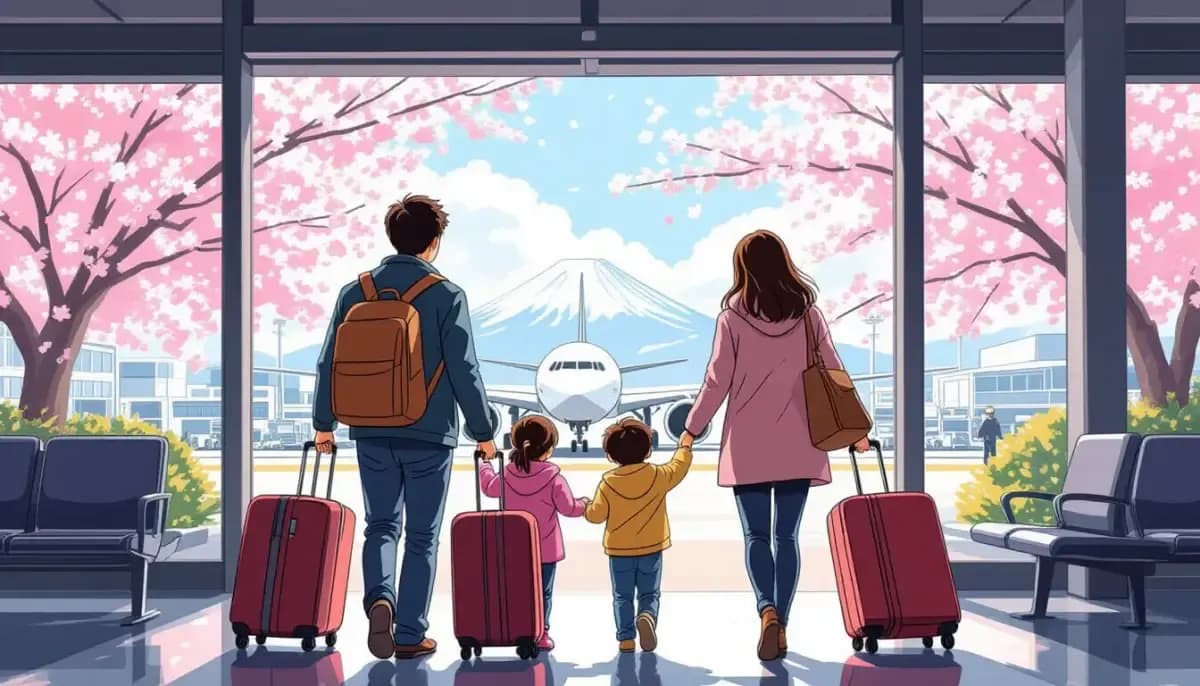
Everything you need to know about moving to Japan with your family, from dependent visa requirements and school options to healthcare, housing, childcare costs, and cultural adjustment tips.
Moving to Japan with Your Family: Complete Guide
Relocating to Japan with your family is one of the most rewarding yet complex decisions you can make as an expat. Whether you are transferring for work, starting a new career, or simply seeking a fresh start in one of the world's safest and most fascinating countries, bringing your spouse and children along requires careful planning across visas, housing, education, and daily life logistics. This comprehensive guide walks you through every essential step so your entire family can settle smoothly into life in Japan.
Understanding the Dependent Visa for Your Family
The first and most critical step is securing the right visas. As the primary visa holder, you will need a qualifying work visa before your family members can join you on dependent visas. Japan offers 29 types of residency statuses, and the dependent visa (家族滞在 / kazoku taizai) specifically allows your legally married spouse and unmarried children to live in Japan.
Most work visas qualify you to sponsor dependents, including the Engineer/Specialist in Humanities/International Services visa, Instructor visa, Business Manager visa, and Highly Skilled Professional visa. However, some visa categories such as Working Holiday and Specified Skilled Worker visas do not allow you to bring family members.
Key requirements for the dependent visa application include:
- A valid work visa held by the sponsor (you)
- Proof of marriage or birth certificates (apostilled or authenticated)
- Evidence of financial capacity to support dependents
- Certificate of Eligibility application submitted through immigration
- Processing time of 1 to 3 months
Immigration authorities generally expect a minimum annual income of ¥3,000,000 for sponsoring one dependent, and ¥4,000,000 to ¥5,000,000 for two or more dependents. Your dependent family members can also obtain permission to work part-time up to 28 hours per week. For a full breakdown of visa types and processes, check our complete visa and immigration guide.
Choosing the Right School for Your Children
Education is often the biggest concern for families moving to Japan. You have three main options, each with distinct advantages and trade-offs.
Japanese public schools are tuition-free and provide excellent academic standards. Your children will learn Japanese rapidly through immersion, make local friends, and experience authentic Japanese culture. The school year runs from April to March, and enrollment is based on your child's age as of April 1st. The drawback is the language barrier initially, along with a different academic calendar from most Western countries.
International schools offer instruction in English (or other languages) and follow familiar curricula like IB, American, or British systems. They make the transition easier for children who do not yet speak Japanese. However, annual tuition ranges from ¥1,500,000 to ¥3,000,000 for secondary education, and most international schools are concentrated in Tokyo, Osaka, and other major cities.
Private Japanese schools sit somewhere in between, costing approximately ¥500,000 to ¥1,500,000 per year, with some offering bilingual programs.
| School Type | Annual Cost | Language | Best For |
|---|---|---|---|
| Public school | Free | Japanese | Long-term residents, cultural immersion |
| International school | ¥1.5M–¥3M | English/Other | Short-term stays, easy transition |
| Private school | ¥500K–¥1.5M | Japanese (some bilingual) | Families wanting quality with flexibility |
For more detailed information about education options, see our guide on raising children in Japan.
Healthcare and Medical Coverage for Families
Japan's universal healthcare system is one of the best in the world, and your family will benefit significantly from it. All residents, including those on dependent visas, must enroll in either the National Health Insurance (NHI) or an employer-based health insurance plan.
The system covers 70% of medical costs for adults and children over 6. Monthly premiums for NHI range from approximately ¥3,000 to ¥15,000 depending on your income level. What makes Japan particularly family-friendly is the extensive coverage for children: most municipalities issue Medical Care Certificates that cover the remaining 30% of costs for children, effectively making healthcare free for kids until age 15 (and in some areas, through high school).
Standard vaccinations are provided free through local health centers. Maternity care is well-supported too, with a childbirth lump-sum grant of ¥500,000 per baby and maternity allowances covering approximately two-thirds of your wages during leave. Learn more about navigating the medical system in our healthcare guide for foreigners.
For a comprehensive overview of family health benefits, For Work in Japan's family life guide provides additional context on insurance enrollment and pediatric care resources.
Finding Family-Friendly Housing
Housing is another major consideration when relocating with a family. Japanese apartments tend to be smaller than what many Western families are used to, and finding larger units that accommodate children can be challenging, especially in Tokyo.
A three-bedroom apartment in a Japanese city center typically costs around ¥120,000 to ¥180,000 per month ($800–$1,200). Suburban areas and smaller cities offer significantly more space for less money. When apartment hunting, keep in mind:
- Key money (reikin) and deposit (shikikin) each typically equal 1-2 months' rent
- Some landlords may be reluctant to rent to foreign families or families with small children
- Proximity to schools and train stations should be top priorities
- Many family-friendly areas like Setagaya, Meguro, and Musashino in Tokyo have parks and good schools nearby
Using a real estate agent who speaks English and has experience with foreign tenants makes the process much smoother. Our housing guide covers the full apartment hunting process in detail.
Cost of Living for a Family in Japan
Understanding your monthly budget is essential for a smooth transition. While Japan has a reputation for being expensive, the actual cost of living is quite reasonable compared to many Western countries, especially outside Tokyo.
| Expense Category | Monthly Cost (Family of 4) |
|---|---|
| Housing (3-bedroom) | ¥120,000–¥200,000 |
| Groceries | ¥60,000–¥80,000 |
| Utilities | ¥20,000–¥30,000 |
| Transportation | ¥20,000–¥40,000 |
| Healthcare (NHI premiums) | ¥15,000–¥30,000 |
| Education (public school) | ¥0–¥10,000 |
| Education (international school) | ¥125,000–¥250,000 |
| Miscellaneous | ¥30,000–¥50,000 |
| Total (public school) | ¥265,000–¥440,000 |
| Total (international school) | ¥390,000–¥680,000 |
A comfortable family budget ranges from approximately ¥540,000 to ¥590,000 per month when factoring in occasional dining out, activities, and savings. For a deep dive into expenses, read our cost of living guide. You can also find useful expense breakdowns at Expat.com's Japan family guide.
Childcare Options and Government Support
Japan has made significant strides in supporting families with young children. Since October 2019, childcare for ages 3 to 5 is free at licensed facilities, including public nursery schools (hoikuen) and kindergartens (yochien). For children under 3, public daycare fees are income-based and substantially subsidized.
The main childcare options include:
- Hoikuen (nursery schools): Full-day care for working parents, ages 0-5. Public ones are affordable but competitive to get into, especially in urban areas with waitlists.
- Yochien (kindergartens): Half-day programs for ages 3-5, focused on early education. More widely available.
- Certified kodomoen: Combined nursery/kindergarten facilities offering flexible hours.
- Private daycares and nannies: No waitlists but significantly more expensive.
Government financial support for families is generous by international standards. New parents receive a childbirth grant of ¥500,000, maternity leave covers approximately two-thirds of wages, and parental leave can extend up to two years when both parents participate. Monthly child allowances provide additional ongoing support.
Preparing Your Family for the Move: A Timeline
Starting your preparations at least 6 months before your intended move date gives you the best chance of a smooth relocation. Here is a recommended timeline:
6 months before:
- Secure your work visa and begin dependent visa applications
- Research schools and submit applications (international schools often have early deadlines)
- Begin Japanese language study for the whole family
3 months before:
- Arrange housing (consider temporary accommodation for the first month)
- Set up international health insurance as a bridge until NHI enrollment
- Sort out what to ship, sell, or store
1 month before:
- Confirm school enrollment and housing lease
- Prepare essential documents (translated and apostilled)
- Set up international bank transfers
First week in Japan:
- Register at your local ward office (city hall)
- Enroll in National Health Insurance
- Open a Japanese bank account
- Get your residence card and My Number card
Our comprehensive moving guide covers each of these steps in greater detail. For career-related transition advice, Ittenshoku offers resources on navigating Japanese employment as part of your family relocation planning.
Daily Life and Cultural Adjustment for Families
Adjusting to daily life in Japan as a family is an adventure that brings unique joys and challenges. Japan is consistently ranked among the safest countries in the world, making it an ideal place to raise children. Kids routinely walk to school independently from first grade, and crime rates are remarkably low.
Cultural adjustment takes time, and each family member will adapt at their own pace. Children typically adjust fastest, especially if enrolled in Japanese schools where they are immersed in the language daily. Tips for a smoother transition include:
- Learn basic Japanese together as a family activity — even survival-level phrases help enormously. See our Japanese learning guide for resources.
- Connect with expat communities through international parent groups, church communities, or online forums. Our guide on making friends in Japan has practical advice.
- Embrace local traditions such as school sports days (undokai), seasonal festivals, and neighborhood events. These are wonderful bonding experiences for the whole family.
- Understand Japanese cultural norms around noise levels, garbage sorting, and community participation to build good relationships with neighbors.
The Online Visa Guide provides additional updated information about dependent visa policies that affect your family's stay. For ongoing financial management as a family in Japan, check our banking and finance guide.
Final Thoughts
Moving to Japan with your family is a life-changing experience that opens doors to exceptional education, world-class healthcare, unparalleled safety, and rich cultural experiences. The key is thorough preparation: start your visa applications early, research schools carefully, budget realistically, and approach the transition with patience and openness. Japan rewards families who invest in understanding its systems, and your children will gain experiences and perspectives that last a lifetime.

Originally from Vietnam, living in Japan for 16+ years. Graduated from Nagoya University, with 11 years of professional experience at Japanese and international companies. Sharing information about living in Japan for foreigners.
View Profile →Related Articles
Buying vs Shipping Furniture When Moving to Japan
Should you ship furniture to Japan or buy new? Compare costs, timelines, and options including Nitori, IKEA, recycle shops, and rental services for foreigners moving to Japan.
Read more →
Registering at City Hall After Moving to Japan
Step-by-step guide to registering your address at city hall in Japan as a foreigner. Learn the 14-day deadline, required documents, My Number process, and tips for a smooth registration.
Read more →
How to Find a Guarantor in Japan as a Foreigner
Complete guide to finding a guarantor (hoshonin) in Japan as a foreigner. Compare guarantor companies like GTN, learn costs, required documents, and alternatives like UR housing and shared houses.
Read more →
Japan Move-In Costs Explained for Foreigners
Understand every move-in cost when renting an apartment in Japan. Breakdown of security deposit, key money, agent fees, and proven strategies to save money as a foreigner.
Read more →
Essential Documents You Need Before Moving to Japan
Complete checklist of essential documents you need before moving to Japan including visa paperwork, COE, financial documents, medical records, and post-arrival registration requirements.
Read more →
Best Cities in Japan for Foreign Residents
Compare the best cities in Japan for foreign residents including Tokyo, Osaka, Fukuoka, Yokohama, Kyoto, and Sapporo. Cost of living, jobs, and lifestyle comparison for expats.
Read more →