
Japan Driving Test Guide for Foreign License Holders

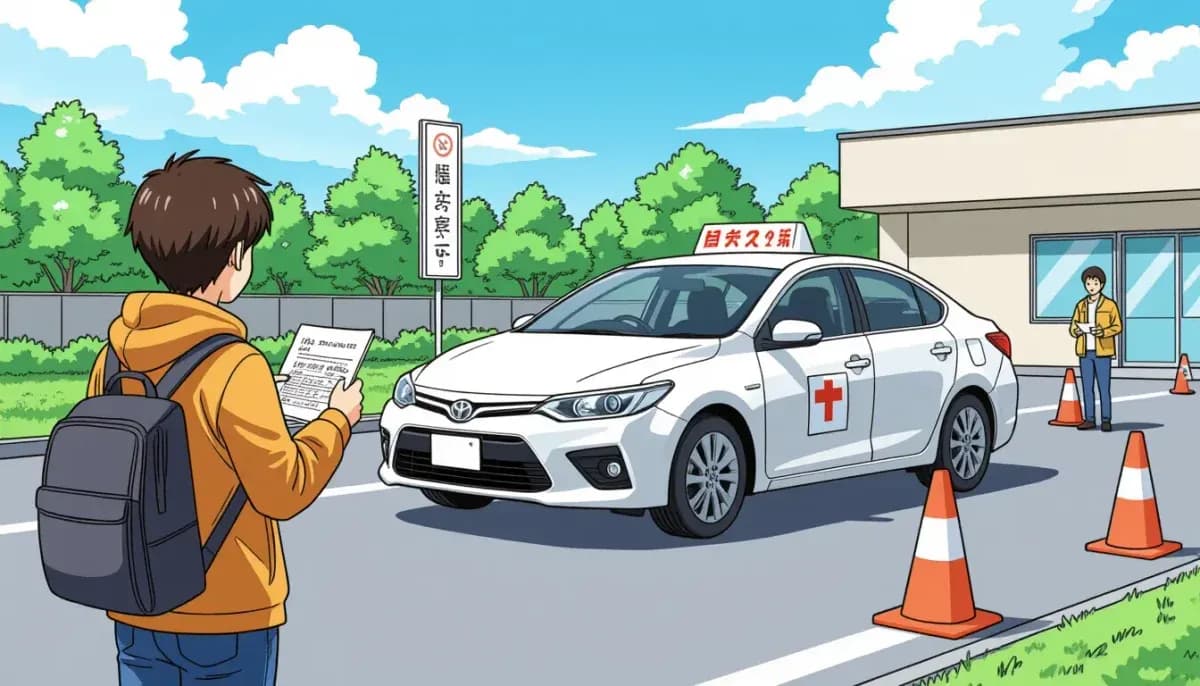
Complete guide to the Japan driving test for foreigners: gaimen kirikae conversion steps, written and practical test tips, documents needed, costs, and how to pass on your first attempt.
Japan Driving Test Guide for Foreign License Holders: Everything You Need to Know
Moving to Japan is exciting, but getting behind the wheel legally requires navigating one of the world's most rigorous driving license systems. Whether you're converting a foreign driver's license through the gaimen kirikae process or sitting a full Japanese driving exam, this guide walks you through every step — documents, tests, costs, and insider tips to help you pass on your first attempt.
If you're still settling into life here, our Complete Guide to Daily Life in Japan for Foreigners and Complete Guide to Transportation in Japan are great starting points.
What Is Gaimen Kirikae? Understanding the Foreign License Conversion Process
Gaimen kirikae (外免切替) literally means "foreign license switching." It's the official procedure that lets legal residents of Japan convert a valid foreign driver's license into a Japanese one. Unlike applying for a brand-new license, gaimen kirikae recognizes the driving experience you already have — but the extent of testing still required depends on which country issued your license.
Who Is Eligible?
Since October 2025, you must be a legal resident of Japan to apply. You must have a valid Certificate of Residence (Juminhyo). Short-term visitors, tourists, and those on 90-day exemption periods are no longer eligible. International Driving Permits (IDPs) remain valid for up to one year after arrival for those who qualify, but permanent residents need full conversion.
Countries Exempt from Tests
Certain countries and territories have bilateral agreements with Japan that allow full conversion with no written or practical test required:
| Region | Exempt Countries / States |
|---|---|
| Europe | UK, Germany, France, Austria, Belgium, Czech Republic, Denmark, Finland, Greece, Hungary, Iceland, Ireland, Italy, Luxembourg, Monaco, Netherlands, Norway, Poland, Portugal, Slovenia, Spain, Sweden, Switzerland |
| Asia-Pacific | Australia, New Zealand, South Korea, Taiwan |
| Americas | Canada; US states: Colorado, Hawaii, Maryland, Ohio, Oregon, Virginia, Washington |
If your country is not on this list (common examples: China, India, the Philippines, Brazil, Thailand, Vietnam), you will need to pass both the written and practical driving tests.
Step-by-Step: The Gaimen Kirikae Process
The full conversion process takes approximately 6 months from start to finish. Here is a breakdown of each stage:
Step 1: Obtain an Official Translation of Your Foreign License
Before anything else, get your foreign driver's license officially translated into Japanese. This is not a standard translation — it must be done through an approved institution:
- JAF (Japan Automobile Federation) — the most common option; costs ¥3,000–¥6,000; turnaround 1–3 days
- Ziplus — costs ¥3,850; turnaround 1–3 days
- Certified embassies or consulates of the issuing country
Keep both your original license and the translation throughout the entire process.
Step 2: Book Your Appointment at the Driver's License Center
Contact your prefecture's Driver's License Center (運転免許センター, Unten Menkyo Center) to schedule an initial document verification appointment. Be aware: appointment slots fill up quickly, often 2–4 months in advance. Book as early as possible.
Most License Centers have limited English support. It's strongly recommended to bring a Japanese-speaking friend or interpreter.
Step 3: Gather Required Documents
Bring all of the following to your appointment:
- Valid foreign driver's license (original)
- Official Japanese translation of your license
- Residence Card (Zairyu Card)
- Passport (with stamps showing you resided in the license-issuing country for 3+ months while the license was valid)
- Juminhyo (Certificate of Residence, from your local city/ward office)
- Proof of residency in the issuing country (utility bills, bank statements, or employment contract from that period)
- 1–2 passport-sized photos (usually taken on-site for a fee)
Tip: The "3-month residency rule" is strictly enforced. You must prove you lived in the country that issued your license for at least 3 months while it was valid. This is a common stumbling block — prepare your evidence carefully.
Step 4: Pass the Eye Test and Document Interview
At the center, staff will review your documents and conduct a short interview to verify your driving history. You will also take a simple eye test. If documents are in order, you'll be cleared to take the written test (if required for your country).
Step 5: Written Knowledge Test (If Required)
Major update: As of October 1, 2025, the written test format changed significantly:
- Old format: 10 true/false questions; allowed to miss 3
- New format: 50 true/false questions; must score at least 45/50 to pass
The test is available in 21 languages, including English, Chinese, Vietnamese, Tagalog, Thai, Portuguese, Spanish, and Korean. Study materials based on Japanese traffic laws are available from the Japan Automobile Federation (JAF) in multiple languages.
Step 6: Practical Driving Test (Skill Verification)
If required, the practical test is conducted on a closed 2-kilometer course at the License Center — not on public roads. You will drive a designated vehicle (manual or automatic depending on your preference) through a series of required maneuvers.
After the written test, you have 6 months to pass the practical test. If you fail to pass within this window, you must restart the entire process from the beginning.
The Practical Driving Test: What Examiners Look For
The practical test is where most foreigners struggle. The pass rate for foreign license conversion skill tests has historically been below 20%, with many applicants taking the test 6 or more times. Since October 2025, examiners apply criteria just as strictly as they would for a provisional Japanese license applicant — small mistakes are no longer overlooked.
Scoring System
The test uses a deduction system:
- You start with 100 points
- Deductions of 5, 10, or 20 points are applied for mistakes
- Certain actions result in immediate test termination (running a red light, going off course, etc.)
- You need at least 70 points to pass
Critical Behaviors Evaluated
| Behavior | Common Mistake |
|---|---|
| Pre-drive car check | Forgetting to walk around the vehicle and check tires/mirrors before getting in |
| Mirror checks | Glancing is not enough — you must visibly turn your head |
| Turn signals | Must be activated 30 meters before turning, not at the turn itself |
| Lane positioning | Stay to the far left on straightaways; drift to the center before turning right |
| Speed compliance | Stick exactly to posted limits; no speeding or going too slowly |
| Intersection safety | Check left, right, and left again before proceeding — exaggerated head movement |
| S-curves and crank course | Slow, controlled steering with no cone contact |
| Railroad crossing | Must stop and visually check both directions before crossing |
What Causes Immediate Failure
- Running a red light or stop sign
- Hitting a cone, curb, or course boundary
- Letting the vehicle stall (manual transmission)
- Dangerous lane changes without checking mirrors
- Going off the designated course route
For more tips from expats who have passed, BFF Tokyo's ultimate driving test guide is an excellent resource.
How to Prepare: Proven Strategies to Pass
Passing the Japan driving test on the first try requires deliberate preparation — not just confidence from years of driving experience abroad.
1. Walk the Course Before Your Test
Most Driver's License Centers allow observers to watch tests or walk the course during non-test hours. Visit in advance to memorize every turn, speed zone, and required stop. Visualize yourself driving through the course repeatedly.
2. Take at Least One Professional Lesson
Even if you're an experienced driver, at least one lesson with an instructor familiar with the Japanese test course is invaluable. Instructors know the exact 120+ scoring criteria and can identify mistakes you don't realize you're making. This is widely reported as the single biggest factor in passing on the first attempt.
Ziplus offers fast-track packages that include translations, video prep, and driving lessons with a reported 84.8% pass rate.
3. Study Japanese Traffic Rules Thoroughly
Japan's traffic rules differ from most countries in several ways:
- Driving is on the left side of the road
- Speed limits are strictly enforced and generally lower than many countries (30–60 km/h in cities)
- Pedestrian priority at crosswalks is absolute
JAF publishes Rules of the Road in multiple languages — download or purchase your copy before studying.
4. Dress Appropriately
Sandals, flip-flops, and open-toed shoes are not allowed for the driving test. Wear proper closed-toe shoes. Arrive early, be polite, and treat the examiner respectfully — attitude matters.
5. Prepare for Limited English Support
Bring a Japanese-speaking friend or use a professional interpreter service for the entire day. Documents, instructions, and feedback from examiners are primarily in Japanese.
Cost Breakdown
Understanding total costs helps you plan and avoid surprises.
| Item | Approximate Cost |
|---|---|
| License translation (JAF) | ¥3,000–¥6,000 |
| Application fee | ¥2,500 |
| Written test fee | ¥1,500 |
| Practical test fee (each attempt) | ¥2,000–¥3,000 |
| Photos (on-site) | ¥800–¥1,200 |
| Study materials | ¥6,000–¥20,000 |
| Professional driving lesson (optional) | ¥40,000–¥60,000 |
| Total (minimum, no lessons) | ¥7,000–¥12,000 |
| Total (with full prep package) | ¥110,000–¥120,000 |
If you fail the practical test, you pay the test fee (¥2,000–¥3,000) each additional attempt. Budget accordingly if your country requires the practical test.
After You Pass: What Comes Next
Once you pass all required tests, your Japanese driver's license (普通自動車免許, Futsuu Jidousha Menkyo) will typically be issued the same day or within 1–2 weeks.
Key Points About Your Japanese License
- Licenses must be renewed every 3–5 years (gold-card holders with clean records get 5-year licenses)
- Address changes must be updated at your local DMV office or police station
- If you move abroad and return to Japan, you may need to convert again or go through a re-examination process
- Points violations work on a deduction system — accumulate too many and your license is suspended
For more information on driving in Japan, the Living in Nihon driver's license conversion guide is a helpful English-language resource. Those working in Japan can also find useful employment-related information at For Work in Japan and career transition advice at Ittenshoku.
Frequently Asked Questions
Can I drive in Japan with my foreign license? If you hold an International Driving Permit (IDP) from a country that signed the 1949 Geneva Convention, you can drive in Japan for up to one year after your arrival date. After one year, or if you become a legal resident, you must complete the gaimen kirikae conversion.
How long does the whole process take? Expect approximately 6 months from your first appointment booking to receiving your Japanese license. Appointment slots at Driver's License Centers fill up 2–4 months in advance.
What if my country is not on the exempt list? You will need to pass both the written knowledge test (50 questions as of October 2025) and the practical driving test on a closed course. Many applicants from non-exempt countries take a professional lesson beforehand to significantly improve their odds.
Is the written test available in English? Yes. The written test is available in 21 languages, including English. Study using the JAF "Rules of the Road" guide in your language of choice.
What happens if I fail the practical test? You can retake the practical test, but each attempt costs ¥2,000–¥3,000. You must pass within 6 months of passing the written test, or you restart from the beginning.
Summary
Converting your foreign driver's license to a Japanese one — or earning a Japanese license from scratch — is a rewarding but detailed process. With the right preparation, including getting your translation early, studying the 50-question written test thoroughly, and taking at least one professional lesson on the actual test course, you can pass efficiently and get on Japan's roads with confidence.
For more on settling into life in Japan, explore our Complete Guide to Moving to Japan and Complete Guide to Daily Life in Japan.

Originally from Vietnam, living in Japan for 16+ years. Graduated from Nagoya University, with 11 years of professional experience at Japanese and international companies. Sharing information about living in Japan for foreigners.
View Profile →Related Articles

Best Cars for Foreigners Living in Japan
Discover the best cars for foreigners living in Japan, from kei cars like the Honda N-Box to electric options. Complete guide to buying, costs, and requirements for expats.
Read more →
Car Maintenance and Repair in Japan Guide
A complete guide to car maintenance and repair in Japan for foreigners. Learn about shaken inspections, costs, finding mechanics, seasonal care, and JAF membership.
Read more →
Getting a Motorcycle License in Japan as a Foreigner
Step-by-step guide for foreigners getting a motorcycle license in Japan. Learn about license types, driving camps, license conversion, costs, and requirements for expats.
Read more →
Japan Highway and Toll System Complete Guide
Everything foreigners need to know about Japan's highway toll system: ETC cards, toll rates, discounts, expressway passes, speed limits, and practical driving tips for expats and visitors.
Read more →
How to Sell a Car in Japan Complete Guide
Step-by-step guide to selling your car in Japan as a foreigner. Covers required documents, 4 selling methods, shaken tips, tax refunds, and how to get the best price.
Read more →
Renting a Car in Japan as a Foreign Driver
Everything foreigners need to know about renting a car in Japan: IDP requirements, which countries can drive, major rental companies, costs, road rules, and tips for first-time drivers.
Read more →