
Can Foreigners Vote in Japan Explained

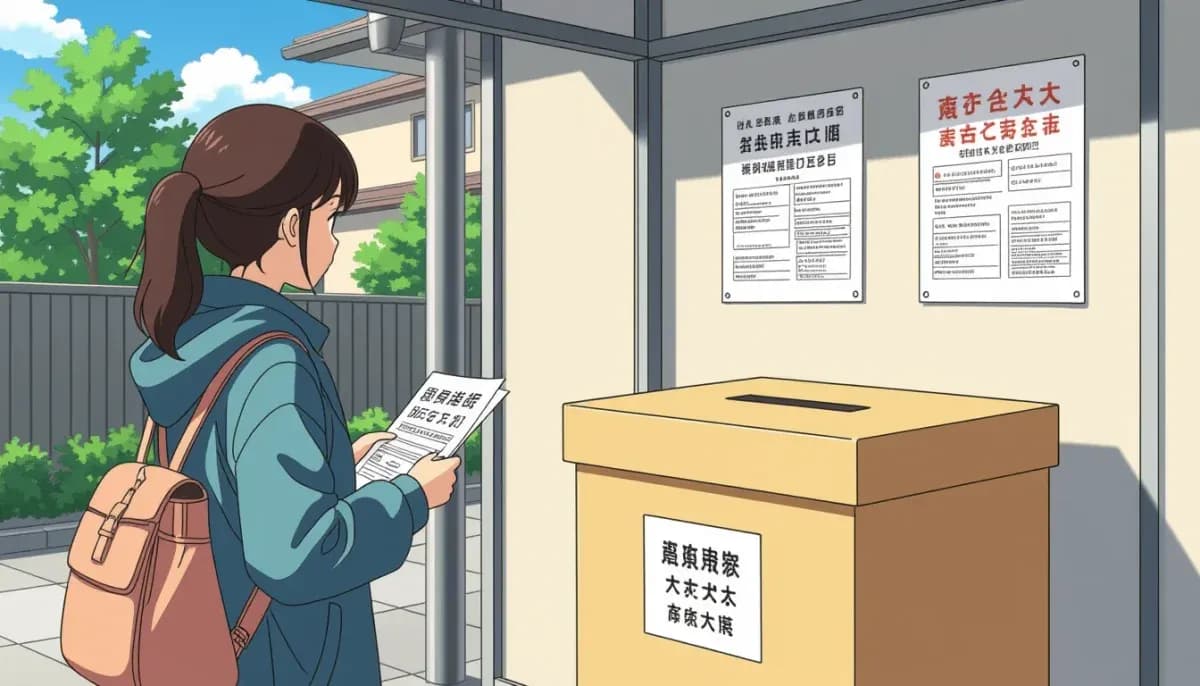
Foreigners cannot vote in Japan's elections — only citizens can. Learn about the history of foreign suffrage, naturalization, and how to vote in your home country while living in Japan.
Can Foreigners Vote in Japan? Voting Rights for Foreign Residents Explained
If you're a foreigner living in Japan, you might wonder whether you have any say in the political decisions that directly affect your daily life. Whether it's local zoning laws, municipal budgets, or national policies on immigration, these decisions shape the world you live in. So can foreigners vote in Japan? The short answer is no — but the full picture is considerably more nuanced. This guide explains the current state of voting rights for foreign residents in Japan, the ongoing debate around foreign suffrage, and what options you do have as an expat living in Japan.
The Current Legal Status: Foreigners Cannot Vote in Japan
Under the current Japanese legal framework, only Japanese citizens have the right to vote in national and local elections. This applies regardless of how long you have lived in Japan, how much tax you pay, or whether you hold permanent residency. Japan's Constitution reserves voting rights for citizens, and this has remained unchanged since the post-war era.
This means that even if you have lived in Japan for 20 years, own a home, raise children in Japanese schools, and pay all your taxes faithfully, you still cannot vote in Japanese elections — not at the national level, and not at the local level in most cases.
The number of people affected by this is significant. According to the Ministry of Justice, approximately 912,361 permanent residents live in Japan, representing a substantial portion of the roughly 3+ million foreign nationals residing in the country. These are people who have made Japan their permanent home, yet have no formal political voice in the country's democratic process.
A Brief History of the Foreign Suffrage Debate in Japan
The debate over voting rights for foreign residents in Japan is not new. Understanding its history helps explain why change has been so slow.
Pre-1945: Ethnic Koreans who had been brought to Japan under colonization were technically subjects of the Japanese Empire and could participate in local elections. However, after Japan's defeat in World War II, the Supreme Commander for the Allied Powers (SCAP) revoked this right in December 1945, and Koreans in Japan (now called "Zainichi Koreans") lost their voting rights.
1990–1995: Some permanent residents, particularly Zainichi Koreans, petitioned the Supreme Court to regain voting rights. In a landmark 1995 ruling, Japan's Supreme Court declined to order the government to grant voting rights to permanent residents in national elections. However, crucially, the court also stated that it was not unconstitutional for the government to grant local voting rights to permanent residents through legislation. This opened a legal door that has remained largely unopened.
The 2000s–2010s: Various political parties attempted to pass legislation granting local voting rights to permanent residents. The Democratic Party of Japan (DPJ), which was in power from 2009 to 2012, was broadly supportive of foreign suffrage. However, the legislation never passed, partly due to strong opposition from the Liberal Democratic Party (LDP), which has governed Japan for most of its post-war history and remains opposed to non-citizen suffrage.
Recent Years: In December 2021, the city of Musashino in suburban Tokyo proposed a local referendum ordinance that would have included foreign residents aged 18 or older who had been registered for at least three months. The proposal was ultimately voted down by the city assembly, reflecting the continued political resistance to expanding voting rights. By the end of 2021, approximately 42 of Japan's 1,718 municipalities had passed ordinances allowing foreign residents to participate in local referendums — not general elections, but at least giving some voice on specific local issues.
For more context on living as a foreigner in Japan and navigating its legal systems, see our guide to Legal Rights for Foreigners in Japan.
The Path to Voting Rights: Naturalization
Currently, the only way for a foreigner to gain full voting rights in Japan is to become a Japanese citizen through naturalization. This gives you the same political rights as any other Japanese citizen, including the right to vote in all national and local elections.
However, naturalization comes with significant trade-offs. Japan generally does not permit dual citizenship (with very limited exceptions), which means that most applicants must renounce their original nationality upon naturalization. For many foreign residents — especially Zainichi Koreans who have deep cultural ties to Korea — this is a profound sacrifice that goes beyond mere paperwork.
The standard requirements for naturalization in Japan include (see Japan Handbook's Naturalization Guide for full details):
| Requirement | Details |
|---|---|
| Residency | Minimum 5 years of continuous lawful residence in Japan |
| Age | Must be 18 years or older (legal adult) |
| Conduct | Clean criminal record, good moral character |
| Financial stability | Ability to support oneself financially |
| Tax compliance | Up-to-date with all tax obligations |
| Renouncing original citizenship | Required in most cases (Japan generally prohibits dual nationality) |
| Japanese language ability | Not formally tested, but expected at a functional level |
Important 2025 Update: The Japanese government has been considering tightening naturalization requirements, potentially extending the residency requirement from 5 years to 10 years, aligning it with the permanent residency requirement. Tax payment history and social insurance premium records may also be scrutinized more strictly. If you are planning to naturalize, it is worth consulting with an immigration specialist soon, as the rules may change. Read more about citizenship options in our Permanent Residency and Citizenship in Japan Guide.
Can You Vote in Your Home Country While Living in Japan?
While foreigners cannot vote in Japanese elections, most countries allow their citizens living abroad to vote in their home country's elections through absentee or overseas voting. This is worth setting up if you want to maintain your democratic participation. Here's a quick overview of how it works for residents of common expat home countries:
| Country | Overseas Voting Option | Notes |
|---|---|---|
| United States | Yes (UOCAVA/state-based) | Contact your state's election office or FVAP |
| United Kingdom | Yes (overseas postal vote) | Must have been registered at a UK address within the last 15 years |
| Australia | Yes (mandatory) | Failure to vote can result in a AU$20 fine; vote at Australian Embassy Tokyo |
| Canada | Yes (International Register of Electors) | Supreme Court eliminated the 5-year restriction in 2019 |
| New Zealand | Yes (online enrollment) | Must have lived in NZ for at least one year |
| European Union countries | Varies by country | Most EU members have overseas voting; check your embassy |
Your home country's embassy or consulate in Japan is your best resource for setting up overseas voting. Most embassies in Tokyo are equipped to handle voter registration and can provide or facilitate postal ballots.
For practical tips on dealing with bureaucracy as a foreigner in Japan, see our guide to Japanese Bureaucracy and Paperwork.
The Political Debate: Arguments For and Against Foreign Suffrage in Japan
The question of whether foreign residents should be allowed to vote in Japan is a genuinely contested political issue, and understanding both sides helps you engage more meaningfully with the conversation.
Arguments in Favor of Foreign Voting Rights
Taxation without representation: Many permanent residents pay income tax, consumption tax, social insurance contributions, and local residence tax — exactly the same as Japanese citizens. The principle of democratic representation suggests that those who contribute to the public purse should have a say in how it is spent.
Long-term integration: Second and third-generation Zainichi Koreans and other long-term foreign residents are deeply embedded in Japanese society. They speak Japanese as their primary language, their children attend Japanese schools, and they identify strongly with their local communities. Denying them any voice in local governance seems increasingly at odds with their lived reality.
The 1995 Supreme Court precedent: The Supreme Court itself has said that granting permanent residents local voting rights is not unconstitutional. There is no legal barrier to extending at least local suffrage to permanent residents — only political will is lacking.
International comparison: Many democracies allow long-term foreign residents to vote in local elections. New Zealand allows all permanent residents to vote in local and national elections. Several EU member states permit EU citizens to vote in local elections in their country of residence. Japan is somewhat of an outlier among wealthy democracies.
Arguments Against Foreign Voting Rights
Citizenship as the basis for political rights: Critics argue that voting is an expression of national membership and should require a commitment to the nation through citizenship. If permanent residents want to vote, the argument goes, they should naturalize.
Dual loyalties: Some opponents worry that foreign residents might vote based on the interests of their home countries rather than Japan's best interests, particularly in national security matters.
Constitutional ambiguity: While the 1995 ruling said local foreign suffrage is not prohibited, the Constitution's spirit, as interpreted by many conservatives, links political rights to Japanese nationality.
The availability of naturalization: Japan's naturalization process, though not trivial, is available to permanent residents. For those genuinely committed to Japan, citizenship offers the clearest path to political participation.
Public opinion in Japan on this issue is genuinely mixed. Survey data suggests that approximately 60% of Japanese citizens support granting permanent residents local voting rights, indicating that there is a popular mandate for change that the political system has not yet translated into law.
For more on your rights and legal standing in Japan, visit Living in Nihon for expat resources, or For Work in Japan for workplace-related rights.
Practical Steps for Foreigners Who Want Political Participation
Even without voting rights in Japan, there are meaningful ways to participate in the political process:
1. Register for overseas voting in your home country. Contact your embassy or consulate and get set up for absentee voting. This keeps you connected to democratic participation and is often simpler than it sounds.
2. Get involved in local community organizations. Many municipalities in Japan welcome foreign residents to participate in community councils, neighborhood associations (jichikai/chonaikai), and public comment processes for local planning decisions.
3. Join advocacy organizations. Several organizations in Japan advocate for the rights of foreign residents, including voting rights. Participation in these groups can be a meaningful form of civic engagement.
4. Consider naturalization if long-term residence is your plan. If you intend to live in Japan permanently, naturalization gives you full political rights. The trade-off of renouncing your original nationality is a deeply personal decision, but it is worth understanding fully.
5. Participate in local referendums where possible. In the 42+ municipalities that have extended local referendum rights to foreign residents, make sure to participate when such referendums are held.
For comprehensive guidance on making Japan your long-term home, see our articles on Taxes in Japan for Foreigners and Working in Japan as a Foreigner.
Looking Ahead: Will Japan Extend Voting Rights to Foreign Residents?
The debate over foreign suffrage in Japan is unlikely to be resolved soon. The LDP, which dominates Japanese politics, remains firmly opposed to extending voting rights to non-citizens. Meanwhile, Japan's aging population and chronic labor shortages are driving increased immigration, which may gradually shift the political calculus.
The Musashino referendum defeat in 2021 showed that even at the local level, expanding foreign voting rights faces significant resistance. However, the fact that 42 municipalities have established some form of foreign resident participation in referendums suggests that gradual, local-level change is possible even without national legislation.
For expats in Japan, the situation remains one of legal limbo: deeply integrated into Japanese society, yet formally excluded from its democratic processes. Understanding your current rights and limitations — and staying engaged politically through your home country's overseas voting systems — is the most practical approach for now.
For additional resources on life in Japan as a foreigner, visit Ittenshoku for job and lifestyle information, or check GaijinPot's guide on voting in your home country from Japan.
Conclusion
Foreigners cannot vote in Japan — not in national elections, and not in most local elections. This is the clear legal reality, and it is unlikely to change dramatically in the near term. Permanent residents, who number nearly a million, have no formal political voice in Japanese elections despite often being deeply rooted members of their communities.
The path to voting rights runs through naturalization, which grants full citizenship and voting rights but typically requires renouncing your original nationality. For those not ready to take that step, staying engaged through your home country's overseas voting systems and participating in local community organizations are the most meaningful alternatives.
The debate over foreign suffrage in Japan reflects deeper questions about nationality, identity, and democratic inclusion that many countries grapple with. As Japan's foreign population continues to grow, these questions are only likely to become more pressing.

Originally from Vietnam, living in Japan for 16+ years. Graduated from Nagoya University, with 11 years of professional experience at Japanese and international companies. Sharing information about living in Japan for foreigners.
View Profile →Related Articles
Visa Overstay Consequences and What to Do in Japan
Learn the serious consequences of visa overstay in Japan, including fines, deportation, and re-entry bans. Discover the Departure Order System and how voluntary surrender can reduce your re-entry ban to just 1 year.
Read more →
Workers Compensation Insurance in Japan Guide
Complete guide to Japan's workers compensation insurance (Rousai Hoken) for foreign workers. Learn about coverage, benefits, how to file a claim, and what to do if your employer refuses to help.
Read more →
Free Legal Consultation Services for Foreigners in Japan
Find free legal consultation services for foreigners in Japan. Covers Houterasu, bar associations, Ministry of Justice, and municipal centers. Multilingual support available.
Read more →
Immigration Detention in Japan What to Know
Everything foreigners need to know about immigration detention in Japan: how it works, your rights, detention duration, provisional release, deportation consequences, and how to get help.
Read more →
Consumer Protection Laws in Japan for Foreign Residents
A complete guide to consumer protection laws in Japan for foreigners — covering the cooling-off period, return policies, product safety, complaint processes, and your rights as a foreign resident.
Read more →
Tenant Rights in Japan for Foreign Renters
Know your rights as a foreign tenant in Japan. Learn about security deposit rules, eviction laws, lease protections, and free legal resources for expats renting in Japan.
Read more →