
Workers Compensation Insurance in Japan Guide

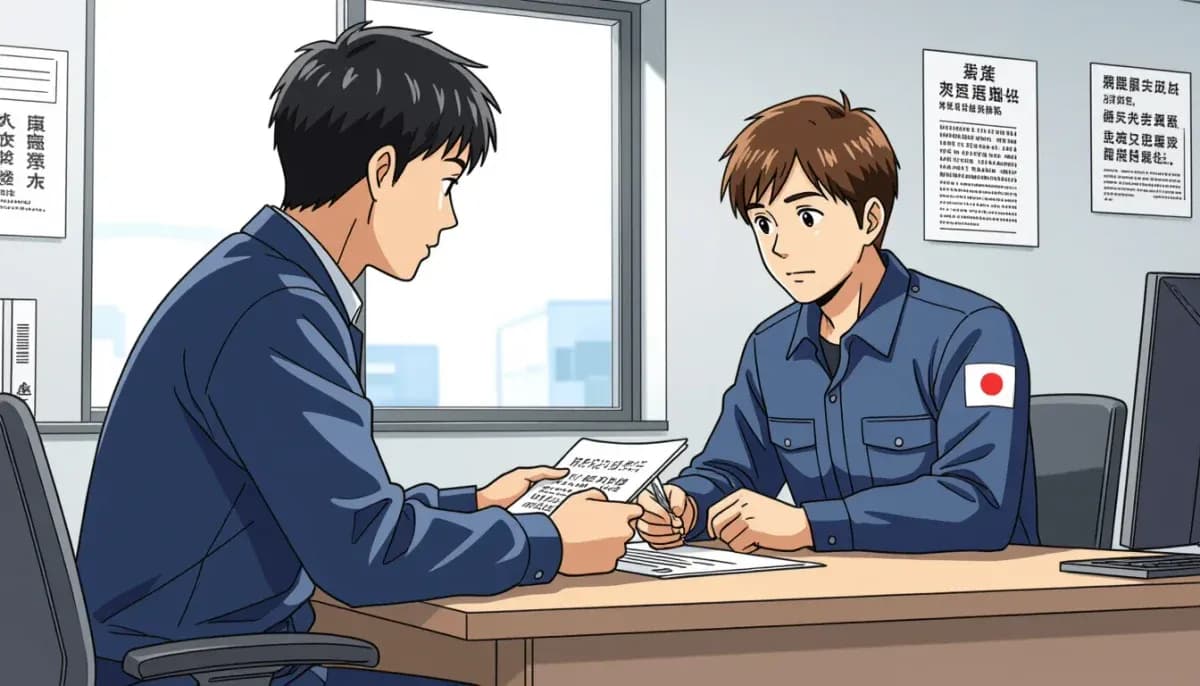
Complete guide to Japan's workers compensation insurance (Rousai Hoken) for foreign workers. Learn about coverage, benefits, how to file a claim, and what to do if your employer refuses to help.
Workers Compensation Insurance in Japan: A Complete Guide for Foreigners
If you've been injured at work or during your commute in Japan, you're entitled to compensation through Japan's workers' accident compensation insurance system — regardless of your nationality. Known as Rousai Hoken (労災保険) or Industrial Accident Compensation Insurance, this mandatory government program protects all workers employed in Japan, from full-time office workers to part-time staff and temporary employees.
This guide explains everything you need to know about workers compensation in Japan as a foreigner: what it covers, how to file a claim, and what to do if your employer is uncooperative.
What Is Workers Compensation Insurance in Japan (Rousai Hoken)?
Workers' accident compensation insurance — commonly called Rousai — is a mandatory public insurance system administered by the Japanese government under the Ministry of Health, Labour and Welfare (MHLW). It provides medical care and financial compensation to workers who are injured, become ill, disabled, or die as a result of work duties or commuting.
Key points:
- Applies to ALL businesses that employ even one worker
- Covers ALL employees regardless of nationality, visa status, or employment type
- Employers pay 100% of premiums — workers pay nothing out of pocket
- Managed through the local Labor Standards Inspection Office (Rodo Kijun Kantokusho / 労働基準監督署)
The system is separate from Japan's general health insurance (Kenko Hoken). When a work-related injury or illness occurs, Rousai Hoken — not your health insurance — covers the costs.
For more information about Japan's overall healthcare system, see our guide: Healthcare in Japan for Foreigners.
Who Is Covered Under Japan's Workers Compensation System?
One of the most important things to understand is that Rousai Hoken applies to all workers in Japan, regardless of nationality. As a foreigner working legally (or even illegally, in practice) in Japan, you have the same rights as Japanese employees when it comes to workplace injury compensation.
Workers Covered
- Full-time regular employees
- Part-time workers
- Fixed-term contract workers
- Temporary/dispatched workers (haken)
- Foreign nationals on work visas
- Foreign students working part-time jobs
Workers Generally NOT Covered
- Self-employed individuals and sole proprietors (voluntary enrollment is available for some)
- Government/public sector workers (they have a separate system)
- Family members working informally in a family business
If your employer tries to tell you that you're not covered because you're a foreigner — that is incorrect. The law clearly states that the Industrial Accident Compensation Insurance Act applies to foreign nationals working in Japan as employees.
For related information about working in Japan, visit: The Complete Guide to Working in Japan as a Foreigner.
What Does Rousai Hoken Cover?
Japan's workers compensation insurance covers a comprehensive range of situations and provides seven main types of benefits:
| Benefit Type | Description | Details |
|---|---|---|
| Medical Benefits | Treatment costs for work injuries/illness | Free treatment at designated hospitals |
| Temporary Absence Benefits | Income during recovery | 60% of average daily wage, from 4th day onward |
| Injury/Disease Compensation Pension | Long-term support | Activated if symptoms persist after 18 months |
| Disability Benefits | Permanent disability | Lump sum or pension depending on severity (14 grades) |
| Surviving Family Benefits | Death benefit for family | Pension or lump sum paid to bereaved family |
| Funeral Expenses | Partial funeral cost reimbursement | Fixed amount or actual expenses |
| Nursing Care Benefits | Support for severe disability | Monthly payments for those needing ongoing care |
Work Accidents vs. Commuting Accidents
Rousai Hoken covers both:
Work accidents (Gyomu Saigai / 業務災害): Injuries or illnesses that occur during the performance of your job duties. This includes injuries on work premises, occupational diseases from prolonged exposure, and mental health conditions caused by overwork or harassment.
Commuting accidents (Tsuko Saigai / 通勤災害): Injuries that occur while traveling between your home and workplace, using a "reasonable and normally accepted route and method." Note that if you make significant detours for personal errands, that portion of the commute may not be covered.
How Much Compensation Will You Receive?
The compensation amounts under Rousai Hoken are calculated based on your average daily wage (Kyufu Kiso Nichigaku / 給付基礎日額).
Temporary Absence Benefit (休業補償給付)
When you cannot work due to a work-related injury or illness:
- Days 1–3: Your employer must pay 60% of your average wage directly (this is the "waiting period")
- Day 4 onward: Rousai Hoken pays 60% of your average daily wage + a special additional benefit of 20% (totaling 80% in practice)
Medical Benefits
- Treatment at designated industrial accident hospitals: Completely free with no co-payment required
- Treatment at non-designated hospitals: You may need to pay upfront and claim reimbursement
Disability Benefits
If you suffer permanent disability, compensation is categorized into 14 disability grades, ranging from Grade 1 (most severe) to Grade 14 (least severe). Grades 1–7 receive a pension; Grades 8–14 receive a lump sum payment.
How to File a Workers Compensation Claim in Japan
If you've been injured at work or during your commute, follow these steps to file a Rousai Hoken claim:
Step 1: Seek Medical Treatment Immediately
Go to a hospital — ideally a designated industrial accident hospital (Rousai Shitei Byoin). At a designated facility, you receive treatment free of charge by presenting your employer information. If you go to a non-designated hospital, you may need to pay and then claim reimbursement.
Step 2: Report to Your Employer
Inform your employer about the accident as soon as possible. Your employer is legally required to help you complete the necessary paperwork and submit it to the Labor Standards Inspection Office.
Step 3: Complete the Claim Forms
The required forms differ based on the type of benefit:
- Form 5 (Dai 5 Go Yoshiki): Medical treatment at a designated hospital
- Form 7 (Dai 7 Go Yoshiki): Medical treatment at a non-designated hospital (for reimbursement)
- Form 8 (Dai 8 Go Yoshiki): Temporary absence compensation
Forms are available at the Labor Standards Inspection Office or can be downloaded from the MHLW website.
Step 4: Submit to the Labor Standards Inspection Office
Your employer typically submits the forms on your behalf. However, if your employer refuses to cooperate, you can submit the claim yourself directly to the Labor Standards Inspection Office. You do not need your employer's signature to initiate a claim.
Step 5: Investigation and Payment
The Labor Standards Inspection Office will investigate whether the incident qualifies as work-related. If approved, benefits are paid directly to you or the medical institution.
What If Your Employer Refuses to Help?
This is unfortunately a common issue, especially for foreign workers. Some employers — particularly in smaller companies or industries with many foreign workers — may refuse to acknowledge a workplace accident or pressure you not to file a claim. Here's what you can do:
1. File the claim yourself. You do not need your employer's cooperation to file a Rousai claim. You can go directly to the Labor Standards Inspection Office and submit the forms yourself.
2. Contact the Labor Standards Inspection Office. They can advise you on how to proceed and may investigate your employer if there is non-compliance.
3. Consult a labor union or legal aid organization. Many unions and non-profit organizations in Japan provide free consultation for foreign workers facing labor issues.
4. Contact the General Union or your country's embassy. These organizations can often provide advice and support in your language.
For guidance on navigating Japan's legal and administrative systems, visit Living in Nihon for helpful resources for foreigners.
Special Considerations for Foreign Workers in Japan
Foreign workers face some unique challenges when dealing with Japan's workers compensation system:
Language Barriers
The claim forms and procedures are primarily in Japanese. While the MHLW has created multilingual guides for foreign workers, the process can still be confusing. The official guide is available in English, Chinese, Vietnamese, Indonesian, Tagalog, and other languages at the MHLW website.
Visa Status and Compensation
Your workers compensation rights are not affected by your visa status. Even if you are working in a status that may not be fully authorized, you still have rights to medical treatment and compensation under Rousai Hoken.
Sending Compensation Overseas
If you return to your home country during recovery or after disability, it is possible to receive ongoing Rousai benefits sent internationally. Discuss this with the Labor Standards Inspection Office when filing your claim.
Totalization Agreements
Japan has totalization agreements with various countries (including the US, UK, Germany, and others) to prevent double social insurance contributions. However, these agreements generally do not affect Rousai Hoken coverage, which remains mandatory for all workers in Japan.
For information about Japan's broader social insurance systems for workers, check out For Work in Japan for practical guidance.
Rousai Hoken vs. Regular Health Insurance: Key Differences
Many foreigners are confused about when to use Rousai Hoken versus their regular health insurance (Kenko Hoken). The rules are clear:
| Situation | Use Rousai Hoken | Use Health Insurance |
|---|---|---|
| Injured at work | ✅ Yes | ❌ No |
| Sick due to overwork/stress | ✅ Yes | ❌ No |
| Injured during commute | ✅ Yes | ❌ No |
| Injured during lunch break off-site | May qualify | Likely |
| General illness (flu, cold) | ❌ No | ✅ Yes |
| Injury from personal activities | ❌ No | ✅ Yes |
| Injury at company social event | Possibly | Possibly |
Important: Using your regular health insurance for a work-related injury is technically incorrect. If discovered, the health insurer can request reimbursement, and you may face complications. Always use Rousai Hoken for anything work-related.
Voluntary Rousai Enrollment for Self-Employed Workers
If you are self-employed or a sole proprietor (freelancer), you are not automatically covered by Rousai Hoken. However, certain categories of self-employed workers can voluntarily enroll in a special scheme called Tokubetsu Kanyū (特別加入).
Eligible groups for voluntary enrollment include:
- Construction subcontractors and sole proprietors in certain industries
- Workers at small businesses owned by the proprietor themselves
- Specific types of agricultural workers
- Some IT freelancers and delivery workers (added in recent years)
The premiums for voluntary enrollment are calculated based on a chosen daily wage amount and the industry-specific insurance rate.
For more details on managing finances as a self-employed foreigner in Japan, see our guide: Banking and Finance in Japan for Foreigners.
Useful Resources for Foreign Workers
Here are some key resources to help you navigate workers compensation in Japan:
- Ministry of Health, Labour and Welfare (MHLW): Official information and multilingual guides at mhlw.go.jp
- MailMate Blog: Practical explanation of Rousai Hoken in English at mailmate.jp
- JP Mirai Portal: Detailed breakdown of Rousai benefit types at portal.jp-mirai.org
- Ittenshoku: Resources for foreign workers in Japan at ittenshoku.com
- Local Labor Standards Inspection Office: Visit in person to file claims or get assistance
Conclusion
Japan's workers compensation insurance system (Rousai Hoken) is one of the most comprehensive in the world, and as a foreign worker, you are fully entitled to its protections. The key takeaways:
- You are covered — regardless of nationality or visa status
- Your employer pays all premiums — this costs you nothing
- Both work and commuting accidents are covered
- You can file a claim yourself if your employer refuses to help
- Language support is available — seek multilingual resources if needed
If you've been injured at work or during your commute, don't hesitate to exercise your rights. The Labor Standards Inspection Office is there to help, and your compensation benefits can make a significant difference during your recovery period.
For more guidance on working life in Japan as a foreigner, explore our comprehensive Working in Japan Guide and Healthcare in Japan Guide.

Originally from Vietnam, living in Japan for 16+ years. Graduated from Nagoya University, with 11 years of professional experience at Japanese and international companies. Sharing information about living in Japan for foreigners.
View Profile →Related Articles
Visa Overstay Consequences and What to Do in Japan
Learn the serious consequences of visa overstay in Japan, including fines, deportation, and re-entry bans. Discover the Departure Order System and how voluntary surrender can reduce your re-entry ban to just 1 year.
Read more →
Can Foreigners Vote in Japan Explained
Foreigners cannot vote in Japan's elections — only citizens can. Learn about the history of foreign suffrage, naturalization, and how to vote in your home country while living in Japan.
Read more →
Free Legal Consultation Services for Foreigners in Japan
Find free legal consultation services for foreigners in Japan. Covers Houterasu, bar associations, Ministry of Justice, and municipal centers. Multilingual support available.
Read more →
Immigration Detention in Japan What to Know
Everything foreigners need to know about immigration detention in Japan: how it works, your rights, detention duration, provisional release, deportation consequences, and how to get help.
Read more →
Consumer Protection Laws in Japan for Foreign Residents
A complete guide to consumer protection laws in Japan for foreigners — covering the cooling-off period, return policies, product safety, complaint processes, and your rights as a foreign resident.
Read more →
Tenant Rights in Japan for Foreign Renters
Know your rights as a foreign tenant in Japan. Learn about security deposit rules, eviction laws, lease protections, and free legal resources for expats renting in Japan.
Read more →