
Paid Leave and Vacation Days in Japan Nenkyuu Guide

Everything foreigners need to know about nenkyuu (paid leave) in Japan: how many days you get, how to request leave, carryover rules, your legal rights, and cultural tips for taking time off.
Paid Leave and Vacation Days in Japan: The Complete Nenkyuu Guide for Foreigners
If you're working in Japan, understanding your paid leave entitlements is essential. Japan's system of annual paid leave — called nenkyuu (年休) or yukyu kyuka (有給休暇) — can be confusing at first, especially if you're coming from a country with different workplace norms. This guide breaks down everything you need to know: how many days you get, how to request them, and how to navigate Japan's unique workplace culture around taking time off.
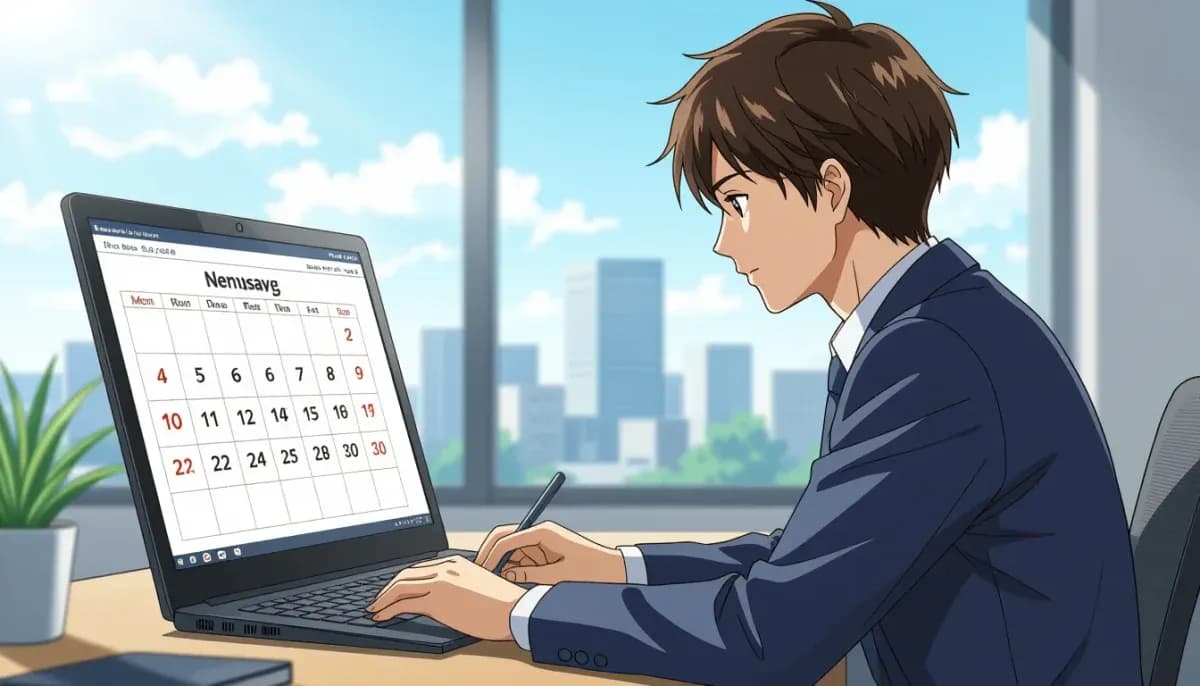
!Japanese office worker reviewing a vacation calendar with nenkyuu days marked

What Is Nenkyuu? Understanding Japan's Paid Leave System
Nenkyuu (年休) is short for nenkyu kyuka (年次有給休暇), meaning "annual paid vacation." It is a legally protected right under Japan's Labor Standards Act (労働基準法), specifically Article 39. This means that regardless of your nationality or visa status, if you work in Japan as an employee, you are entitled to paid leave.
The key distinction from many Western countries is that Japan's paid leave system is tightly regulated by law, with specific eligibility requirements, accrual schedules, and even mandatory usage rules. Employers are legally prohibited from penalizing workers for taking their entitled leave.
There are two common terms you'll encounter:
- Nenkyuu (年休) — informal abbreviation used in everyday conversation
- Yukyu (有給) — also common, short for "paid"
Both refer to the same legal entitlement. When you request a day off and still get paid, you're using your nenkyuu.
How Many Paid Leave Days Do You Get in Japan?
Your entitlement to paid leave depends on how long you've been with your employer. The law sets out a minimum accrual schedule that all employers must follow.
Eligibility Requirements
To qualify for paid leave, you must:
- Have been continuously employed for at least 6 months
- Have attended work on at least 80% of scheduled working days
Once you meet these requirements, you automatically earn your first batch of paid leave days — typically 10 days for full-time employees.
Paid Leave Accrual Schedule (Full-Time Employees)
| Years of Continuous Service | Paid Leave Days Granted |
|---|---|
| 6 months | 10 days |
| 1 year 6 months | 11 days |
| 2 years 6 months | 12 days |
| 3 years 6 months | 14 days |
| 4 years 6 months | 16 days |
| 5 years 6 months | 18 days |
| 6 years 6 months or more | 20 days |
After 6.5 years of continuous service, you reach the maximum of 20 days per year. Many companies also offer additional leave beyond these legal minimums as part of their benefits package — always check your employment contract and company handbook.
Part-Time Employee Entitlements
Part-time workers are also entitled to nenkyuu, but the number of days is calculated proportionally based on scheduled working hours and days per week.
| Days per Week | Hours per Week | 6 months | 1.5 years | 2.5 years | 3.5 years | 4.5 years | 5.5 years | 6.5+ years |
|---|---|---|---|---|---|---|---|---|
| 5 days+ | 30hrs+ | 10 days | 11 days | 12 days | 14 days | 16 days | 18 days | 20 days |
| 4 days | — | 7 days | 8 days | 9 days | 10 days | 12 days | 13 days | 15 days |
| 3 days | — | 5 days | 6 days | 6 days | 8 days | 9 days | 10 days | 11 days |
| 2 days | — | 3 days | 4 days | 4 days | 5 days | 6 days | 6 days | 7 days |
| 1 day | — | 1 day | 2 days | 2 days | 2 days | 3 days | 3 days | 3 days |
Important: Part-time workers who work 30 or more hours per week receive the same number of paid leave days as full-time employees.
The 2019 Work Style Reform: Mandatory Leave Usage
One of the biggest recent changes to Japan's labor law came with the Work Style Reform Act (働き方改革関連法), which took effect in April 2019. Under this law:
- Employers must ensure that employees with 10 or more days of annual paid leave use at least 5 days of it each year
- Companies that fail to comply face fines of up to 300,000 yen per employee
- Employers must designate specific leave dates if an employee hasn't used their minimum 5 days by year-end
This was a significant shift. Before 2019, many Japanese workers felt social pressure not to use their full leave allotment. The new law gives both employers and employees a legal obligation to make leave happen.
For foreigners working in Japan, this is great news — your employer is now legally required to help you take at least 5 days off per year. If your manager tries to discourage you from taking leave, they are potentially violating labor law.
For a broader overview of your rights as a worker in Japan, see our guide to Working in Japan as a Foreigner.
How to Request Paid Leave in Japan
Requesting nenkyuu in Japan involves both the formal process and the unwritten cultural expectations. Here's how to navigate both.
The Formal Process
- Check your company's leave policy — Most companies have specific procedures outlined in the employee handbook (就業規則, shuugyou kisoku). This may include a required form, advance notice period, and approval chain.
- Submit your request in advance — The required lead time varies by company:
- Minimum: 2 days notice for routine leave - Common: 1 week notice for extended leave - Some companies: 2 weeks or more for long vacations
- Use the proper channel — Depending on your company, this might be:
- A paper leave application form (有給休暇申請書, yukyu kyuka shinseisho) - An internal HR system or app - Email to your direct supervisor
- Get approval from your supervisor — Your request goes to your direct manager first, then to HR. While employers can technically postpone your leave to a different date if it causes operational disruption, they cannot refuse to grant it entirely.
Cultural Tips for Foreigners
Japan's workplace culture around taking leave can feel very different from Western norms. Here are some key insights:
Don't feel you need to give a reason. Unlike some workplaces, you are legally allowed to take nenkyuu without explaining why. Simply saying "I'd like to take paid leave on [date]" is sufficient. That said, giving a vague reason like "personal matters" (私用, shiyou) or "health reasons" can help smooth things over in traditional workplaces.
Timing matters more than quantity. Try to avoid requesting leave during:
- Year-end and new year (年末年始, nenmatsu nenshi)
- Golden Week (early May)
- Obon season (mid-August)
- Tax season or other peak work periods specific to your industry
Prepare handover materials. Before going on leave, it's considered good practice to prepare documentation for colleagues who will cover your work. This shows consideration and makes it easier to get future requests approved.
Foreigners have more flexibility. Many expats report that Japanese coworkers give them more latitude when taking leave, understanding that foreigners have different cultural expectations. Use this to your advantage, but be sensitive to team dynamics.
For more on navigating Japanese workplace culture, check out our guide to Japanese Workplace Culture.
Carryover Rules and Expiration
Unused paid leave does not disappear at the end of the fiscal year — but it doesn't last forever either.
- Carryover: Unused nenkyuu can be carried over to the following year
- Maximum carryover: 20 days (if you have 20 days and don't use any, you carry 20 into the next year)
- Expiration: Nenkyuu expires 2 years after it was granted
This means your leave accumulates over time, up to a maximum of 40 days (20 current year + 20 carried over). After 2 years, any unused days simply expire — you cannot receive cash compensation for them.
Tip: Track your leave balance carefully, especially as you accumulate more years of service. Some employees lose significant amounts of paid leave simply by forgetting they had it.
!Calendar showing nenkyuu days tracking and planning for the year

Special Types of Leave in Japan
Beyond standard nenkyuu, Japan recognizes several other types of leave that are worth knowing about:
| Leave Type | Japanese Name | Notes |
|---|---|---|
| Annual paid leave | 年次有給休暇 (nenkyuu) | Legally required, scales with tenure |
| Sick leave | 病気休暇 (byouki kyuka) | Not legally mandated; company policy varies |
| Maternity leave | 産前産後休業 (sanzen sango kyuugyou) | 6 weeks before, 8 weeks after birth |
| Paternity/childcare leave | 育児休業 (ikuji kyuugyou) | Up to 1 year; legally protected |
| Bereavement leave | 忌引き (kibiki) | Varies by company; typically 3–7 days |
| Summer leave | 夏季休暇 (kakki kyuka) | Company-provided; typically 3–5 days |
| Year-end/New Year leave | 年末年始休暇 | Company-provided; typically 1 week |
Maternity and childcare leave are particularly strong in Japan by international standards, with significant government support. For more information on benefits and rights at work, see our Legal Rights for Foreigners in Japan guide.
Japan's Paid Leave Usage Reality: Are Workers Actually Taking Time Off?
Despite the generous legal framework, Japan has historically had one of the lowest paid leave usage rates among developed countries. Cultural factors — fear of burdening colleagues, concerns about career advancement, and general workplace pressure — have long discouraged workers from taking their full entitlement.
However, the trend is improving:
- 2022 record: Japanese workers took an average of 10.9 days out of 17.6 days entitled — a 62.1% usage rate, the highest ever recorded
- By company size: Large companies (1,000+ employees) had a 65.6% usage rate; smaller firms (30–99 employees) lagged at 57.1%
- By industry: Post and logistics topped at 74.8%; accommodation and food services were lowest at 49.1%
- Government target: The government has set a goal of 70% usage by 2025
For foreigners working in Japan, these cultural dynamics are worth understanding. You may encounter coworkers who don't use their leave and who subtly judge those who do. But the law is on your side, and the culture is gradually shifting.
For helpful resources on navigating work culture and labor rights, Living in Nihon offers practical guides for foreigners living and working in Japan.
Know Your Rights: What Employers Cannot Do
Some employers — particularly smaller or more traditional companies — may try to discourage leave-taking. Here's what you need to know about your legal protections:
Employers CANNOT:
- Refuse to grant paid leave outright (they can only postpone to a different date)
- Cut your pay for taking entitled leave
- Demote, fire, or otherwise penalize you for taking nenkyuu
- Force you to exchange unused leave for cash instead of time off (with very limited exceptions)
Employers CAN:
- Request you change your leave dates if operational needs require it (but must offer alternative dates)
- Designate specific leave periods for the whole company (e.g., summer shutdown)
- Set minimum advance notice requirements within reason
If you believe your employer is violating your leave rights, you can contact the Labor Standards Inspection Office (労働基準監督署, roudou kijun kantokusho), which operates throughout Japan and offers consultation services in multiple languages.
For comprehensive information on Japan's labor law framework, the team at For Work in Japan has detailed guides on workplace rights for foreign workers.
Practical Tips for Making the Most of Your Nenkyuu
Here are actionable strategies for foreigners to maximize their paid leave in Japan:
1. Track your balance from day one. Request your leave balance from HR when you join. Many companies provide a leave management app or internal portal.
2. Use the mandatory 5-day rule strategically. If your employer needs to ensure you use 5 days, work with them to schedule these at convenient times — perhaps around existing holidays to create longer breaks.
3. Bridge public holidays. Japan has 16 public holidays per year. By taking a few nenkyuu days around these, you can create week-long breaks while only using 2–3 days of leave. This is a very common and accepted practice.
4. Take half-day leave. Many companies allow 半日有給 (hannichi yukyu), or half-day paid leave. This is a great option for appointments, errands, or easing back into work after a break.
5. Plan summer and winter breaks early. Golden Week (late April/early May), Obon (mid-August), and the New Year period are when most people take leave. Submit requests early for these peak periods to secure your dates.
6. Communicate proactively. Tell your supervisor in advance not just the dates but also your handover plan. This builds goodwill and makes future requests easier.
For more tips on managing your daily life in Japan, including work-life balance strategies, see our Daily Life in Japan Guide.
Additionally, Ittenshoku offers an excellent resource on Japan's Labor Standards Law basics — essential reading if you want to understand your full range of legal protections as a worker in Japan.
Frequently Asked Questions About Nenkyuu
Can I take paid leave if I'm still in my probationary period? The legal requirement kicks in after 6 months of employment. If your probationary period is within that 6-month window, you may not be entitled yet. Check your contract.
What if my employer denies my leave request? Employers can postpone but not deny leave outright. If they refuse entirely, this may be a labor law violation. Contact the Labor Standards Inspection Office.
Do part-time or arubaito workers get nenkyuu? Yes — if you work regularly and meet the 6-month and 80% attendance requirements, you are entitled to proportional paid leave regardless of your employment category.
Can I take all my nenkyuu at once? Technically yes — it's your legal right. Practically, taking extended leave (2+ weeks) at once may require more planning and advance notice. Discuss with your employer.
What happens to my nenkyuu if I quit? Unused nenkyuu expires when you leave the company — you generally cannot receive cash payment for it. Some companies do have policies to pay out unused leave upon resignation, but this is not legally required.
Is nenkyuu different from summer vacation and New Year holidays? Yes. Company-designated holidays like summer vacation (夏季休暇) and New Year's leave are separate from your personal nenkyuu entitlement and are provided on top of it.
Conclusion: Take Your Nenkyuu — You've Earned It
Japan's paid leave system is robust and legally protected. As a foreigner working in Japan, you have every right to take your nenkyuu, and the law mandates that your employer facilitate this. While the cultural pressure to skip vacation remains in some workplaces, Japan is actively working to shift this norm.
The key takeaways:
- You're entitled to 10–20 days per year based on tenure, after 6 months of service
- Your employer must ensure you use at least 5 days per year (since 2019)
- Unused leave carries over up to 20 days and expires after 2 years
- Employers cannot penalize you for taking your entitled leave
- Usage rates are improving — Japan hit a record 62.1% in 2022
Understanding your rights is the first step. The second is using them. For more guides on navigating life and work as a foreigner in Japan, explore our Working in Japan Guide and resources on Japanese Workplace Culture.

Originally from Vietnam, living in Japan for 16+ years. Graduated from Nagoya University, with 11 years of professional experience at Japanese and international companies. Sharing information about living in Japan for foreigners.
View Profile →Related Articles

What It Is Like Working in a Japanese Company as a Foreigner
Discover what it's really like working in a Japanese company as a foreigner — workplace hierarchy, Horenso culture, long hours, communication challenges, and tips to thrive in Japan's corporate world.
Read more →
Women in the Japanese Workplace Guide for Foreign Women
A comprehensive guide for foreign women navigating the Japanese workplace — from gender dynamics and dress codes to legal rights, salary negotiation, and building professional networks in Japan.
Read more →
Japanese Business Email and Communication Etiquette
Master Japanese business email etiquette as a foreigner in Japan. Learn the 7-part email format, keigo honorifics, meeting protocols, business card exchange, and essential phrases for professional success.
Read more →
How to Handle Workplace Conflict in Japan
Learn how to navigate workplace conflict in Japan as a foreigner. Discover culturally-appropriate strategies including nemawashi, hourensou, and your legal rights against power harassment.
Read more →
Dress Code Guide for Japanese Offices
A complete guide to dress codes in Japanese offices for foreigners and expats. Learn what to wear, seasonal Cool Biz rules, industry differences, grooming standards, and common mistakes to avoid.
Read more →
Senpai Kohai Relationship in the Japanese Workplace
Understand the senpai kohai system in Japanese workplaces. This guide covers hierarchy rules, kohai expectations, senpai duties, and practical tips for foreigners navigating Japanese office culture.
Read more →