
How Much Does It Cost to Retire in Japan

Discover the real cost to retire in Japan as a foreigner. Monthly budgets, visa options, healthcare costs, and savings needed for a comfortable retirement in Japan.
How Much Does It Cost to Retire in Japan: A Complete Budget Guide for Foreigners
Japan has long captured the imagination of retirees worldwide — a country with world-class healthcare, extraordinary food culture, ultra-low crime rates, and a pace of life that many describe as uniquely civilized. But exactly how much does it cost to retire in Japan as a foreigner? The honest answer: less than you might think, but more than you hope, depending on where and how you live.
This guide breaks down the real numbers — monthly budgets, housing costs, healthcare expenses, visa pathways, and the full picture of what retirement in Japan actually costs in 2025 and beyond.
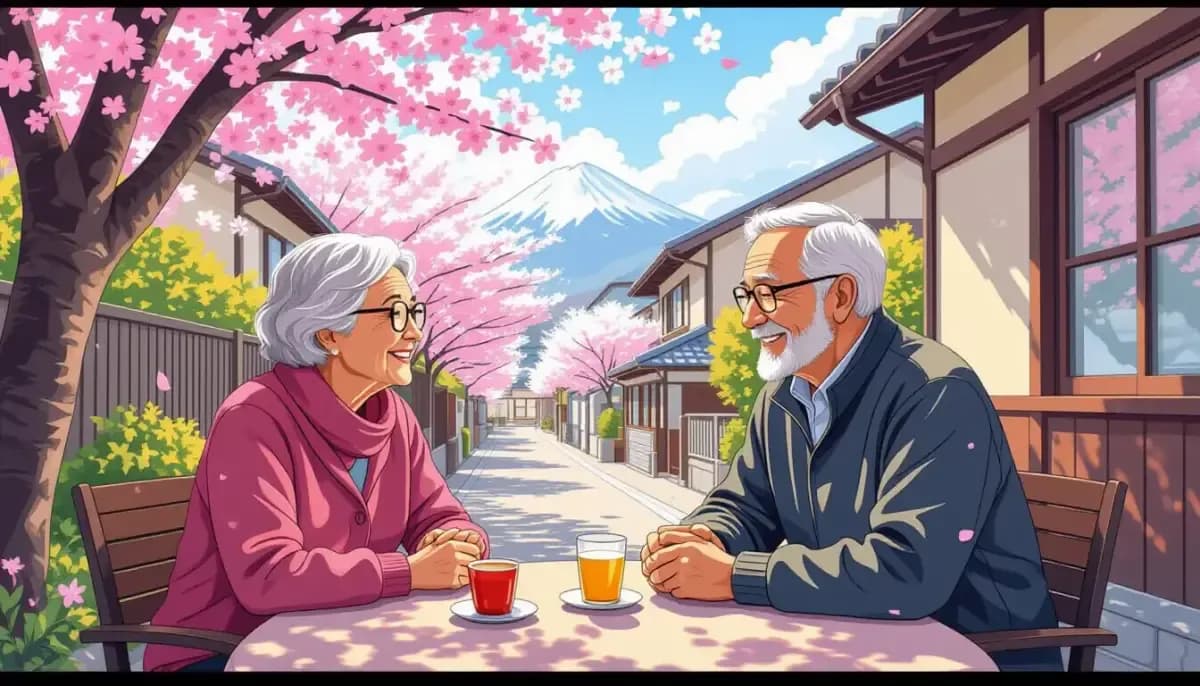
!Retired couple enjoying life in a peaceful Japanese neighborhood with cherry blossoms
The Big Picture: Monthly Cost Estimates to Retire in Japan
Japan's 2024 government survey found that couples aged 65 and older spend approximately ¥286,877 per month on average. For foreigners, costs can run slightly higher due to imported goods preferences, international travel needs, and English-language services.
Here is a realistic monthly budget breakdown by lifestyle and location:
| Lifestyle | Tokyo (Couple) | Suburbs (Couple) | Rural Japan (Couple) |
|---|---|---|---|
| Frugal | ¥350,000 | ¥280,000 | ¥220,000 |
| Comfortable | ¥500,000 | ¥380,000 | ¥300,000 |
| Luxury | ¥750,000+ | ¥580,000 | ¥450,000 |
For a single retiree, estimate roughly 60–65% of the couple budget above.
In USD terms (at ¥150/USD exchange rate):
- Frugal single retiree outside Tokyo: ~$900–$1,100/month
- Comfortable couple in Tokyo: ~$3,200–$3,500/month
- Comfortable couple in rural Japan: ~$1,800–$2,200/month
Japan's consumer prices are approximately 50.6% lower than in the United States, making Japan surprisingly affordable compared to many Western countries — especially if you live locally, eat Japanese food, and avoid imported goods.
For a comprehensive overview of living costs beyond retirement, check out our Complete Guide to Cost of Living in Japan.
Detailed Monthly Budget Breakdown
Understanding where your money goes is essential for retirement planning. Here's how a comfortable Tokyo lifestyle for a couple might break down:
Housing (¥80,000–¥150,000/month)
Housing is typically the largest expense. A 2-bedroom apartment in central Tokyo can run ¥150,000–¥250,000/month, while the same space in suburban areas or smaller cities costs ¥60,000–¥100,000/month.
For owned properties: Japan's real estate is unique in that properties depreciate rather than appreciate over time, unlike Western markets. Purchasing an older apartment or an akiya (abandoned house) can dramatically reduce housing costs. Some akiya properties in rural areas are available for near-zero cost or even free, though they often require renovation investment.
Initial housing costs if renting:
- Security deposit: 1–2 months rent
- Key money (non-refundable gift to landlord): 1–2 months rent in some areas
- Agency fee: 1 month rent
- First month's rent
Total move-in costs: 4–6 months of rent upfront — plan for this in your initial budget.
Food and Dining (¥60,000–¥100,000/month for a couple)
Japan is a food paradise, and eating well doesn't have to be expensive. Supermarkets offer fresh, high-quality produce and fish at very reasonable prices. A home-cooked diet built around Japanese staples — rice, fish, tofu, seasonal vegetables — is both nutritious and affordable.
Eating out is reasonable too: a bowl of ramen costs ¥800–¥1,200, a set lunch at a restaurant typically runs ¥1,000–¥1,500, and convenience store meals (which are genuinely good quality) offer quick meals for ¥400–¥800.
Healthcare (¥15,000–¥40,000/month)
This is where Japan truly shines for retirees. Japan's National Health Insurance (NHI) system covers 70% of all medical costs. Seniors aged 65–74 pay just 20%, and those 75 and older pay only 10% of costs.
Monthly NHI premiums vary by income and municipality but typically run ¥10,000–¥25,000/month for a retiree couple. The system includes a high-cost medical expense benefit that caps monthly out-of-pocket payments, protecting against catastrophic medical bills.
No referrals are needed, no insurance networks — you can visit any clinic or hospital in Japan. Japan ranks among the top healthcare systems globally, with excellent preventive care, modern technology, and highly qualified practitioners.
For more details on navigating Japan's healthcare system, see our Complete Guide to Healthcare in Japan.
Utilities and Internet (¥25,000–¥40,000/month)
- Electricity: ¥8,000–¥15,000
- Gas: ¥5,000–¥10,000
- Water: ¥3,000–¥5,000
- Internet (fiber): ¥4,000–¥6,000
- Mobile phone: ¥3,000–¥5,000
Japan's winters in northern areas and summers nationwide require significant heating/cooling costs. Older Japanese apartments often lack insulation, which can spike energy bills.
Transportation (¥20,000–¥50,000/month)
Japan's public transportation is world-class — punctual, clean, and comprehensive. In urban areas, most retirees can live comfortably without a car. Seniors 65+ often receive discounted public transit passes.
If you live in a rural area, a car becomes necessary. Japanese used cars are excellent quality and relatively affordable, but maintenance, insurance, and mandatory inspections (shaken) add costs.
Insurance and Taxes (¥30,000–¥80,000/month)
Japan's tax system applies to residents. Key taxes for foreign retirees include:
- Income tax: Progressive rates on all Japan-sourced and (for permanent residents) worldwide income
- Resident tax: Approximately 10% of the previous year's income
- Long-term care insurance: Mandatory from age 40
US citizens must also file US federal tax returns regardless of where they live. However, Foreign Tax Credits typically prevent double taxation. Consult a qualified tax professional for your specific situation.
Our Complete Guide to Taxes in Japan provides more detailed information.
Visa Options for Foreign Retirees
Here's a crucial fact that catches many aspiring retirees off guard: Japan does not offer a dedicated retirement visa.
Unlike countries such as Malaysia (MM2H program) or Portugal (D7 visa), Japan has no official retirement pathway. Retirees must qualify under alternative visa categories:
| Visa Type | Key Requirements | Duration |
|---|---|---|
| Designated Activities (Long-Stay) | ¥30 million (~$200,000) in savings | 6 months, once renewable |
| Spousal Visa | Married to Japanese citizen or PR holder | 6 months–5 years |
| Long-Term Resident Visa | Japanese heritage or special circumstances | 6 months–5 years |
| Permanent Residency (PR) | 10 years residence (or 5 on work visa) | Indefinite |
| Highly Skilled Professional | Points-based; invest/start business | Fast-track to PR |
The most practical pathway for most retirees is to first obtain a work or spouse visa, establish long-term residence, then apply for Permanent Residency after the required years. Immigration authorities generally expect stable income or savings of at least ¥3 million annually to approve long-term residence.
The Designated Activities (Long-Stay) Visa is the closest thing to a retirement visa and requires substantial savings (¥30 million / ~$200,000 USD), making it inaccessible for many retirees but viable for those with significant assets.
For detailed visa information, see our Complete Guide to Japan Visa and Immigration.
How Much Savings Do You Need to Retire in Japan?
Using the standard 25x rule (your annual expenses × 25 = retirement nest egg for 3–4% annual withdrawal):
Scenario 1: Frugal single retiree, rural Japan
- Monthly expenses: ¥180,000
- Annual expenses: ¥2,160,000
- Savings needed (25x): ¥54,000,000 (~$360,000)
Scenario 2: Comfortable couple, suburban Japan
- Monthly expenses: ¥380,000
- Annual expenses: ¥4,560,000
- Savings needed (25x): ¥114,000,000 (~$760,000)
Scenario 3: Comfortable couple, Tokyo
- Monthly expenses: ¥500,000
- Annual expenses: ¥6,000,000
- Savings needed (25x): ¥150,000,000 (~$1,000,000)
Keep in mind that Social Security and pension income reduces the savings requirement. With 45,000 American Social Security recipients currently living in Japan — the second-highest number globally — many retirees successfully combine Social Security (averaging ~$1,782/month in 2025) with modest savings to create a comfortable retirement.
Add a buffer: Financial planners recommend keeping 3–8 years of living expenses in accessible savings beyond your investment portfolio to handle market downturns and unexpected expenses.
For broader financial planning in Japan, the team at Living in Nihon's retirement planning guide provides valuable insights tailored to foreigners building their life in Japan.
Where to Retire in Japan: Cost Comparison by City
Location is the single biggest variable in your retirement budget. Here's a comparison of popular retirement destinations:
| City/Area | Monthly Rent (2BR) | Overall Cost Index | English Friendliness |
|---|---|---|---|
| Tokyo | ¥150,000–¥250,000 | Highest | High |
| Osaka | ¥100,000–¥180,000 | High | Medium-High |
| Kyoto | ¥90,000–¥160,000 | Medium-High | High (tourism) |
| Fukuoka | ¥70,000–¥120,000 | Medium | Medium |
| Hiroshima | ¥60,000–¥100,000 | Medium-Low | Medium |
| Sendai | ¥60,000–¥100,000 | Medium-Low | Low-Medium |
| Rural Tohoku/Kyushu | ¥30,000–¥60,000 | Low | Low |
Fukuoka is frequently cited as the best balance city for foreign retirees: lower cost than Tokyo by 30–40%, excellent food scene, direct flights to Asia, warm climate, and a growing international community.
Rural Japan offers the lowest costs, access to pristine nature, and a slower pace of life — but requires Japanese language skills and comfort with limited English-language services. For those interested in rural living, Japan's akiya (abandoned house) program can provide deeply discounted housing.
For housing guidance, For Work in Japan's housing and living infrastructure guide offers practical advice for settling in Japan.
Healthcare: Japan's Biggest Retirement Advantage
If there's one reason to retire in Japan above all others, it may be the healthcare system. Japan consistently ranks among the world's top 10–15 healthcare systems, and for retirees specifically:
- No referral needed: Visit any specialist directly
- No network restrictions: Any clinic or hospital in Japan accepts your insurance
- Co-pay after 65: Just 20% of costs (10% for those 75+)
- Monthly out-of-pocket cap: The high-cost medical benefit system limits maximum monthly payments
- Quality: World-class facilities, cutting-edge technology, highly trained physicians
For perspective: a typical doctor's visit in Japan might cost you ¥500–¥1,500 out of pocket. A specialist consultation might run ¥1,000–¥3,000. Even hospitalization is dramatically cheaper than in the US, with capped monthly contributions protecting you from catastrophic costs.
The catch: English-language medical services are limited outside major cities. Learning basic medical Japanese — or using translation apps — becomes important for rural or suburban retirees.
For more details on enrollment and what's covered, see our Healthcare in Japan guide.
Key Financial Considerations for Foreign Retirees
Currency Risk
The yen fluctuates significantly. Between 2021 and 2024, the yen fell over 30% against the USD, dramatically increasing the yen value of USD-denominated income. Financial advisors recommend stress-testing your budget at ¥130/USD (stronger yen) to ensure you can cover expenses even if the yen strengthens from current levels.
Tax Treaty Benefits
Japan has tax treaties with many countries (including the US, UK, Canada, Australia) to prevent double taxation. However, the rules are complex — foreign pension income, Social Security, and investment returns may be taxed differently depending on your residency status and treaty provisions.
Non-Permanent Residents (those living in Japan less than 5 years in the last 10): taxed only on Japan-sourced income and remitted foreign income. Permanent Residents: taxed on worldwide income.
Inheritance Tax Warning
Japan has some of the world's highest inheritance tax rates (up to 55%), and these can apply to foreign heirs in certain circumstances. If estate planning is important, consult a qualified Japanese attorney well before retirement.
For more on Japan's banking and financial system, see our Complete Guide to Banking and Finance in Japan.
Practical Tips for Budgeting Your Japan Retirement
- Learn Japanese: Even basic conversational Japanese can dramatically reduce costs. English-language services consistently cost more than Japanese equivalents.
- Eat local: Japanese supermarkets and local restaurants offer exceptional value. Imported Western foods are expensive.
- Use public transit: Japan's trains and buses are extraordinarily efficient. Avoiding car ownership in urban areas saves ¥50,000–¥100,000/month.
- Consider rural subsidies: Many rural municipalities offer cash incentives, free housing, and business grants to attract foreign residents through programs like the Regional Revitalization Program.
- Plan for one-time costs: Moving, visa fees, housing deposits (4–6 months rent), and furniture can total ¥1,500,000–¥3,000,000 in the first year.
- Build a Japan-specific emergency fund: Keep 6–12 months of expenses in a Japanese bank account to handle unexpected costs without currency exchange risk.
- Join expat communities: Online communities (like those found at Ittenshoku) provide invaluable practical advice from those who have already navigated the retirement-in-Japan journey.
For more on daily life and practical navigation of Japan, our Daily Life in Japan Guide covers everything from banking to grocery shopping.
Is Retiring in Japan Worth It? A Realistic Assessment
The Case For:
- World-class healthcare at a fraction of Western costs
- Exceptional safety — Japan ranks among the top 10 safest countries globally
- Rich culture, extraordinary food, beautiful natural environments
- Lower consumer prices (50%+ cheaper than the US in many categories)
- Efficient public transportation reducing car dependency
- Long life expectancy — Japan leads the world in longevity
The Challenges:
- No dedicated retirement visa requires creative planning
- Language barrier — Japanese is genuinely difficult for Western language speakers
- Bureaucracy can be challenging without language skills or a local helper
- Social integration can be slow; Japan remains a relatively closed social culture
- Currency risk if your income is in foreign currency
- High initial moving and setup costs
For most financially prepared retirees who enjoy Japanese culture and are committed to learning at least basic Japanese, retirement in Japan offers extraordinary value — particularly outside of Tokyo. A couple living comfortably in suburban Japan can do so on $2,000–$2,500/month, far below what the same quality of life would cost in most Western cities.
The bottom line: A frugal-to-comfortable retirement in Japan is achievable for retirees with $200,000–$500,000 in savings plus pension income. A truly comfortable, stress-free retirement in a major city requires $800,000–$1,000,000 in savings or equivalent pension income of $3,000–$4,000/month.
For comprehensive guidance on moving to Japan and setting up your life, see our Complete Guide to Moving to Japan.
Summary: What You Need to Retire in Japan
| Factor | Minimum | Comfortable | Luxury |
|---|---|---|---|
| Monthly Budget (Single) | ¥150,000 | ¥250,000 | ¥500,000+ |
| Monthly Budget (Couple) | ¥220,000 | ¥380,000 | ¥750,000+ |
| Savings (Single, 25x) | ¥45M (~$300K) | ¥75M (~$500K) | ¥150M+ |
| Savings (Couple, 25x) | ¥66M (~$440K) | ¥114M (~$760K) | ¥225M+ |
| Japanese Language | Basic helpful | Recommended | Less critical in cities |
| Visa Path | Designated Activities / Spousal | PR or Spousal | Any pathway |
Japan's retirement landscape is complex but rewarding for those who plan carefully. The financial advantages — particularly in healthcare and overall cost of living — make it genuinely compelling. Start planning early, consult qualified legal and tax professionals, and immerse yourself in the language and culture before making the move.
For further reading on retirement and financial planning for foreigners in Japan, visit Living in Nihon's comprehensive retirement guide and BrightTax's guide to retiring in Japan.

Originally from Vietnam, living in Japan for 16+ years. Graduated from Nagoya University, with 11 years of professional experience at Japanese and international companies. Sharing information about living in Japan for foreigners.
View Profile →Related Articles
Volunteer and Social Opportunities for Retirees in Japan
Discover the best volunteer opportunities and social activities for foreign retirees in Japan. From Hands On Tokyo to Fureai Kippu time banks, find your place in Japanese community life.
Read more →
Senior Discounts and Benefits Available in Japan
Discover the full range of senior discounts and benefits available in Japan for foreign residents — from museum discounts and airline fares to long-term care insurance and reduced healthcare copayments.
Read more →
Estate Planning and Inheritance in Japan for Foreigners
Complete guide to estate planning and inheritance in Japan for foreigners. Learn about inheritance tax rates, visa status rules, making a will, and strategies to protect your assets.
Read more →
Part Time Work After Retirement in Japan
A complete guide for foreigners on working part-time after retirement in Japan. Covers visa requirements, best job types, financial planning, and how to find work as a retired expat.
Read more →
Social Security Agreements Between Japan and Other Countries
Complete guide to Japan's social security agreements for foreigners: which countries are included, how to avoid double contributions, certificate of coverage, pension totalization, and lump-sum withdrawal rules.
Read more →
Nursing and Elder Care Options in Japan
A complete guide to elder care in Japan for foreigners: how Japan's Long-Term Care Insurance (Kaigo Hoken) works, types of facilities, costs, and tips for non-Japanese residents navigating the system.
Read more →