
How to Study in Japan as a Foreign Student Guide


Everything you need to know to study in Japan as a foreign student: universities, visas, scholarships, costs, student life, and working while studying. Updated 2025 guide.
How to Study in Japan as a Foreign Student: The Complete Guide
Japan has emerged as one of the world's most exciting destinations for international students. With cutting-edge universities, a rich cultural experience, relatively affordable living costs compared to Western countries, and a job market that actively recruits foreign graduates, studying in Japan offers unique advantages. In 2024, Japan reached a record-breaking 337,000 international students — a testament to its growing appeal. This guide walks you through everything you need to know to make your dream of studying in Japan a reality.
Why Study in Japan? Key Benefits for Foreign Students
Japan offers a compelling combination of academic excellence and cultural immersion that few other countries can match.
Academic Prestige: Japanese universities consistently rank among the world's best. The University of Tokyo, Kyoto University, and Osaka University are globally recognized institutions with strong research programs in engineering, science, medicine, and humanities.
Unique Cultural Experience: Living in Japan means immersing yourself in one of the world's most distinctive cultures — from traditional temples and festivals to cutting-edge technology and pop culture. This cultural depth enriches your education in ways that extend far beyond the classroom.
Career Advantages: Japanese companies actively recruit international graduates, especially those with Japanese language skills. A Japanese degree can open doors not just in Japan but across Asia and globally.
Affordability: Compared to the United States, UK, or Australia, studying in Japan can be significantly more cost-effective. National universities charge a standard tuition of around 535,800 yen (approximately USD 3,600) per year — far less than comparable institutions in English-speaking countries.
Safety and Quality of Life: Japan consistently ranks as one of the safest countries in the world, with excellent public transportation, clean cities, and high-quality healthcare — all important factors for students living away from home.
For a broader view of life in Japan as a foreigner, check out our Complete Guide to Daily Life in Japan for Foreigners.
Types of Study Programs Available in Japan
Understanding your options is the first step to planning your academic journey.
Universities (Daigaku)
Four-year undergraduate programs and graduate schools. Most prestigious option for long-term academic careers. Language of instruction is typically Japanese, though English-taught programs have grown significantly. Top schools include University of Tokyo, Waseda, Keio, and Kyoto University.
Japanese Language Schools
Typically 1–2 year programs focused on mastering Japanese. Often a prerequisite for university admission. Ideal for students who want to improve their language skills before entering a degree program.
Vocational Schools (Senmon Gakko)
2–3 year specialized programs in fields like IT, culinary arts, fashion, music, and healthcare. More practical and career-focused than universities, with high employment rates.
Junior Colleges (Tanki Daigaku)
2-year programs, often in the humanities, education, or social sciences. A shorter route to a Japanese qualification.
Exchange Programs
Short-term study through a partnership between your home university and a Japanese institution. Usually 1 semester to 1 year, and credits transfer back home.
| Program Type | Duration | Language | Avg. Annual Tuition |
|---|---|---|---|
| National University | 4 years | Japanese/English | ¥535,800 |
| Private University | 4 years | Japanese/English | ¥800,000–¥1,200,000 |
| Japanese Language School | 1–2 years | Japanese | ¥700,000–¥900,000 |
| Vocational School | 2–3 years | Japanese | ¥700,000–¥1,000,000 |
| Exchange Program | 1 semester–1 year | Varies | Varies (home tuition) |
How to Apply to a Japanese University: Step-by-Step
The university application process in Japan requires careful preparation, especially for foreign students.
Step 1: Meet Basic Eligibility Requirements
To apply to a Japanese university, you must have completed at least 12 years of formal education (equivalent to completing high school). Some countries have shorter school systems, in which case you may need to complete a university preparatory course.
Step 2: Pass the EJU (Examination for Japanese University Admission)
The EJU (Examination for Japanese University Admission for International Students) is the standard entrance exam for international students. It covers Japanese language proficiency, science, mathematics, and Japan & the World. The exam is held twice yearly (June and November) both in Japan and at select overseas locations.
Step 3: Demonstrate Japanese Proficiency
Most universities require JLPT N2 or higher. For English-taught programs, TOEFL or IELTS scores may be required instead. Some universities conduct their own language assessments.
Step 4: Prepare Application Documents
Typical requirements include:
- Academic transcripts (translated into Japanese or English)
- Proof of graduation / school completion certificate
- Personal statement / motivation letter
- Letters of recommendation (2–3)
- EJU score report
- JLPT certificate (if applicable)
- Passport copy
- Application fee (typically ¥30,000–¥40,000)
Step 5: Apply and Wait for Results
Application deadlines vary by university, but most fall between October–December for April enrollment, or May–July for October enrollment. Results are typically announced 1–2 months after application.
For more on navigating Japanese bureaucracy and paperwork, see our Complete Guide to Japanese Bureaucracy and Paperwork.
Applying for a Japan Student Visa
Once you have your university acceptance letter, securing your student visa is the next critical step.
Certificate of Eligibility (COE)
Your school will typically apply for a Certificate of Eligibility (COE) on your behalf. This document proves you have a legitimate reason to enter Japan. Processing takes approximately 1–3 months, so begin early.
Required Documents for Student Visa
- Valid passport (with at least 6 months validity beyond your intended stay)
- Certificate of Eligibility (issued by your school)
- Visa application form
- Recent passport-size photographs
- Application fee (varies by country)
Financial Requirements
You must demonstrate sufficient funds to support yourself. Most immigration officers expect to see a bank statement showing a balance of JPY 2,000,000–3,000,000 (approximately USD 13,000–20,000). This can be your own funds or a sponsor's financial statement.
Student Visa Duration
Student visas are typically issued for 1 year, 1 year 3 months, 2 years, 2 years 3 months, or 3 years, depending on your program length. They can be renewed while you remain enrolled.
For detailed visa information, see our Complete Guide to Japan Visa and Immigration.
You can also find student visa details at the Study in Japan Official Website.
Scholarships for International Students in Japan
Funding your studies is a major concern for most international students. Japan offers several excellent scholarship programs.
MEXT Scholarship (Monbukagakusho)
The most prestigious scholarship for studying in Japan. Awarded by Japan's Ministry of Education, the MEXT scholarship covers:
- Full tuition
- Monthly stipend of ¥117,000–¥145,000 (depending on level of study)
- Round-trip airfare
- Enrollment fee waiver
Competition is intense, but the rewards are substantial. Applications go through Japanese embassies or directly through universities.
JASSO Scholarships
The Japan Student Services Organization (JASSO) offers both scholarship grants and interest-free student loans for international students enrolled in Japanese universities.
University-Specific Scholarships
Most Japanese universities offer their own scholarships for outstanding international students. These vary widely in amount and eligibility criteria — check directly with your target school.
Private Foundations
Numerous private Japanese foundations offer scholarships to international students studying specific fields or from particular regions. Resources like JASSO's scholarship database can help you identify these opportunities.
For more on managing money in Japan, see our Complete Guide to Banking and Finance in Japan.
Cost of Living as a Student in Japan
Understanding your budget is essential for a successful study abroad experience.
| Expense | Tokyo | Kyoto | Fukuoka |
|---|---|---|---|
| Rent (single room) | ¥50,000–¥80,000 | ¥40,000–¥60,000 | ¥30,000–¥50,000 |
| Food | ¥30,000–¥40,000 | ¥25,000–¥35,000 | ¥20,000–¥30,000 |
| Transportation | ¥10,000–¥15,000 | ¥8,000–¥12,000 | ¥7,000–¥10,000 |
| Utilities | ¥5,000–¥10,000 | ¥5,000–¥10,000 | ¥4,000–¥8,000 |
| Total/Month | ¥100,000–¥145,000 | ¥78,000–¥117,000 | ¥61,000–¥98,000 |
Annual Budget Estimate: Plan for at least ¥2,000,000 (USD 13,000) per year including tuition and living costs. In Tokyo, a more realistic budget is ¥2,500,000–¥3,000,000 per year.
Student Discounts: University ID cards unlock significant discounts on transportation (commuter passes), museums, movies, and some restaurants. Always carry your student ID.
For a comprehensive look at living costs, visit our Complete Guide to Cost of Living in Japan.
Working While Studying in Japan
Most international students on student visas can work part-time with the right permission.
Permission Required: You must apply for "Permission to Engage in Activity Other than that Permitted under the Status of Residence Previously Granted" at the immigration office. This is typically obtained upon arrival in Japan or through your university.
Hour Limits:
- During term time: maximum 28 hours per week
- During official school breaks: maximum 40 hours per week (8 hours/day)
- Entertainment industry (bars, adult entertainment): strictly prohibited
Popular Student Jobs:
- Convenience store staff (combini)
- Restaurant and café service
- English conversation tutoring
- Factory or warehouse work
- Hotel front desk
Important Warning: Exceeding your work hour limit is taken very seriously by Japanese immigration. Violations can result in visa revocation and deportation. Track your hours carefully.
Learn more about working in Japan in our Complete Guide to Working in Japan as a Foreigner.
Student Life in Japan: What to Expect
Day-to-day student life in Japan has its own rhythm and culture worth understanding before you arrive.
University Clubs (Circles): Japanese university life revolves heavily around extracurricular clubs (circles) covering everything from sports to music to anime. Joining a club is one of the best ways to make Japanese friends and integrate into campus life.
Academic Culture: Japanese academic culture values dedication and attendance. Professors expect punctuality and attentiveness. Group projects and presentations are common.
Dormitories and Housing: University dormitories are affordable (¥10,000–¥30,000/month) but limited in availability — apply early. Off-campus options include share houses, which are popular among international students. See our Complete Guide to Finding Housing in Japan for detailed guidance.
Health Insurance: All residents in Japan, including students, are required to enroll in the National Health Insurance (NHI) system. Students pay a reduced premium of around ¥2,000–¥5,000 per month, and insurance covers 70% of medical costs.
Language Challenges: Even at English-taught programs, daily life outside campus requires some Japanese. Learning the language accelerates your integration and career prospects. See our Complete Guide to Learning Japanese as a Foreigner.
For a comprehensive guide to student life in Japan and tips from experienced expats, check out Living in Nihon's studying guide and For Work in Japan's international student to professional guide.
After Graduation: Career Paths in Japan
Many international students choose to stay and work in Japan after completing their degrees. Japan's government and businesses have actively worked to attract and retain international talent.
Job Change Visa: After graduation, you can apply to change your student visa to a work visa if you have a job offer. The process typically takes 1–3 months. See our Complete Guide to Working in Japan as a Foreigner.
Job Hunting (Shukkatsu): Japan has a unique structured job hunting season where companies recruit new graduates in a synchronized process. International students can participate and many companies specifically seek bilingual candidates.
Highly Skilled Professional Visa: Graduates from top Japanese universities may qualify for the Highly Skilled Professional (HSP) visa, which offers accelerated pathways to permanent residency.
For additional resources on studying in Japan, visit Go! Go! Nihon's study abroad guide and the Study in Japan Official Website.
Also explore Ittenshoku for career opportunities in Japan after your studies.
Frequently Asked Questions
Can I study in Japan without speaking Japanese? Yes — there are over 500 English-taught degree programs in Japan. However, learning Japanese will significantly enhance your experience, employability, and social life.
How long does it take to get a Japan student visa? From application to visa issuance, expect 2–3 months. Plan accordingly by starting the COE application as soon as you receive your acceptance letter.
Is Japan an affordable place to study? Compared to the US, UK, or Australia, Japan can be quite affordable — especially if you choose a national university and live outside Tokyo. National university tuition is around ¥535,800/year, and monthly living costs outside major cities can be as low as ¥60,000–¥80,000.
What is the best university in Japan for international students? Waseda University has the largest international student community (5,562 students), followed by the University of Tokyo (4,793). The best university depends on your field of study and language preferences.
Final Thoughts
Studying in Japan as a foreign student is a life-changing experience that combines world-class education with deep cultural immersion. With proper preparation — securing your visa, arranging finances, understanding the academic culture, and building language skills — you can make the most of everything Japan has to offer. The record 337,000 international students in Japan in 2024 are proof that this path is both viable and rewarding.
Start early, plan carefully, and embrace the adventure. Japan is waiting.

Originally from Vietnam, living in Japan for 16+ years. Graduated from Nagoya University, with 11 years of professional experience at Japanese and international companies. Sharing information about living in Japan for foreigners.
View Profile →Related Articles

English Taught MBA Programs in Japan Guide
Discover the best English-taught MBA programs in Japan for international students. Compare Hitotsubashi, Waseda, NUCB, GLOBIS and more — tuition, requirements, scholarships, and career outcomes covered.
Read more →
Graduating in Japan and Starting Your Job Hunt
Complete guide for foreign students graduating in Japan and starting a job hunt. Learn about shinsotsu saiyō, visas, platforms, language requirements, and application tips for 2025.
Read more →
Student Health Insurance in Japan Guide
Everything international students need to know about health insurance in Japan — NHI enrollment, costs, reductions, Gakkensai, and how to get coverage fast after arriving.
Read more →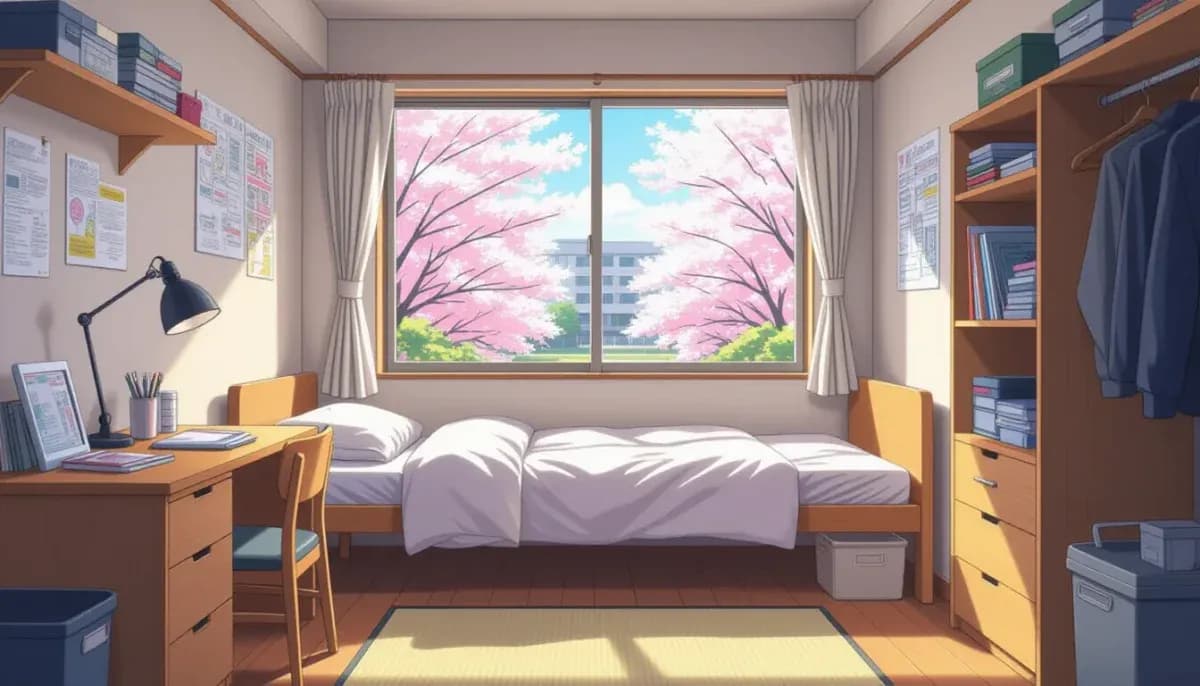
Student Housing Options and Dormitories in Japan
Discover all student housing options in Japan: university dorms, share houses, student apartments, and private rentals. Costs, tips, and how to apply as an international student.
Read more →
Vocational and Technical Schools in Japan Guide
Complete guide to vocational schools (senmon gakko) in Japan for foreigners. Learn about admission requirements, costs, visa rules, fields of study, and career pathways after graduation.
Read more →
Research Programs and Graduate School in Japan
Complete guide to graduate school and research programs in Japan for foreigners. Learn about MEXT scholarships, English programs, application process, costs, and top universities.
Read more →