
Moving from Tokyo to Rural Japan Experience Guide

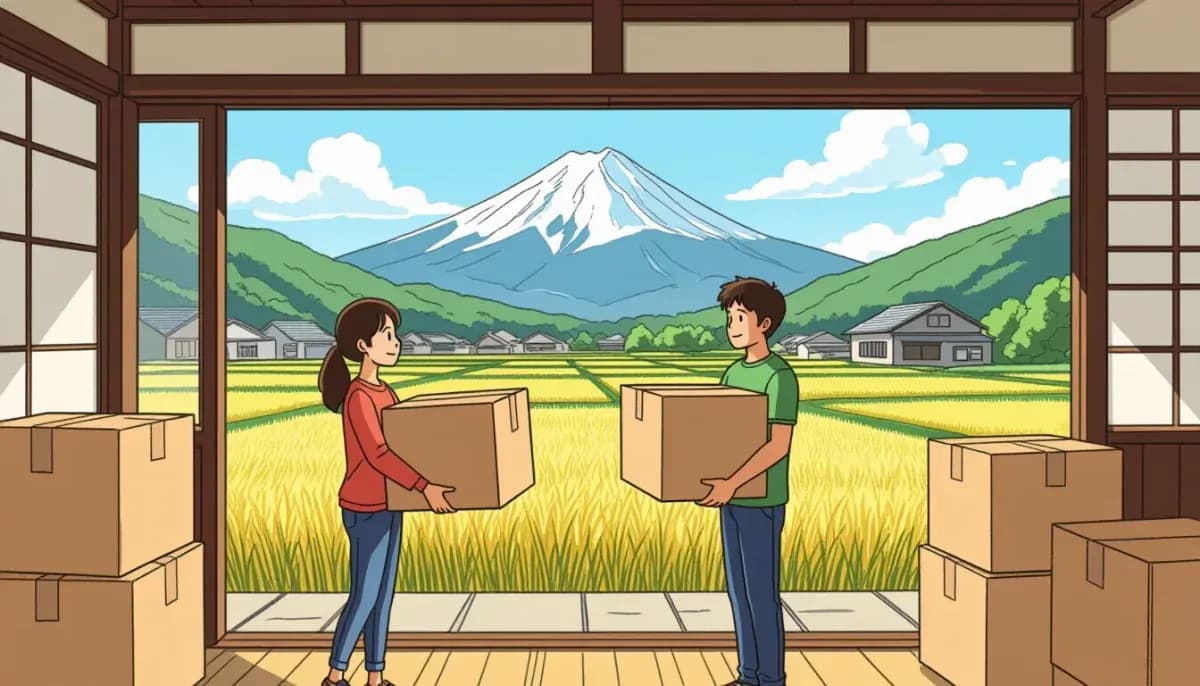
Planning to move from Tokyo to rural Japan? Discover the real costs, challenges, government subsidies, best regions, and practical steps for foreigners making the inaka transition.
Moving from Tokyo to Rural Japan: The Complete Experience Guide
Swapping Tokyo's neon-lit skyline for a quiet village surrounded by rice paddies may sound idyllic — and for many foreigners, it truly is. But the move from Japan's biggest metropolis to the countryside (inaka) is a significant life change that requires careful planning, realistic expectations, and a genuine appetite for adventure. This guide draws on first-hand expat accounts, municipality data, and practical resources to help you navigate every step of the journey.
!Moving from Tokyo to rural Japan countryside lifestyle

Why Foreigners Are Leaving Tokyo for the Inaka
Japan's rural communities are experiencing a slow but steady influx of foreign residents. Japan's total foreign resident population reached nearly 3.95 million (roughly 3% of the population) in 2024–2025, and an increasing share are choosing smaller cities and villages over traditional expat hubs.
The reasons are straightforward:
- Cost of living: A one-bedroom apartment in central Tokyo costs ¥100,000–¥200,000+ per month, while a full house in the countryside can be rented for ¥20,000–¥50,000 ($135–$350) — sometimes even less.
- Space and nature: Countryside homes come with gardens, storage, and breathing room that Tokyo simply cannot offer at any reasonable price.
- Quality of life: Clean air, low crime rates, seasonal festivals, and community-centered living attract people burned out by urban pace.
- Remote work opportunities: The COVID-era shift to remote work made rural Japan viable for professionals who no longer need to commute to a Tokyo office.
For a broader perspective on the costs of living across Japan, see our Complete Guide to Cost of Living in Japan.
Understanding the True Costs: Tokyo vs. Rural Japan
One of the most compelling reasons to consider the move is the dramatic difference in monthly expenses.
| Expense Category | Tokyo (est.) | Rural Japan (est.) |
|---|---|---|
| Housing (house/apartment) | ¥100,000–¥200,000 | ¥10,000–¥50,000 |
| Transportation | ¥10,000–¥20,000 (train) | ¥20,000–¥30,000 (car + fuel) |
| Food (home cooking) | ¥40,000–¥60,000 | ¥30,000–¥57,000 |
| Utilities | ¥15,000–¥25,000 | ¥10,000–¥20,000 |
| Entertainment/misc | ¥30,000–¥60,000 | ¥10,000–¥20,000 |
| Monthly total | ¥195,000–¥365,000 | ¥80,000–¥177,000 |
Real-world data from expats living in rural Japan confirms these figures. One foreigner living in Ehime Prefecture reported a total monthly spend of just ¥132,058 (~$914), including ¥10,000/month for a traditional kominka (old farmhouse) maintained under a stewardship arrangement. Car costs eat into savings, but the overall budget remains far below Tokyo norms.
Important caveat: Very cheap rural housing often lacks modern insulation, central heating, and up-to-date electrical wiring. Budget for renovation if you plan to purchase an older home.
Akiya: Japan's Abandoned Home Opportunity
One of the most talked-about pathways to affordable rural living is the akiya (空き家) market — Japan's vast stock of vacant homes. There are an estimated 8–9 million abandoned homes across Japan, and many municipalities actively list them on akiya banks (databases of available properties).
Key facts about akiya:
- Purchase prices range from zero to a few million yen (far below urban market prices)
- Quality varies enormously — some are structurally sound; others need full renovation
- Many municipalities offer subsidies for renovation costs (up to ¥1–2 million in some areas)
- You must register your juminhyo (residence certificate) at your new address to qualify for most subsidies
Finding akiya listings: search prefectural akiya bank websites, or use the national aggregator Akiya & Inaka which offers English-language consulting services.
For more on housing in Japan, our Complete Guide to Finding Housing in Japan covers the rental process, contracts, and guarantors.
Government Subsidies for Rural Movers
Japan's government actively wants people to move to depopulating rural areas, which means real financial incentives exist for those willing to relocate.
Common support programs include:
- Moving cost subsidies: Some municipalities cover part of your relocation expenses
- Housing purchase/renovation grants: Up to ¥1–2 million for home improvement in designated areas
- Business start-up support: Grants for foreigners starting businesses that contribute to the local economy
- Insulation improvement subsidies: Help with the cost of making older homes more energy-efficient
- Child-rearing bonuses: Monthly payments for families raising children in rural areas
The Furusato Kika Fair (ふるさと回帰フェア), held annually in Tokyo, is the largest event connecting urban residents with rural municipalities. Over 100 prefectures and cities participate, offering information booths, one-on-one consultations, and details about local support programs. If you are seriously considering a move, attending this fair is one of the most efficient ways to compare regions.
!Rural Japan village with traditional houses and mountain scenery

Major Challenges You Must Prepare For
Rural Japan is beautiful and affordable — but it is not easy. Here are the challenges that catch foreigners most off guard.
Language Barrier (Amplified)
Tokyo is relatively forgiving. Staff at major shops often speak some English, and English signage is common. Rural Japan is a different world. Very few residents outside the local school system speak English, and you may encounter thick regional dialects (hōgen) that even standard Japanese learners find difficult.
Japanese is classified by the U.S. Foreign Service Institute as a "super-hard language" requiring approximately 2,200 class hours to reach professional proficiency. In rural areas, you will need at least survival-level Japanese for:
- Medical appointments and pharmacy visits
- Dealings with the local municipal office (city hall)
- Neighborhood association (jichikai) obligations
- Shopping, car repairs, and everyday interactions
Enroll in Japanese language study before you move and keep studying after arrival. Our Complete Guide to Learning Japanese as a Foreigner has practical resources to get started.
Car is Non-Negotiable
Unlike Tokyo, where a Suica card and good walking shoes are sufficient, rural Japan requires a car — full stop. Public bus and train services exist but are often infrequent, with some routes running only 2–3 times per day. Many villages have no public transportation at all.
Getting a car in Japan involves:
- Proof of a dedicated parking space (shakken inspection requirements)
- Valid Japanese driver's license (conversion process varies by country)
- Car registration (shakken) and insurance
Kei cars (660cc engine, tax-advantaged) are the standard rural vehicle and are far cheaper to run than standard cars. Budget ¥10,000–¥20,000/month for car-related costs.
Employment Options Are Limited
Unless you work remotely, finding employment in rural Japan is genuinely difficult. The most common options for foreign residents include:
- ALT (Assistant Language Teacher) positions at local schools: ¥200,000–¥300,000/month
- Eikaiwa (English conversation schools): Pay varies but may be lower in smaller towns
- Remote work: Fastest-growing category; requires a stable internet connection (fiber is widely available even in rural areas)
- Agriculture/farming: Some municipalities offer training programs for people interested in working the land
- Tourism-related work: Smaller towns near scenic attractions sometimes have hospitality positions
For comprehensive employment guidance, see our Complete Guide to Working in Japan as a Foreigner and Complete Guide to Teaching English in Japan.
Social Isolation Is Real
Moving from Tokyo's millions-strong expat community to a village of a few thousand residents is a social shock. English-speaking friends become scarce, dating options narrow dramatically, and the cultural emphasis on wa (group harmony) can make it hard for outspoken foreigners to build close relationships.
Strategies to combat isolation:
- Join local sports clubs, pottery classes, or cultural groups
- Participate in neighborhood association (jichikai) events — even if your Japanese is basic
- Find Facebook groups and online communities for foreign residents in your prefecture
- Attend the Furusato Kika Fair in Tokyo to meet others who have made or are considering the same move
Mental health resources in rural areas are limited, and English-language counseling is scarce. If you have existing mental health needs, ensure you have remote support options in place before moving.
Practical Steps: How to Make the Move
Here is a step-by-step process to reduce uncertainty and increase your chances of a successful transition:
- Visit multiple times in different seasons: Rural Japan in cherry-blossom season looks very different from rural Japan in February. Snow, flooding risk, and summer humidity vary hugely by region.
- Use short-term rental before committing: Platforms like Airbnb and monthly rental services let you test-drive a town. Spend at least one month living locally before signing a long-term lease.
- Research municipal support programs: Every prefecture is different. Some offer generous subsidies; others have minimal programs. Check your target municipality's official website and the Relo Japan database.
- Get your driver's license sorted early: License conversion can take several months in some prefectures. Start this process before you move.
- Open a Japanese bank account: Rural areas rely on cash more than Tokyo. Ensure you have a local bank account and understand ATM access.
- Connect with your new neighborhood association: Introduce yourself to the jichikai leader. Participating in local clean-up events and seasonal festivals builds goodwill quickly.
See our Complete Guide to Daily Life in Japan for Foreigners for more on navigating everyday life after the move.
Best Regions for Foreign Residents Moving from Tokyo
Not all rural areas are equally welcoming or practical for foreigners. Here are some regions with growing expat communities and strong support infrastructure:
| Region | Highlights | Nearest Major City |
|---|---|---|
| Nagano Prefecture | Mountain scenery, ski resorts, cool summers | Nagano City |
| Wakayama Prefecture | Akiya subsidies, warm climate, coast | Osaka (2 hrs) |
| Tokushima Prefecture | Remote work village (Kamiyama), strong community | Takamatsu (1 hr) |
| Gifu Prefecture | Affordable, good transport links, cultural heritage | Nagoya (1 hr) |
| Yamagata Prefecture | Excellent skiing, traditional crafts, affordable | Sendai (1 hr) |
| Ehime Prefecture (Shikoku) | Very low cost of living, farming, slow pace | Matsuyama |
Tokushima's Kamiyama town is particularly notable — it has attracted remote workers and creative professionals from across Japan and internationally, with a fiber-optic internet connection installed throughout, co-working spaces, and an actively internationalized community.
Healthcare and Services: What to Expect
Healthcare in rural Japan is generally adequate but more limited than in Tokyo. You should expect:
- Fewer specialist clinics — general practitioners handle most issues
- Limited English-speaking medical staff (bring a translation app or Japanese-speaking friend for complex appointments)
- Longer travel times to hospitals for serious conditions
- Japan's national health insurance (kokumin kenkō hoken) applies everywhere — enroll at your local city hall
For a full breakdown of Japan's healthcare system, see our Complete Guide to Healthcare in Japan for Foreigners.
Further Reading and Resources
Planning a move to rural Japan involves many interconnected topics. Here are resources that have helped other expats make the transition:
- Japan Cheapo: Moving to the Japanese Countryside — Practical guide covering housing, transportation, and lifestyle expectations
- Inaka Lifestyle: Cost of Living in Rural Japan — Real monthly budget data from a foreigner living in Ehime Prefecture
- Inaka Lifestyle: Challenges of Rural Japan — Honest breakdown of language, transport, and social hurdles
- Living in Nihon — Comprehensive guides to life in Japan for foreigners
- For Work in Japan — Employment and career resources for foreign residents in Japan
- Ittenshoku — Job search and career change resources for foreigners in Japan
Is Moving to Rural Japan Right for You?
Rural Japan offers a lifestyle that is genuinely difficult to replicate elsewhere: quiet mornings in a traditional farmhouse, fresh vegetables from a neighbor's garden, snow-capped mountains visible from your window, and a community that — with patience and effort — can become genuinely welcoming.
But it demands real sacrifices: limited career options, social isolation, a serious language learning commitment, and the daily friction of navigating systems not designed with foreigners in mind.
The most successful rural movers share a few traits: patience, a genuine interest in Japanese language and culture, an existing remote income or rural-compatible career, and the flexibility to adapt to a lifestyle very different from both Tokyo and their home country.
If that sounds like you, the inaka may be one of the most rewarding decisions you ever make.
For more on planning your life in Japan, explore our Complete Moving to Japan Guide and Complete Guide to Japanese Culture and Etiquette.

Originally from Vietnam, living in Japan for 16+ years. Graduated from Nagoya University, with 11 years of professional experience at Japanese and international companies. Sharing information about living in Japan for foreigners.
View Profile →Related Articles
Living in Sendai as a Foreigner Complete Guide
Everything foreigners need to know about living in Sendai, Japan: neighborhoods, housing costs, transportation, jobs, schools, and community resources in Tohoku's largest city.
Read more →
Japan City Comparison Guide for Foreign Residents
Compare Tokyo, Osaka, Fukuoka, Nagoya, and Sapporo as cities to live in Japan as a foreigner. Cost of living, job markets, expat communities, and which city suits your lifestyle.
Read more →
Small Town Living in Japan Pros and Cons for Foreigners
Thinking about moving to rural Japan? Discover the real pros and cons of small town living in Japan for foreigners — costs, community, language barriers, and tips for making inaka life work.
Read more →
Living in Okinawa as a Foreigner Complete Guide
Everything you need to know about living in Okinawa as a foreigner — neighborhoods, cost of living, visas, housing, jobs, and practical tips for expats moving to Japan's tropical paradise.
Read more →
Living in Kobe as a Foreigner Complete Guide
Everything you need to know about living in Kobe as a foreigner: neighborhoods, cost of living, international schools, healthcare, work, and daily life in this expat-friendly Japanese city.
Read more →
Living in Sapporo as a Foreigner Complete Guide
Everything foreigners need to know about living in Sapporo: cost of living, best neighborhoods, housing, weather, jobs, healthcare, and expat community resources in Japan's northern capital.
Read more →