
Long Term Resident Status in Japan Explained

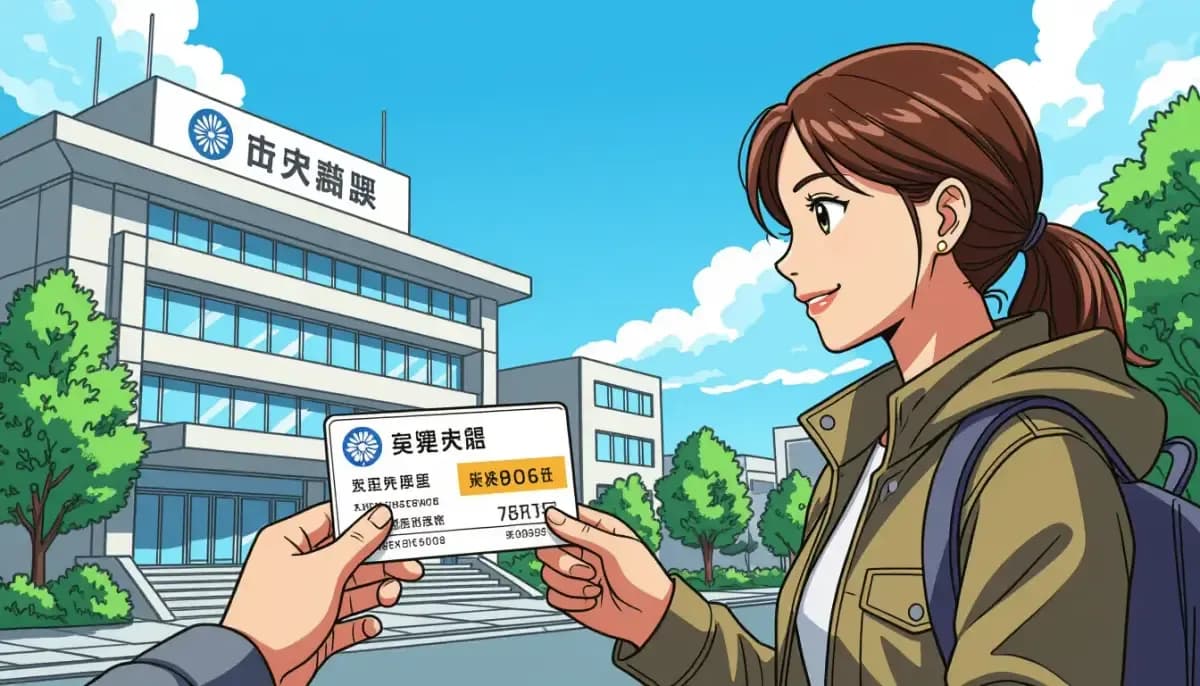
Understand Japan's Long-Term Resident status (定住者). Learn who qualifies (Nikkei, divorced spouses), required documents, how to apply, and the pathway to permanent residency.
Long Term Resident Status in Japan Explained
If you're a foreigner living in Japan — or planning to move there — understanding your visa status options is crucial. Among the various residence statuses available, the Long-Term Resident status (定住者, Teijūsha) is one of the most flexible and beneficial. It allows holders to live and work in Japan without any occupational restrictions, making it highly sought after by Japanese descendants, family members of Japanese nationals, and others with strong ties to Japan.
This guide explains everything you need to know about Japan's Long-Term Resident status: who qualifies, how to apply, what documents you need, and how it can serve as a stepping stone to permanent residency.
What Is Long-Term Resident Status (定住者)?
Long-Term Resident status (定住者) is a residence status granted by Japan's Minister of Justice on a discretionary basis. Unlike work visas that are tied to specific occupations or industries, this status is granted based on the applicant's personal circumstances and their relationship to Japan.
The defining feature of Long-Term Resident status is freedom from work restrictions. Holders can engage in any type of employment — from skilled professional roles to manual labor — without needing to change or update their visa status when switching jobs. This freedom makes it comparable in practicality to permanent residency, though it still requires periodic renewal.
Long-Term Resident status falls under the broader category of "status-based" (身分系) visas, alongside permanent residency, spouse of Japanese national, and spouse of permanent resident statuses. These are distinct from work-based or study-based visas because they are rooted in the holder's personal status or family relationships rather than employment.
For a complete overview of Japan's visa system, see our Japan Visa and Immigration Guide.
Who Qualifies for Long-Term Resident Status?
Japan's Long-Term Resident status is divided into two main categories: Specified and Unspecified.
Specified Long-Term Resident (告示定住者)
This category covers situations explicitly defined by Ministerial Ordinance. The main qualifying groups include:
- Japanese Descendants (Nikkei): The most common category. This includes 2nd-generation (nisei) and 3rd-generation (sansei) descendants of Japanese nationals who emigrated abroad. 4th-generation descendants may also qualify under specific conditions, particularly if a qualifying sponsor is in Japan. This category was established to allow people of Japanese heritage — particularly from Brazil, Peru, and other South American countries — to work in Japan.
- Spouses and minor children of qualifying Nikkei or other Long-Term Residents: Family members accompanying or joining a qualified holder may also be eligible.
- Myanmarese refugees and Indochinese refugees: Individuals from specific refugee categories who have been resettled in Japan.
- Spouses or children of Japanese nationals left behind in China: A historical category addressing Japanese people stranded in China after World War II and their families.
- Adopted children under age 6 of qualifying applicants under certain conditions.
Unspecified Long-Term Resident (告示外定住者)
This category covers humanitarian cases not explicitly listed in the ordinance, but where the Minister of Justice determines continued residence is appropriate. Common situations include:
- Divorced or bereaved spouses of Japanese nationals: If your marriage to a Japanese national ends due to divorce or the death of your spouse, you may qualify to remain in Japan under Long-Term Resident status if you have been living in Japan for a certain period.
- Single parents raising Japanese children: A parent who has custody of and is actively raising a child with Japanese nationality may qualify, even after separation from a Japanese spouse.
- Biological mothers supporting Japanese children born outside of wedlock: Where the child holds Japanese nationality, the foreign mother may be eligible to reside in Japan to raise the child.
- Recognized refugees: Individuals granted refugee status in Japan under the Refugee Recognition Act.
| Category | Type | Key Requirement |
|---|---|---|
| Japanese Descendants (Nikkei) | Specified | 2nd–4th generation Japanese ancestry |
| Spouses of Nikkei/LTR | Specified | Marriage to qualifying LTR holder |
| Myanmarese/Indochinese Refugees | Specified | Official refugee/resettler recognition |
| Divorced/Bereaved Spouse | Unspecified | Former marriage to Japanese national, ties to Japan |
| Single Parent (Japanese child) | Unspecified | Custody and active care of Japanese national child |
| Recognized Refugee | Unspecified | Refugee recognition under Japanese law |
For more information about marriage and residency in Japan, visit our Marriage and Relationships in Japan Guide.
Key Benefits of Long-Term Resident Status
Long-Term Resident status offers several major advantages compared to regular work visas:
No Work Restrictions
The single biggest benefit is the complete absence of work restrictions. Holders can work in any industry, in any occupation, and for any employer without needing immigration approval. This is in sharp contrast to work visas like the Engineer/Specialist in Humanities visa, which restrict you to specific job categories.
Pathway to Permanent Residency
For Specified Long-Term Residents (primarily Nikkei), the residence requirement for applying for permanent residency is significantly relaxed. While most foreign residents need to live in Japan continuously for 10 years (with 5 years of work experience), specified Long-Term Residents may be eligible to apply for PR after as few as 5 years of stable, lawful residence.
Family Sponsorship
Long-Term Residents may be able to sponsor certain family members to join them in Japan, depending on their relationship and the family member's circumstances.
Social Integration
Long-Term Resident status signals strong ties to Japan and a long-term commitment to the country. This can help with practical matters like securing housing, obtaining credit, and integrating into Japanese society. For details on daily life considerations, see our Daily Life in Japan Guide.
Required Documents for Long-Term Resident Status
The exact documents vary depending on your category and individual circumstances, but the following are commonly required:
For all applicants:
- Completed application form (在留資格変更許可申請書 or 在留資格認定証明書交付申請書)
- Valid passport
- Residence card (在留カード) — if already in Japan
- Residence certificate (住民票) including all household members
- Recent photograph (4cm × 3cm)
Proof of eligibility by category:
- Nikkei applicants: Japanese family registry transcripts (戸籍謄本) tracing lineage to Japanese ancestor; birth certificates; marriage certificates
- Divorced/bereaved spouses: Divorce certificate or death certificate; proof of prior marriage (family registry); evidence of residence duration in Japan
- Parents raising Japanese children: Child's family registry showing Japanese nationality; evidence of custody; proof of active parenting (school records, medical records, photos)
Financial documentation:
- Recent pay stubs (直近3ヶ月分の給与明細)
- Tax payment certificates (納税証明書)
- Employment contract or certificate of employment
- Bank statements showing financial stability
Additional supporting documents:
- Letter of Guarantee (身元保証書) from a Japanese national or permanent resident
- Police clearance certificate (if required from country of origin)
- Social insurance and pension enrollment proof (健康保険証、年金手帳)
For help understanding Japan's documentation and administrative procedures, our Moving to Japan Guide provides additional context.
For comprehensive guidance tailored to your situation, Living in Nihon's Japan Visa & Residency Status Guide offers detailed breakdowns of each visa category.
How to Apply for Long-Term Resident Status
There are two main application routes depending on whether you are currently inside or outside Japan.
Applying from Abroad (Certificate of Eligibility)
If you are outside Japan, you apply for a Certificate of Eligibility (在留資格認定証明書, COE) through a regional Immigration Services Agency office in Japan (usually via a sponsor or representative in Japan).
- Prepare documents in Japan through your sponsor or representative
- Submit COE application to the regional immigration office
- Wait for review — typically 1–3 months
- Receive COE and present it at a Japanese embassy or consulate in your country
- Obtain visa sticker at the embassy (usually 1–2 weeks after COE submission)
- Enter Japan with the visa and receive your residence card at the port of entry
Applying Within Japan (Status Change)
If you are already in Japan with a different residence status (e.g., spouse visa that ended after divorce), you can apply to change your status at your nearest regional Immigration Services Agency office.
- Gather all required documents as listed above
- Submit application in person at the immigration office
- Pay the application fee (typically ¥4,000 for a revenue stamp)
- Wait for decision — usually 1–2 months
- Receive new residence card upon approval
For guidance on working in Japan across different visa types, see the Working in Japan Guide and For Work in Japan's Residence Status Guide.
Renewal and Maintaining Your Status
Long-Term Resident status is not permanent — it must be renewed periodically. Renewal periods are granted for 6 months, 1 year, 3 years, or 5 years, based on the immigration officer's assessment of your situation.
At each renewal, immigration officials will review:
- Continued eligibility (e.g., are you still raising a Japanese child? Has your financial situation changed?)
- Financial stability — stable income, tax payments, no arrears
- Legal compliance — no criminal record, no immigration violations
- Social insurance compliance — health insurance and pension enrollment up to date
Tips for successful renewal:
- Pay all taxes on time — this is one of the most important factors immigration considers
- Maintain social insurance enrollment — gaps in coverage raise red flags
- Document your circumstances — keep records of child involvement, employment, residency
- Notify immigration of major life changes — marriage, divorce, job changes
- Consult an immigration specialist (行政書士) before renewal if your situation has changed
A useful resource for understanding Japan's broader immigration system is the i-socia Advisors Long-Term Resident guide.
Long-Term Resident Status vs. Other Visas
Understanding how Long-Term Resident status compares to other common statuses helps clarify when to pursue it.
| Status | Work Restrictions | Renewal Required | PR Pathway |
|---|---|---|---|
| Long-Term Resident (定住者) | None | Yes (every 1–5 years) | 5–10 years |
| Permanent Resident (永住者) | None | No (once granted) | Already achieved |
| Spouse of Japanese National | None | Yes (every 1–3 years) | 3 years |
| Engineer/Humanities (技人国) | Yes (must match job) | Yes (every 1–5 years) | 10 years |
| Specified Skilled Worker (特定技能) | Yes (sector-specific) | Yes (every 1–4 years) | Limited |
| Student Visa | Part-time only (28 hrs/week) | Yes (per enrollment) | Not direct |
If you are a Nikkei descendant or have strong family ties to Japan, Long-Term Resident status offers the best of both worlds: freedom to work in any field and a realistic pathway to permanent residency. For those already in Japan on a work visa looking to eventually obtain PR, our guide on Permanent Residency in Japan provides additional details on the pathway.
Common Challenges and How to Handle Them
Application Rejection
Long-Term Resident status is discretionary, meaning immigration officers have significant judgment in decisions. Common reasons for rejection include:
- Insufficient financial documentation
- Gaps in tax or social insurance payments
- Weak evidence of qualifying relationship (e.g., not enough proof of active parenting)
- Previous immigration violations or criminal history
Solution: Always consult a licensed immigration specialist (行政書士) before applying, especially for unspecified cases. They can help identify weak points in your application and advise on additional supporting documents.
Proving Nikkei Lineage
For Nikkei applicants, tracing Japanese ancestry through foreign-born generations can be challenging, particularly if Japanese family records were lost or are difficult to obtain.
Solution: Work with the Japanese embassy in your home country and consider hiring a specialist who is experienced in Nikkei immigration cases. The Ministry of Foreign Affairs provides guidance on specified long-term resident visas.
Maintaining Status After Divorce or Job Loss
Life circumstances change, and Long-Term Resident status renewals depend heavily on ongoing eligibility.
Solution: Notify immigration immediately of significant life changes. If your qualifying condition (e.g., raising a Japanese child) is still valid, document it thoroughly. Immigration is generally sympathetic to genuine humanitarian cases with strong Japan ties.
For support integrating into Japanese society during difficult transitions, our Making Friends and Social Life in Japan Guide and Healthcare in Japan Guide provide practical resources.
Frequently Asked Questions
Can I bring my family to Japan on Long-Term Resident status? Yes, under certain conditions. Your spouse and minor children may be eligible for their own Long-Term Resident status or a Dependent (家族滞在) visa depending on the circumstances.
How long does the application take? Status change applications within Japan typically take 1–2 months. COE applications from abroad take 1–3 months, plus 1–2 weeks for visa issuance at the embassy.
Can I switch jobs freely? Yes. Long-Term Resident status has no work restrictions, so you can change employers, industries, or job types without immigration approval.
What happens if I travel outside Japan for an extended period? Extended absences (typically more than 1 year without a re-entry permit, or more than 5 years with a special re-entry permit) can affect your residency status. Always obtain a re-entry permit before traveling abroad for long periods.
Is Long-Term Resident status the same as permanent residency? No. Long-Term Resident status requires periodic renewal and can be revoked if circumstances change. Permanent residency, once granted, does not expire and does not require renewal (though the residence card must be updated). For banking and financial planning as a long-term resident, see our Banking and Finance in Japan Guide.
Conclusion
Japan's Long-Term Resident status (定住者) is one of the most valuable visa categories available to foreigners with personal or family ties to Japan. Its complete freedom from work restrictions, combined with a realistic pathway to permanent residency, makes it an excellent option for Japanese descendants, family members of Japanese nationals, and others in qualifying circumstances.
The application process requires careful documentation and preparation, but with the right approach and — when needed — professional guidance from a licensed immigration specialist, Long-Term Resident status can open doors to a stable, flexible life in Japan.
For further guidance on navigating life in Japan as a foreigner, explore our comprehensive Japan Visa and Immigration Guide and Working in Japan Guide. You can also find detailed visa information at IT転職 (Ittenshoku) for career-related residency questions.

Originally from Vietnam, living in Japan for 16+ years. Graduated from Nagoya University, with 11 years of professional experience at Japanese and international companies. Sharing information about living in Japan for foreigners.
View Profile →Related Articles
Dual Citizenship Rules in Japan What Foreigners Should Know
Japan officially prohibits dual citizenship for adults, but enforcement is inconsistent. Learn the rules, deadlines, naturalization requirements, and what this means for foreigners living in Japan.
Read more →
Benefits of Getting Permanent Residency in Japan
Discover the key benefits of Japan permanent residency — from employment freedom and mortgage access to family stability and no visa renewals. Full guide for foreigners planning long-term life in Japan.
Read more →
Common Japan PR Rejection Reasons and How to Avoid Them
Discover the most common Japan permanent residency rejection reasons and expert tips to avoid them. Covers income, taxes, residency, documentation, and 2025 immigration changes.
Read more →
Spouse Permanent Residency Application in Japan
Complete guide to applying for permanent residency in Japan as a spouse of a Japanese national or PR holder. Learn requirements, documents, income thresholds, and how to avoid rejection.
Read more →
Japan PR Interview Tips and What to Expect
Learn what to expect during Japan's permanent residency (PR) application process. Discover when an interview occurs, naturalization interview tips, common questions, and how to maximize your chances of approval.
Read more →
How to Maintain Your Permanent Residency in Japan
Learn the essential obligations for keeping your Japan permanent residency: residence card renewal, tax compliance, overseas stay rules, and the new 2027 revocation law. Complete guide for PR holders.
Read more →