
Dual Citizenship Rules in Japan What Foreigners Should Know

Japan officially prohibits dual citizenship for adults, but enforcement is inconsistent. Learn the rules, deadlines, naturalization requirements, and what this means for foreigners living in Japan.
Dual Citizenship Rules in Japan: What Foreigners Should Know
Japan's stance on dual citizenship is one of the most misunderstood aspects of living here as a foreigner. The short answer: Japan officially prohibits dual nationality for adults. But the reality on the ground is far more nuanced. Whether you're considering naturalizing as a Japanese citizen, raising children with mixed nationality, or simply curious about your legal standing — this guide breaks down everything you need to know.
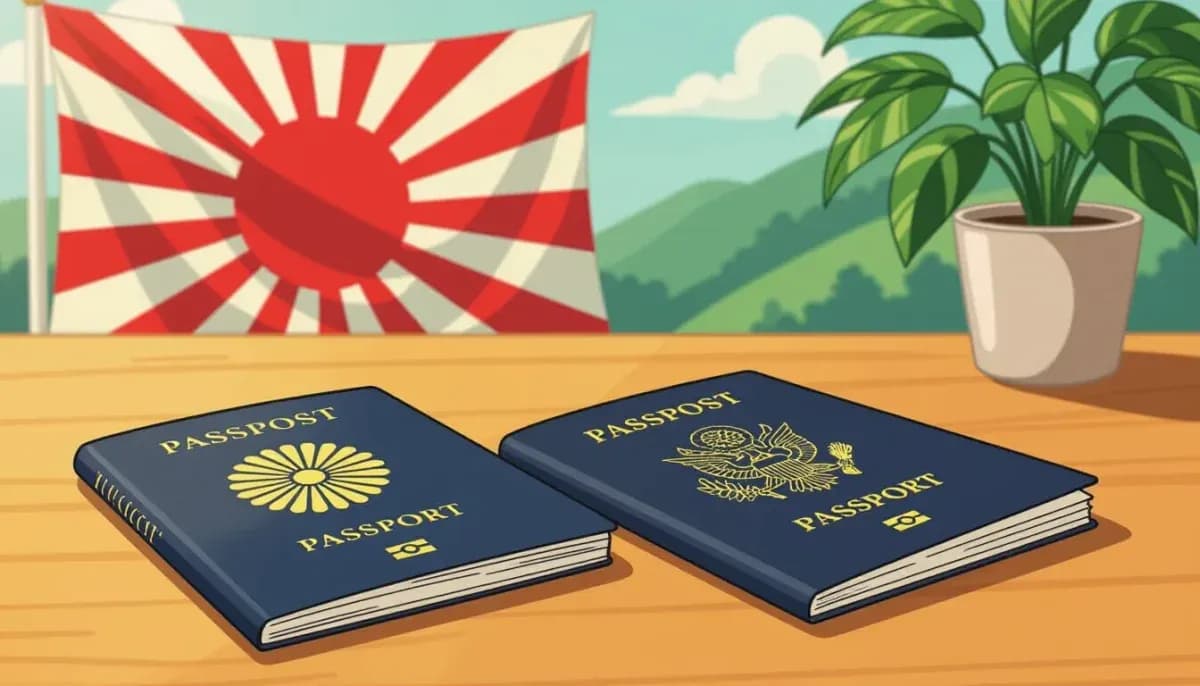
!Japanese and foreign passports representing the dual citizenship decision in Japan

Japan's Official Position on Dual Citizenship
Japan's Nationality Act is built on the principle of a single nationality. Under the law, Japanese nationals who voluntarily acquire a foreign citizenship automatically lose their Japanese nationality at that moment. Conversely, foreigners who naturalize as Japanese citizens are required to renounce their original nationality as part of the process.
Japan stands as the only G7 nation to ban dual nationality. Globally, more than 80% of countries allow dual citizenship as of 2023, making Japan an outlier among developed nations. The government's justification centers on avoiding conflicts in legal rights and obligations between countries, as well as ensuring clear allegiance to a single state.
Key provisions of the Nationality Act:
- Japanese nationals who voluntarily obtain foreign citizenship lose Japanese nationality immediately
- Naturalization applicants must not hold another nationality, or must renounce it upon becoming Japanese
- Those who involuntarily acquire a second nationality (e.g., children born to mixed-nationality parents) must choose one by age 22
- If a second nationality is acquired after age 20, the person has two years to make a choice
For more on Japan's visa and residency framework that precedes citizenship decisions, see our Complete Guide to Japan Visa and Immigration.
The Reality: Enforcement Is Inconsistent
Here's where theory diverges from practice. Despite the strict legal framework, enforcement of the dual nationality prohibition is famously inconsistent. The Justice Ministry has confirmed that approximately 890,000 people were or are in a position to hold dual nationality in Japan. A Japan Times survey found that only 23% of 1,449 respondents actually gave up one of their passports.
Why is enforcement so lax?
- No criminal penalties exist for failing to renounce a second nationality
- The obligation to choose is classified as a "duty of effort" (努力義務, doryoku-gimu), meaning there are no hard punishments for non-compliance
- The government may send a notice demanding a nationality declaration, but many people never receive one
- Japanese nationals living abroad face even less scrutiny
- There is no automatic revocation system — someone must actively flag a case
This enforcement gap has led many dual nationals, particularly those born with multiple citizenships, to quietly retain both passports. However, it's important to understand that this is a legal gray area, not a legal right. Policy could tighten at any time.
For context on how residence status works in Japan, our Complete Guide to Working in Japan as a Foreigner covers how your visa category affects your long-term options.
Rules for Children Born with Dual Nationality
Children born to one Japanese parent and one foreign parent face a specific set of rules:
| Situation | Rule |
|---|---|
| Child born in Japan to mixed-nationality parents | Automatically Japanese; may also hold parent's foreign nationality |
| Child born abroad to Japanese parent | Must file reservation of Japanese nationality at consulate within 3 months of birth |
| Deadline to choose nationality | Before age 22 (or within 2 years of acquiring second nationality after age 20) |
| Failure to choose by deadline | Minister of Justice may demand a declaration within 1 month; further failure results in loss of Japanese nationality |
| Making a nationality declaration | Does not automatically cancel the other nationality — separate renunciation with the other country is required |
The 3-month window for babies born abroad is critical and often overlooked. If a Japanese parent fails to register the birth at a Japanese consulate within that window, the child loses Japanese nationality retroactively from birth. This is a permanent consequence that cannot be undone.
If you're raising children in Japan, our Complete Guide to Raising Children in Japan provides broader guidance on family life, schooling, and registration requirements.
Permanent Residency vs. Naturalization: A Key Distinction
Many foreigners confuse permanent residency (永住権, eijuken) with naturalization (帰化, kika). They are fundamentally different:
Permanent Residency:
- You keep your original foreign nationality
- You can live and work in Japan indefinitely
- You must renew your residence card (every 7 years)
- You do not gain voting rights or a Japanese passport
- Your PR status can theoretically be revoked under certain conditions
Naturalization:
- You become a Japanese citizen
- You receive a Japanese passport
- You must renounce your original citizenship
- You gain full rights, including the right to vote
- Your status is permanent and cannot be revoked
For most foreigners who want to stay in Japan long-term without giving up their home country passport, permanent residency is the preferred path. For those who want to fully commit to life in Japan and are willing to relinquish their original nationality, naturalization is the deeper integration option.
Learn more about these pathways on Living in Nihon's Permanent Residency and Naturalization Guide.
How to Naturalize as a Japanese Citizen
If you decide naturalization is right for you, here are the requirements under Japan's Nationality Act:
Standard Requirements:
- 5+ consecutive years of legal residence in Japan (some exceptions apply)
- Age 20 or older at the time of application
- Good conduct — no serious criminal history
- Financial self-sufficiency — stable income or assets to support yourself
- Willing to renounce other citizenships upon approval
- Basic Japanese language ability — roughly elementary school 3rd-grade level (reading and writing)
Reduced Residency Requirements For:
- Those born in Japan (even without Japanese parentage)
- Those with a Japanese spouse (3 years of marriage + 1 year in Japan, or 3 consecutive years in Japan)
- Former Japanese nationals
- Those with Japanese children
The Application Process:
- Gather documents at your local Legal Affairs Bureau (法務局, hōmukyoku)
- Submit your application (not immigration — naturalization is handled by the Ministry of Justice)
- Wait 8–12 months for review and investigation
- Attend a naturalization ceremony if approved
- Register your new status at your local ward office
Note: The Japanese government has been considering extending the residency requirement from 5 years to 10 years (as of 2025), which would align it with permanent residency standards. This proposal has not yet been enacted but is worth monitoring.
For guidance on Japan's broader residency status options, check out For Work in Japan's Visa and Residence Status Guide.
!Japanese Legal Affairs Bureau building where naturalization applications are processed

Can You Secretly Keep Both Passports?
This question comes up frequently in expat forums. The honest answer: many people do, and many get away with it. But there are real risks:
Risks of keeping both passports as a naturalized Japanese citizen:
- Japanese authorities can technically strip you of Japanese citizenship if they discover you still hold a foreign passport
- When traveling, you should use your Japanese passport at Japanese immigration — inconsistency can trigger scrutiny
- Some countries require you to use their passport when entering or exiting, which creates a record
- High-profile cases (politicians, athletes) have faced public backlash and official inquiries
- The legal gray area means you are technically in violation of Japanese law
For permanent residents (non-citizens): Japan does not regulate how many foreign nationalities you hold. If you're a foreign national on a PR visa, you can freely hold multiple foreign citizenships — the Nationality Act only applies to Japanese citizens and naturalization applicants.
For a deeper dive into Japan's legal landscape for residents, Ittenshoku's career resources for foreigners in Japan provide context on professional and legal standing.
Recent Developments and the Future of Dual Citizenship in Japan
Japan's dual citizenship debate is not static. Several developments are worth watching:
- Parliamentary discussions: Multiple proposals to allow dual citizenship have been introduced in the Diet, largely driven by concerns about attracting skilled foreign workers and retaining Japanese nationals who live abroad
- High-profile cases: Athletes, academics, and politicians with dual nationality have brought the issue into public discourse — most notably tennis star Naomi Osaka, who chose Japanese citizenship before the 2021 Olympics
- Business community pressure: Japan's push to attract global talent has led some business groups to advocate for relaxing the dual nationality ban
- Government position as of 2026: No formal policy change has been enacted; Japan remains a single-nationality country for adults
For context on international comparisons, Wikipedia's entry on Japanese Nationality Law provides a detailed legal overview, while Metropolis Japan's coverage offers an expat-focused perspective.
Practical Tips for Foreigners Navigating Japan's Citizenship Rules
Whether you're a long-term resident weighing your options or a parent managing your child's nationality, here are actionable takeaways:
- Don't assume enforcement means permission. The lack of criminal penalties does not make dual citizenship legal. Policy changes could affect your status.
- Act on deadlines. The 3-month birth registration window for children born abroad is non-negotiable. Missing it has permanent consequences.
- Understand the PR vs. naturalization trade-off. Most foreigners prefer permanent residency for its flexibility. Naturalization is a serious, largely irreversible commitment.
- Consult a licensed administrative scrivener (行政書士, *gyōseishoshi*) or immigration lawyer. Nationality law is complex and personal circumstances vary significantly.
- Monitor policy developments. Japan's stance on dual citizenship may evolve in the coming years. Staying informed is essential for long-term planning.
- Keep your tax obligations in check. If you're a Japanese national living abroad or a dual national, understanding your tax residency status is critical. See our Complete Guide to Taxes in Japan for Foreigners.
- Consider how citizenship decisions affect your family. If you're married to a Japanese national or raising children in Japan, your citizenship status has implications for your entire family. Our Marriage and Relationships in Japan Guide and Raising Children in Japan Guide cover these intersections in detail.
Japan's dual citizenship rules are strict on paper but inconsistently enforced in practice. The key takeaway for foreigners is this: understand the legal framework, know the deadlines that apply to your situation, and make informed decisions rather than assuming the gray area will always protect you. Whether you choose permanent residency, naturalization, or to remain on a long-term visa, Japan offers a stable and fulfilling life — with the right legal foundation under your feet.

Originally from Vietnam, living in Japan for 16+ years. Graduated from Nagoya University, with 11 years of professional experience at Japanese and international companies. Sharing information about living in Japan for foreigners.
View Profile →Related Articles

Benefits of Getting Permanent Residency in Japan
Discover the key benefits of Japan permanent residency — from employment freedom and mortgage access to family stability and no visa renewals. Full guide for foreigners planning long-term life in Japan.
Read more →
Common Japan PR Rejection Reasons and How to Avoid Them
Discover the most common Japan permanent residency rejection reasons and expert tips to avoid them. Covers income, taxes, residency, documentation, and 2025 immigration changes.
Read more →
Spouse Permanent Residency Application in Japan
Complete guide to applying for permanent residency in Japan as a spouse of a Japanese national or PR holder. Learn requirements, documents, income thresholds, and how to avoid rejection.
Read more →
Japan PR Interview Tips and What to Expect
Learn what to expect during Japan's permanent residency (PR) application process. Discover when an interview occurs, naturalization interview tips, common questions, and how to maximize your chances of approval.
Read more →
How to Maintain Your Permanent Residency in Japan
Learn the essential obligations for keeping your Japan permanent residency: residence card renewal, tax compliance, overseas stay rules, and the new 2027 revocation law. Complete guide for PR holders.
Read more →
Long Term Resident Status in Japan Explained
Understand Japan's Long-Term Resident status (定住者). Learn who qualifies (Nikkei, divorced spouses), required documents, how to apply, and the pathway to permanent residency.
Read more →