
Common Japan PR Rejection Reasons and How to Avoid Them

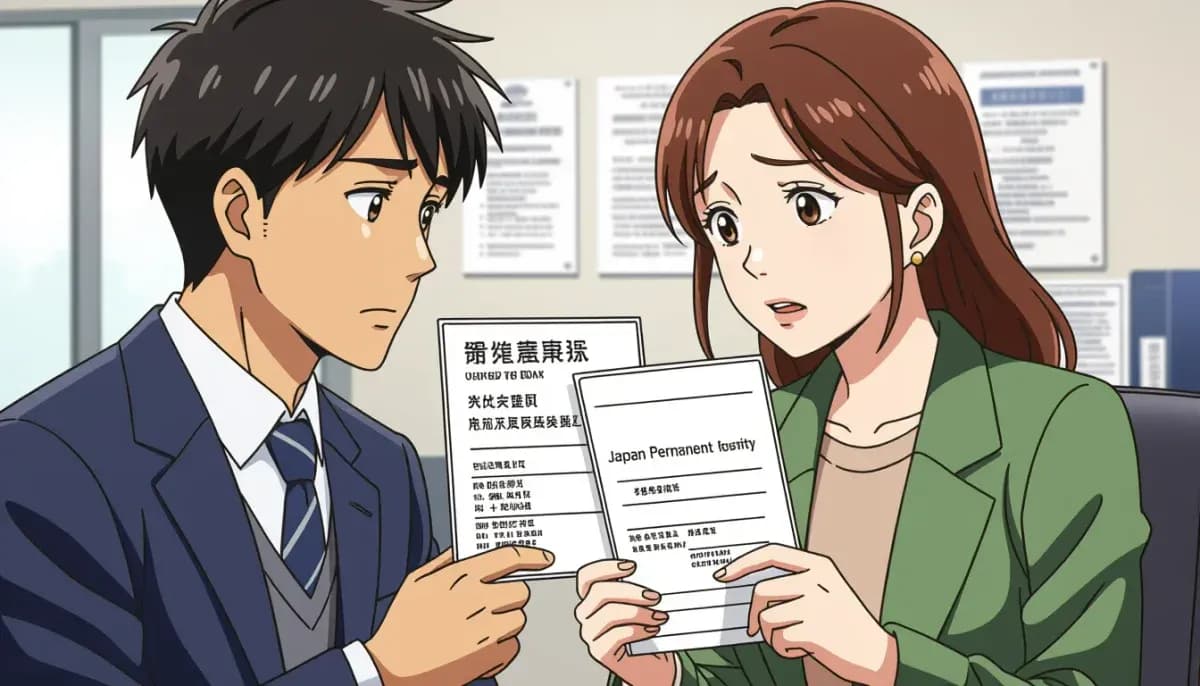
Discover the most common Japan permanent residency rejection reasons and expert tips to avoid them. Covers income, taxes, residency, documentation, and 2025 immigration changes.
Common Japan PR Rejection Reasons and How to Avoid Them
Applying for permanent residency (PR) in Japan is a major milestone for many foreigners living and working in the country. Yet approximately 50% of PR applications are rejected every year, and with processing times now stretching to 17–19 months in 2025, a single avoidable mistake can cost you almost two years of your life. Understanding why applications get denied — and what you can do to prevent it — is the most important thing you can do before submitting your paperwork.
This guide covers the most common Japan PR rejection reasons, the latest trends in immigration screening, and practical strategies to maximize your chances of approval.
1. Tax and Social Insurance Payment Issues
This is the single most common reason for PR rejection in Japan. Immigration authorities examine your financial compliance record in detail, and even one missed or late payment can trigger a denial.
What immigration checks
- Resident tax (住民税): Your 5-year payment history
- Health insurance (健康保険): Enrollment and payment for at least 2 years
- National Pension (国民年金 / 厚生年金): 2 years of continuous, on-time contributions
Why it matters
The immigration office is not just checking whether you eventually paid — they are checking whether you paid on time. Retroactive payment after receiving a demand notice does not automatically save your application. If you paid late even once within the review period, you may need to explain why and provide supporting documentation.
From April 2027, Japan plans to introduce a new rule that could revoke permanent residency for individuals who knowingly fail to pay taxes or social insurance without valid excuse. This signals how seriously the government treats financial compliance.
How to avoid this rejection reason
- Set up automatic bank transfers (口座振替) for all tax and insurance payments
- Register for automatic deduction at your local city hall with your bank details
- Keep receipts and payment confirmations for all transactions
- If you ever missed a payment in the past, consult an immigration attorney before applying
2. Insufficient Income
Japan's immigration office uses income as a proxy for your ability to support yourself and your family without public assistance. The general benchmark is:
- ¥3,000,000 per year for a single applicant
- Add ¥300,000 per dependent (spouse, children)
Income is verified through resident tax certificates issued by municipal offices, covering the last 5 years for work visa holders or 3 years for status-based visa holders (e.g., spouse of Japanese national).
Common income-related issues
- Recent unemployment or a period of low income due to job change
- Significant salary drop within the review period
- Income from multiple sources without proper documentation
- Self-employment income that appears inconsistent year-to-year
How to avoid this rejection reason
- Wait until you have at least one full tax year at ¥3 million+ before applying
- If you recently changed jobs, wait at least 6 months and ideally 1 year so your income record stabilizes
- Gather all income documentation (源泉徴収票, 確定申告書) systematically
- If income fluctuates, include a letter explaining the circumstances
3. Not Meeting the Residency Period Requirement
The standard PR application requires:
| Visa Type | Minimum Residency | Additional Conditions | |---||---||---|| | Work Visa | 10 years total (5+ on work visa) | Stable employment, income | | Spouse of Japanese National | 3 years marriage + 1 year residence | Good conduct | | Spouse of PR Holder | 1 year in Japan | Cohabitation required | | Highly Skilled Professional | 1–3 years (80+ points) | HSFP visa required | | Business Manager | 5 years | Company established, active |
Many applicants are rejected simply because they apply too early — before meeting the required number of years. Others are rejected because their residency is not considered "continuous" due to extended time abroad.
The overseas absence rule
If you leave Japan for more than 100 days per year, immigration may determine that your residency is not continuous. This is especially common for:
- Businesspeople with frequent international travel
- Applicants who spent extended time abroad for family reasons
- Those who took long holidays or sabbaticals overseas
Guideline: Keep total time outside Japan below 20% of your residence period, and avoid any single trip longer than 3 months.
How to avoid this rejection reason
- Use your passport and re-entry permit records to calculate your exact days abroad
- If you have taken long overseas trips, consult a professional before applying
- Apply only after you are certain you meet the residency calculation
4. Poor Documentation and Application Errors
According to immigration specialists, 37% of PR applications in 2023 were rejected due to incomplete or inconsistent documentation. Japan's PR application is a document-heavy process, and even small errors can sink an otherwise strong application.
Common documentation mistakes
- Missing required certificates or using outdated forms
- Names, addresses, or dates that don't match across documents
- Inconsistent work history or residence history
- Weak or poorly written "Statement of Reasons" (理由書)
- Unexplained gaps in employment or residence
The Statement of Reasons (理由書)
This document is one of the most underestimated parts of the PR application. Immigration officers use it to evaluate:
- Your long-term commitment to Japan
- The legitimacy of your ties to the country
- Whether your circumstances align with your visa status
A vague or generic statement significantly weakens your application. A strong statement should explain:
- Why you want to live permanently in Japan
- Your community ties (family, property, social involvement)
- Your contributions to Japanese society
How to avoid this rejection reason
- Start gathering documents at least 6 months before you plan to apply
- Double-check that names, dates, and addresses match across all documents
- Have a bilingual immigration lawyer or administrative scrivener (行政書士) review your Statement of Reasons
- Verify all documents are current — many certificates must be issued within 3 months
5. Criminal Record and Traffic Violations
PR applications require demonstrating "good conduct" (素行が善良であること). Immigration evaluates this comprehensively, including:
- Criminal records (any conviction in Japan or abroad)
- Traffic violations (speeding, DUI, accidents)
- Outstanding fines or penalties
- Any overstay of a previous visa
Even minor traffic violations can count against you if they are recent or numerous. A DUI conviction is generally a disqualifying factor.
How to avoid this rejection reason
- Obey traffic laws — avoid speeding, running red lights, or any alcohol-related driving
- If you have past violations, consult an immigration professional about whether they affect your eligibility
- Pay any outstanding fines before applying
- Be honest in your application — lying about violations is worse than disclosing them
6. Recent Job Changes or Employment Instability
Immigration officers view frequent job changes or short employment tenure as a risk factor. Key red flags include:
- Changing jobs within 6 months of application
- A pattern of short-term employment (less than 1–2 years per job)
- Starting a new business just before applying
- Moving from employee to freelancer without a clear business track record
2025 update: stricter employment scrutiny
Since late 2025, immigration screening has intensified. The review process now goes beyond checking submitted forms — officers verify whether the actual circumstances of the applicant match what is documented. Employment contracts, payslips, and company documents are cross-checked more carefully.
How to avoid this rejection reason
- Apply when you have been at least 1 year at your current employer, ideally longer
- If you recently changed jobs, wait until you have a stable track record at the new company
- If self-employed or freelancing, document your business activity thoroughly (tax returns, contracts, client records)
7. Visa Status Inconsistency or Unexplained Changes
If your visa status has changed multiple times — for example, from a work visa to a student visa and back — immigration may question your long-term commitment to residing in Japan. This is especially problematic if:
- The reasons for status changes are not clearly documented
- Your activities during a particular visa status appear inconsistent (e.g., working under a dependent visa)
- You continued a particular activity (like freelancing) without the appropriate visa status
How to avoid this rejection reason
- Prepare a chronological chart of all your visa status changes
- Write brief, honest explanations for each change
- Include supporting documents (marriage certificate, employment contract, university enrollment) for each status change
- Consult an immigration lawyer if your visa history is complex
What to Do If Your PR Application Is Rejected
If your application is denied, you will receive a Disposition Notice (不許可通知). You are entitled to ask the immigration office for the reason for rejection.
Steps after rejection
- Request an explanation — Visit the immigration office and ask specifically what caused the denial
- Resolve the issue — Fix the problem that caused rejection (e.g., pay outstanding taxes, wait longer)
- Reapply when ready — There is no mandatory waiting period, but most lawyers recommend waiting at least 6–12 months before reapplying
- Get professional help — Consider hiring a certified administrative scrivener (行政書士) or immigration lawyer for your reapplication
PR Application Timeline and Processing Times (2025)
| Year | Avg. Processing Time | Notes | |---||---||---|| | 2023 | 8–10 months | Stable | | 2024 | 12–15 months | Increased scrutiny | | 2025 | 17–19 months | High volume + stricter review |
Given these timelines, planning ahead is essential. Begin your preparation at least 6 months before you intend to submit, ensuring all your documentation is complete and your financial records are clean.
Expert Resources and Further Reading
For detailed guidance on Japan's permanent residency process, the following resources provide comprehensive information:
- Living in Nihon — Permanent Residency & Naturalization Guide: A thorough guide covering eligibility requirements, application procedures, and pathways to naturalization for foreigners in Japan.
- For Work in Japan — Visa & Residence Status Guide: Essential information on visa categories, residence status transitions, and immigration compliance for workers in Japan.
- Ittenshoku — Career and Life in Japan: Practical resources for IT professionals and career changers navigating life and employment in Japan.
- IMS Legal — Four Reasons PR Applications Are Denied: Detailed legal analysis of the most common PR denial grounds.
- Oak Admin — Avoiding PR Rejection: Step-by-step guidance on strengthening your PR application.
Summary: PR Rejection Prevention Checklist
Before submitting your Japan PR application, verify each of the following:
- [ ] All resident taxes paid on time for the last 5 years
- [ ] Health insurance and pension contributions paid without gaps for 2+ years
- [ ] Annual income of ¥3 million+ (plus ¥300,000 per dependent)
- [ ] Residency requirement met (10 years standard, 1–3 years for HSFP)
- [ ] Days abroad per year below 100 days; no single trip over 3 months
- [ ] No recent job change (ideally 1+ year at current employer)
- [ ] All documents current, complete, and internally consistent
- [ ] Compelling Statement of Reasons prepared
- [ ] No outstanding traffic violations or criminal record issues
- [ ] All visa status changes clearly documented and explained
For more on navigating Japan's immigration system, see our guides on Japan Visa and Immigration and Taxes in Japan for Foreigners.
Taking these steps seriously before you apply is the most effective way to ensure your years of hard work and life in Japan lead to the permanent home you deserve.

Originally from Vietnam, living in Japan for 16+ years. Graduated from Nagoya University, with 11 years of professional experience at Japanese and international companies. Sharing information about living in Japan for foreigners.
View Profile →Related Articles

Dual Citizenship Rules in Japan What Foreigners Should Know
Japan officially prohibits dual citizenship for adults, but enforcement is inconsistent. Learn the rules, deadlines, naturalization requirements, and what this means for foreigners living in Japan.
Read more →
Benefits of Getting Permanent Residency in Japan
Discover the key benefits of Japan permanent residency — from employment freedom and mortgage access to family stability and no visa renewals. Full guide for foreigners planning long-term life in Japan.
Read more →
Spouse Permanent Residency Application in Japan
Complete guide to applying for permanent residency in Japan as a spouse of a Japanese national or PR holder. Learn requirements, documents, income thresholds, and how to avoid rejection.
Read more →
Japan PR Interview Tips and What to Expect
Learn what to expect during Japan's permanent residency (PR) application process. Discover when an interview occurs, naturalization interview tips, common questions, and how to maximize your chances of approval.
Read more →
How to Maintain Your Permanent Residency in Japan
Learn the essential obligations for keeping your Japan permanent residency: residence card renewal, tax compliance, overseas stay rules, and the new 2027 revocation law. Complete guide for PR holders.
Read more →
Long Term Resident Status in Japan Explained
Understand Japan's Long-Term Resident status (定住者). Learn who qualifies (Nikkei, divorced spouses), required documents, how to apply, and the pathway to permanent residency.
Read more →