
Understanding Japanese Apartment Layouts and Floor Plans

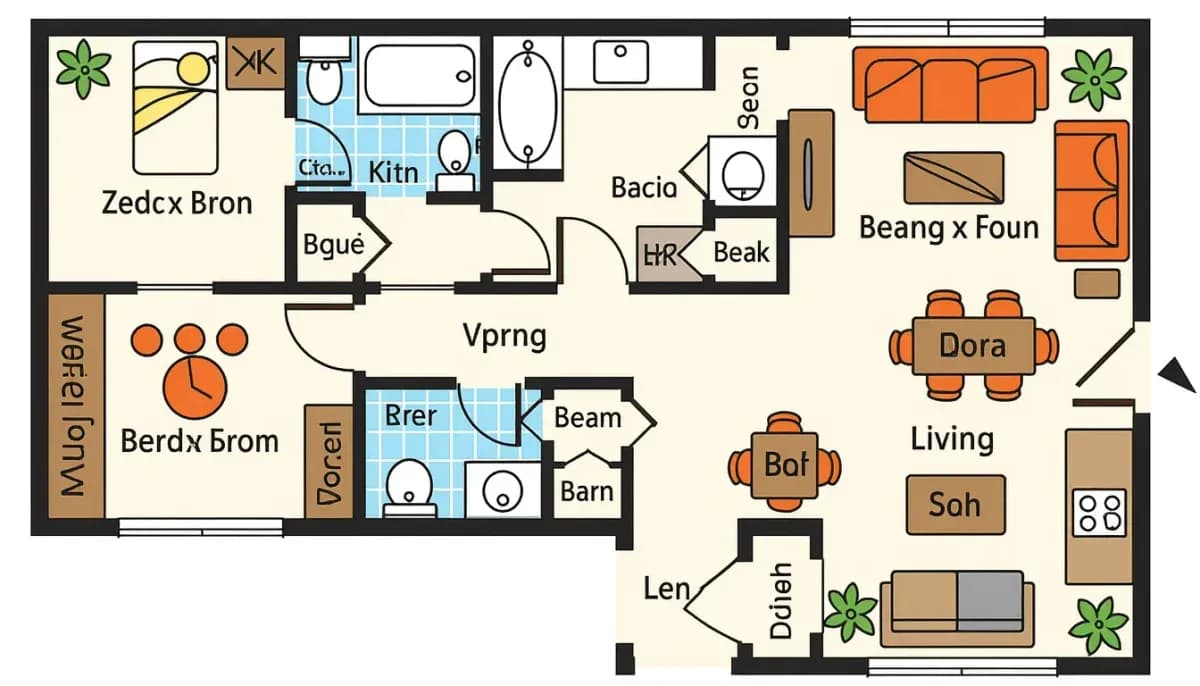
Complete guide to Japanese apartment layouts and floor plans for foreigners. Learn what 1K, 1LDK, 2LDK mean, how to read floor plan diagrams, tatami measurements, and tips for choosing the right apartment in Japan.
Understanding Japanese Apartment Layouts and Floor Plans
If you have ever browsed apartment listings in Japan, you have probably seen mysterious codes like 1K, 1LDK, or 2DK attached to every property. These abbreviations are the backbone of the Japanese housing system, and understanding them is essential before you start your apartment search. This guide breaks down every layout type, measurement unit, and floor plan symbol you will encounter as a foreigner renting in Japan.
What Do the Letters Mean in Japanese Floor Plans
Japanese apartment layouts use a simple letter-based system to describe how many rooms an apartment has and what type of spaces are included. The number before the letters tells you how many separate bedrooms or multipurpose rooms the apartment has, while the letters describe the shared living spaces.
Here is what each letter stands for:
- R (Room) — A single multipurpose room with no separated kitchen. Used only in 1R layouts where everything is in one open space.
- K (Kitchen) — A compact kitchen area separated from the main room by a wall or partition. Usually fits one to two burners.
- D (Dining) — A dining area large enough for a small table, typically combined with the kitchen.
- L (Living) — A living room space for a sofa, TV, and relaxation, usually combined with the dining and kitchen areas.
- S (Service Room) — A smaller room, often without windows or ventilation, that does not officially qualify as a bedroom under building codes but can be used as storage or a home office.
So when you see "2LDK," it means two bedrooms plus a combined living room, dining room, and kitchen. Once you understand this system, reading any Japanese floor plan becomes straightforward.
Common Apartment Layout Types Explained
Each layout type serves a different lifestyle and budget. Here is a detailed breakdown of the most common configurations you will find on apartment hunting websites in Japan.
1R (One Room)
The most basic and affordable option. A 1R apartment is a single open room where the kitchen area flows directly into the living and sleeping space with no dividing wall. Cooking odors will spread through the entire room. Typical size ranges from 12 to 20 square meters, and these are popular among students and budget-conscious singles.
1K (One Room + Kitchen)
Similar to a 1R but with one crucial difference: the kitchen is separated from the main room by a wall or door. This keeps cooking smells contained and gives you a cleaner living space. Sizes range from 20 to 25 square meters. The 1K is the most common choice for single working professionals in cities like Tokyo and Osaka.
1DK (One Room + Dining Kitchen)
A step up that adds a dedicated dining area connected to the kitchen. The DK space is typically large enough for a small dining table. Total size ranges from 25 to 35 square meters. A 1DK offers a good balance between space and affordability for singles who want room to eat and cook comfortably.
1LDK (One Room + Living Dining Kitchen)
The most popular layout for couples and remote workers. A 1LDK gives you a proper bedroom plus a large combined living, dining, and kitchen area. The LDK space is usually 8 tatami mats or larger, providing room for a sofa, dining table, and workspace. Sizes range from 35 to 50 square meters. If you are renting an apartment in Japan as a foreigner, a 1LDK is often the sweet spot between comfort and cost.
2LDK and 3LDK (Family Layouts)
A 2LDK has two bedrooms plus an LDK area and typically measures 55 to 70 square meters. It suits couples with one child or anyone who needs a dedicated home office. A 3LDK adds a third bedroom and ranges from 65 to 85 square meters, making it ideal for families. Average rent for a 2LDK in Tokyo runs from ¥120,000 to ¥250,000 per month, depending on the neighborhood and building age.
Japanese Apartment Layout Comparison Table
| Layout | Rooms | Typical Size (sqm) | Monthly Rent Tokyo (¥) | Best For |
|---|---|---|---|---|
| 1R | 1 open room | 12–20 | 50,000–80,000 | Students, short stays |
| 1K | 1 room + kitchen | 20–25 | 60,000–100,000 | Singles |
| 1DK | 1 room + dining kitchen | 25–35 | 80,000–120,000 | Singles wanting space |
| 1LDK | 1 bedroom + LDK | 35–50 | 145,000–230,000 | Couples, remote workers |
| 2LDK | 2 bedrooms + LDK | 55–70 | 120,000–250,000 | Small families, couples |
| 2SLDK | 2 bedrooms + S + LDK | 60–75 | 150,000–280,000 | Families needing storage |
| 3LDK | 3 bedrooms + LDK | 65–85 | 180,000–350,000 | Families |
Rent varies significantly by location. The same 1LDK that costs ¥200,000 in central Tokyo might cost ¥80,000 in a regional city. Check the cost of living in Japan guide for detailed regional comparisons.
How to Read Japanese Floor Plan Diagrams
When you look at a Japanese floor plan diagram, called a madori-zu (間取り図), you will see various abbreviations and symbols beyond just the room layout letters. Understanding these will help you evaluate properties much faster.
Room Size in Tatami Mats (Jo)
Japanese room sizes are measured in jo (畳), which represents the area of one traditional tatami mat. One tatami mat equals approximately 1.62 square meters (17.4 square feet). However, mat sizes vary slightly by region — Tokyo-style tatami mats measure 1.76m x 0.88m while Kyoto-style mats are slightly larger at 1.91m x 0.955m.
Common room sizes you will see:
- 4.5 jo — About 7.3 sqm. A very small bedroom, enough for a single bed and desk.
- 6 jo — About 9.7 sqm. The standard bedroom size in most apartments.
- 8 jo — About 13 sqm. A comfortable room that can serve as a living room.
- 10 jo — About 16.2 sqm. A spacious room suitable for a combined LDK.
Common Floor Plan Abbreviations
You will encounter these abbreviations on virtually every Japanese floor plan:
- UB (Unit Bath) — A prefabricated bathroom where the toilet, sink, and bathtub are all in one waterproof room. Common in budget apartments.
- BT別 (Bath Toilet Separate) — The bath and toilet are in separate rooms. This is generally preferred and worth looking for.
- WIC (Walk-In Closet) — A larger closet you can walk into. A luxury feature in Japanese apartments.
- CL (Closet) — A standard built-in closet with sliding doors.
- SB (Shoe Box) — A shoe cabinet in the genkan entryway.
- PS (Pipe Space) — Plumbing infrastructure, not usable space.
- MB (Meter Box) — Where utility meters are located, usually near the entrance.
- RF (Roof Floor) — A loft or mezzanine space, typically too low to stand in but useful for storage or sleeping.
- 洋室 (Yoshitsu) — A Western-style room with hard flooring.
- 和室 (Washitsu) — A Japanese-style room with tatami flooring.
For a deeper dive into the rental process, see our guide on understanding Japanese lease contracts.
Building Types: Mansion vs Apartment
In Japan, the words "mansion" and "apartment" mean something completely different from what you might expect. Understanding the distinction helps you set realistic expectations about noise, comfort, and price.
Mansion (マンション) refers to a reinforced concrete or steel-frame building, usually three stories or taller. Mansions offer superior soundproofing, better earthquake resistance, and generally higher-quality construction. They cost more but provide significantly better living comfort, especially important if you have neighbors on all sides. Auto-lock entrances, elevators, and on-site management are common in mansion buildings.
Apaato (アパート) refers to a wooden or light steel-frame building, typically two stories. These are the most affordable option but come with thinner walls, less soundproofing, and basic construction. If you are sensitive to noise or live in a building with many residents, a mansion is worth the extra cost.
Other building types:
- Terrace House (テラスハウス) — Attached townhouses sharing walls but with separate entrances.
- Kodate (戸建て) — A standalone detached house, rare for rentals in cities but common in suburbs.
According to government data, the average dwelling size in Japan is approximately 90.86 square meters as of 2023, though Tokyo apartments average a much smaller 66.5 square meters. The Ministry of Land, Infrastructure, Transport and Tourism recommends a minimum of 25 square meters for a single person living in an urban area, with 40 square meters considered ideal.
Unique Features of Japanese Apartments
Japanese apartments include several design features that foreigners may not be familiar with. Knowing what to expect will help you settle in quickly after you complete the move-in process.
Genkan (玄関) — Every Japanese home has a small entryway area called the genkan where you remove your shoes before stepping up into the living space. This recessed area is a few centimeters lower than the main floor.
Balcony (ベランダ) — Almost every apartment has a small balcony, but it is primarily used for drying laundry rather than relaxation. Many apartments do not have dryer hookups, so the balcony is essential for daily life in Japan.
Unit Bath — Budget apartments often feature a 3-in-1 unit bath where the bathtub, shower, toilet, and sink are all in one compact waterproof room. Higher-end apartments separate the bath and toilet (バストイレ別), which is much more comfortable.
Washing Machine Space — Look for the washing machine placement on the floor plan. Some apartments have indoor laundry hookups (室内洗濯機置き場), while older or cheaper units only have outdoor hookups on the balcony or a shared laundry room.
Air Conditioning — Most apartments come with at least one wall-mounted air conditioning unit pre-installed. Check the floor plan for AC placement, especially if the apartment has multiple rooms.
Tips for Choosing the Right Layout as a Foreigner
Picking the right layout depends on your budget, lifestyle, and how long you plan to stay. Here are practical recommendations:
For singles on a budget: A 1K in a mansion building offers the best balance of affordability and comfort. Make sure the kitchen is separated from the living space and look for BT別 (separate bath and toilet).
For couples: A 1LDK gives you enough space to live comfortably together. The separate bedroom is important for maintaining sanity when one person works different hours or wants personal space.
For families: A 2LDK minimum, ideally 3LDK if you have more than one child. Consider proximity to schools and parks, and look for buildings with elevator access if you have young children.
For remote workers: Look for a 1SLDK or 2LDK where the extra room or service room can serve as a dedicated home office. This has become increasingly popular since the shift to remote work.
When using search platforms like Suumo, Homes.co.jp, and other apartment hunting websites, filter by your preferred layout type (間取り) to narrow results quickly. Working with foreigner-friendly real estate agents can also help you navigate the process smoothly, especially when you need help with the guarantor requirement.
For a comprehensive overview of the housing search process, see the complete guide to finding housing in Japan. You can also learn about key money and deposit costs and monthly apartment expenses to budget properly before signing a lease.
Helpful Resources for Apartment Hunting
Finding the right apartment takes research. Here are additional resources to help you in your search:
- Complete Guide to Finding Housing in Japan on Living in Nihon covers the full rental process from search to contract signing.
- Housing and Living Infrastructure Guide on For Work in Japan provides detailed information about setting up your living environment.
- IT Career Resources at Ittenshoku can help tech workers find positions that offer housing support or relocation assistance.
- Japanese Apartment 101 Guide at Real Estate Japan provides detailed floor plan explanations with visual examples.
- GaijinPot Apartment Layout Guide breaks down layout terms specifically for foreign residents.
Understanding Japanese apartment layouts is one of the first practical skills you need when moving to Japan. Once you know what 1K, 1LDK, and 2LDK actually mean, browsing listings becomes much easier and you can focus on finding the perfect place to call home.

Originally from Vietnam, living in Japan for 16+ years. Graduated from Nagoya University, with 11 years of professional experience at Japanese and international companies. Sharing information about living in Japan for foreigners.
View Profile →Related Articles
Tokyo Apartment Hunting Tips for Foreigners
Complete guide to finding an apartment in Tokyo as a foreigner. Learn about rental costs, required documents, guarantor system, best neighborhoods, and negotiation strategies for expats.
Read more →
Short Term Housing Options in Japan for Foreigners
Discover the best short term housing options in Japan for foreigners, including monthly apartments, share houses, serviced apartments, and vacation rentals with costs and tips.
Read more →
Furnished vs Unfurnished Apartments in Japan
Compare furnished and unfurnished apartments in Japan with detailed cost breakdowns, pros and cons, and practical tips for foreigners choosing the right rental option.
Read more →
Complete Guide to Moving Out of a Japanese Apartment
Step-by-step guide to moving out of a Japanese apartment as a foreigner. Learn about notice periods, security deposits, restoration fees, cleaning tips, and how to protect your deposit refund.
Read more →
Monthly Apartment Costs in Japan Fully Explained
Complete breakdown of monthly apartment costs in Japan including rent by city, utilities, internet, management fees, and budget-saving tips for foreign residents.
Read more →
How to Get a Guarantor Company in Japan
Complete guide to getting a guarantor company (hoshō kaisha) in Japan as a foreigner. Learn about types, costs, application process, required documents, and tips for approval.
Read more →