
Japan Spouse Visa Application Guide for International Couples

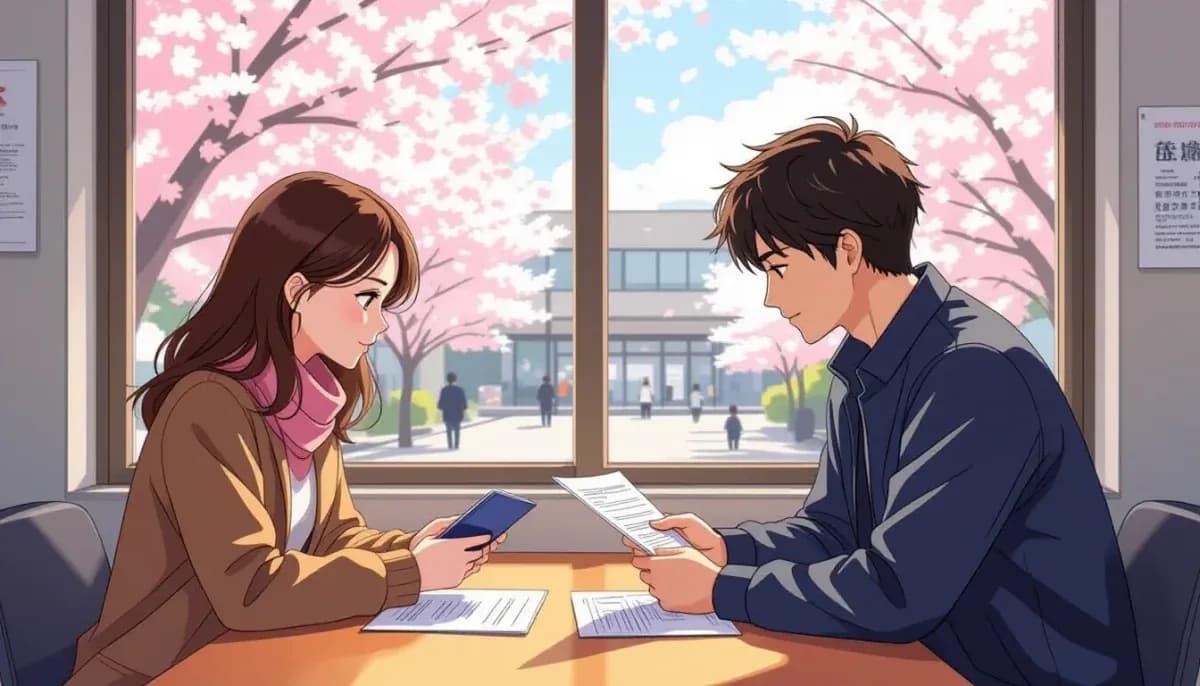
Complete guide to applying for a Japan spouse visa. Learn about required documents, processing times, eligibility requirements, and tips for international couples moving to Japan.
Japan Spouse Visa Application Guide for International Couples
Getting married to a Japanese national is an exciting milestone, but navigating the spouse visa application process can feel overwhelming. The Japan spouse visa (formally called "Spouse or Child of Japanese National") is one of the most sought-after residence statuses because it offers unrestricted employment rights and a clear pathway to permanent residency. This comprehensive guide walks you through every step of the application, from gathering documents to receiving your residence card.
If you are planning to move to Japan with your Japanese partner, understanding the spouse visa process is essential. For a broader overview of all visa categories, check out our Japan visa and immigration guide.
What Is a Japan Spouse Visa?
The Japan spouse visa is a residence status that allows foreign nationals married to Japanese citizens to live, work, and build a life in Japan. Unlike work visas that restrict you to specific job categories, the spouse visa grants complete freedom in employment. You can work in any industry, start a business, or even choose not to work at all.
Spouse visas are issued for durations of 6 months, 1 year, 3 years, or 5 years. First-time applicants typically receive a 1-year visa, which can be renewed and extended as your marriage continues. After 3 continuous years on a spouse visa, you become eligible to apply for permanent residency.
For more information about international marriage procedures in Japan, read the detailed guide on Living in Nihon.
Eligibility Requirements
Before applying, make sure you meet these fundamental requirements:
- Legal marriage: Your marriage must be legally recognized under both Japanese law and the laws of your home country. Marriages performed abroad must be properly registered in Japan's family registry system (koseki tohon).
- Genuine relationship: Immigration authorities will assess whether your marriage is authentic and not entered into solely for immigration purposes.
- Financial stability: You or your Japanese spouse must demonstrate sufficient income or savings to support your life in Japan.
- Clean legal record: No serious criminal history or prior immigration violations.
Note that same-sex marriages and common-law partnerships are not currently eligible for the spouse visa category, as Japan does not yet legally recognize same-sex marriage at the national level.
Required Documents Checklist
Preparing the right documents is the most critical part of your application. Missing or incomplete paperwork is the number one reason for delays and denials.
| Document | Who Provides It | Notes |
|---|---|---|
| Visa application form | Foreign spouse | Available at embassy/consulate |
| Valid passport | Foreign spouse | Must be valid for duration of stay |
| ID photo (4cm x 3cm) | Foreign spouse | Taken within the last 3 months |
| Marriage certificate | Both spouses | With certified Japanese translation |
| Koseki Tohon (family registry) | Japanese spouse | Issued within the past 3 months |
| Tax certificates (2 years) | Japanese spouse | Proves income and tax compliance |
| Employment certificate | Japanese spouse | Current employer verification |
| Salary slips (3 months) | Japanese spouse | Recent paycheck documentation |
| Relationship evidence | Both spouses | Photos, chat logs, travel records |
| Statement of reason | Foreign spouse | Explain your marriage and plans |
| Marriage questionnaire | Both spouses | Details about how you met |
| Guarantee letter | Japanese spouse | Financial responsibility pledge |
Additional documents that strengthen your application include bank statements, proof of cohabitation (lease agreements with both names), records of money transfers between spouses, and letters from family members attesting to the relationship.
The Application Process Step by Step
The spouse visa application follows different paths depending on whether you are currently inside or outside Japan.
Applying from Outside Japan
Step 1: Register your marriage. Complete marriage registration in both Japan and your home country. Your Japanese spouse submits a marriage notification (kon-in todoke) at their local city hall.
Step 2: Apply for a Certificate of Eligibility (COE). Your Japanese spouse files the COE application at the regional immigration bureau in Japan. This is the most time-consuming step, typically taking 1 to 2 months, though complex cases can stretch beyond 6 months.
Step 3: Receive and send the COE. Once approved, the COE is mailed to your Japanese spouse, who then sends the original document to you abroad.
Step 4: Apply for the visa. Take the COE and your other documents to the nearest Japanese embassy or consulate. With a COE, visa processing typically takes just 5 to 10 working days.
Step 5: Enter Japan and receive your residence card. Upon arrival at a major airport, you receive your zairyu card (residence card) at immigration. If arriving at a smaller port, you will need to visit your local immigration office.
Applying from Inside Japan (Change of Status)
If you are already in Japan on a different visa (student, work, tourist), you can apply for a change of status at the regional immigration bureau. The processing time is similar, usually 1 to 3 months.
For those already working in Japan, switching to a spouse visa removes employment restrictions and provides greater career flexibility. Learn more about career options at For Work in Japan.
Processing Times and Fees
Understanding the timeline helps you plan your move effectively.
| Stage | Processing Time | Cost |
|---|---|---|
| Marriage registration (Japan) | Same day | Free |
| Certificate of Eligibility | 1-3 months | Free |
| Visa application at embassy | 5-10 working days | Varies by country |
| Change of status (in Japan) | 1-3 months | 4,000 yen |
| Visa renewal | 2-4 weeks | 4,000 yen |
The total timeline from start to finish typically ranges from 2 to 4 months for straightforward cases. However, applications with incomplete documentation, inconsistencies, or red flags can take 6 months or longer.
Common Reasons for Denial and How to Avoid Them
Immigration officers carefully scrutinize spouse visa applications to identify potential sham marriages. Being aware of red flags helps you prepare a stronger application.
Red flags that increase denial risk:
- Age gaps exceeding 15 years between spouses
- Very short dating or relationship period before marriage
- Meeting exclusively through dating apps with limited in-person contact
- History of immigration violations or overstaying
- Insufficient or inconsistent documentation
- Lack of cohabitation or evidence of shared daily life
- Language barrier with no evidence of communication methods
How to strengthen your application:
- Provide extensive photographic evidence covering multiple occasions and time periods
- Include chat logs showing regular, genuine communication
- Submit flight records and hotel bookings from visits to each other
- Get statements from family members and friends who have witnessed your relationship
- Show evidence of cohabitation such as a shared lease agreement
- Demonstrate financial planning as a couple through joint bank accounts or money transfers
Rights and Benefits of the Spouse Visa
The spouse visa is one of the most advantageous residence statuses in Japan. Here is what it offers:
- Unrestricted work rights: Work in any industry or profession without needing a separate work permit
- Business ownership: Start and operate your own company in Japan
- National health insurance: Access to Japan's comprehensive healthcare system
- Pension eligibility: Enrollment in Japan's national pension scheme
- Path to permanent residency: Apply after 3 continuous years of residence
- Path to naturalization: Apply for Japanese citizenship after meeting residency requirements
- No employer dependency: Unlike work visas, you are not tied to any specific employer
For information about managing your finances as a foreign resident, see our banking and finance guide. Understanding taxes in Japan is also essential once you begin working.
Renewal and Long-Term Considerations
Your spouse visa must be renewed before it expires. The renewal process is simpler than the initial application but still requires demonstrating that your marriage remains genuine and active.
Key renewal requirements:
- Proof that you and your spouse still live together
- Updated tax certificates and income documentation
- Continued valid marriage registration
Important situations that affect your visa:
- Divorce: Your spouse visa becomes invalid. You may need to apply for a different visa status or leave Japan, though long-term residents with established lives may qualify for a "Long-term Resident" visa.
- Death of Japanese spouse: Similar to divorce, though exceptions may apply if you have children who are Japanese nationals.
- Separation: Extended periods of living apart from your spouse may raise questions during renewal.
If you are raising children in Japan, our guide to raising children in Japan covers education, healthcare, and support systems available to international families.
Practical Tips for a Smooth Application
Based on successful applicants' experiences, here are practical tips to make your spouse visa journey as smooth as possible:
- Start gathering documents early. Some documents like tax certificates and employment records take time to obtain. Begin at least 3 months before your planned application date.
- Get professional translations. All non-Japanese documents need certified translations. Consider using a professional translation service rather than doing it yourself.
- Consider hiring an immigration lawyer. For complex cases (previous denials, short relationships, or unusual circumstances), an administrative scrivener (gyoseishoshi) specializing in immigration can significantly improve your chances. Check Ittenshoku for career-related resources that may complement your visa planning.
- Keep a relationship timeline. Create a chronological document showing when you met, key milestones in your relationship, visits to each other, and your marriage. This demonstrates genuine commitment.
- Prepare for the interview. Some immigration offices conduct interviews. Be ready to answer questions about how you met, your daily life together, future plans, and your communication methods if there is a language difference.
- Maintain copies of everything. Keep photocopies and digital scans of every document you submit. This is invaluable if you need to reapply or if documents are lost.
For more about adapting to daily life in Japan after receiving your visa, including tips on Japanese culture and etiquette, explore our comprehensive guides.
Frequently Asked Questions
Can I work immediately after receiving my spouse visa? Yes. The spouse visa grants unrestricted employment rights from day one. You do not need any additional work permit.
How long does the entire process take? For straightforward cases, expect 2 to 4 months from COE application to receiving your residence card. Complex cases may take 6 months or longer.
Can I apply for permanent residency on a spouse visa? Yes. After 3 continuous years of residence in Japan on a spouse visa, you become eligible to apply for permanent residency. Learn more in our complete guide to switching from a spouse visa to permanent residency.
What happens if my application is denied? You can reapply with improved documentation. There is no limit on the number of times you can apply, but each application should address the reasons for the previous denial.
Do I need to speak Japanese to get a spouse visa? No. Japanese language ability is not a formal requirement. However, demonstrating some Japanese communication ability can strengthen your application by showing commitment to life in Japan. Check our Japanese language learning guide for resources.
Can I travel outside Japan on a spouse visa? Yes. As long as you have a valid re-entry permit (automatically granted for departures under 1 year with a valid residence card), you can freely travel and return to Japan.

Originally from Vietnam, living in Japan for 16+ years. Graduated from Nagoya University, with 11 years of professional experience at Japanese and international companies. Sharing information about living in Japan for foreigners.
View Profile →Related Articles

Japan Designated Activities Visa Guide
Complete guide to Japan's Designated Activities visa covering job hunting, No. 46, J-FIND, digital nomad, and working holiday categories with requirements and application steps for foreigners.
Read more →
Japan Long Term Resident Visa Explained
Everything you need to know about Japan's Long-Term Resident Visa (teijusha): eligibility categories, application process, required documents, and how it compares to permanent residency.
Read more →
How to Change Your Visa Status in Japan
Complete guide to changing your visa status of residence in Japan. Learn the step-by-step application process, required documents, fees, processing timeline, and 2025-2026 immigration updates for foreigners.
Read more →
Common Japan Visa Application Mistakes to Avoid
Discover the most common Japan visa application mistakes that lead to rejection. Learn how to avoid documentation errors, wrong visa categories, and weak financial proof to get approved.
Read more →
Japan Business Manager Visa Requirements and Process
Complete guide to Japan's Business Manager Visa in 2026. Learn about the new 30 million yen capital requirement, application process, documents needed, and tips for approval as a foreign entrepreneur.
Read more →
Japan Dependent Visa for Family Members Guide
Complete guide to Japan's Dependent Visa for family members. Learn about eligibility, required documents, financial requirements, application process, work restrictions, and renewal procedures for bringing your spouse and children to Japan.
Read more →