
How to Change Your Visa Status in Japan


Complete guide to changing your visa status of residence in Japan. Learn the step-by-step application process, required documents, fees, processing timeline, and 2025-2026 immigration updates for foreigners.
How to Change Your Visa Status in Japan
Changing your visa status in Japan is one of the most important immigration procedures you may face as a foreigner living here. Whether you are transitioning from a student visa to a work visa, switching jobs that require a different visa category, or getting married to a Japanese national, understanding the process thoroughly can save you weeks of stress and potential legal issues. This guide covers everything you need to know about changing your status of residence in Japan, including the latest fee changes and document requirements.
What Is a Change of Status of Residence?
In Japanese immigration law, what most people call a "visa change" is officially known as a Change of Status of Residence (在留資格変更許可申請). This is the procedure you follow when you want to engage in activities that are not permitted under your current visa category while remaining in Japan.
For example, if you hold a "Student" status of residence and you graduate from university and want to start working at a Japanese company, you must apply for a change to an appropriate work visa such as "Engineer/Specialist in Humanities/International Services." You cannot simply start working under your student visa.
It is important to note that since August 2019, Japan's Immigration Services Agency discontinued allowing changes from temporary visitor (tourist) visas to other visa types. If you entered Japan as a tourist, you generally cannot change your status from within Japan — you must leave the country and apply for the appropriate visa at a Japanese embassy or consulate abroad. For a comprehensive overview of all visa types, check out the complete visa and residence status guide on Living in Nihon.
Common Reasons for Changing Visa Status
There are several situations that typically require a change of status of residence. Understanding which applies to you is the first step in the process.
| Scenario | From | To | Notes |
|---|---|---|---|
| Graduating and getting a job | Student | Engineer/Specialist in Humanities/International Services | Most common change |
| Marriage to Japanese national | Any visa | Spouse or Child of Japanese National | Must provide marriage certificate |
| Starting a business | Work visa | Business Manager | Requires 5M+ yen capital (30M as of Oct 2025 for new rules) |
| Changing job categories | One work visa | Different work visa | Only needed if new job falls outside current visa scope |
| Highly skilled worker | Regular work visa | Highly Skilled Professional | Points-based system, 70+ points needed |
| Joining a spouse in Japan | Tourist/Short-term | Dependent | Usually must apply from outside Japan |
| Designated activities | Student | Designated Activities (Job Hunting) | Up to 1 year after graduation |
If your situation involves a job change within the same visa category, you may not need to change your status at all — just notify immigration. However, if your new role falls outside your current visa permissions, a full status change is required. You can also learn about different types of work visas available in Japan to determine which one fits your situation.
Required Documents for a Visa Status Change
The exact documents you need depend on the visa category you are applying for, but the following are generally required for all applications:
Basic documents you will need:
- Application form for Change of Status of Residence (available at immigration or online)
- Valid passport
- Current residence card (zairyu card)
- One passport-sized photograph (4cm x 3cm, taken within 3 months)
- Documents proving eligibility for the new status
For changing to a work visa, your employer must provide:
- Certificate of company registration (登記事項証明書)
- Financial statements or tax certificates
- Employment contract or offer letter
- Detailed job description explaining how your duties match the visa category
For changing to a spouse visa:
- Marriage certificate
- Spouse's family register (戸籍謄本)
- Tax certificates proving financial stability
- A written explanation of how you met and your relationship history
As of December 2025, the Japanese immigration authority simplified document requirements for the Engineer/Specialist in Humanities/International Services visa category, with requirements now varying based on the category of the sponsoring organization. This means that applicants sponsored by larger, more established companies may need fewer supporting documents. For more information about visa and residence status basics, see the visa residence status guide at For Work in Japan.
Step-by-Step Application Process
Follow these steps to successfully change your visa status:
Step 1: Determine the correct visa category. Research which status of residence matches your planned activities. If you are unsure, you can consult with an immigration lawyer or visit your local immigration office for guidance. The guide to highly skilled professional visas and business manager visa requirements can help if those categories apply to you.
Step 2: Gather all required documents. Collect every document listed for your specific visa category change. Make sure everything is current — documents older than 3 months may be rejected. Have Japanese translations ready for any foreign-language documents.
Step 3: Submit your application at the Immigration Office. You must apply at the Regional Immigration Services Bureau that has jurisdiction over your place of residence. You cannot apply at just any immigration office. Major offices are located in Tokyo (Shinagawa), Osaka, Nagoya, Fukuoka, and Sapporo.
Step 4: Wait for processing. Processing typically takes 2 to 8 weeks, though it can be longer for complex cases or during busy periods. Many applicants at major urban bureaus report longer wait times. You will receive a postcard notification when a decision has been made.
Step 5: Pick up your new residence card. Once approved, bring the notification postcard, your passport, current residence card, and the application fee (revenue stamp) to the immigration office to receive your updated residence card.
Fees and Processing Timeline
Understanding the costs involved helps you plan ahead. Recent changes have significantly impacted the fee structure.
| Fee Type | Amount | Notes |
|---|---|---|
| In-person application (as of April 2025) | 6,000 yen | Increased from 4,000 yen |
| Online application | 5,500 yen | Slightly cheaper than in-person |
| Planned FY2026 fee | ~40,000 yen | Dramatic increase announced |
| Permanent residency (planned FY2026) | ~100,000 yen | Current fee much lower |
The processing timeline varies considerably:
- Simple cases (e.g., student to standard work visa): 2-4 weeks
- Complex cases (e.g., business manager visa): 4-8 weeks
- Busy periods (March-April, September): May exceed 8 weeks
One critical safeguard to know: when you submit your application before your current visa expires, your status of residence is automatically extended for 2 months from its expiration date. The immigration office will process your application and notify you of the result before this extension ends. This means you will not become an overstayer simply because processing takes time, as long as you applied before your visa expired.
For those considering a longer-term path, our guide on permanent residency and citizenship in Japan covers the requirements and timeline for that process.
Important Rules and Restrictions
There are several critical rules you must follow during the visa change process to avoid problems:
You must continue following your current visa's rules. Until your new status is approved, you are still bound by the conditions of your current visa. A student visa holder cannot start full-time work before the change is approved, even if they have already submitted the application.
Apply as early as possible. Unlike visa renewals, there is no requirement to wait until 3 months before expiry. Apply as soon as you have all the documents ready, especially if your current visa is expiring soon.
Travel during the application process. You can travel abroad while your application is pending, but you must return before the 2-month extension period ends. Make sure you have a valid re-entry permit or use the special re-entry permit system.
Do not overstay. If your application is denied and your visa has expired (including the 2-month extension), you must leave Japan immediately. Overstaying is a serious offense that can result in deportation and a re-entry ban.
Avoid common mistakes. Many applications are delayed or rejected due to incomplete documents, incorrect forms, or mismatched job descriptions. Our guide on common visa application mistakes to avoid covers the most frequent errors. Understanding the financial and legal aspects of your career move is also important — check the career change financial and legal guide at Ittenshoku for helpful information.
What to Do If Your Application Is Denied
A denied application does not necessarily mean the end of the road. Here are your options:
Understand the reason. The immigration office should provide a reason for the denial. Common reasons include insufficient documents, the job not matching the visa category, or concerns about financial stability.
Reapply with stronger documentation. You can submit a new application addressing the issues raised. There is no limit on how many times you can apply, but each application should be meaningfully different from the previous one.
Consult an immigration lawyer. If your case is complex, an administrative scrivener (行政書士) or immigration lawyer can help prepare a stronger application. They understand what immigration officers look for and can draft persuasive cover letters.
Consider alternative visa categories. Sometimes the visa category you applied for is not the right fit, but another category might work. For example, if you do not qualify for a standard work visa, the designated activities visa or long-term resident visa might be options.
Leave Japan and apply from abroad. If all else fails, you may need to leave Japan, obtain a Certificate of Eligibility through your employer or sponsor, and apply for the new visa at a Japanese embassy abroad. This is often more reliable for complex cases.
For additional context on the broader immigration process and how to apply for a Japan work visa, our step-by-step guide walks you through the entire procedure. You can also refer to the official MOFA visa page and the detailed visa change procedure guide at Juridique for authoritative information.
2025-2026 Immigration Updates Affecting Visa Changes
Japan's immigration landscape is evolving rapidly, and several recent changes directly affect the visa status change process:
Fee increases: The April 2025 fee increase from 4,000 to 6,000 yen was just the beginning. The government has announced plans to raise visa change fees to approximately 40,000 yen in FY2026, making it significantly more expensive to change your status.
Simplified documents: As of December 2025, the required documents for Engineer/Specialist in Humanities/International Services visa applications have been simplified, with the level of required documentation now depending on the category of the sponsoring company.
Stricter Business Manager visa requirements: Starting October 2025, the Business Manager visa requires 30 million yen in capital (up from 5 million yen) and at least one full-time local employee. This is a major change for anyone planning to start a business in Japan.
Record foreign population: With foreign workers reaching 2.3 million in late 2024 and the total foreign resident population approaching 4 million, immigration offices are busier than ever. This means longer processing times and a greater need for well-prepared applications.
Online applications expanding: Japan continues to expand its online application system, offering slightly lower fees (5,500 yen vs. 6,000 yen for in-person) and the convenience of applying without visiting the immigration office in person.
Staying informed about these changes is essential. The Japan immigration trends analysis at Japan Living Guide provides regularly updated coverage of policy changes. You should also review the i-socia Advisors guide on visa status changes for professional guidance on navigating the process.
Conclusion
Changing your visa status in Japan requires careful preparation, the right documents, and patience with the processing timeline. The most important steps are to identify the correct visa category, gather complete documentation, and submit your application well before your current visa expires. With recent fee increases and upcoming changes in FY2026, acting sooner rather than later can save you significant money. If your case is straightforward, you can handle the process yourself. For complex situations, investing in professional help from an immigration lawyer can make the difference between approval and denial. Whatever your situation, make sure to follow the rules of your current visa while waiting for the decision, and keep all your documents organized and up to date.

Originally from Vietnam, living in Japan for 16+ years. Graduated from Nagoya University, with 11 years of professional experience at Japanese and international companies. Sharing information about living in Japan for foreigners.
View Profile →Related Articles

Japan Designated Activities Visa Guide
Complete guide to Japan's Designated Activities visa covering job hunting, No. 46, J-FIND, digital nomad, and working holiday categories with requirements and application steps for foreigners.
Read more →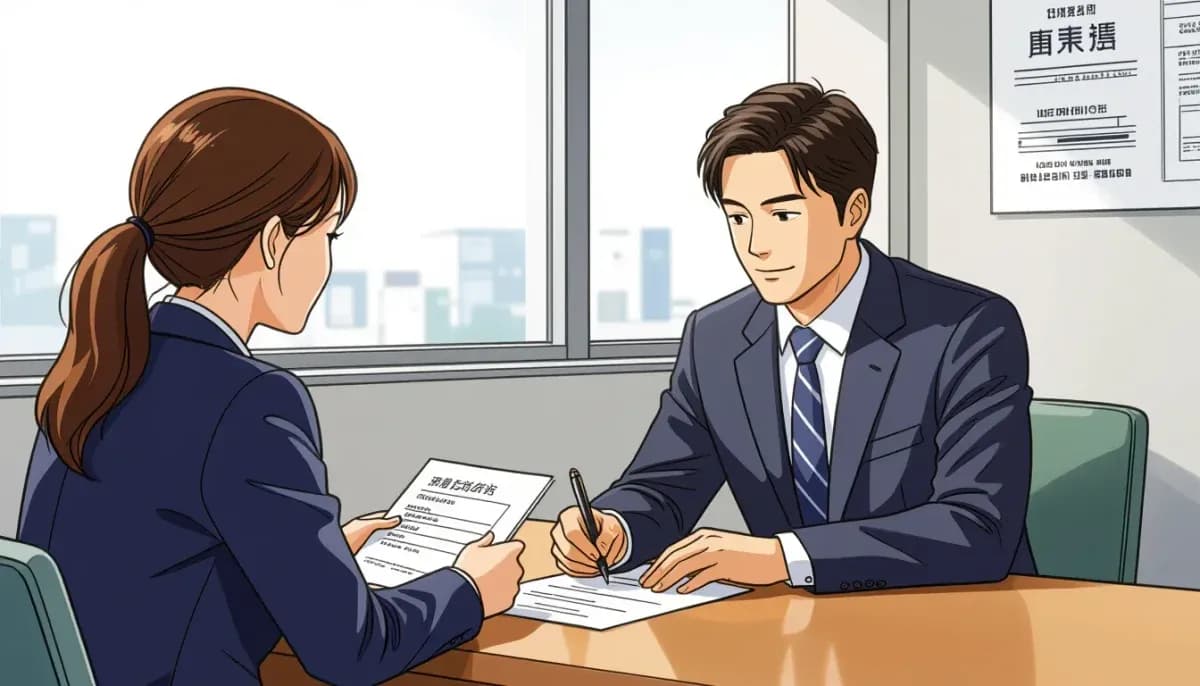
Japan Long Term Resident Visa Explained
Everything you need to know about Japan's Long-Term Resident Visa (teijusha): eligibility categories, application process, required documents, and how it compares to permanent residency.
Read more →
Common Japan Visa Application Mistakes to Avoid
Discover the most common Japan visa application mistakes that lead to rejection. Learn how to avoid documentation errors, wrong visa categories, and weak financial proof to get approved.
Read more →
Japan Business Manager Visa Requirements and Process
Complete guide to Japan's Business Manager Visa in 2026. Learn about the new 30 million yen capital requirement, application process, documents needed, and tips for approval as a foreign entrepreneur.
Read more →
Japan Dependent Visa for Family Members Guide
Complete guide to Japan's Dependent Visa for family members. Learn about eligibility, required documents, financial requirements, application process, work restrictions, and renewal procedures for bringing your spouse and children to Japan.
Read more →
Working Holiday Visa Japan Complete Guide
Everything you need to know about Japan's Working Holiday Visa: eligible countries, age requirements, application process, work rules, costs, and tips for making the most of your WHV experience.
Read more →