
Japan National Health Insurance Complete Guide for Foreigners

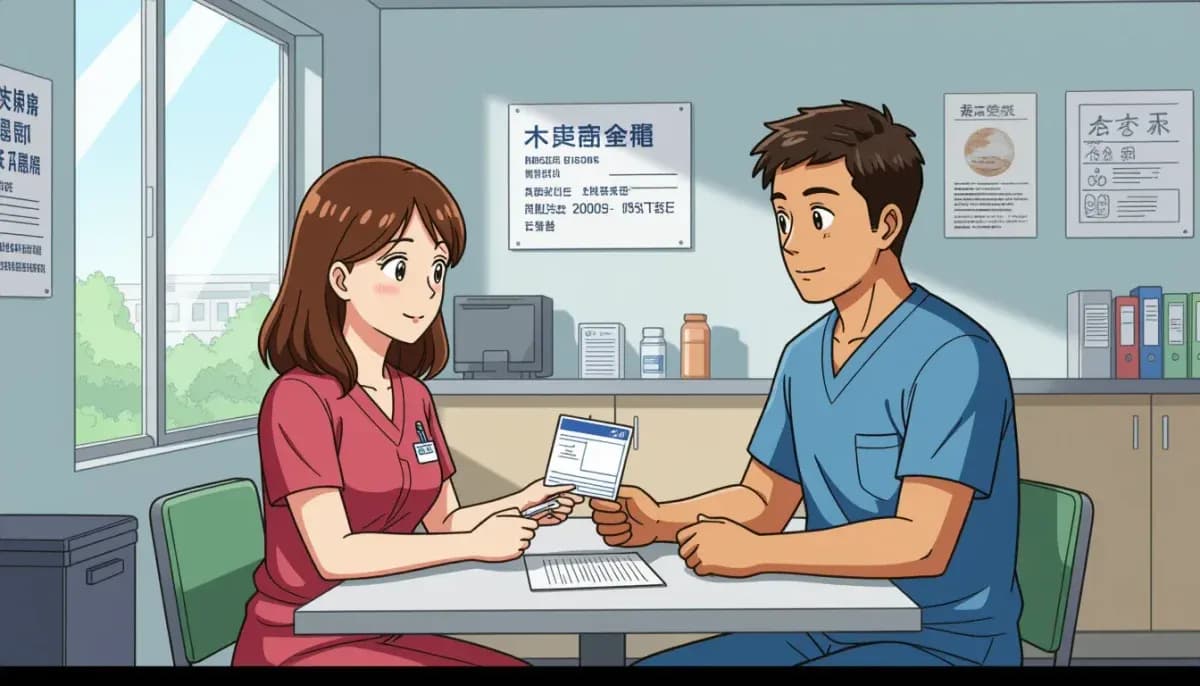
Complete guide to Japan's National Health Insurance (NHI) for foreign residents. Learn how to enroll, calculate premiums, understand coverage, and save money on healthcare in Japan.
Japan National Health Insurance Complete Guide for Foreigners
Moving to Japan means navigating its healthcare system, and one of the first things you need to understand is the National Health Insurance (NHI) or Kokumin Kenko Hoken (国民健康保険). Japan has had universal health coverage since 1961, and every resident — including foreigners — is legally required to enroll in some form of health insurance. This guide covers everything you need to know about NHI as a foreign resident, from enrollment to premiums, coverage, and tips for saving money.
If you are looking for a broader overview of the healthcare system, check out our Complete Guide to Healthcare in Japan for Foreigners.
What Is Japan's National Health Insurance (NHI)?
Japan's National Health Insurance is the public health insurance program designed for residents who are not enrolled in employer-based health insurance (Shakai Hoken). It is administered by local municipal governments and covers a wide range of medical services.
NHI is specifically for:
- Self-employed individuals and freelancers
- Unemployed residents and those between jobs
- Part-time workers who work fewer than 30 hours per week
- International students studying in Japan
- Retired residents under 75 years old
- Dependents not covered by an employer's plan
If your employer provides Shakai Hoken (Employee Health Insurance), you will typically be enrolled in that system instead. The key difference is that with Shakai Hoken, your employer pays roughly half of the premium, while NHI premiums are paid entirely by you.
Who Must Enroll in NHI?
All foreign residents staying in Japan for more than 3 months are legally required to have health insurance. If you do not have employer-provided coverage, you must enroll in NHI at your local city or ward office.
This requirement applies regardless of your visa type — whether you hold a work visa, a student visa, a spouse visa, or any other medium-to-long-term visa.
Important deadlines:
- You must enroll within 14 days of establishing your residence in Japan
- Late enrollment triggers retroactive premium charges going back up to 2 years
- Any medical care received before enrollment must be paid 100% out of pocket
Starting in 2027, immigration authorities plan to integrate NHI payment history into visa renewal screening. Unpaid premiums could result in visa denial or non-renewal, so staying current on your health insurance is critical for your visa and immigration status.
How to Enroll in NHI as a Foreigner
Enrolling in NHI is straightforward and handled at your local municipal office. Here is the step-by-step process:
Step 1: Complete your resident registration at the city hall or ward office. This is usually done when you first arrive in Japan.
Step 2: Visit the National Health Insurance counter at the same municipal office. In larger cities, there is usually a dedicated NHI section.
Step 3: Bring the required documents:
| Document | Details |
|---|---|
| Residence Card (Zairyu Card) | Your primary ID as a foreign resident |
| Passport | For identity verification |
| My Number Card or Notification | Your My Number Card or the notification letter |
| Bank account details | For setting up automatic premium payments |
| Proof of income (if available) | Previous year's income documentation |
| Inkan or signature | Some offices may request your personal seal |
Step 4: Fill out the enrollment application at the counter. Staff will assist you, and many larger city offices have multilingual support or interpretation services available.
Step 5: Receive your health insurance card. As of December 2024, Japan has transitioned from traditional plastic health insurance cards to the My Number health insurance card system. Your My Number Card will function as your health insurance card at medical facilities. Learn more about how to use your Japan health insurance card.
For more details on the broader medical system and how insurance integrates with hospital visits, see this guide to Japan's health insurance and medical system.
How NHI Premiums Are Calculated
NHI premiums are one of the most confusing aspects for foreigners. Unlike employer insurance where costs are split, you pay 100% of NHI premiums yourself. Premiums vary significantly by municipality and are recalculated each fiscal year (April to March) based on your previous year's income.
The premium consists of three components:
| Component | Purpose | Who Pays |
|---|---|---|
| Medical Care (Iryou-bun) | Covers basic healthcare costs | All NHI members |
| Elderly Support (Shien-bun) | Funds healthcare for seniors 75+ | All NHI members |
| Nursing Care (Kaigo-bun) | Funds long-term nursing care | Members aged 40–64 only |
Example annual premiums in central Tokyo (FY2025):
| Annual Income | Approximate NHI Premium |
|---|---|
| ¥0 (first year in Japan) | ¥15,000–¥25,000 |
| ¥2,000,000 | ~¥180,000/year |
| ¥4,000,000 | ~¥398,000/year |
| ¥6,000,000 | ~¥650,000/year |
| ¥8,000,000 | ~¥941,000/year |
First-year advantage: If you just arrived in Japan and had no Japanese income the previous year, your premiums will be significantly lower during your first year. However, they will increase substantially once your Japanese income is recorded.
For information on how health insurance relates to your overall tax obligations, check out the guide to taxes and social insurance for foreigners.
What Does NHI Cover?
NHI provides comprehensive coverage for most standard medical services. The standard cost-sharing ratio is:
- 70% covered by insurance (you pay 30%)
- Children under 6: 80% covered (you pay 20%)
- Adults 70–74: 80% covered (you pay 20%), or 70% if high income
- Seniors 75+: 90% covered (you pay 10%), transition to Late-Stage Medical System
Services covered by NHI:
| Covered | Not Covered |
|---|---|
| Doctor consultations and examinations | Cosmetic surgery and procedures |
| Prescription medications | Non-prescribed supplements and vitamins |
| Surgery and hospitalization | Private hospital room upgrades (差額ベッド代) |
| Basic dental care (fillings, extractions) | Orthodontics and cosmetic dentistry |
| Diagnostic tests (blood work, X-rays, MRI) | Comprehensive health checkups (人間ドック) |
| Maternity care (prenatal visits, delivery) | Fertility treatments (partially covered since 2022) |
| Mental health treatment | Some advanced or experimental therapies |
| Rehabilitation services | Over-the-counter medications |
For dental-specific coverage information, see our Dental Care in Japan Guide for Foreigners. If you need mental health support, check our guide to Mental Health Services in Japan.
The High-Cost Medical Expense System (Kogaku Ryoyo-hi)
One of the best features of Japan's health insurance is the High-Cost Medical Expense System (高額療養費制度). This puts a monthly cap on your out-of-pocket medical expenses, protecting you from catastrophic medical bills.
The monthly cap depends on your income level:
| Income Level | Monthly Out-of-Pocket Cap |
|---|---|
| Low income (住民税非課税) | ¥35,400 |
| Standard income | ¥57,600 |
| Upper-middle income | ¥80,100 + 1% of excess |
| High income (¥6M–8.39M) | ¥167,400 + 1% of excess |
| Very high income (¥8.39M+) | ¥252,600 + 1% of excess |
This means even if you need major surgery or extended hospitalization, your maximum monthly payment is capped. You can apply for a Gengaku Ninsho (限度額適用認定証) in advance so the hospital only charges you up to the cap directly, rather than paying full price and waiting for reimbursement.
Tips for Saving Money on NHI Premiums
Managing NHI costs is a concern for many foreign residents. Here are practical strategies:
1. File a tax return even with low income. If you do not file, the municipality cannot verify your income, and you may miss out on premium reductions. Refer to our guide on filing tax returns in Japan for details.
2. Apply for premium reductions. If your income drops significantly (due to job loss, for example), you can apply for a premium reduction or exemption at your city hall. Categories include:
- Full exemption
- 70% reduction
- 50% reduction
- 20% reduction
3. Use the Blue Return (Aoiro Shinkoku) if self-employed. Freelancers who file a Blue Return can deduct up to ¥650,000 from their NHI calculation base, potentially saving ¥100,000 or more annually. See our Freelancer Tax Guide for Japan.
4. Compare costs between municipalities. NHI premiums vary by city. If you are flexible about where you live, some areas have noticeably lower premiums. Check out our guide to Best Cities in Japan for Foreigners for more context.
5. Consider switching to Shakai Hoken. If you start working for an employer, Shakai Hoken often works out cheaper since your employer covers half the premium.
For additional career information that may affect your insurance options, see this guide to IT and industry career changes which covers industries with strong employee benefits.
NHI vs. Shakai Hoken: Which One Will You Have?
Understanding the difference between these two systems helps you plan your finances:
| Feature | NHI (Kokumin Kenko Hoken) | Shakai Hoken (Employee Insurance) |
|---|---|---|
| Who enrolls | Self-employed, freelancers, students, unemployed | Company employees working 30+ hours/week |
| Premium payment | 100% paid by you | ~50% paid by employer |
| Dependents | Each family member pays separately | Dependents covered at no extra cost |
| Income base | Previous year's income | Current salary |
| Pension included | No (separate National Pension) | Yes (Kosei Nenkin included) |
| Maternity allowance | Lump-sum only (¥500,000) | Lump-sum + income replacement (2/3 salary) |
| Sick leave pay | None | Up to 18 months at 2/3 salary |
For a complete breakdown of the employee system, read our Shakai Hoken Explained guide. If you are considering your employment options, our guide to working in Japan provides broader context.
What to Do When You Leave Japan
When you leave Japan permanently, you need to cancel your NHI enrollment at the city hall. Key steps include:
- Submit a moving-out notification (転出届) at city hall before your departure
- Return your health insurance card or notify the NHI desk about your departure
- Pay any outstanding premiums — unpaid premiums can cause problems if you ever return to Japan
- Apply for premium refund if you have overpaid for the remaining period
For a complete checklist on departing Japan, see our guide to leaving Japan as a foreigner.
Common Questions Foreigners Have About NHI
Can I use NHI at any hospital? Yes, NHI is accepted at virtually all hospitals and clinics in Japan. Use our guide to finding an English-speaking doctor if language is a concern.
What if I cannot afford the premiums? Apply for a reduction or exemption at city hall. Even with a reduction, you maintain full coverage.
Can I have private insurance alongside NHI? Yes, many residents carry supplemental private health insurance for costs NHI does not cover, such as private hospital rooms.
What happens in a medical emergency? Dial 119 for an ambulance (free of charge). Emergency treatment is covered by NHI at the standard 30% copayment. Read our Emergency Medical Care guide for more details.
Do I need NHI if I already have travel insurance? Yes. Travel insurance does not replace the legal requirement for NHI enrollment. However, you may keep supplemental international coverage for added protection.
For comprehensive statistics about Japan's healthcare system, the Commonwealth Fund's Japan profile and Japan Health Policy NOW provide detailed data on coverage rates and healthcare spending.
Final Thoughts
Japan's National Health Insurance system provides excellent coverage at relatively affordable rates, especially compared to countries without universal healthcare. As a foreign resident, understanding how to enroll, what your premiums will cost, and what services are covered will help you take full advantage of the system.
The most important things to remember: enroll within 14 days of arriving, always pay your premiums on time (especially with the upcoming 2027 visa integration), and do not hesitate to use the High-Cost Medical Expense System if you face large medical bills. For broader healthcare guidance, visit our Complete Healthcare Guide for Foreigners in Japan.

Originally from Vietnam, living in Japan for 16+ years. Graduated from Nagoya University, with 11 years of professional experience at Japanese and international companies. Sharing information about living in Japan for foreigners.
View Profile →Related Articles

Vision Care and Getting Glasses in Japan
Complete guide to buying prescription glasses in Japan as a foreigner. Learn about free eye exams, top stores like JINS and Zoff, prices from ¥5,000, contact lenses, and insurance coverage.
Read more →
Private Health Insurance Options in Japan
Complete guide to private health insurance options in Japan for foreigners. Compare IPMI, Japanese private insurance, costs, providers, and how to apply alongside mandatory NHI coverage.
Read more →
Over the Counter Medicine in Japan Guide
Complete guide to buying OTC medicine in Japan as a foreigner. Learn about popular Japanese medicines, drugstore chains, banned medications, and essential pharmacy phrases for expats.
Read more →
How to Use Your Japan Health Insurance Card
Learn how to use your Japan health insurance card (hokensho) as a foreigner. Covers Myna Hokensho transition, co-payment rates, NHI vs SHI, enrollment steps, and cost-saving tips for expats.
Read more →
Having a Baby in Japan as a Foreign Parent
Complete guide to having a baby in Japan as a foreign parent. Learn about prenatal care, hospital costs, the ¥500,000 birth grant, maternity leave, and essential steps for registering your newborn.
Read more →
Emergency Medical Care in Japan What Foreigners Need to Know
Learn how to access emergency medical care in Japan as a foreigner. Covers ambulance services, ER procedures, costs, insurance coverage, and essential preparation tips for expats and tourists.
Read more →