
How to Use Your Japan Health Insurance Card

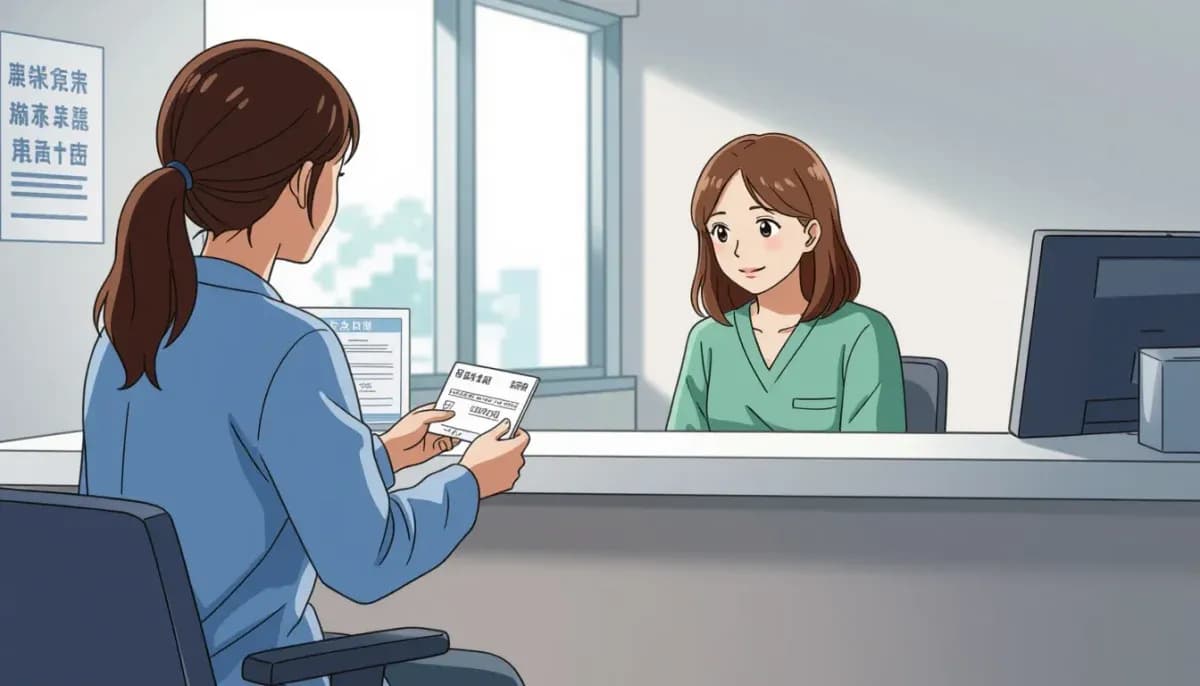
Learn how to use your Japan health insurance card (hokensho) as a foreigner. Covers Myna Hokensho transition, co-payment rates, NHI vs SHI, enrollment steps, and cost-saving tips for expats.
How to Use Your Japan Health Insurance Card: A Complete Guide for Foreigners
If you live in Japan as a foreigner, your health insurance card (hokensho) is one of the most important documents you will carry. It gives you access to Japan's world-class healthcare system at a fraction of the full cost. Whether you have National Health Insurance (NHI) or Employees' Health Insurance (SHI), knowing how to use your card correctly can save you money, stress, and confusion at the doctor's office. This guide walks you through everything you need to know about your Japan health insurance card, including the recent transition to the Myna Hokensho system.
What Is the Japan Health Insurance Card (Hokensho)?
Your health insurance card, called hokensho (保険証) in Japanese, is proof that you are enrolled in Japan's mandatory health insurance system. When you present this card at a hospital or clinic, you only pay 30% of your medical bills — the insurance covers the remaining 70%.
Japan has two main types of public health insurance:
- National Health Insurance (NHI / Kokumin Kenko Hoken) — for self-employed individuals, freelancers, students, and those not covered by an employer plan
- Employees' Health Insurance (SHI / Shakai Hoken) — for company employees, automatically enrolled through your employer
As of March 2024, approximately 970,000 foreign nationals were enrolled in NHI alone, accounting for about 4% of all NHI members. If you are a foreigner living in Japan for three months or longer, enrollment in one of these systems is mandatory by law.
For more details on the overall healthcare system, check out our Complete Guide to Healthcare in Japan for Foreigners.
The Transition to Myna Hokensho: What Changed in December 2025
As of December 2, 2025, Japan officially phased out the traditional paper and plastic health insurance cards. The new standard is the Myna Hokensho (マイナ保険証), which links your health insurance information directly to your My Number Card.
Here is what this means for you:
- No more separate insurance cards — your My Number Card now functions as your health insurance card
- Authentication at hospitals uses facial recognition or a 4-digit PIN at a dedicated card reader
- Your medical history and prescription records can be accessed digitally by your doctor (with your consent)
- If you do not have a My Number Card, your municipality will issue a Qualification Verification Certificate (資格確認書) as a temporary substitute
To register your My Number Card as a Myna Hokensho, you can use:
- The Mynaportal website or app
- A Seven Bank ATM
- The card reader at a hospital or pharmacy
For a detailed walkthrough, see Belonging Japan's Myna Hokensho Guide.
How to Use Your Insurance Card at the Hospital
Using your health insurance card at a Japanese medical facility is straightforward, but there are important steps to follow:
Step 1: Bring your card to every visit. Always carry your Myna Hokensho (or Qualification Verification Certificate) when visiting any hospital, clinic, dentist, or pharmacy. Without it, you will be charged the full 100% of medical costs upfront.
Step 2: Present your card at reception. Hand your card to the receptionist or scan it at the card reader terminal. If using the Myna Hokensho, you will authenticate via facial recognition or PIN.
Step 3: Fill out the questionnaire. First-time visitors to a clinic will typically need to fill out a medical questionnaire (問診票). Some clinics offer English versions, but having a basic Japanese vocabulary or a translation app helps.
Step 4: See the doctor and receive treatment. After your consultation, any prescribed medications will be given as a prescription slip to take to a pharmacy.
Step 5: Pay your co-payment. At the payment counter, you pay only your share — typically 30%. The clinic will submit the rest directly to your insurance provider.
Step 6: Visit the pharmacy. Take your prescription to any pharmacy. Present your insurance card again, and you will pay 30% of the medication cost as well.
Learn more about health insurance and the medical system in Japan at Living in Nihon.
Co-Payment Rates and Cost Caps
One of the biggest benefits of Japan's health insurance system is predictable out-of-pocket costs. Here is a breakdown of what you can expect to pay:
| Age Group | Co-Payment Rate | Monthly High-Cost Cap (Typical Earner) |
|---|---|---|
| Children under 6 | 20% | Varies by municipality |
| Ages 6–69 | 30% | ~¥80,100 + 1% over ¥267,000 |
| Ages 70–74 (general income) | 20% | ~¥57,600 |
| Ages 75+ | 10% | ~¥18,000 |
The High-Cost Medical Expense Benefit (高額療養費制度 / Kogaku Ryoyo-hi Seido) is especially important. If your medical expenses in a single month exceed the cap for your income bracket, you can apply for reimbursement of the excess amount. This applies to both NHI and SHI members.
For example, if you are a typical earner aged 30 and your hospital bill comes to ¥500,000, your insurance covers 70% (¥350,000). Your initial co-payment would be ¥150,000, but through the high-cost benefit, you would be reimbursed down to approximately ¥82,430.
To learn more about taxes and social insurance contributions, visit For Work in Japan.
NHI vs. Employees' Health Insurance: Key Differences
Understanding which type of insurance you have helps you know your benefits:
| Feature | NHI (Kokumin Kenko Hoken) | Employees' Health Insurance (SHI) |
|---|---|---|
| Who enrolls | Self-employed, freelancers, students, unemployed | Company employees |
| Enrollment method | Register at city/ward office | Automatic through employer |
| Premium calculation | Based on previous year's income + household members | Split 50/50 with employer, based on salary |
| Annual premium cap (Tokyo) | ~¥920,000 (medical) + ¥170,000 (long-term care) | No fixed cap, percentage-based |
| Dependents covered | Each member pays individually | Dependents covered at no extra cost |
| Maternity benefits | Lump-sum birth allowance (¥500,000) | Lump-sum + maternity leave pay (67% of salary) |
| Sickness benefits | Not available | Up to 18 months at 67% of salary |
If you are working for a Japanese company, your employer handles SHI enrollment automatically. If you are self-employed, a freelancer, or between jobs, you must register for NHI at your local city or ward office within 14 days of losing other coverage.
For details on how insurance premiums affect your take-home pay, see this guide on social insurance premium changes at Ittenshoku.
What Your Health Insurance Covers (and What It Does Not)
Japan's public health insurance covers a wide range of medical services:
Covered services:
- Doctor consultations and examinations
- Hospitalization and surgery
- Prescribed medications
- Basic dental care (fillings, extractions, cleanings)
- Maternity care and childbirth lump-sum allowance (¥500,000)
- Mental health consultations
- Physical rehabilitation
- Most diagnostic tests (blood work, X-rays, MRI, CT scans)
Not covered:
- Cosmetic surgery and elective procedures
- Orthodontic treatment (braces)
- Most traditional/herbal medicine (kampo exceptions exist)
- Private hospital rooms (difference charged separately)
- Advanced treatments not yet approved in Japan
- Routine health checkups (though many municipalities offer subsidized annual checkups)
If you need coverage beyond public insurance, consider supplemental private insurance. Many foreigners in Japan opt for additional policies to cover gaps, especially for dental orthodontics and private room upgrades. Check out Japan Dev's guide to healthcare for expats for more practical tips.
Common Mistakes Foreigners Make with Their Insurance Card
Avoid these frequent pitfalls:
1. Forgetting your card at home. If you visit a doctor without your card, you pay 100%. You can get reimbursed later, but the process involves paperwork and waiting weeks. Always keep your My Number Card accessible.
2. Not updating your address. When you move to a new municipality, you must transfer your NHI registration. Failing to do so can result in coverage gaps or double billing.
3. Using an expired card. If your visa status changes or you switch from NHI to SHI (or vice versa), make sure your old card is returned and your new coverage is active.
4. Not knowing about the high-cost benefit. Many foreigners pay large hospital bills without realizing they can apply for reimbursement. Always ask about 高額療養費 at the hospital billing counter.
5. Skipping enrollment. Some foreigners assume they do not need insurance. In Japan, it is legally required, and unpaid premiums accumulate as debt that must be settled before you leave the country.
For more on managing your finances in Japan, visit our Complete Guide to Banking and Finance in Japan.
How to Enroll in Health Insurance as a Foreigner
If you have just arrived in Japan or changed your employment status, here is how to get enrolled:
For NHI (self-employed, students, freelancers):
- Visit your local city or ward office (市区町村役場)
- Go to the National Health Insurance counter (国民健康保険窓口)
- Bring your residence card, passport, and My Number notification
- Fill out the enrollment form
- Your premium will be calculated based on your previous year's income (first-year foreigners often get lower premiums)
- You will receive your insurance qualification, linked to your My Number Card
For SHI (company employees):
- Your employer handles everything
- You will receive your insurance information within your first month
- Dependents (spouse, children) can be added at no extra cost
If you have just arrived and have no income history in Japan, your NHI premiums for the first year will typically be at the minimum rate, which varies by municipality but can be as low as ¥1,000–¥2,000 per month.
For information on the visa requirements that affect your insurance eligibility, see our Complete Guide to Japan Visa and Immigration.
Frequently Asked Questions
Can I use my insurance card at any hospital? Yes. Japan's health insurance works at virtually any hospital, clinic, or pharmacy nationwide. There is no network restriction like in some other countries.
What if I lose my My Number Card? Contact your local ward office immediately. You can request a Qualification Verification Certificate while your replacement card is being processed (takes 1–2 months).
Do I need insurance for a short visit to Japan? Tourists on short stays (under 3 months) are not eligible for public health insurance. Travel insurance is strongly recommended. For stays over 3 months with a valid residence status, enrollment is mandatory.
Can I opt out of Japanese health insurance? No. Health insurance is mandatory for all residents. Even if you have private international insurance, you must still be enrolled in either NHI or SHI.
What happens to my insurance when I leave Japan? When you deregister your address at the ward office before leaving, your NHI membership ends. Make sure all premiums are paid before departure, as unpaid premiums can cause issues if you return.
For more about daily life practicalities as a foreigner in Japan, explore our Complete Guide to Daily Life in Japan.
Conclusion
Your Japan health insurance card is your gateway to affordable, high-quality healthcare. With the transition to the Myna Hokensho system, the process has become more digital and streamlined. Make sure you are enrolled, keep your My Number Card ready, and do not hesitate to use your insurance whenever you need medical care. Japan's healthcare system is one of the best in the world — as a foreign resident, you have every right to take full advantage of it.
For a comprehensive overview of healthcare options, visit our Complete Guide to Healthcare in Japan for Foreigners, and for financial planning around insurance costs, see our Complete Guide to Taxes in Japan for Foreigners.

Originally from Vietnam, living in Japan for 16+ years. Graduated from Nagoya University, with 11 years of professional experience at Japanese and international companies. Sharing information about living in Japan for foreigners.
View Profile →Related Articles

Vision Care and Getting Glasses in Japan
Complete guide to buying prescription glasses in Japan as a foreigner. Learn about free eye exams, top stores like JINS and Zoff, prices from ¥5,000, contact lenses, and insurance coverage.
Read more →
Private Health Insurance Options in Japan
Complete guide to private health insurance options in Japan for foreigners. Compare IPMI, Japanese private insurance, costs, providers, and how to apply alongside mandatory NHI coverage.
Read more →
Over the Counter Medicine in Japan Guide
Complete guide to buying OTC medicine in Japan as a foreigner. Learn about popular Japanese medicines, drugstore chains, banned medications, and essential pharmacy phrases for expats.
Read more →
Having a Baby in Japan as a Foreign Parent
Complete guide to having a baby in Japan as a foreign parent. Learn about prenatal care, hospital costs, the ¥500,000 birth grant, maternity leave, and essential steps for registering your newborn.
Read more →
Emergency Medical Care in Japan What Foreigners Need to Know
Learn how to access emergency medical care in Japan as a foreigner. Covers ambulance services, ER procedures, costs, insurance coverage, and essential preparation tips for expats and tourists.
Read more →
Japan Health Checkup Ningen Dock Explained
Complete guide to Ningen Dock, Japan's comprehensive health checkup system. Learn costs, what's included, English-speaking clinics, preparation tips, and how it differs from the standard annual health check.
Read more →