
International Driving Permit Use in Japan Explained

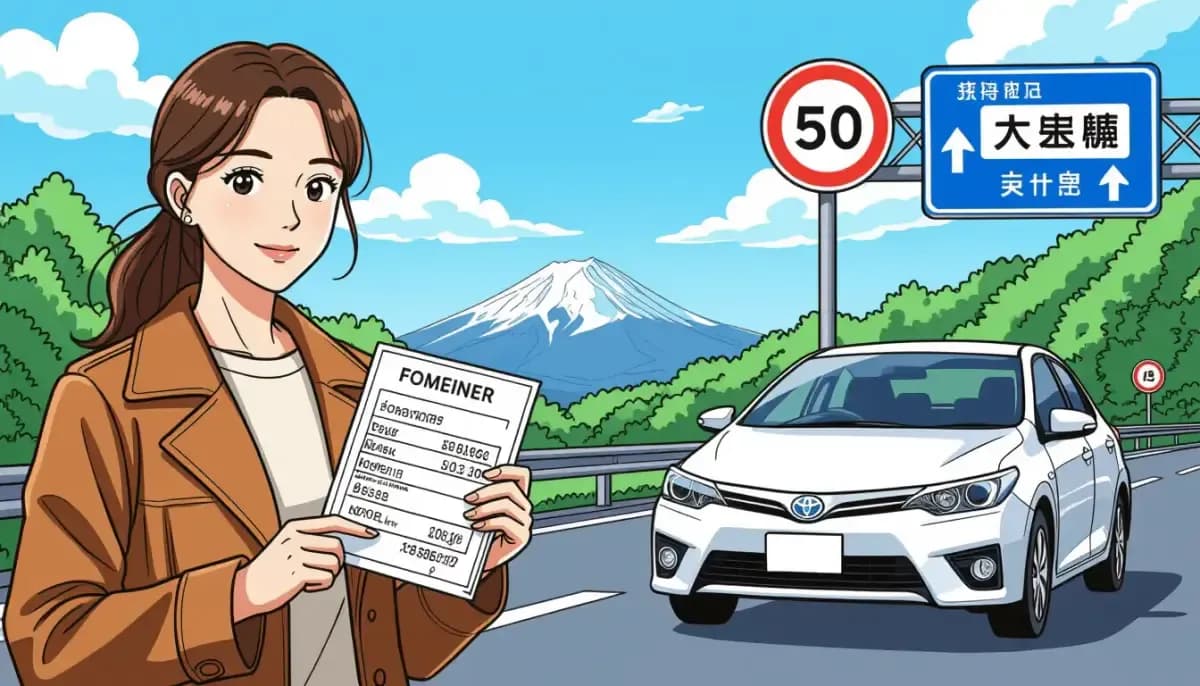
Learn how to use an International Driving Permit in Japan. Covers Geneva Convention requirements, the 3-month rule, car rental tips, and bilateral license agreements for foreigners.
International Driving Permit Use in Japan Explained
Driving in Japan is one of the best ways to explore the country's scenic countryside, rural villages, and regions not easily reached by train. Whether you're a tourist visiting for a few weeks or a foreigner settling in Japan long-term, understanding how the International Driving Permit (IDP) works here is essential before you get behind the wheel. Japan's rules differ from many countries, and a small mistake can result in serious legal consequences.
This guide explains everything you need to know about using an International Driving Permit in Japan — from which convention your permit must follow, to the all-important three-month rule for residents, and how to make the most of your driving experience in Japan.
!International driving permit and map for Japan driving
What Is an International Driving Permit and Do You Need One in Japan?
An International Driving Permit (IDP) is an official document that translates your national driver's license into multiple languages, allowing you to drive legally in foreign countries. It is NOT a standalone license — it must always be carried together with your valid home country driver's license.
In Japan, most foreign nationals who wish to drive must have:
- A valid driver's license from their home country
- A valid International Driving Permit (IDP)
However, Japan has a critical requirement that many visitors miss: Japan only recognizes IDPs issued under the 1949 Geneva Convention. Permits issued under the 1968 Vienna Convention are NOT valid in Japan, even if your country is a signatory to the 1949 Convention.
When you obtain your IDP, always check the booklet — it must say "Geneva Convention on International Road Traffic of 19 September 1949." If the date is different, you cannot legally drive in Japan with that permit.
Special Countries: No IDP Required
Citizens from Belgium, France, Germany, Monaco, Switzerland, and Taiwan do not need an IDP because these countries do not issue permits based on the 1949 Geneva Convention. Instead, drivers from these countries must carry an official Japanese translation of their driver's license, which can be obtained from:
- The Japan Automobile Federation (JAF)
- Your country's embassy or consulate in Japan
This translation is valid for up to one year from entry into Japan.
How to Get an International Driving Permit Before Coming to Japan
You must apply for your IDP in your home country before arriving in Japan. Japan does not issue IDPs locally, and there is no way to obtain one after you've already arrived.
The application process varies by country, but generally involves:
| Step | Details |
|---|---|
| Apply through | National automobile association (e.g., AAA in the US, AA in the UK, JAF in Japan for outbound) |
| Documents needed | Valid driver's license, passport-size photos (1-2), application form |
| Fee | Usually $15–$25 USD (varies by country) |
| Processing time | Same-day to 2 weeks depending on organization |
| Validity | Usually 1 year from issue date |
| Format | Small booklet form (card or paper formats are NOT valid in Japan) |
Important format note: Japan is strict about the physical format of the IDP. It must be a small booklet, not a card or a printed paper. If your IDP is in any other format, it will not be accepted by Japanese authorities or rental car companies.
How Long Can You Drive in Japan with an IDP?
Your IDP allows you to drive in Japan for a maximum of one year from the date you enter Japan — even if your IDP has a longer validity period on it. The clock starts ticking from your entry date, not the issue date of your IDP.
For example:
- If your IDP is issued in your home country for 3 years, you still can only use it for 1 year in Japan.
- After 12 months, you must either obtain a Japanese driver's license (by converting your foreign license) or leave Japan and return with a new IDP.
For information about the full process of converting your foreign license to a Japanese one, check out our guide to moving to Japan as a foreigner.
The Three-Month Rule: Critical for Long-Term Residents
One of the most misunderstood rules involves long-term foreign residents who are registered in Japan's Basic Resident Register (住民基本台帳). This rule was introduced to prevent people from simply "renewing" their IDP by making brief trips abroad.
Here's how the rule works:
If you are a registered resident in Japan, and you leave Japan to obtain a new IDP abroad, you must have spent more than 3 consecutive months outside Japan before that new IDP becomes valid for use in Japan.
In plain terms:
- You cannot go abroad for 2 weeks, get a fresh IDP, come back, and drive legally.
- You must have been outside Japan for more than 3 continuous months.
This rule applies to both Japanese nationals and non-Japanese residents who are registered in the Basic Resident Register. Short-term visitors (tourists on a temporary visa who are not registered residents) are generally not affected by this rule.
If you're planning to live in Japan long-term, the best path forward is to convert your foreign license to a Japanese driver's license — for details, see our complete guide on Japan visa and immigration requirements.
Countries with Bilateral License Agreements: Who Gets a Pass?
Japan has bilateral agreements with more than 20 countries that allow their citizens to convert their driver's license to a Japanese license without taking the written or practical driving test. This is a significant benefit for citizens of these countries.
Countries with test-exempt license conversion (partial list):
| Region | Countries |
|---|---|
| Europe | Austria, Belgium, Czech Republic, Denmark, Finland, France, Germany, Greece, Iceland, Ireland, Italy, Luxembourg, Monaco, Netherlands, Norway, Poland, Portugal, Spain, Sweden, Switzerland, UK |
| Asia-Pacific | Australia, New Zealand, South Korea, Taiwan |
| North America | Canada; certain US states (Colorado, Hawaii, Maryland, Ohio, Oregon, Virginia, Washington) |
Citizens from these countries still need to present:
- Original driver's license
- Official JAF-certified translation (¥3,850)
- Passport showing 3+ months of prior residence abroad (if relevant)
- Residence card (if applicable)
Note that the list of eligible US states is limited — Americans from other states must still pass both the written and practical driving tests to get a Japanese license.
Driving Rules You Must Know in Japan
Japan's traffic rules differ from many countries. Before you drive, familiarize yourself with these key rules:
!Japanese road and traffic rules for foreigners
| Rule | Detail |
|---|---|
| Side of road | Drive on the left — steering wheel is on the right |
| Legal driving age | 18 years old |
| Blood alcohol limit | Zero tolerance — any detectable alcohol is illegal |
| Speed limits | 30 km/h in residential areas, 40-60 km/h on regular roads, 80-100 km/h on expressways |
| Seatbelts | Mandatory for all passengers |
| Mobile phones | No handheld use while driving — heavy fines apply |
| Pedestrian crossings | Must stop completely when a pedestrian is at a crossing |
| Gas prices | Approximately ¥180 per liter (as of March 2025) |
Japan's roads are generally well-maintained and many road signs include English translations. Navigation apps like Google Maps work well throughout Japan, though you may want to download offline maps for rural areas.
Using Your IDP to Rent a Car in Japan
International Driving Permits are widely accepted at car rental companies across Japan. The major rental companies (Toyota Rent a Car, Nissan Rent a Car, Times Car Rental, Budget, ORIX, etc.) all accept IDPs from Geneva Convention countries.
What you'll need at the rental counter:
- Your valid home country driver's license (original)
- Your valid IDP (booklet format, Geneva Convention 1949)
- Your passport
- A credit card (most companies require one for the deposit)
Tips for renting a car in Japan:
- Book in advance, especially for holiday periods like Golden Week and New Year
- Choose an ETC card (electronic toll card) at the counter — it makes highway travel much smoother
- International car hire sites like ToCoo, Nippon Rent-a-Car, and Toyota Rent-A-Car offer English-language booking
- Most cars are automatics — manual transmission cars are rare and must be specifically requested
- One-way rentals are available but may incur extra fees
- Age restrictions apply: most companies require drivers to be 20-22 years old, and drivers under 25 may pay a surcharge
For more on transportation in Japan, the Japan train system guide is a great companion resource.
Frequently Asked Questions About IDPs in Japan
Can I drive in Japan with just my home country license? No, in most cases you cannot. Japan requires a valid IDP alongside your home country license — unless you are from one of the bilateral agreement countries (Belgium, France, Germany, Monaco, Switzerland, Taiwan) who use an official JAF translation instead.
My IDP was issued under the Vienna Convention. Can I use it in Japan? No. Japan strictly requires IDPs issued under the 1949 Geneva Convention. Vienna Convention permits are not valid for driving in Japan.
I'm a tourist. Does the 3-month rule affect me? Generally no. The 3-month rule applies to foreigners who are registered residents in Japan's Basic Resident Register. If you're visiting on a tourist visa without resident registration, you are not affected.
Can I get an IDP in Japan? No. IDPs must be obtained in your home country before departing. Japan does not issue IDPs to foreign nationals.
Do I need an IDP for a motorcycle? Yes, the same rules apply. Your IDP must cover the vehicle class (e.g., motorcycle/moped) that corresponds to what you'll be riding. Check your home country license and IDP to confirm the vehicle categories covered.
What happens if I drive without a valid IDP? Driving without a valid license in Japan is a serious offense. Penalties can include fines, license confiscation, and even deportation in serious cases. Never drive without your valid documents.
Converting Your Foreign License to a Japanese Driver's License
If you plan to stay in Japan long-term, converting your foreign driver's license to a Japanese one is the most practical solution. This avoids the complications of the 3-month rule and gives you permanent driving rights in Japan.
The conversion process (外免切替, gaimenkiriage) involves:
- Gathering documents: original license, official JAF translation, passport, residence card, and photographs
- Visiting your local Driver's License Center (運転免許センター)
- Passing an eye test
- Written test (for most countries)
- Practical driving test (for countries without bilateral agreements)
Costs range from ¥10,000 to ¥100,000 depending on how many retests you need. Processing time is typically 2 weeks to 3 months.
For a broader understanding of life administration in Japan, our moving to Japan checklist covers all the key tasks for new arrivals, including driving, banking, and registration.
Resources for Driving in Japan
Here are some authoritative resources to help you plan your driving in Japan:
- Living in Nihon: Driver's License Conversion Guide for Foreigners — Comprehensive coverage of the license conversion process, test-exempt countries, and 2025 rule changes.
- Japan Guide: Driving in Japan — General driving rules, road conditions, and speed limits in Japan.
- U.S. Embassy Japan: Driving in Japan — Specific guidance for American citizens driving in Japan.
- For Work in Japan — Resources for foreigners navigating life and work in Japan.
- Ittenshoku — Career and life resources for foreigners in Japan.
- Japan Car Rental Guide — What you need to rent a car in Japan as a foreigner.
Conclusion
Driving in Japan with an International Driving Permit opens up a world of exploration beyond the train network. The key points to remember:
- Geneva Convention 1949 only — check your IDP carefully
- Booklet format only — cards and papers are not valid
- Valid for 1 year from entry — not from the IDP's issue date
- 3-month rule applies to residents — don't try to refresh your IDP with a short trip abroad
- Always carry your original license + IDP together
With the right documents in hand, driving through Japan — from the mountain roads of Hokkaido to the coastal highways of Kyushu — is an unforgettable experience.

Originally from Vietnam, living in Japan for 16+ years. Graduated from Nagoya University, with 11 years of professional experience at Japanese and international companies. Sharing information about living in Japan for foreigners.
View Profile →Related Articles
Best Cars for Foreigners Living in Japan
Discover the best cars for foreigners living in Japan, from kei cars like the Honda N-Box to electric options. Complete guide to buying, costs, and requirements for expats.
Read more →
Car Maintenance and Repair in Japan Guide
A complete guide to car maintenance and repair in Japan for foreigners. Learn about shaken inspections, costs, finding mechanics, seasonal care, and JAF membership.
Read more →
Getting a Motorcycle License in Japan as a Foreigner
Step-by-step guide for foreigners getting a motorcycle license in Japan. Learn about license types, driving camps, license conversion, costs, and requirements for expats.
Read more →
Japan Highway and Toll System Complete Guide
Everything foreigners need to know about Japan's highway toll system: ETC cards, toll rates, discounts, expressway passes, speed limits, and practical driving tips for expats and visitors.
Read more →
How to Sell a Car in Japan Complete Guide
Step-by-step guide to selling your car in Japan as a foreigner. Covers required documents, 4 selling methods, shaken tips, tax refunds, and how to get the best price.
Read more →
Renting a Car in Japan as a Foreign Driver
Everything foreigners need to know about renting a car in Japan: IDP requirements, which countries can drive, major rental companies, costs, road rules, and tips for first-time drivers.
Read more →