
Housing Discrimination in Japan What You Can Do

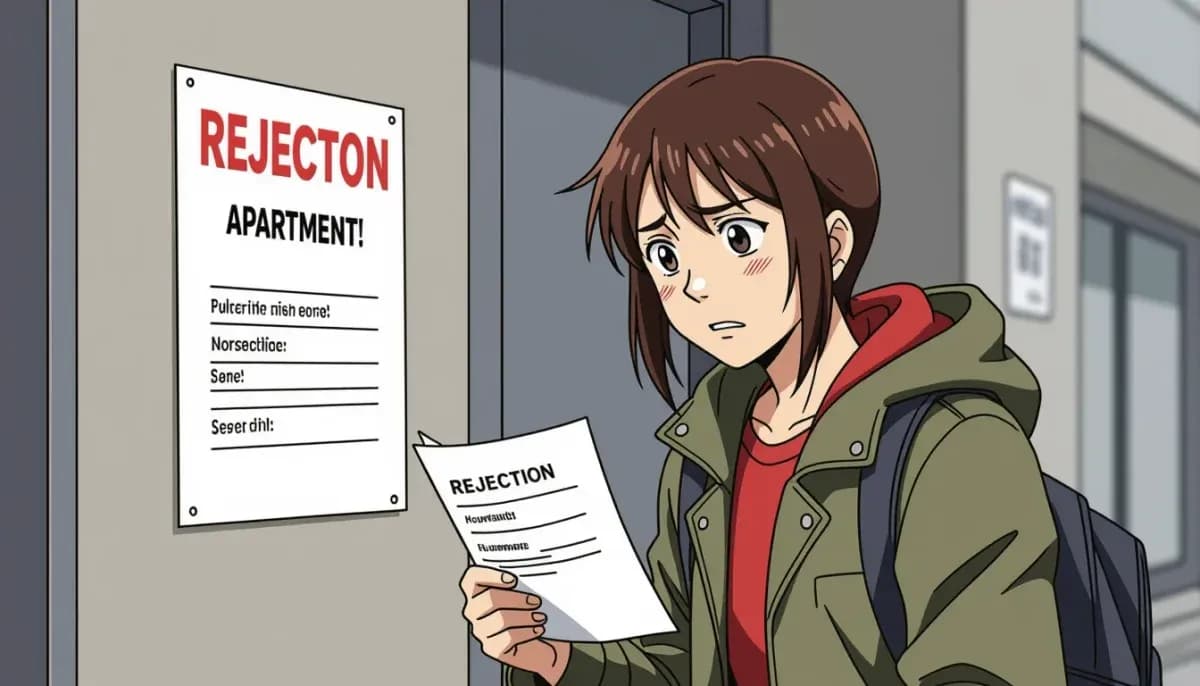
Facing housing discrimination in Japan as a foreigner? Learn the statistics, your legal rights, practical strategies to find housing, and what to do when landlords reject you.
Housing Discrimination in Japan: What You Can Do
Finding an apartment in Japan as a foreigner can feel like running a marathon with one hand tied behind your back. You have a stable income, a valid visa, and all the documents ready—but landlords keep turning you away. If this sounds familiar, you are not alone. Housing discrimination against foreigners in Japan is a well-documented problem, and it affects hundreds of thousands of people every year.
This guide explains exactly what housing discrimination looks like in Japan, why it happens, what your legal rights are, and—most importantly—what practical steps you can take to find a place to live and fight back if necessary.
!Foreigner facing housing discrimination in Japan looking at apartment listings

How Widespread Is Housing Discrimination in Japan?
The scale of the problem is significant. According to a 2016 survey commissioned by Japan's Ministry of Justice, 39.8% of foreign residents reported being rejected for housing because they were foreign. Even more striking, 26.8% of respondents encountered rental listings that explicitly stated "no foreigners allowed."
A more recent LIFULL 2024 survey found that 60.4% of disadvantaged groups—including foreigners, elderly people, single mothers, people with disabilities, and LGBTQ+ couples—reported experiencing housing discrimination.
The situation is particularly acute in Tokyo. Some estimates suggest that close to nine out of ten private rental units in the capital do not accept foreign tenants, though the situation has been slowly improving in international neighborhoods.
Discrimination Is Not Equal Across All Nationalities
Housing discrimination in Japan is not uniform. Data shows a troubling racial hierarchy in who gets rejected:
- Thailand: 53.1% of applicants rejected based on nationality
- China: 51.0% rejection rate
- Korea: 50.0% rejection rate
Research also shows that applicants with Chinese or Korean names face approximately 13% lower acceptance rates compared to those with Japanese-sounding names, even when other qualifications are identical. Notably, many landlords are more willing to rent to white Western foreigners while explicitly turning away applicants from Asian countries—a form of discrimination that has been reported openly by foreign residents.
Language ability does not protect you either. The Ministry of Justice survey found that even foreigners with near-native Japanese proficiency experienced rejection. About 22.9% of people who had lived in Japan since birth reported rental application rejection based on their foreign nationality.
Why Do Japanese Landlords Reject Foreigners?
Understanding the reasons behind discrimination helps you address them strategically. Landlords and property managers cite several concerns:
Visa and residency uncertainty: Landlords worry that a tenant might leave when their visa expires, creating vacancy and potential unpaid rent.
Communication barriers: Concerns about explaining house rules, managing disputes, or handling emergencies in Japanese.
Cultural differences: Unfounded assumptions about differing norms around noise, cleanliness, waste disposal, or property care.
Pressure from neighbors: Some landlords claim existing tenants or neighboring residents object to foreign neighbors.
Personal prejudice: In some cases, simple xenophobia with no rational basis.
It is worth emphasizing that many of these concerns are stereotypes, not realities. Plenty of landlords who have rented to foreigners report excellent experiences. The discrimination is largely based on bias and unfamiliarity, not evidence.
What Are Your Legal Rights?
This is where many foreigners are surprised. Housing discrimination based on nationality is legally problematic in Japan, even if enforcement is weak.
Constitutional Protections
Article 14 of Japan's Constitution guarantees equality under the law for all persons, regardless of race, creed, sex, social status, or family origin. This constitutional protection extends to foreign residents.
International Commitments
Japan ratified the International Convention on the Elimination of All Forms of Racial Discrimination (ICERD) in 1996. Under this treaty, Japan committed to combating racial discrimination, including in access to housing.
The Legal Gap
Despite constitutional protections and international treaty obligations, Japan currently has no domestic law that explicitly prohibits rental contract denials based on race or nationality. This is the critical gap. Without a specific enforcement mechanism, landlords face minimal legal risk.
However, courts have ruled on individual cases. In one notable precedent, a court found that there were no reasonable grounds to refuse to rent to a foreign applicant and ordered the landlord to pay ¥1 million in compensation plus ¥100,000 in legal fees. This demonstrates that legal action is possible, though challenging.
Some municipalities have gone further. Kawasaki City enacted one of Japan's first anti-discrimination ordinances, which includes penalties for discriminatory acts based on ethnicity.
The Proof Problem
Even when discrimination clearly occurred, proving it legally is extremely difficult. Landlords are not required to state their reason for rejection. They can simply decline without explanation, or give a neutral-sounding reason like "the income requirement isn't met" or "we prefer a long-term resident." Without documented evidence that nationality was the reason, building a legal case is an uphill battle.
!Apartment listings in Japan with foreign resident looking at options

Practical Strategies to Find Housing Despite Discrimination
Rather than waiting for systemic change, here are the most effective approaches foreigners use right now.
Use Foreigner-Friendly Real Estate Services
This is the single most effective strategy. Specialized agencies know which landlords and properties accept foreign tenants, saving you from wasting time on applications that will never succeed.
Key platforms to use:
- GaijinPot Apartments: Listings specifically for foreigners, with English support
- SUUMO (Foreign Edition): Major Japanese portal with foreigner-accessible listings
- wagaya Japan: Multilingual real estate platform
- CHINTAI: Foreigner-focused listings
- LIFULL FRIENDLY DOOR: Specifically designed for marginalized housing seekers including foreigners
For comprehensive guidance on navigating the entire housing search process as a foreigner, Living in Nihon's complete housing guide is an excellent resource covering everything from finding listings to signing your contract.
Use a Guarantee Company (保証会社)
The traditional Japanese rental system requires a personal guarantor—often a Japanese citizen who co-signs your lease. Most foreigners don't have this connection. Guarantee companies (hoshō gaisha) solve this problem by acting as your institutional guarantor.
Costs typically run 0.5 to 1 month's rent upfront, plus an annual renewal fee. While this adds to your move-in costs, it opens up many more properties to you. Most modern landlords now accept guarantee companies even for Japanese tenants, so this barrier is becoming more manageable.
Apply for UR Urban Renaissance Agency Housing
UR Housing is one of the best-kept secrets for foreign residents in Japan. UR is a semi-governmental housing provider with hundreds of thousands of units across Japan, and their rental conditions are dramatically more foreigner-friendly:
- No guarantor required
- No key money (礼金)
- No brokerage fees
- Accessible with just a valid residence card and proof of income
The tradeoff is that UR properties tend to be older and located slightly further from city centers. But the accessibility and cost savings can be significant. You can search UR listings directly on their official website.
Strengthen Your Application
When you apply to a standard private rental, make your application as strong as possible:
| Document | Why It Matters |
|---|---|
| Residence card (在留カード) | Proves legal status in Japan |
| Employment certificate | Shows stable employment |
| Pay stubs (3-6 months) | Demonstrates consistent income |
| Bank statements | Shows financial reserves |
| Reference letter from employer | Adds credibility |
| Japanese co-signer (if possible) | Strongest possible guarantee |
Income requirements are strict: your monthly rent should not exceed 30% of take-home pay, and landlords typically want to see income at least 36 times the monthly rent. If your income is borderline, look at slightly cheaper properties.
Consider Alternative Housing Arrangements
If private apartments are proving impossible, these alternatives can bridge the gap:
Share houses and guest houses: Lower barriers to entry, often no guarantor required, and easier to find through English-language services. Costs are usually higher per square meter but require minimal upfront investment.
Company-provided housing: If your employer offers housing allowances or directly-managed apartments, use them. This completely bypasses the discrimination problem.
Weekly/monthly mansions: Short-term furnished apartments that require minimal paperwork. More expensive long-term but a useful stepping stone while you search.
For a deeper look at the housing search process and infrastructure setup, For Work in Japan's housing and living guide covers the practical side of setting up your home in Japan.
What to Do If You Face Discrimination
If you believe you were rejected because of your nationality, you have several options.
Document Everything
As soon as you suspect discrimination, start keeping records:
- Save all correspondence with the real estate agent
- Note dates, times, and what was said
- Record the property address and listing details
- Note whether you were given a reason for rejection
Contact Support Organizations
Several organizations offer help and advice:
Tokyo Metropolitan Government Foreign Residents' Advisory Center: Provides multilingual consultation services (English, Chinese, Korean, Spanish, and more). They can advise on your situation even if they cannot directly intervene.
Japan Legal Support Center (Houterasu / 法テラス): Offers free legal consultations and can connect you with lawyers who handle discrimination cases. Call 0570-078374.
Ministry of Land, Infrastructure, Transport and Tourism (MLIT): The ministry provides multilingual housing guides and information in 14 languages.
Kawasaki City Human Rights Center: If you are in Kawasaki, they have specific authority to investigate discrimination complaints.
Consult a Lawyer
If you have clear evidence of discrimination and want to pursue legal action, consult a lawyer experienced in housing or discrimination law. Given the court precedent of ¥1 million compensation orders, legal action is viable in strong cases. Houterasu can help you find affordable legal counsel.
Consider Advocacy and Public Attention
In documented cases of overt discrimination (for example, written "no foreigners" notices), organizations like Bread & Roses Japan and community advocacy groups have successfully pressured property managers to change their policies. Public attention, social media documentation, and advocacy can sometimes achieve what legal processes cannot.
For additional context on navigating life in Japan as a foreigner, including other practical challenges, Ittenshoku's resources for foreigners cover a range of topics helpful for settling in Japan.
The Bigger Picture: Is Change Coming?
Gradually, yes. Japan's declining domestic population means the country increasingly needs foreign residents as workers, consumers, and community members. This economic reality is slowly shifting attitudes.
The government has taken some steps—the MLIT publishes multilingual housing information, some municipalities have enacted local ordinances, and the overall proportion of foreigner-friendly landlords is growing in major cities. LIFULL's FRIENDLY DOOR platform and similar services represent a market responding to real demand.
However, comprehensive national legislation specifically prohibiting housing discrimination based on nationality remains absent. Advocacy groups continue to push for such a law, and Japan's commitments under ICERD create international pressure.
For now, the most effective approach combines strategic apartment hunting, using foreigner-friendly services, and knowing where to turn when discrimination occurs.
Key Resources Summary
| Resource | What It Offers | Contact |
|---|---|---|
| Japan Legal Support Center (Houterasu) | Free legal consultation, lawyer referrals | 0570-078374 |
| Tokyo Metropolitan Foreign Residents' Center | Multilingual advisory services | tokyo.lg.jp |
| GaijinPot Apartments | Foreigner-friendly listings | gaijinpot.com |
| LIFULL FRIENDLY DOOR | Inclusive housing platform | friendly-door.jp |
| UR Housing | No guarantor, no key money rentals | ur-net.go.jp |
| MLIT Housing Info | 14-language guides | mlit.go.jp |
Moving Forward
Housing discrimination in Japan is real, widespread, and deeply frustrating. But it is not insurmountable. Thousands of foreigners successfully find good housing in Japan every year by using the right strategies, the right platforms, and the right support networks.
Know your rights, document any discrimination you face, use foreigner-friendly services, and don't give up. The rental market is imperfect, but with the right approach, you can find a home in Japan that works for you.
For more on building your life in Japan, see our guides on finding housing in Japan, cost of living in Japan, and daily life in Japan for foreigners.

Originally from Vietnam, living in Japan for 16+ years. Graduated from Nagoya University, with 11 years of professional experience at Japanese and international companies. Sharing information about living in Japan for foreigners.
View Profile →Related Articles
Visa Overstay Consequences and What to Do in Japan
Learn the serious consequences of visa overstay in Japan, including fines, deportation, and re-entry bans. Discover the Departure Order System and how voluntary surrender can reduce your re-entry ban to just 1 year.
Read more →
Can Foreigners Vote in Japan Explained
Foreigners cannot vote in Japan's elections — only citizens can. Learn about the history of foreign suffrage, naturalization, and how to vote in your home country while living in Japan.
Read more →
Workers Compensation Insurance in Japan Guide
Complete guide to Japan's workers compensation insurance (Rousai Hoken) for foreign workers. Learn about coverage, benefits, how to file a claim, and what to do if your employer refuses to help.
Read more →
Free Legal Consultation Services for Foreigners in Japan
Find free legal consultation services for foreigners in Japan. Covers Houterasu, bar associations, Ministry of Justice, and municipal centers. Multilingual support available.
Read more →
Immigration Detention in Japan What to Know
Everything foreigners need to know about immigration detention in Japan: how it works, your rights, detention duration, provisional release, deportation consequences, and how to get help.
Read more →
Consumer Protection Laws in Japan for Foreign Residents
A complete guide to consumer protection laws in Japan for foreigners — covering the cooling-off period, return policies, product safety, complaint processes, and your rights as a foreign resident.
Read more →