
Japanese Convenience Store Food Complete Guide

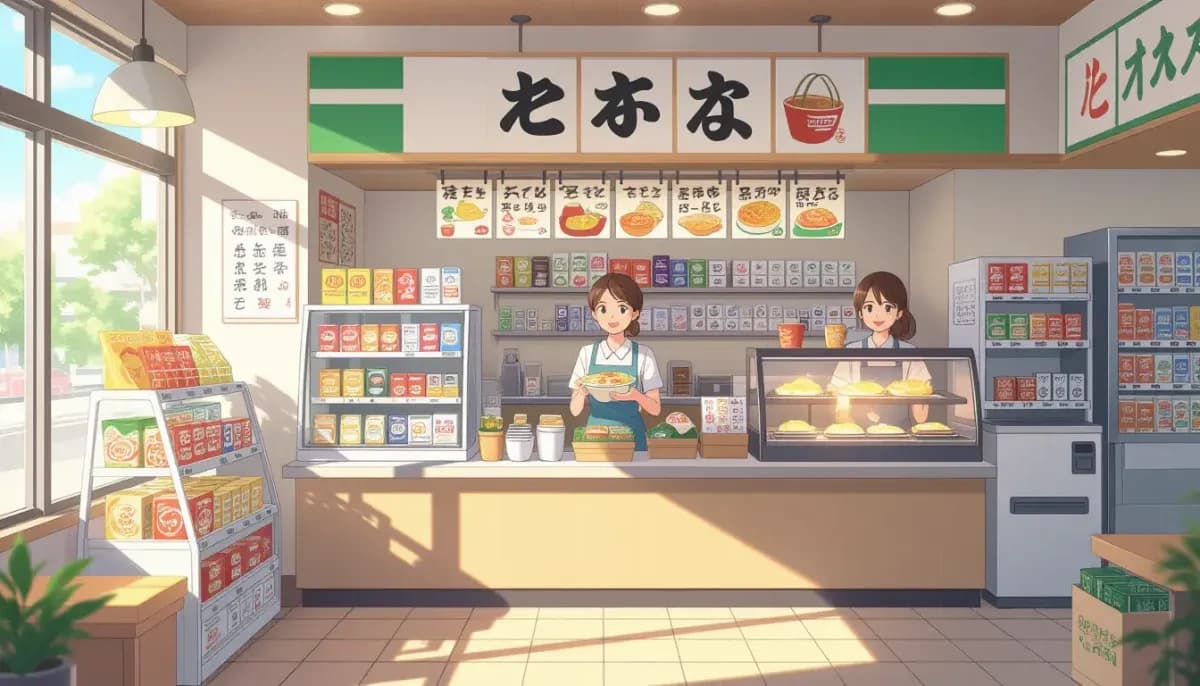
Everything foreigners need to know about Japanese convenience store food (konbini): must-try items, chain comparisons, prices, tips for ordering, and budget meal planning.
Japanese Convenience Store Food Complete Guide
If you've just arrived in Japan, one of the first things you'll notice is that convenience stores here are nothing like back home. Japanese convenience stores — called konbini (コンビニ) — are a genuine institution. Open 24/7, offering hot meals, fresh sandwiches, quality desserts, and dozens of practical services, the konbini is where millions of Japanese people (and expats) grab breakfast, lunch, and dinner every single day.
This guide breaks down everything you need to know about Japanese convenience store food: what to order, which chains are best for what, how much things cost, and how to navigate the experience as a foreigner.
The Big Three: 7-Eleven, FamilyMart, and Lawson
Japan has over 56,000 convenience stores as of 2023 — roughly one store for every 2,210 people. That's 45 stores per 100,000 residents. The market generates more than 12.7 trillion yen in annual sales, and in 2023 alone, Japanese convenience stores recorded 16.2 billion customer visits.
Three chains dominate the market:
| Chain | Stores in Japan | Market Share | Best Known For |
|---|---|---|---|
| 7-Eleven (Seven-Eleven) | 21,208 | 37% | Egg sandwiches, Seven Premium range, foreign-friendly ATMs |
| FamilyMart | 16,636 | 29% | FamiChiki fried chicken, steamed buns, Famima Café |
| Lawson | 14,476 | 25% | Premium Roll Cake, UchiCafé desserts, Natural Lawson organic options |
Each chain has its signature items, and longtime Japan residents often have fierce loyalty to one or the other. But in practice, all three are excellent — and choosing is half the fun.
Must-Try Foods at Japanese Convenience Stores
Onigiri (Rice Balls)
Onigiri are the undisputed kings of the konbini. These triangular rice balls are wrapped in crispy nori seaweed and filled with everything from classic tuna mayo to pickled plum (umeboshi), grilled salmon, spicy mentaiko cod roe, and seasonal limited-edition fillings. Prices typically range from ¥110 to ¥180.
The packaging is an engineering marvel: a three-step system keeps the nori crispy and separate from the rice until you're ready to eat. Look for the numbered tabs and pull in order.
7-Eleven's tuna mayo onigiri is legendary and costs around ¥135. Lawson and FamilyMart also have excellent rotating selections.
Sandwiches and Baked Goods
Japanese convenience store sandwiches — especially egg salad sandwiches — have a cult following for good reason. The bread is pillowy soft, the fillings are generous, and the quality is surprisingly high. Expect to pay ¥150–¥280 for a sandwich.
For bread lovers, look for:
- Melon pan (sweet bread with a crispy cookie crust)
- Japanese curry bread (kare pan) — deep-fried dough stuffed with curry
- Cream buns with various fillings
Hot Foods
The hot food counter near the register is one of the best-kept secrets of the konbini experience. Here you'll find:
- Karaage (Japanese fried chicken) — available at all three chains; Lawson's is widely considered the best
- FamiChiki — FamilyMart's signature fried chicken piece, ¥204, so popular people make special trips just for it
- Steamed nikuman (pork buns) — especially popular in autumn and winter
- Korokke (croquettes) — breaded and deep-fried potato patties, often with meat or vegetables
- Corn dogs and hot dogs — quick snacks under ¥200
- Nana Chicken at 7-Eleven — ¥223 per piece
Bento Boxes and Ready Meals
About 35% of customers regularly buy bento (packed lunches) and onigiri at convenience stores. Bento boxes range from simple rice-and-protein combinations to elaborate multi-dish assortments, typically costing ¥450–¥900.
Popular bento options include:
- Chicken teriyaki bento
- Grilled mackerel bento
- Hamburger steak bento
- Mapo tofu rice
- Seasonal limited-edition boxes
Pro tip: When you bring your bento to the register, the staff will ask if you want it heated ("atatamemasu ka?"). Say "hai" (yes) and they'll microwave it for you — no extra charge. This is one of Japan's best quality-of-life features.
Desserts
Lawson is king of konbini desserts. Its UchiCafé SWEETS range is genuinely remarkable — the Premium Roll Cake (¥194) has become a cultural icon, with a reputation for fluffy sponge and perfectly balanced cream filling. Seasonal offerings like strawberry shortcake, Mont Blanc, and matcha tiramisu regularly go viral on social media.
7-Eleven and FamilyMart aren't far behind. Look for:
- Purin (custard pudding)
- Eclairs and cream puffs
- Soft-serve ice cream
- Seasonal parfaits
Oden
Oden is a Japanese simmered dish made with various ingredients cooked in dashi broth, served in a large pot near the register — especially from autumn through winter. The beauty of konbini oden is that you choose your own ingredients from the pot:
- Fish cakes (chikuwa, hanpen)
- Daikon radish
- Hard-boiled eggs
- Grilled meat skewers
- Fried tofu pockets (abura-age)
- Konjac (konnyaku)
Each piece costs roughly ¥70–¥150. Point and the staff will pick it out and put it in a container with broth. You can ask for extra broth (soup) for free.
Drinks and Café Items
Every major chain now runs its own in-store café service:
- Famima Café (FamilyMart) — self-serve coffee machine, ¥100–¥200
- 7-Eleven's Seven Café — beloved for its smooth, affordable coffee
- Lawson's MACHI café — strong contender with a range of hot and cold drinks
Canned and bottled drinks fill entire refrigerated walls — green tea, barley tea, sports drinks, flavored waters, energy drinks, and more. Alcohol is also available: beer, chuhai (flavored shochu highballs), sake, and wine.
Seasonal and Limited-Edition Items
One of the great joys of konbini life is the constant rotation of seasonal and limited-edition products. Convenience stores in Japan change their menus far more frequently than in other countries:
- Spring: Cherry blossom (sakura) flavored sweets, strawberry desserts
- Summer: Watermelon, ramune, kakigori (shaved ice) themed products
- Autumn: Sweet potato, chestnut (kuri), mushroom flavors
- Winter: Oden, nikuman, hot drinks, holiday cakes
Following food news accounts or apps like the official konbini apps lets you track new releases before they sell out.
Practical Tips for Foreigners at Japanese Convenience Stores
Tax Rates: Eat-In vs. Takeout
Japan has a two-tier consumption tax for food:
- 8% consumption tax on food purchased as takeout
- 10% consumption tax on food consumed in the store (eat-in)
If you're eating at the store's seating area, tell staff at the register: "Ten'nai de onegai shimasu" (店内でお願いします — "I'll be eating in"). If you're taking food to go, the standard ¥8% rate applies automatically.
ATMs for Foreign Cards
If you need cash, 7-Eleven's Seven Bank ATMs are the most foreigner-friendly in Japan. They support multiple languages (English, Chinese, Korean, and others) and accept almost all internationally issued cards. This is especially useful if you're still setting up a local bank account.
For more on banking in Japan, see our guide on banking and finance in Japan.
Microwaving Food
For any food item labeled with a microwave icon, you can ask staff to heat it: "Atatamete kudasai" (温めてください). This is standard practice and takes only about a minute.
Plastic Bags
Japan charges for plastic bags (typically ¥2–¥5). You can decline by saying "fukuro wa kekkō desu" (袋は結構です — "no bag needed"), or simply wave your hand.
Language and Ordering
Most cashier interactions follow a predictable script. You'll typically hear:
- "Irasshaimase" — welcome
- "~en desu" — your total in yen
- "Atatamemasu ka?" — shall I warm it up?
- "Fukuro wa yoroshii desu ka?" — do you need a bag?
- "Poin to kādo wa?" — do you have a points card?
Pointing works well if you're not comfortable with Japanese yet.
Budgeting for Convenience Store Meals
The konbini is one of the best options for budget eating in Japan. A full meal — onigiri + hot food item + drink — typically costs ¥400–¥700. A light breakfast of bread and coffee can be under ¥300.
| Meal Type | Typical Cost |
|---|---|
| Breakfast (bread + coffee) | ¥200–¥350 |
| Light lunch (2 onigiri + drink) | ¥350–¥500 |
| Full lunch (bento + drink) | ¥600–¥900 |
| Dinner (bento + soup + drink) | ¥700–¥1,100 |
| Snack (dessert or hot food item) | ¥150–¥350 |
Compare this to restaurant meals in Japan, which typically start at ¥800–¥1,200 for a basic lunch set. As covered in our cost of living in Japan guide, convenience stores can significantly reduce your daily food expenses.
For context, budget-conscious expats who cook at home spend around ¥15,000–¥25,000 per month on food, while those eating out exclusively spend ¥60,000–¥100,000. Convenience stores sit comfortably in the middle.
Beyond Food: What Else Can You Do at a Konbini?
Japanese convenience stores are genuinely multifunctional spaces. Beyond food, you can:
- Pay bills — electricity, gas, water, NHK, credit cards, and more via the register
- Use ATMs — especially useful for foreign cards at 7-Eleven
- Send and receive packages — all major courier services work with konbini
- Print and copy documents — multifunction printers accept USB drives and smartphone printing
- Buy concert and event tickets — Lawson Ticket, 7ticket, and FamilyMart's Famiport kiosks
- Send luggage to the airport (takuhaibin service) — great for tourists
- Access free Wi-Fi — most major konbini offer free wireless internet
This breadth of services makes the konbini an indispensable part of daily life in Japan, as outlined in our broader daily life in Japan guide.
Dietary Considerations
Vegetarian and Vegan Options
Traditional Japanese convenience store food can be challenging for strict vegetarians, as dashi (fish stock) appears in many soups and sauces. However, options are improving:
- Natural Lawson stores carry organic and vegan-friendly items
- Plain rice balls (with pickled plum or seasoned kombu) are often vegetarian
- Salads, fruit cups, and plain bread are safe bets
- Soy milk and plant-based drinks are widely available
Allergen Information
Japan requires mandatory allergen labeling for: egg, dairy, wheat, shrimp, crab, buckwheat, and peanuts. Check the small text on packaging carefully. For detailed food allergen navigation in Japan, our Japanese food and cooking guide covers this in depth.
Halal Considerations
Strictly halal food is limited at standard konbini. Vegetarian options and packaged items with clear ingredients are generally the safest choices.
Which Chain Is Right for You?
| If you want... | Go to... |
|---|---|
| Best fried chicken | Lawson (karaage) or FamilyMart (FamiChiki) |
| Best sandwiches | 7-Eleven |
| Best desserts | Lawson UchiCafé |
| Best coffee | 7-Eleven Seven Café |
| Foreign-friendly ATM | 7-Eleven |
| Organic/vegan options | Natural Lawson |
| Seasonal hot foods (oden, nikuman) | All three, but Lawson excels |
| Best bento value | FamilyMart |
External Resources for Konbini Enthusiasts
For deeper reading on Japanese food culture and daily life:
- Japanese Food Culture & Cooking Guide for Foreigners — Living in Nihon's comprehensive guide to Japanese food for expats, covering budget meal planning and supermarket tips
- Japan Convenience Store Guide (MATCHA) — Chain-by-chain breakdown with specific food recommendations and prices
- Convenience Stores in Japan — Statistics & Facts (Statista) — Market data and consumer behavior statistics
- Housing and Living in Japan for Foreigners — For Work in Japan's guide covering daily life infrastructure
- Ittenshoku Japan Life Resources — Resources for foreigners navigating Japanese life and career
Wrapping Up
Japanese convenience stores are one of the genuine pleasures of living in or visiting Japan. The food quality is high, prices are reasonable, the hours are unbeatable, and the experience is uniquely Japanese. Whether you're grabbing a quick breakfast before the morning commute, picking up dinner after a long day, or satisfying a midnight craving, the konbini has you covered.
The best approach is simply to explore. Try something unfamiliar — the mystery food item you can't read, the seasonal dessert that's only available for two weeks, the oden ingredient you've never encountered before. That spirit of curiosity is very much in the konbini spirit.
For a broader understanding of Japanese daily life, including transportation, shopping, and social customs, see our complete guide to daily life in Japan and our Japanese culture and etiquette guide.

Originally from Vietnam, living in Japan for 16+ years. Graduated from Nagoya University, with 11 years of professional experience at Japanese and international companies. Sharing information about living in Japan for foreigners.
View Profile →Related Articles

Izakaya Guide How to Order and Enjoy Like a Local
Complete izakaya guide for foreigners in Japan: how to order food and drinks, understand etiquette, decode the menu, and enjoy Japan's iconic pub culture like a local.
Read more →
Must Try Japanese Dishes for Every Foreign Resident
Discover the essential Japanese dishes every foreign resident should try — from ramen and sushi to takoyaki, izakaya staples, and surprising regional specialties across Japan.
Read more →
Halal Food Options and Restaurants in Japan
Find halal food restaurants, grocery stores, and tips for Muslim foreigners living in or visiting Japan. Covers Tokyo, Osaka, Kyoto, food labels, apps, and more.
Read more →
Best Meal Delivery Services Available in Japan
Complete guide to meal delivery services in Japan for expats and foreigners. Compare Uber Eats, Wolt, Demaecan, Menu, and meal kit options with English support, pricing, and tips.
Read more →
Essential Japanese Kitchen Equipment and Tools
Complete guide to Japanese kitchen equipment and tools for foreigners living in Japan. Covers rice cookers, santoku knives, donabe pots, where to buy, and how to build your kitchen step-by-step.
Read more →
Managing Food Allergies in Japan Communication Guide
Complete guide for foreigners managing food allergies in Japan. Learn essential Japanese phrases, how to read food labels, use allergy cards, and navigate restaurants safely as an expat.
Read more →