
Essential Japanese Kitchen Equipment and Tools

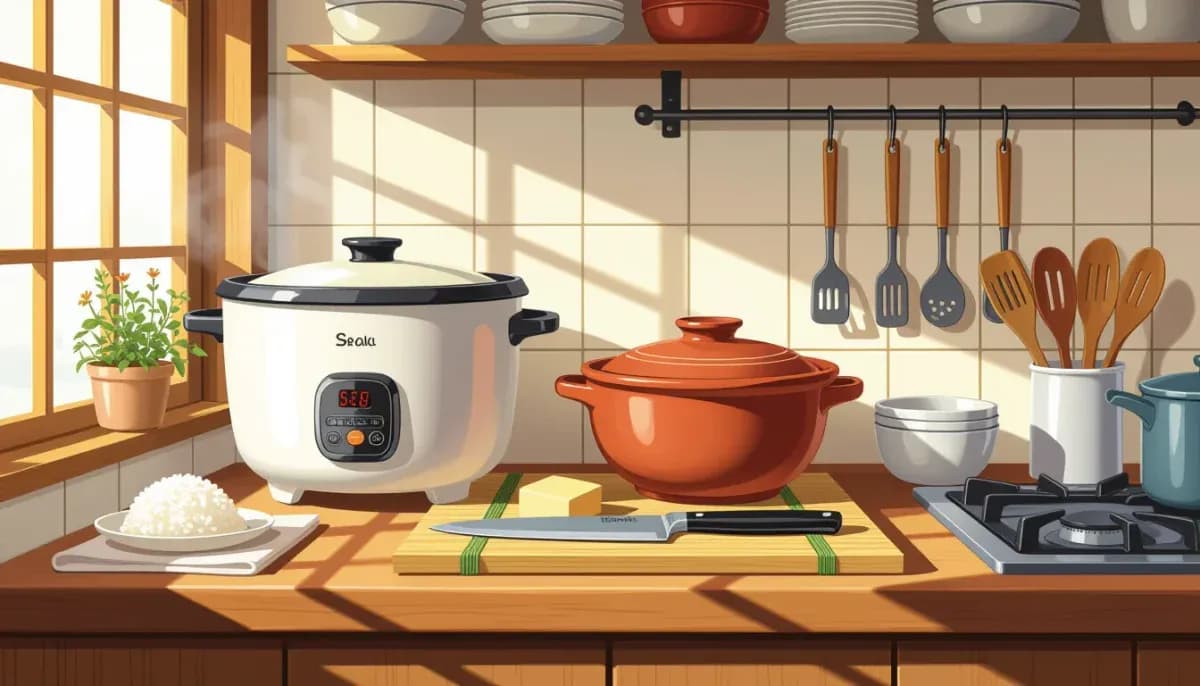
Complete guide to Japanese kitchen equipment and tools for foreigners living in Japan. Covers rice cookers, santoku knives, donabe pots, where to buy, and how to build your kitchen step-by-step.
Essential Japanese Kitchen Equipment and Tools: A Complete Guide for Foreigners
Setting up a kitchen in Japan can be both exciting and overwhelming. Whether you're moving into your first Japanese apartment or looking to upgrade your cooking setup, having the right kitchen equipment makes all the difference. Japanese cooking relies on specific tools that have been refined over centuries — and once you understand what each tool does, you'll wonder how you ever cooked without them.
This guide covers everything a foreigner needs to know about Japanese kitchen equipment: from essential knives and cookware to specialized gadgets and where to buy them affordably in Japan.

Why Japanese Kitchen Equipment Is Different
Japanese culinary culture emphasizes precision, seasonality, and respect for ingredients. This philosophy extends to the tools used in the kitchen. Unlike Western cooking equipment that tends toward multi-purpose utility, Japanese kitchen tools are often designed with specific tasks in mind — resulting in better results for those specific techniques.
Japan's kitchen appliances market was valued at $8.66 billion in 2023 and is projected to reach $12.14 billion by 2031, reflecting the country's deep investment in quality cooking equipment. The kitchenware market alone stood at USD 3.32 billion in 2024, growing at a CAGR of 7.2%.
For foreigners living in Japan, understanding these tools opens the door to making authentic Japanese dishes at home — saving money compared to eating out and giving you a deeper appreciation of Japanese food culture. For an overview of Japanese cooking techniques, check out our Complete Guide to Japanese Food and Cooking.
The Essential Starter Kit: What You Need First
When you first arrive in Japan, you don't need everything at once. Here's a prioritized list of what to get first:
1. Rice Cooker (炊飯器 / Suihanki)
A rice cooker is arguably the most important appliance in any Japanese kitchen. Rice is a daily staple, and nothing produces consistently perfect Japanese rice like a dedicated rice cooker. Japanese rice cookers are remarkably sophisticated — many use fuzzy logic or AI algorithms to adjust temperature and cooking time based on the rice variety and amount.
Price range: ¥5,000–¥50,000 (basic to premium models) Recommended starting point: A 3-cup (3合) model for ¥5,000–¥15,000 is sufficient for most single people or couples.
In 2022, electric rice cooker sales in Japan reached approximately 5.01 million units annually — a testament to how essential this appliance is in Japanese households.
Top brands to look for:
- Zojirushi (象印) — Known for high-end models with advanced technology
- Panasonic — Good mid-range options
- Tiger (タイガー) — Reliable and affordable
- Iris Ohyama — Budget-friendly without sacrificing quality
2. Japanese Knife (包丁 / Hocho)
Japanese knives are world-renowned for their sharpness and precision. For most home cooks, a single santoku knife (三徳包丁) is the best starting point. The name "santoku" means "three virtues" — it excels at slicing, dicing, and mincing.
Price range: ¥1,500–¥30,000+ (beginner to professional grade) Recommended starting point: A stainless steel santoku from ¥3,000–¥8,000
Other common Japanese knives:
- Gyuto (牛刀) — Japanese-style chef's knife, great for meat
- Nakiri (菜切り包丁) — Vegetable knife with straight edge
- Deba (出刃包丁) — Heavy knife for cutting fish and poultry
- Yanagiba (柳刃包丁) — Long, thin sashimi knife
Important tip: Unlike Western knives, many traditional Japanese knives are single-bevel (sharpened on one side only), requiring different sharpening techniques. For beginners, a double-bevel stainless steel knife is easier to maintain.
3. Cutting Board (まな板 / Manaita)
Japanese kitchens traditionally use wooden cutting boards, which are gentler on knife edges. Hinoki (cypress) wood is a popular choice for its antibacterial properties and pleasant scent. However, plastic boards are easier to clean and sanitize.
Recommended: A medium-sized hinoki wood board (about 30cm × 20cm) for ¥1,500–¥5,000, or a large plastic board for ¥500–¥2,000.

Essential Cookware for Japanese Cooking
Pots and Pans
| Cookware | Japanese Name | Best For | Price Range |
|---|---|---|---|
| Frying pan (26cm) | フライパン | Stir-fry, pan-fry, tamagoyaki | ¥2,000–¥15,000 |
| Single-handle pot (18cm) | 片手鍋 | Miso soup, ramen, boiling | ¥1,500–¥8,000 |
| Donabe (clay pot) | 土鍋 | Hot pot, nabemono, slow cooking | ¥2,500–¥15,000 |
| Tamagoyaki pan | 玉子焼き器 | Japanese rolled omelet | ¥1,500–¥6,000 |
| Yukihira nabe | 雪平鍋 | Soup, stew, simmering | ¥2,000–¥8,000 |
| Deep frying pot | 揚げ鍋 | Tempura, karaage | ¥2,000–¥10,000 |
The Donabe (土鍋): Japan's Most Versatile Pot
The donabe is a traditional earthenware pot that has been used in Japanese cooking for over 1,000 years. Made from special clay, donabe retain and distribute heat evenly — making them perfect for:
- Nabemono (鍋物) — Hot pot dishes like sukiyaki and shabu-shabu
- Yudofu — Simmered tofu
- Onigiri rice cooking — Produces exceptionally fluffy rice
- Slow-cooked soups and stews
A donabe requires some care — soak it in water before first use and never put it directly on high heat. Properly cared for, a donabe lasts decades.
The Tamagoyaki Pan: A Japanese Classic
The rectangular tamagoyaki pan creates Japan's iconic rolled egg omelet. It comes in two sizes:
- Kanto style (rectangular) — Wider, produces thicker rolls
- Kansai style (slightly tapered) — Creates a more elegant shape
Copper tamagoyaki pans conduct heat more evenly and are preferred by professionals, but a good non-stick aluminum pan works well for home cooking.
Essential Cooking Utensils
Saibashi (菜箸) — Cooking Chopsticks
These extra-long chopsticks (about 1.5× the length of regular chopsticks) are essential in Japanese kitchens. They keep your hands safely away from hot oil, allow precise control when plating, and are used for everything from beating eggs to turning tempura. Look for bamboo or stainless steel versions.
Price: ¥300–¥1,500
Otoshibuta (落し蓋) — Drop Lid
This small floating lid is placed directly on top of simmering food rather than on the pot rim. It keeps ingredients submerged, circulates flavors evenly, and prevents evaporation — essential for Japanese simmered dishes (nimono). Wooden versions are traditional; stainless steel or silicon versions are easier to clean.
Price: ¥500–¥3,000
Miso Strainer (味噌こし / Misokoshi)
A small strainer with a muddler stick designed specifically to dissolve miso paste smoothly into soup. While you can use a regular strainer or ladle, this purpose-made tool makes miso soup preparation much smoother.
Price: ¥500–¥2,000
Oroshigane (おろし金) — Grater
Japanese graters are essential for preparing daikon radish, ginger, and wasabi. The traditional Japanese oroshigane produces finely grated results that differ from Western box graters. Look for a ceramic ginger grater or stainless steel daikon grater.
Price: ¥500–¥3,000
Makisu (巻き簾) — Bamboo Rolling Mat
For making maki sushi, the bamboo rolling mat is indispensable. It's inexpensive, easy to use, and available at almost every kitchen goods store in Japan.
Price: ¥200–¥800
Where to Buy Kitchen Equipment in Japan
Japan has excellent options for kitchen shopping at every price point. For practical tips on shopping in Japan, see our Complete Guide to Shopping in Japan.
Budget Options
- 100-yen stores (Daiso, Seria, Can Do) — Surprisingly good selection of basic utensils, cutting boards, measuring tools, and even basic pots
- Nitori — Affordable home goods chain with good quality cookware
- Donki (Don Quijote) — Chaotic but often has good deals on kitchen appliances
Mid-Range Options
- IKEA — Available in major cities, familiar Western-style cookware
- Tokyu Hands / Loft — Design-forward kitchen goods
- Yamada Denki / Yodobashi Camera — Best selection of kitchen appliances
Premium Options
- Kappabashi Kitchen Town (合羽橋道具街) — Tokyo's famous wholesale kitchen district, used by professional chefs. You can find everything from artisan knives to industrial steamers, often at wholesale prices
- Department store basement floors (Depachika) — Isetan, Takashimaya, and Mitsukoshi have excellent kitchen sections
Pro tip: For kitchen appliances like rice cookers, buying at a major electronics retailer and paying with a point card can net significant discounts and cashback.
For more guidance on grocery shopping and cooking in Japan, the Japanese Grocery Shopping Guide is an excellent companion resource.
Understanding Japanese Kitchen Measurements
Japanese recipes often use specific measurement tools and terms:
| Term | Meaning | Conversion |
|---|---|---|
| 1合 (go) | Rice measurement | ~150g dry rice / ~180ml water |
| 大さじ (ōsaji) | Tablespoon | 15ml |
| 小さじ (kosaji) | Teaspoon | 5ml |
| カップ (kappu) | Cup | 200ml (not 240ml like US cups) |
| 少々 (shōshō) | Pinch | About 1/8 teaspoon |
| 適量 (tekiyo) | Appropriate amount | To taste |
Important: Japanese measuring cups hold 200ml, not the 240ml of a standard US cup. This difference matters when following recipes precisely. Invest in a set of Japanese measuring cups and spoons early on.
Setting Up Your Kitchen: A Step-by-Step Approach
For foreigners new to Japan, we recommend building your kitchen kit gradually:
Month 1 — Bare Minimum (¥8,000–¥20,000 total):
- Rice cooker (basic 3-cup model)
- One frying pan (26cm)
- One saucepan (18cm)
- Cutting board + knife
- Basic utensils (spatula, ladle)
Month 2–3 — Expanding (additional ¥5,000–¥15,000):
- Santoku knife upgrade
- Donabe (clay pot)
- Saibashi (cooking chopsticks)
- Oroshigane (grater)
- Measuring cups and spoons
Month 4–6 — Getting Serious (additional ¥5,000–¥20,000):
- Tamagoyaki pan
- Bamboo rolling mat (makisu)
- Drop lid (otoshibuta)
- Better knife + whetstone for sharpening
Once you're comfortable cooking Japanese staples at home, explore our How to Cook Japanese Food at Home as a Beginner guide for recipe inspiration.
Maintaining Your Japanese Kitchen Equipment
Knife Care
Japanese knives require more maintenance than Western knives but reward the effort with exceptional performance:
- Sharpen regularly with a whetstone (砥石 / toishi) — aim for every 2–3 months of regular use
- Never put in dishwasher — hand wash only
- Dry immediately after washing to prevent rust (especially carbon steel knives)
- Store in a knife block or on a magnetic strip — never loose in a drawer
Rice Cooker Maintenance
- Remove and wash the inner pot after every use
- Clean the steam valve regularly to prevent buildup
- Descale every 3–6 months using the cooker's built-in cleaning cycle (most modern models have one)
Donabe Care
- Soak in water for 30 minutes before first use
- Never subject to sudden temperature changes (room temp to high heat)
- Dry completely before storing to prevent mold
- Never use on direct high flame — start low and gradually increase
Cooking Japanese Food Without All the Equipment
You don't need to buy everything at once. Many Japanese dishes can be made with basic equipment:
- Miso soup → Any small saucepan works
- Gyudon / Donburi → Frying pan + rice cooker
- Yakitori → Grill pan or regular frying pan
- Curry → Any large pot
Start with what you have, add specialized tools as you discover which Japanese dishes you enjoy cooking most. For more on Japanese dining culture, including restaurant etiquette and how to order, see our Japanese Restaurant Ordering Guide.
Useful Resources for Japanese Kitchen Equipment
For comprehensive information on Japanese cooking basics and kitchen setup, these resources are highly recommended:
- Living in Nihon's Japanese Food Culture & Cooking Guide — Essential overview of Japanese food culture and cooking basics for foreigners
- For Work in Japan's Living Infrastructure Guide — Practical guide covering housing and daily life setup in Japan
- Ittenshoku Japan Resources — Helpful resources for people living and working in Japan
- Just One Cookbook's Kitchen Tools Guide — Detailed reviews of essential Japanese kitchen tools
- Japanese Taste Kitchen Tools Guide — Visual guide to 17 essential Japanese cooking utensils
- Pickled Plum's Japanese Kitchenware Guide — Fun introduction to essential Japanese kitchen accessories
Conclusion
Setting up a Japanese kitchen is an investment that pays dividends in cooking quality and enjoyment. Start with the essentials — a good rice cooker, a decent knife, and basic cookware — then add specialized tools as you deepen your Japanese cooking skills.
Japan is one of the best countries in the world for kitchen equipment shopping. From the budget-friendly 100-yen store to the legendary Kappabashi kitchen district, you'll find tools for every skill level and budget. Embrace the process of building your kitchen gradually, and enjoy the journey of discovering new Japanese cooking techniques along the way.
For more on Japanese food culture, check out our guides on Japanese Convenience Store Food, Must-Try Japanese Dishes, and the Complete Guide to Japanese Food and Cooking.

Originally from Vietnam, living in Japan for 16+ years. Graduated from Nagoya University, with 11 years of professional experience at Japanese and international companies. Sharing information about living in Japan for foreigners.
View Profile →Related Articles

Izakaya Guide How to Order and Enjoy Like a Local
Complete izakaya guide for foreigners in Japan: how to order food and drinks, understand etiquette, decode the menu, and enjoy Japan's iconic pub culture like a local.
Read more →
Must Try Japanese Dishes for Every Foreign Resident
Discover the essential Japanese dishes every foreign resident should try — from ramen and sushi to takoyaki, izakaya staples, and surprising regional specialties across Japan.
Read more →
Halal Food Options and Restaurants in Japan
Find halal food restaurants, grocery stores, and tips for Muslim foreigners living in or visiting Japan. Covers Tokyo, Osaka, Kyoto, food labels, apps, and more.
Read more →
Japanese Convenience Store Food Complete Guide
Everything foreigners need to know about Japanese convenience store food (konbini): must-try items, chain comparisons, prices, tips for ordering, and budget meal planning.
Read more →
Best Meal Delivery Services Available in Japan
Complete guide to meal delivery services in Japan for expats and foreigners. Compare Uber Eats, Wolt, Demaecan, Menu, and meal kit options with English support, pricing, and tips.
Read more →
Managing Food Allergies in Japan Communication Guide
Complete guide for foreigners managing food allergies in Japan. Learn essential Japanese phrases, how to read food labels, use allergy cards, and navigate restaurants safely as an expat.
Read more →