
Tips for Sending Money to Family from Japan


Practical tips for foreigners sending money to family from Japan. Compare Wise, bank transfers, SBI Remit. Save on fees, time transfers, claim tax deductions for overseas dependents.
Tips for Sending Money to Family from Japan: A Complete Guide for Foreign Residents
Living and working in Japan as a foreigner often means supporting family back home. Whether you're sending monthly support to your parents, paying for a sibling's education, or helping with a family emergency, international money transfers are a regular part of expat life in Japan. The good news: there are more options than ever to send money from Japan efficiently and affordably.
This guide covers practical tips to maximize every yen you send, from choosing the right service to timing your transfers for the best exchange rates.
!Person using smartphone to send money internationally from Japan

Understanding the True Cost of Sending Money from Japan
The biggest mistake foreigners make when sending money to family is focusing only on the transfer fee while ignoring the exchange rate markup. The total cost of a transfer includes both.
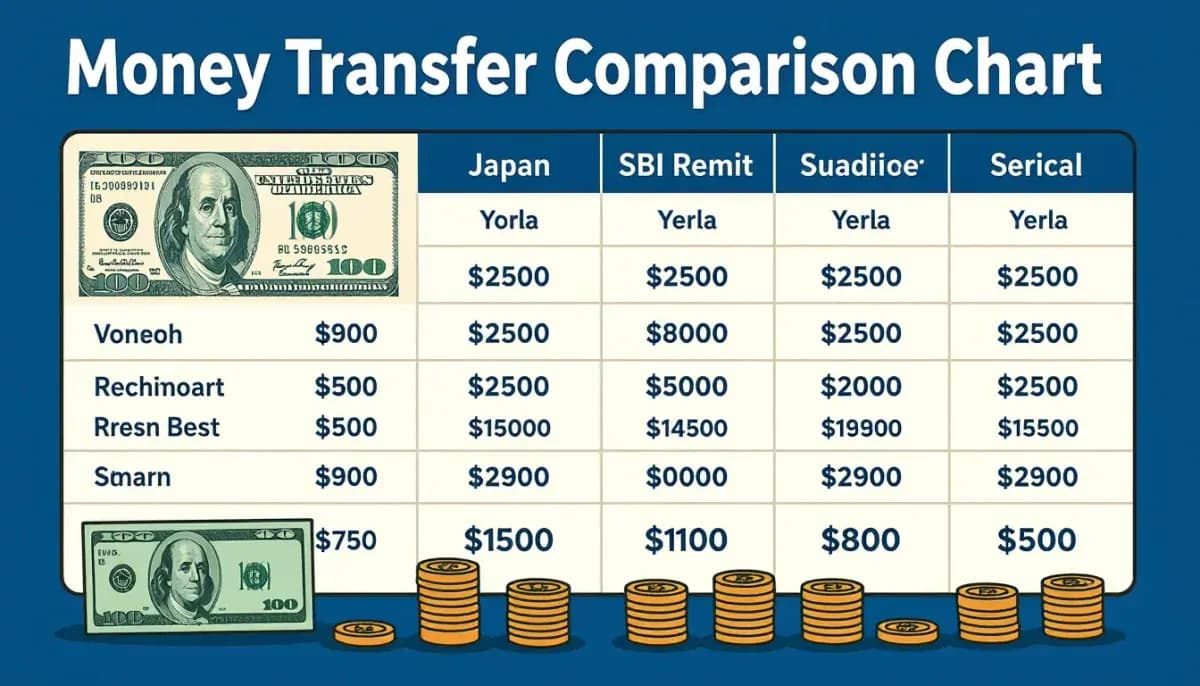
Here's a quick breakdown of typical costs by transfer method:
| Method | Typical Fee | Exchange Rate | Processing Time | Best For |
|---|---|---|---|---|
| Japanese Bank Wire | ¥3,000–¥7,500 | Poor (1–3% markup) | 3–5 business days | Large, infrequent transfers |
| Wise | 0.5–1.5% of amount | Mid-market rate | 1–2 business days | Regular transfers, best value |
| SBI Remit | ¥350–¥1,500 | Moderate | 1–3 business days | Mid-sized transfers |
| Rakuten Bank | ¥750+ | Moderate | 2–4 business days | Rakuten users |
| PayPal | ~3% | Poor (~3% markup) | Same day–3 days | Emergencies |
| Western Union | Varies | Poor to moderate | Minutes–2 days | Cash pickup abroad |
Key takeaway: A bank charging ¥2,000 in fees but applying a 2% exchange rate markup on a ¥300,000 transfer costs you ¥8,000 total — far more than Wise at 0.8% (¥2,400 total with the mid-market rate).
Always compare the total amount received by your family, not just the stated transfer fee.
Choosing the Right Transfer Service for Your Situation
Different services suit different needs. Here's how to choose:
For Regular Monthly Support: Use Wise
Wise (formerly TransferWise) is the top choice for expats sending recurring transfers. It uses the real mid-market exchange rate with fees of just 0.5–1.5%, making it the most cost-effective option for amounts between ¥50,000–¥500,000. Transfers arrive in 1–2 business days.
Setup tip: Register your family member's bank account details once, then sending takes just a few minutes each month. Wise also lets you hold multiple currencies, useful if your family's local currency fluctuates.
For more details on setting up Wise in Japan, see our Wise for Japan Users Complete Setup and Usage Guide.
For Large One-Time Transfers: Consider Your Bank
For amounts over ¥1,000,000, your Japanese bank may be competitive — especially if you have a premium account. Sony Bank and Shinsei Bank offer lower forex markups than mega-banks like MUFG or SMBC. However, be aware that any transfer over ¥1,000,000 requires documentation explaining the purpose (family support, medical expenses, education, etc.).
See our detailed Bank Wire Transfer from Japan Step by Step Guide for the full process.
For Cash Pickup: Western Union or SBI Remit
If your family doesn't have a bank account or needs cash quickly, Western Union and SBI Remit both offer cash pickup options through MoneyGram and agent networks in over 200 countries. Western Union allows cash pickup within minutes in many locations.
For Small Amounts: PayPal
For transfers under ¥30,000, PayPal offers convenient person-to-person transfers if both you and your family member have accounts. However, the ~3% currency conversion fee makes it expensive for larger amounts.
Timing Your Transfers to Get Better Exchange Rates
Exchange rates fluctuate daily and can significantly impact how much your family receives. A 1% difference in the JPY/USD rate on a ¥300,000 transfer equals ¥3,000 — essentially a free transfer.
Practical timing tips:
- Monitor rates with apps: Use apps like Wise's rate alerts, XE Currency, or Google Finance to track your target currency pair. Set an alert for when the rate reaches a favorable level.
- Avoid Mondays: Weekend rate movements can cause volatility on Monday mornings. Mid-week transfers (Tuesday–Thursday) often see more stable rates.
- Watch for major events: Bank of Japan policy announcements, US Federal Reserve decisions, and major economic data releases cause sharp rate movements. Transfer before these events if you anticipate volatility.
- Consider regular automatic transfers: If you need to send money monthly, services like Wise allow scheduled recurring transfers, effectively averaging your exchange rate over time.
For a detailed comparison of rates across services, see our Money Transfer Fees from Japan Complete Comparison.
Required Documents and Japan's Remittance Regulations
Japan has specific regulatory requirements for international transfers that you need to understand to avoid delays.
My Number (個人番号) Requirement
Your My Number (12-digit individual identification number) is required when registering for remittance services in Japan. This is part of Japan's anti-money laundering (AML) and tax transparency regulations. Most services ask for this during account setup.
Large Transfer Documentation
For transfers exceeding ¥1,000,000, Japanese banks are legally required to confirm the purpose of the remittance. You may need to provide:
- Written explanation of the transfer purpose (family support, medical, education, etc.)
- Supporting documents (medical invoices, school tuition receipts, etc.)
- Recipient relationship documentation
This does NOT mean you can't send the money — it's just a compliance step. Keep it simple: state "living expenses for family member" or "education support" as appropriate.
New Regulations from 2023
Since 2023, Japan has tightened overseas remittance documentation requirements. Banks and transfer services may request additional verification for large or unusual transfers. Having a consistent, documented history of regular family support transfers helps avoid complications.
!Documents and yen bills for international money transfer

Tax Benefits: Claiming Overseas Family as Dependents
One often-overlooked benefit of sending money to family abroad: you may be able to claim your overseas family members as tax dependents on your Japanese income tax return, potentially saving hundreds of thousands of yen.
Who Qualifies as an Overseas Dependent?
Under Japanese tax law, a non-resident relative can qualify as your dependent if:
- They are related to you (parent, child, sibling, etc.)
- Their annual income is below ¥580,000 (threshold raised in 2025 tax reform from ¥480,000)
- You provide financial support through documented remittances
Tax Deduction Amounts
| Dependent Age | Income Tax Deduction | Resident Tax Deduction |
|---|---|---|
| Under 16 | ¥0 | ¥0 |
| 16–18 | ¥380,000 | ¥330,000 |
| 19–22 (student) | ¥630,000 | ¥450,000 |
| 23–69 | ¥380,000 | ¥330,000 |
| 70+ (general) | ¥480,000 | ¥380,000 |
| 70+ (living together) | ¥580,000 | ¥450,000 |
For someone in the 20% income tax bracket claiming one parent (over 70), this could save ¥96,000+ in taxes annually.
Documentation Required for the Deduction
To claim overseas dependents, you need:
- Relationship document: Family register (koseki) or equivalent official document proving the relationship
- Remittance proof: Bank transfer slips or statements showing money sent to the family member
- Identity documents: Passport copies for the overseas dependent
Key rule from 2023: The annual remittance amount must exceed ¥380,000 to qualify for the deduction for most categories. Keep systematic records of all transfers.
For complete tax guidance, see our Japan Remittance Tax Rules and Reporting Requirements and the Complete Guide to Taxes in Japan for Foreigners.
Practical Tips to Maximize Every Transfer
Tip 1: Batch Your Transfers
Transfer fees are often fixed or minimum amounts. Sending ¥200,000 once is more efficient than sending ¥50,000 four times. Even percentage-based services like Wise have minimum fees, making larger, less frequent transfers more cost-effective.
Tip 2: Register Multiple Services
Don't rely on a single service. Register with 2–3 services (Wise, SBI Remit, and your bank) so you can compare rates before each transfer and have a backup if one service has issues.
Tip 3: Use Recipient's Local Account
Always transfer directly to your family member's bank account rather than using cash pickup unless absolutely necessary. Bank-to-bank transfers have lower fees and better exchange rates than cash pickup services.
Tip 4: Set Up Direct Debit or Auto-Transfer
If you send money monthly, set up automatic recurring transfers through Wise or your bank. This saves time, ensures your family receives money on schedule, and averages your exchange rate over time.
Tip 5: Keep Detailed Records
Maintain a spreadsheet or folder with:
- Date and amount of each transfer
- Service used and fees paid
- Exchange rate applied
- Purpose of transfer
- Receipts and confirmation numbers
This documentation serves double duty: proof for tax deductions and compliance evidence if questioned by your bank.
Tip 6: Understand the Receiving Bank's Fees
Your family's receiving bank may charge an incoming wire fee (often $10–$25 in the US, €10–€20 in Europe). Ask your family about this upfront. Some services like Wise deliver to specific countries without intermediary bank fees.
Common Mistakes to Avoid
Mistake 1: Using ATM international cash withdrawal Withdrawing cash and physically carrying money overseas is not just impractical — it may violate currency export regulations. Japan allows export of up to ¥1,000,000 in cash without declaration, but amounts over that require customs declaration.
Mistake 2: Ignoring the mid-market rate Check the current mid-market rate on Google or XE.com before transferring. If a service's offered rate deviates significantly (more than 1%), you're paying a hidden currency conversion fee.
Mistake 3: Waiting too long to register Services like Wise and SBI Remit require identity verification that can take 1–5 business days. Register before you need to send money urgently. Family emergencies happen — having your account verified means you can transfer within minutes when needed.
Mistake 4: Not communicating with your family Make sure your family knows when to expect transfers, which bank account to receive them, and what to do if there's a delay. Set up a simple notification system (even just a text message) confirming when you've sent.
Comparing Top Services for Family Remittances from Japan
For a comprehensive side-by-side comparison, see our detailed guides:
- Best Ways to Send Money from Japan Compared
- Comparing Money Transfer Services Available in Japan
- Wise for Japan Users Complete Setup and Usage Guide
Additional resources from trusted sources:
- Living in Nihon: Banking and Financial Services Guide — comprehensive overview of financial services for foreigners in Japan
- For Work in Japan: Financial Resources — career and financial guidance for working in Japan
- Tokyo Cheapo: Cheapest Ways to Transfer Money Out of Japan
- Japan Living Guide: International Money Transfers
- Ittenshoku: Financial Planning Resources
Conclusion
Sending money to family from Japan doesn't have to be expensive or complicated. The key is choosing the right service for your specific needs, timing transfers wisely, keeping proper documentation, and taking advantage of tax benefits for overseas dependents.
Quick recommendations:
- Best overall value: Wise for regular transfers under ¥500,000
- Best for cash pickup: SBI Remit or Western Union
- Best for large amounts: Shop between Sony Bank, Shinsei Bank, and Wise
- Don't forget: Claim eligible overseas family as tax dependents
With the right approach, supporting your family from Japan can be both efficient and financially smart. Start by registering for Wise or SBI Remit today, keep your records organized, and consult a tax professional about dependent deductions if you're supporting family regularly.
For the complete overview of all your money transfer options, see our pillar guide: The Complete Guide to Sending Money from Japan.

Originally from Vietnam, living in Japan for 16+ years. Graduated from Nagoya University, with 11 years of professional experience at Japanese and international companies. Sharing information about living in Japan for foreigners.
View Profile →Related Articles
Money Transfer Fees from Japan Complete Comparison
Compare money transfer fees from Japan: Wise, SBI Remit, Revolut, banks and more. Find the cheapest way to send money abroad as a foreigner in Japan with real fee data.
Read more →
GoRemit Shinsei Bank International Transfer Guide
Complete guide to GoRemit Shinsei Bank's international transfer service, its October 2025 discontinuation, and the best alternatives for expats in Japan including SBI Remit and Wise.
Read more →
SBI Remit Japan International Transfer Guide
Complete guide to SBI Remit for foreigners in Japan. Learn how to register, compare fees by country (Philippines, Vietnam, China), transfer methods, and tips to save money on international transfers.
Read more →
Comparing Money Transfer Services Available in Japan
Compare the top money transfer services in Japan including Wise, SBI Remit, Western Union, and Revolut. Find the cheapest and fastest option for sending money abroad as a foreigner in Japan.
Read more →
Japan Remittance Tax Rules and Reporting Requirements
Understand Japan's remittance tax rules for non-permanent residents: the ¥1,000,000 reporting threshold, deemed remittance rules, FX gains, and how to file correctly as a foreigner in Japan.
Read more →
Cryptocurrency for Remittances from Japan
Learn how to use cryptocurrency for international remittances from Japan. Compare XRP, Bitcoin, and stablecoins, understand tax rules, and discover the best FSA-licensed exchanges for foreign residents.
Read more →