
Bank Wire Transfer from Japan Step by Step Guide

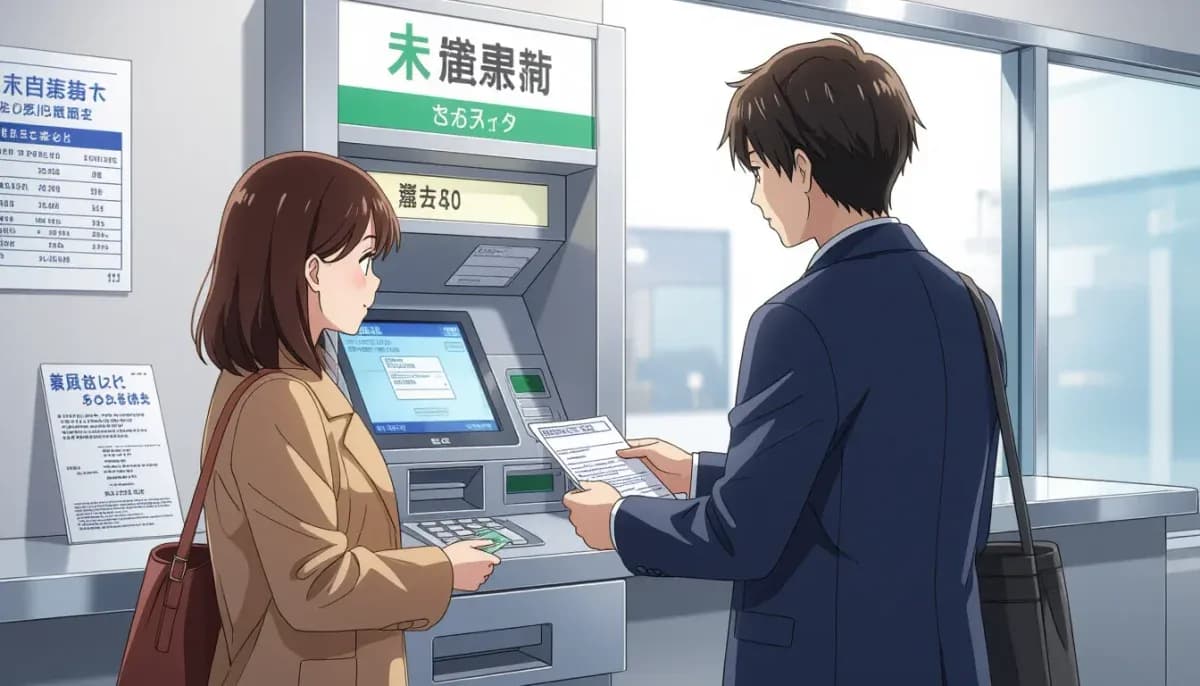
Learn how to do a bank wire transfer from Japan step by step. Compare fees at MUFG, Mizuho, Japan Post Bank, and GoRemit. Includes domestic furikomi and international SWIFT transfer guides for foreigners.
Bank Wire Transfer from Japan: A Complete Step-by-Step Guide
Whether you are sending money home to family, paying overseas tuition, or handling international business, understanding how to do a bank wire transfer from Japan is essential for any foreigner living here. This guide walks you through everything you need to know — from domestic furikomi at the ATM to international SWIFT transfers — with clear steps, fee comparisons, and practical tips.
\!Bank wire transfer Japan guide

What Is a Bank Wire Transfer in Japan?
In Japan, bank transfers are generally called furikomi (振り込み). This term covers both domestic transfers between Japanese bank accounts and international wire transfers sent overseas via the SWIFT network.
With over 2.3 million foreign workers in Japan as of late 2024 — nearly triple the number from a decade ago — wire transfers have become a critical financial lifeline. Remittances from foreigners in Japan reached a record 506.8 billion yen in just the first half of 2025, and the full-year total is projected to exceed 1 trillion yen for the first time.
Understanding the process helps you save money on fees and avoid common mistakes. Let us break it down step by step.
Domestic Furikomi: How to Transfer Money Within Japan
Domestic wire transfers (sending yen to another Japanese bank account) are straightforward and can be done at an ATM, via online banking, or at a bank counter.
Step-by-Step ATM Furikomi Process
Most Japanese ATMs support furikomi. However, the menu is primarily in Japanese, so here is what to look for:
Step 1: Find the Transfer Menu Look for お振り込み (ofurikomi) or ご送金 (gosoukin) on the ATM welcome screen. If you have trouble, look for the button with a yen symbol and an arrow.
Step 2: Choose Your Funding Source Select whether you want to transfer from your bank account (using your cash card or bank book) or deposit cash. Note: Cash transfers are often limited to ¥100,000 per transaction at some ATMs.
Step 3: Select the Destination Bank Major banks appear on-screen as buttons. To find smaller banks or credit unions, tap その他 (sonohoka) meaning other and search by name. You may need to enter the branch name in katakana.
Step 4: Enter Account Details You will need:
- Account type: 普通 (futsuu) = regular savings; 当座 (touza) = checking
- Account number (usually 7 digits)
- Transfer amount
- Your phone number (required for some banks)
Step 5: Review and Confirm A summary screen shows the recipient name and amount. Press 確認 (kakunin) to confirm the transfer. You can use the 戻り (modori) button to go back and correct any mistakes.
Pro Tip: After your first furikomi, you can print a Furikomi Card at many ATMs. This card stores the recipient's account details for faster repeat payments.
Online Banking Furikomi
Most major banks in Japan offer online banking in Japanese (and some with English interfaces). Online transfers are generally cheaper than ATM or counter transfers:
- Same bank transfers: Usually free
- Other bank transfers: ¥3 to ¥550 depending on amount and your account type
- Time savings: Available 24/7 without visiting a branch
Domestic Transfer Fees Overview
| Transfer Method | Same Bank | Other Bank (under ¥30,000) | Other Bank (over ¥30,000) |
|---|---|---|---|
| ATM | Free | ¥110–¥220 | ¥220–¥440 |
| Online Banking | Free | ¥110–¥330 | ¥220–¥550 |
| Bank Counter | Free | ¥440–¥660 | ¥660–¥880 |
Fees vary by bank. Check your bank's official fee schedule.
International Wire Transfer from Japan: Step-by-Step
Sending money overseas from Japan involves the SWIFT network — the global messaging system used by banks for international transfers. Here is how it works.
What You Need Before You Start
Before initiating an international wire transfer, prepare the following:
- Your Japanese bank account with sufficient funds
- My Number (マイナンバー): Required by Japanese law for all foreign remittance transactions
- Recipient's full name (exactly as on their bank account)
- Recipient's bank name and address
- SWIFT/BIC code of the recipient's bank
- Recipient's account number or IBAN (for European countries)
- Purpose of transfer: Required for amounts over ¥1 million (e.g., family support, tuition, business payment)
Step-by-Step: International Transfer at the Bank Counter
Step 1: Visit Your Bank Branch Bring your residence card, passport, bank book, and all recipient details. Most major bank branches handle international transfers, but confirm in advance as some smaller branches may not.
Step 2: Fill Out the Remittance Form You will receive an overseas remittance application form (海外送金依頼書). Fill in:
- Sender information (your name, address, account number)
- Recipient details (name, bank, SWIFT code, account number)
- Transfer amount and currency
- Purpose of transfer
Step 3: Submit Documents For transfers over ¥1 million, the bank will request supporting documentation such as a contract, invoice, or letter explaining the purpose.
Step 4: Pay the Fee Fees are deducted from your account along with the transfer amount. Exchange rate markup (TTS rate) is also applied.
Step 5: Receive Confirmation The bank provides a receipt with a reference number. Keep this for tracking purposes. International transfers typically take 2–5 business days.
\!International wire transfer SWIFT Japan

Bank Wire Transfer Fees: Full Comparison
Fees vary widely between Japanese banks and alternative services. Here is a comprehensive comparison:
| Service | Transfer Fee | Exchange Rate | Processing Time | English Support |
|---|---|---|---|---|
| MUFG Bank (counter) | ¥7,500 | TTS (markup ~2-3%) | 3–5 business days | Limited |
| MUFG Bank (online) | ¥3,000 | TTS markup | 3–5 business days | Limited |
| Mizuho Bank (counter) | ¥8,500 | TTS markup | 3–5 business days | Limited |
| Mizuho Bank (online) | ¥5,000 | TTS markup | 3–5 business days | Limited |
| Japan Post Bank | ¥2,500 (¥2,000 online) | TTS markup | 3–5 business days | Partial |
| GoRemit (SBI Shinsei) | ¥2,000 flat | TTS markup | 2–4 business days | Full English |
| Wise | 0.5–1.5% of amount | Mid-market rate | 1–2 business days | Full English |
| PayPal | ~3% of amount | Markup applied | Same day–3 days | Full English |
| Rakuten Bank | ¥750+ | TTS markup | 2–4 business days | Partial |
Important Note: Japan is the most expensive G8 country for remittances, with an average cost of 7.56%. Choosing the right service can save you thousands of yen per transfer.
For a detailed comparison of all transfer services, see our guide to comparing money transfer services in Japan.
Choosing the Right Method for Your Transfer
Not all wire transfers are equal. Here is how to choose based on your situation:
Use a Japanese Bank (MUFG, Mizuho, SMBC) When:
- You are sending large amounts (¥1 million+) where the fixed fee is a small percentage
- You need an official bank record for legal or tax purposes
- Your recipient's bank requires a traditional SWIFT transfer
Use GoRemit (SBI Shinsei Bank) When:
- You want English-language support throughout
- You prefer a flat ¥2,000 fee regardless of amount
- You do not want to open a new account (no Shinsei Bank account required)
Use Wise When:
- You want to minimize costs on smaller amounts (under ¥500,000)
- Speed matters (1–2 business days)
- You want the real mid-market exchange rate without hidden markups
For a full guide to setting up Wise in Japan, see our Wise for Japan users guide. If you prefer Japan Post Bank's services, check our Japan Post international transfer guide.
Important Rules and Regulations
My Number Requirement
Japanese law requires your My Number (Individual Number) for all international wire transfers. If you have not registered your My Number with your bank, do so before attempting an international transfer.
Large Transfer Reporting
Any transfer of ¥1 million or more triggers enhanced due diligence. The bank will ask for:
- Purpose of the transfer (in writing)
- Supporting documents (contracts, invoices, remittance agreements)
- Relationship to the recipient
Annual Tax Reporting
If you receive foreign income or send large amounts overseas, you may have tax reporting obligations. Consult our Japan remittance tax rules guide for details.
Account Closure Before Leaving Japan
If you plan to leave Japan permanently, you must close your bank account before departure. Transferring account ownership to another person is illegal and can result in criminal penalties.
Common Mistakes to Avoid
Here are the most frequent errors foreigners make with wire transfers in Japan:
- Wrong account type: Confusing 普通 (futsuu/regular) with 当座 (touza/checking) results in a failed transfer
- Missing SWIFT code: Every international transfer requires the recipient bank's SWIFT/BIC code
- Incorrect recipient name: Names must match exactly as they appear on the bank account — even small discrepancies can cause delays or returns
- Not bringing My Number: Banks will refuse international transfers without My Number registration
- Forgetting about exchange rate markup: The advertised fee is not the total cost — the TTS exchange rate adds 1–3% on top
- Missing transfer deadline: Most banks have cut-off times (usually 3 p.m.) for same-day processing
Useful Resources for Wire Transfers from Japan
For comprehensive guidance on banking and finance in Japan, check out these helpful resources:
- Living in Nihon: Complete Banking and Finance Guide — Covers account opening, transfers, and credit cards for foreigners in Japan
- For Work in Japan: Tax and Finance Guide — Useful for understanding tax implications of international transfers
- Ittenshoku: Career and Finance Resources — Financial planning resources for professionals in Japan
- GaijinPot: Furikomi Step-by-Step Guide — Detailed walkthrough of ATM transfers in Japanese
- Tokyo Cheapo: Money Transfer Comparison — Budget-friendly money transfer options
For more on the best ways to move money internationally, explore our overview of best ways to send money from Japan and our SBI Remit Japan guide.
Conclusion
Bank wire transfers from Japan — whether domestic furikomi or international SWIFT transfers — are manageable once you understand the process and the fees involved. The key takeaways:
- For domestic transfers: Use online banking to save on fees; ATMs work for one-off payments
- For international transfers: Compare fees carefully — traditional banks charge ¥2,500–¥8,500, while services like Wise charge 0.5–1.5%
- Always have your My Number ready for any international transfer
- For large amounts (¥1M+), prepare supporting documents in advance
The 2.3 million foreign workers in Japan collectively sent record amounts home in 2025. With the right knowledge and tools, you can ensure more of your hard-earned money reaches its destination efficiently and affordably.
For a complete overview of all money transfer options, visit our Banking and Finance in Japan guide.

Originally from Vietnam, living in Japan for 16+ years. Graduated from Nagoya University, with 11 years of professional experience at Japanese and international companies. Sharing information about living in Japan for foreigners.
View Profile →Related Articles
Money Transfer Fees from Japan Complete Comparison
Compare money transfer fees from Japan: Wise, SBI Remit, Revolut, banks and more. Find the cheapest way to send money abroad as a foreigner in Japan with real fee data.
Read more →
GoRemit Shinsei Bank International Transfer Guide
Complete guide to GoRemit Shinsei Bank's international transfer service, its October 2025 discontinuation, and the best alternatives for expats in Japan including SBI Remit and Wise.
Read more →
Tips for Sending Money to Family from Japan
Practical tips for foreigners sending money to family from Japan. Compare Wise, bank transfers, SBI Remit. Save on fees, time transfers, claim tax deductions for overseas dependents.
Read more →
SBI Remit Japan International Transfer Guide
Complete guide to SBI Remit for foreigners in Japan. Learn how to register, compare fees by country (Philippines, Vietnam, China), transfer methods, and tips to save money on international transfers.
Read more →
Comparing Money Transfer Services Available in Japan
Compare the top money transfer services in Japan including Wise, SBI Remit, Western Union, and Revolut. Find the cheapest and fastest option for sending money abroad as a foreigner in Japan.
Read more →
Japan Remittance Tax Rules and Reporting Requirements
Understand Japan's remittance tax rules for non-permanent residents: the ¥1,000,000 reporting threshold, deemed remittance rules, FX gains, and how to file correctly as a foreigner in Japan.
Read more →