
Ride Hailing and Taxi Apps in Japan Guide

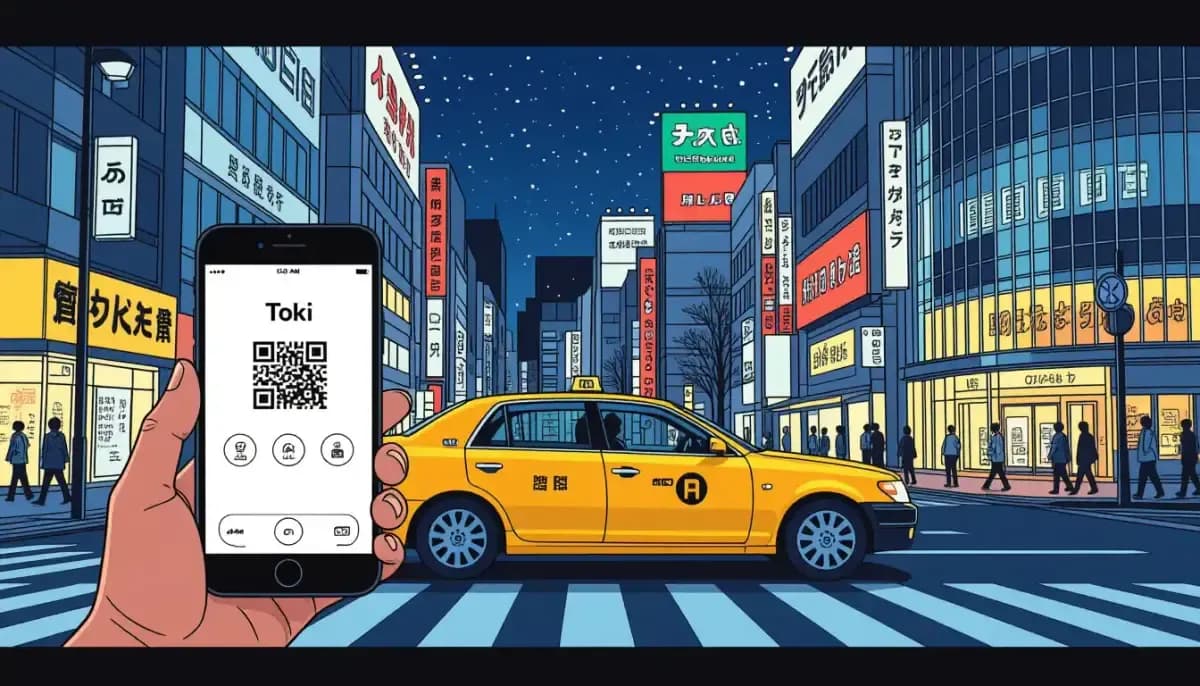
Complete guide to ride hailing and taxi apps in Japan for foreigners. Learn how to use GO, Uber, DiDi, and S.RIDE, understand fares, etiquette, and tips for smooth travel.
Ride Hailing and Taxi Apps in Japan: The Complete Guide for Foreigners
Getting around Japan is easier than ever thanks to a growing selection of ride hailing and taxi apps designed with foreigners in mind. Whether you are visiting Tokyo for a week or living in Osaka as an expat, knowing how to use these apps will save you time, stress, and money. This guide covers everything you need to know about the top apps, pricing, etiquette, and practical tips for using taxis in Japan.
Understanding Japan's Ride Hailing Landscape
Japan's approach to ride hailing is fundamentally different from countries where apps like Uber connect riders with private drivers. In Japan, due to strict transportation regulations, all ride hailing apps dispatch licensed professional taxi drivers only. Private individuals cannot offer rides for money, meaning there is no "UberX" with a non-professional driver.
This actually works in your favor as a foreigner. Every car that picks you up is a licensed, insured, metered taxi with a professional driver. Safety standards are extremely high, and Japan consistently ranks among the world's safest countries for taxi travel.
The app-based taxi market in Japan has exploded in recent years. The GO app holds approximately 80% of the market share among Japan's top ride hailing platforms, with a network of over 100,000 cabs across 46 of Japan's 47 prefectures. Uber, DiDi, and S.RIDE compete for the remaining share, particularly in major metropolitan areas.
For a broader overview of getting around Japan, see our Complete Transportation Guide for Foreigners in Japan.
The Top Taxi Apps in Japan Compared
Here is a quick comparison of the major ride hailing apps available to foreigners in Japan:
| App | Coverage | English Support | Payment | Best For |
|---|---|---|---|---|
| GO | 46/47 prefectures | Yes | Card, Apple Pay, Cash | Nationwide travel, best coverage |
| Uber | Tokyo, Osaka, Kyoto, Nagoya, Fukuoka, Sendai | Yes (50+ languages) | Card, Cash | Familiar interface |
| DiDi | Tokyo, Kansai, Kyushu, Hokkaido | Yes | Card, Cash | Regional discounts |
| S.RIDE | Tokyo metro area | Partial | Card, Cash | Quick dispatch in Tokyo |
| Grab | Limited areas | Yes | Card | Southeast Asia visitors |
Each app has its strengths depending on where you are in Japan and what you need. Let's break down each one in detail.
GO App: Japan's Dominant Taxi Platform
The GO app is the first thing you should download before visiting or moving to Japan. Operated by Mobility Technologies, GO aggregates taxi fleets from local taxi companies across the country and presents them in one convenient interface.
Key features of the GO app:
- Available in Japanese and English
- Covers 46 of Japan's 47 prefectures
- Real-time taxi tracking on map
- Advance booking option (schedule rides up to 7 days in advance)
- Upfront fare estimates before booking
- Supports credit card, Apple Pay, and GO Pay wallet
- Regular discount coupons for new users
To use GO, download the app, register with your email address and phone number, and add a payment method. When booking a ride, pin your pickup location on the map, enter your destination, and confirm. You can watch your driver's progress in real time and receive a notification when they arrive.
GO's nationwide coverage makes it indispensable if you are traveling beyond the major cities. Even in smaller cities and rural areas, GO can find you a taxi when Uber cannot.
For more on daily life practicalities as a foreigner, see our Complete Guide to Daily Life in Japan for Foreigners.
Uber in Japan: What to Expect
Uber operates in Japan, but it works differently here than in most other countries. All Uber rides in Japan are dispatched through licensed taxi companies, not private drivers. Uber essentially acts as a booking interface for local taxi fleets.
Uber is available in:
- Tokyo and Yokohama
- Osaka
- Kyoto
- Nagoya
- Fukuoka
- Sendai
The Uber app in Japan supports over 50 languages, making it extremely accessible for international visitors. If you already have an Uber account from your home country, you can use it immediately in Japan without creating a new account.
One important note: Uber's coverage is primarily limited to these major cities. Outside them, the GO app will almost always outperform Uber in terms of car availability. In rural areas and smaller cities, GO is the far better choice.
DiDi Japan: A Strong Contender
DiDi, the Chinese ride hailing giant, launched its Japanese service in 2018 and has grown steadily since. In Japan, DiDi also operates exclusively through licensed taxi companies.
DiDi covers:
- Tokyo
- Kansai region (Osaka, Kyoto, Kobe)
- Kyushu region (Fukuoka, Kumamoto, others)
- Hokkaido (Sapporo and surrounding areas)
DiDi's multilingual support makes it a good option for travelers who are more comfortable with interfaces in Chinese, Korean, or other Asian languages in addition to English. The app frequently offers promotional discounts, which can make it cheaper than competing services in areas where it operates.
Learn more about Living in Nihon's transportation guide for additional insights on getting around Japan as a foreigner.
S.RIDE: Tokyo's Streamlined Option
S.RIDE is a Tokyo-focused taxi app known for its simplicity. The booking process is built around a single swipe, making it one of the fastest apps to use when you need a taxi in a hurry.
S.RIDE is operated by a consortium that includes Sony, SoftBank, and several major Tokyo taxi companies. It is best suited for frequent Tokyo users rather than nationwide travelers. The English support is partial compared to GO or Uber, but the intuitive swipe interface reduces the need for language navigation.
Understanding Taxi Fares in Japan
Taxi fares in Japan are metered and regulated, so prices are consistent and transparent. Here is what to expect in Tokyo (fares vary slightly by region):
| Fare Component | Amount |
|---|---|
| Flag-down fare | ¥500 (covers first ~1.1 km) |
| Additional distance | ¥100 per ~255 meters |
| Time charge (under 10 km/h) | ¥100 per 1 minute 35 seconds |
| Late-night surcharge (22:00–05:00) | +20% on total fare |
| Long-distance discount (over ¥9,000) | 10% off excess amount |
A typical 10–15 minute urban ride usually costs between ¥1,500 and ¥2,500 in Tokyo. Airport runs can be significantly higher, and highway tolls are always charged separately on top of the metered fare.
When booking through an app like GO or Uber, you will typically see a fare estimate before confirming your ride. App bookings may add a small booking fee on top of the metered fare, but this is usually ¥100–¥200.
For a detailed breakdown of living costs in Japan, check our Complete Guide to Cost of Living in Japan.
Essential Taxi Etiquette in Japan
Japanese taxi culture has some unique customs that every foreigner should know before their first ride:
The automatic door rule: The rear left door of a Japanese taxi opens and closes automatically, controlled by the driver. Never touch this door yourself. Wait for it to open when you arrive and close when you leave. Touching it is considered rude and can startle drivers.
No tipping: Tipping is not customary in Japan and may be politely refused. Simply saying "arigatou gozaimasu" (thank you very much) at the end of your ride is the appropriate way to show appreciation.
Destination communication: Japanese addresses are notoriously complex, with a block-based numbering system that confuses even locals. Using an app removes this problem entirely, as your destination is communicated to the driver digitally. If you do hail a street taxi, have your destination written in Japanese or show the driver a map pin.
Seatbelts: Seatbelts are mandatory in all seats in Japan. Buckle up immediately.
No eating or smoking: Most taxis in Japan prohibit eating and smoking inside the vehicle.
Quiet rides: Japanese taxi drivers generally do not initiate conversation unless you do first. Comfortable silence is perfectly normal.
For more on Japanese customs and social norms, see our Complete Guide to Japanese Culture and Etiquette.
How to Hail a Traditional Taxi in Japan
While apps are convenient, you can still hail taxis the traditional way in Japan. Look for taxis with an illuminated sign in the windshield:
- Red light displayed = Available (taxi is free)
- Green light displayed = Reserved or unavailable
Taxi stands are located outside major train stations, hotels, shopping malls, and tourist landmarks. In busy areas like Shinjuku or Shibuya in Tokyo, you will find long queues of both taxis and passengers at designated stands.
At night in entertainment districts, demand often exceeds supply. In these situations, having the GO app installed is a significant advantage, as you can book in advance rather than competing for street taxis.
Tips for Foreigners Using Ride Hailing Apps in Japan
Download and register before you arrive. Both GO and Uber require phone verification and payment setup, which is easier to complete while you still have a stable connection and are not jet-lagged.
Enable location services. Accurate GPS pickup is essential. In dense urban areas like Shinjuku or Akihabara, be precise about where you want to be picked up and look for your driver's car on the map.
Communicate via the app. If your driver cannot find you, most apps have an in-app messaging function. Share your exact location using the map pin rather than trying to describe in Japanese.
Keep the app receipt. If you forget something in the taxi, your ride receipt contains the taxi company information you need to file a lost item report.
Check coverage before rural trips. GO is your best bet outside major cities, but even GO may have limited availability in very rural areas. In those cases, asking your hotel or accommodation to call a local taxi company is often the most reliable option.
For advice on commuting and working life in Japan, see For Work in Japan's commuting and infrastructure guide.
Comparing Ride Apps vs. Traditional Street Taxis
| Method | Pros | Cons |
|---|---|---|
| Ride app (GO, Uber) | Cashless, no language barrier, fare estimate, trackable | Small booking fee, wait time varies |
| Street hail | Immediate, no app needed | Language barrier, cash often preferred |
| Taxi stand | Reliable, no wait for dispatch | May be a queue, fixed locations only |
| Hotel taxi call | Hotel staff assist, reliable | Slower to arrange |
For daily life as a foreigner, ride apps win on almost every dimension. The upfront fare estimates, cashless payment, and built-in translation remove the biggest friction points of using taxis in Japan.
Accessibility and Special Needs
Japan's taxi industry has made significant strides in accessibility. Universal design (UD) taxis with wider doors and wheelchair ramps are available through the GO app by selecting the appropriate vehicle type. These vehicles are more common in Tokyo and other major cities.
For riders with hearing impairments, app-based taxis are ideal because all communication happens through the app interface rather than voice. Many GO drivers also have experience with non-Japanese speaking passengers and are accustomed to the silent, map-based communication that apps enable.
Learn more about daily conveniences and services in Japan through our Complete Guide to Shopping in Japan.
Additional Resources
For detailed English-language coverage of Japan's taxi app scene, Japan's Best Taxi Apps in English from MATCHA provides regularly updated reviews of the top platforms. Inside Kyoto's Uber in Japan guide offers a good breakdown of Uber vs. GO specifically. For IT professionals relocating to Japan, Ittenshoku covers career transition resources for life in Japan more broadly.
Final Thoughts
Japan's ride hailing apps make taxi travel more accessible than ever for foreigners. The GO app should be your primary tool, with Uber as a reliable backup in major cities. Understanding the fare structure, automatic door etiquette, and no-tipping culture will help you navigate Japanese taxis confidently from your very first ride.
Download GO before your trip, register your payment method, and enjoy stress-free transportation across one of the world's most efficient and safest taxi networks.

Originally from Vietnam, living in Japan for 16+ years. Graduated from Nagoya University, with 11 years of professional experience at Japanese and international companies. Sharing information about living in Japan for foreigners.
View Profile →Related Articles

Japan My Number Portal and Digital ID Guide
Complete guide to Japan's My Number system for foreign residents. Learn how to get your My Number Card, use the My Number Portal (マイナポータル), and navigate Japan's digital ID services as an expat.
Read more →
Tech Shopping in Japan Akihabara and Electronics Districts
Complete guide to tech shopping in Japan's Akihabara and electronics districts. Learn tax-free shopping tips, store recommendations, voltage compatibility, and smart buying strategies for foreigners.
Read more →
Using a VPN in Japan When and Why You Need One
Complete guide to using a VPN in Japan for foreigners and expats. Learn about legality, streaming access, public Wi-Fi security, banking apps, and the best VPN services for Japan in 2025.
Read more →
Japan Online Government Services and E-Gov Guide
Complete guide to Japan's online government services for foreigners: e-Gov portal, My Number Card, Mynaportal, Visit Japan Web, e-Tax filing, and the 2026 Residence Card integration.
Read more →
Cashless Payment Options in Japan Complete Guide
Discover all cashless payment options in Japan for foreigners—IC cards, PayPay, credit cards, and mobile wallets. Practical tips for daily life and travel in Japan.
Read more →
Japan Internet Providers Speed and Price Comparison
Compare Japan's top internet providers for foreigners. Detailed speed, price, and English support breakdown for NTT Docomo, SoftBank, au, NURO Hikari, GTN Hikari, and Sakura Fiber Internet.
Read more →