
Best Navigation and Map Apps for Getting Around Japan

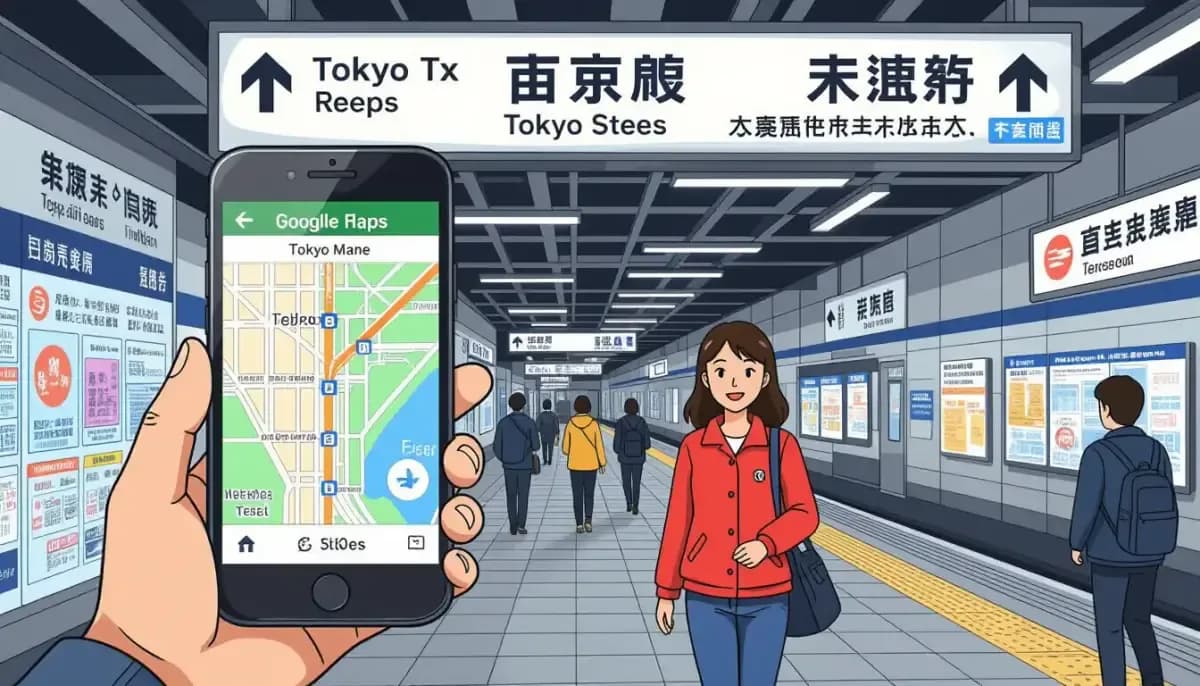
Discover the best navigation and map apps for getting around Japan as a foreigner. Compare Google Maps, NAVITIME, Yahoo Maps, and more for trains, transit, and offline travel.
Best Navigation and Map Apps for Getting Around Japan
Japan's public transportation network is one of the most sophisticated in the world, but navigating it as a foreigner can feel overwhelming at first. Between Shinkansen bullet trains, local subway lines, buses, and taxis — all often labeled in Japanese — having the right navigation app on your phone can make the difference between a smooth commute and a stressful missed connection. Whether you're a tourist visiting for two weeks or an expat settling in for years, this guide covers the best navigation and map apps for getting around Japan.
Why You Need a Dedicated Japan Navigation App
Google Maps works well in most countries, but Japan's transit system has layers of complexity that benefit from specialized tools. Tokyo's main hubs like Shinjuku Station have over 200 exits and handle 3.5 million passengers daily — more than any station in the world. Osaka, Nagoya, and Sapporo all have similarly intricate networks.
The good news: Japan is exceptionally well-served by navigation apps, with both local and international options offering English-language support, real-time train schedules, offline maps, and transit pass integration. According to Japan National Tourism Organization data, international visitors to Japan reached 3.6 million in December 2025 alone — a sign of how much demand exists for traveler-friendly navigation tools.
One important tip: public WiFi in Japan is unreliable in many areas. Download offline maps before you head out, and consider getting a Japan SIM card or pocket WiFi to ensure your apps work seamlessly. For more on getting around Japan, check our Complete Guide to Transportation in Japan.
Google Maps: The Best All-Around Navigation App
For most foreigners in Japan, Google Maps is the single most essential app to have installed. It works across the entire country — from bustling Tokyo neighborhoods to remote mountain towns — and provides English-language directions for trains, buses, walking, cycling, and taxis.
What makes Google Maps stand out in Japan:
- Real-time train schedules: Google Maps integrates live data for JR, private railways, and subway lines across Japan
- Platform and car recommendations: At complex stations, it tells you which car to board for the easiest transfer
- Exit guidance: At massive stations like Shinjuku or Shibuya, it specifies which numbered exit to use
- Journey cost estimates: See approximate fare costs (note: these may differ if you hold a Japan Rail Pass)
- Offline maps: Download maps for specific regions before heading out into areas with limited connectivity
Google Maps covers roughly 90% of urban transportation needs. Its walking directions are generally accurate, though occasionally it may suggest a longer route than necessary in dense neighborhoods. For rural areas, coverage is solid but less detailed than in cities.
Google Maps is free on both iOS and Android and requires no setup beyond a standard Google account.
Japan Travel by NAVITIME: Best for Serious Transit Planning
Japan Travel by NAVITIME is the app of choice when you need precise, detailed transit information — especially for longer journeys involving multiple train lines or intercity travel.
NAVITIME is Japan's leading domestic navigation platform, pre-installed on phones from major Japanese carriers. The English-language "Japan Travel by NAVITIME" app brings these capabilities to international users with features including:
- Japan Rail Pass integration: Enter your JR Pass type and dates, and NAVITIME automatically calculates which trains are covered, avoiding unnecessary charges
- Door-to-door routing: Input a starting address and destination address for fully mapped routes combining trains, buses, and walking
- Offline functionality: Download maps and transit data for use without internet
- Train delay notifications: Real-time updates when lines are delayed or disrupted
- Platform-specific guidance: Know exactly which platform and which end to stand at for your train
- WiFi spot finder: Locate free WiFi hotspots nearby
NAVITIME is particularly useful for trips outside major cities where connections between local train lines and buses require careful planning. It's available free with premium features available via subscription.
Yahoo! Maps Japan: Best for Detailed Urban Navigation
Yahoo! Maps (ヤフーカーナビ) is one of the most popular navigation apps among Japanese residents, and it offers features that even Google Maps lacks for urban navigation in Japan.
Key advantages of Yahoo Maps Japan:
- Color-coded train lines: Map displays each train line in its actual official color, making it easier to identify lines visually
- Detailed building numbers: Shows individual building numbers more comprehensively than Google Maps, helpful for finding specific addresses in Japan's complex addressing system
- One-way street information: Important for cyclists and drivers navigating narrow urban streets
- Furigana (reading guides): Helps non-native readers understand place name pronunciations
Yahoo Maps is primarily in Japanese, which limits its accessibility for new arrivals who don't read the language. However, combined with Google Translate, it becomes a powerful tool. The app is free on iOS and Android and is particularly recommended for expats who have some Japanese reading ability.
Maps.me: Best for Offline Use in Rural Japan
Maps.me (also written as MAPS.ME) is the go-to app for offline navigation, which makes it invaluable when traveling to rural parts of Japan, hiking in national parks, or anywhere reliable mobile data is hard to come by.
What Maps.me offers:
- Full offline maps: Download Japan's map entirely before your trip — no internet required during navigation
- GPS navigation: Works using GPS signal even without data connection
- 15+ language support: Menus and directions available in English and many other languages
- Bookmarking: Save locations you want to visit and access them offline
- Search by name, address, or category: Find nearby restaurants, konbini, parks, temples, and more
- Turn-by-turn navigation: Step-by-step directions for walking, cycling, and driving
Maps.me is free to download and use, with an optional paid subscription to remove ads. It's particularly popular among hikers and backpackers exploring Japan's countryside where cell signal is sparse.
Tokyo Metro Official App: Best for Tokyo Subway Navigation
If you spend significant time in Tokyo, the Tokyo Metro: Route Finder app is worth downloading specifically for subway navigation. Developed by Tokyo Metro, it covers all nine Tokyo Metro lines plus the Toei subway lines and the JR Yamanote loop line.
Features include:
- Interactive metro map: Tap on any station for exit information and nearby landmarks
- Route planning with time and cost: Compare routes by fastest time, fewest transfers, or cheapest fare
- Timetables: Full train schedules for every station
- Station guides: Maps of major stations showing exits, shops, and connecting lines
The app is simple and easy to use, making it excellent for first-time visitors navigating Tokyo's 13 interconnected subway lines. It's available free on iOS and Android. Note that it's focused on Tokyo and doesn't cover Osaka, Nagoya, or other regional transit systems.
Comparison Table: Japan Navigation Apps at a Glance
| App | Best For | Offline Maps | English Support | Cost | Transit Info |
|---|---|---|---|---|---|
| Google Maps | All-around daily navigation | Yes (download required) | Excellent | Free | All Japan transit |
| Japan Travel by NAVITIME | Detailed trip planning & JR Pass users | Yes | Good | Free / Premium | All Japan transit + delays |
| Yahoo! Maps Japan | Urban navigation, local detail | Partial | Limited (mostly Japanese) | Free | All Japan transit |
| Maps.me | Rural areas, offline travel | Excellent (full download) | Good | Free / Ad-free paid | Walking & driving |
| Tokyo Metro App | Tokyo subway navigation | No | Good | Free | Tokyo Metro & Toei only |
| GO Taxi | Taxi booking | N/A | Good | Free | 45 of 47 prefectures |
GO Taxi: Best App for Hailing a Cab
Japan's taxi system is reliable and safe, but hailing a taxi from the street isn't always straightforward — especially outside major cities or late at night. GO Taxi solves this by offering a Uber-style ride-hailing experience using Japan's licensed taxi fleet.
GO Taxi is available in 45 out of 47 prefectures, making it the most widely available taxi app in the country. Features include:
- Upfront fare estimates: See the approximate cost before confirming your ride
- Real-time tracking: Watch your taxi approach on the map
- Cashless payment: Pay via credit card directly through the app
- Japanese driver support: Drivers are licensed local taxi operators
For foreigners who find it difficult to communicate destinations to taxi drivers in Japanese, GO Taxi eliminates the language barrier entirely. Just input your destination in English (or use a map pin), and the app communicates the route to the driver.
Tips for Using Navigation Apps in Japan
Getting the most out of Japan's navigation apps requires a bit of preparation:
1. Download offline maps before you arrive Don't assume you'll have reliable data everywhere. Download offline maps for your target regions in Google Maps and Maps.me before departing.
2. Get a Japan SIM or pocket WiFi While offline maps cover navigation, real-time features like train delays, platform changes, and restaurant searches require internet. A pocket WiFi device or Japan SIM card ensures your apps work everywhere. See our guide to daily life in Japan for SIM card recommendations.
3. Learn Japan's addressing system Japan uses a block-based address system (prefecture → city → district → block → building number) rather than street names. This can confuse apps. When searching, try inputting the building name or the nearest landmark instead of a street address.
4. Use multiple apps Each app has strengths. Many experienced expats use Google Maps for walking and urban navigation, NAVITIME for complex intercity trips, and GO Taxi as a backup. Having 2-3 apps installed costs nothing.
5. Save key locations offline In Google Maps, star or label important locations (your home, office, nearest hospital) so they're accessible even without connectivity. You can also screenshot maps for areas you'll visit frequently.
For more guidance on daily life and getting around, visit Living in Nihon's transportation guide for comprehensive coverage of Japan's transit system.
Useful Resources for Getting Around Japan
As you settle into life in Japan, these resources will help you navigate transportation confidently:
- For Work in Japan (forworkinjapan.com) covers commuting culture and transportation norms for working professionals in Japan, including how to handle packed rush-hour trains and company commuter pass systems.
- Ittenshoku (ittenshoku.com) provides guidance on job changes and relocation within Japan, including tips on researching commute routes when considering a new job or apartment.
- JR Rail Pass Blog (jrailpass.com/blog/best-apps-travel-japan) offers detailed reviews of Japan travel apps specifically focused on train travel.
- The Navigatio (thenavigatio.com/travel-apps-for-japan) provides tried-and-tested reviews of 12 essential Japan travel apps with firsthand experience from multiple visits.
For related guides, explore our articles on finding housing in Japan (where commute time is a key factor) and working in Japan (where understanding the commuter pass system saves money).
Final Thoughts
Japan's transportation system is extraordinary in its precision and coverage, and the navigation apps available today make it remarkably accessible to foreigners at every level of Japanese language proficiency. Start with Google Maps for day-to-day navigation, add Japan Travel by NAVITIME for detailed transit planning, and keep Maps.me installed for offline peace of mind.
As you grow more comfortable living in Japan, you'll naturally develop preferences — many long-term expats swear by Yahoo Maps for its local accuracy, while frequent travelers love NAVITIME's transit pass integration. The best approach is to experiment with a few options during your first weeks and find what works best for your lifestyle and travel patterns.
Safe travels — and enjoy the remarkable experience of navigating one of the world's most efficient transit systems.

Originally from Vietnam, living in Japan for 16+ years. Graduated from Nagoya University, with 11 years of professional experience at Japanese and international companies. Sharing information about living in Japan for foreigners.
View Profile →Related Articles

Japan My Number Portal and Digital ID Guide
Complete guide to Japan's My Number system for foreign residents. Learn how to get your My Number Card, use the My Number Portal (マイナポータル), and navigate Japan's digital ID services as an expat.
Read more →
Tech Shopping in Japan Akihabara and Electronics Districts
Complete guide to tech shopping in Japan's Akihabara and electronics districts. Learn tax-free shopping tips, store recommendations, voltage compatibility, and smart buying strategies for foreigners.
Read more →
Using a VPN in Japan When and Why You Need One
Complete guide to using a VPN in Japan for foreigners and expats. Learn about legality, streaming access, public Wi-Fi security, banking apps, and the best VPN services for Japan in 2025.
Read more →
Japan Online Government Services and E-Gov Guide
Complete guide to Japan's online government services for foreigners: e-Gov portal, My Number Card, Mynaportal, Visit Japan Web, e-Tax filing, and the 2026 Residence Card integration.
Read more →
Cashless Payment Options in Japan Complete Guide
Discover all cashless payment options in Japan for foreigners—IC cards, PayPay, credit cards, and mobile wallets. Practical tips for daily life and travel in Japan.
Read more →
Japan Internet Providers Speed and Price Comparison
Compare Japan's top internet providers for foreigners. Detailed speed, price, and English support breakdown for NTT Docomo, SoftBank, au, NURO Hikari, GTN Hikari, and Sakura Fiber Internet.
Read more →