
Japanese Farewell Customs and Saying Goodbye

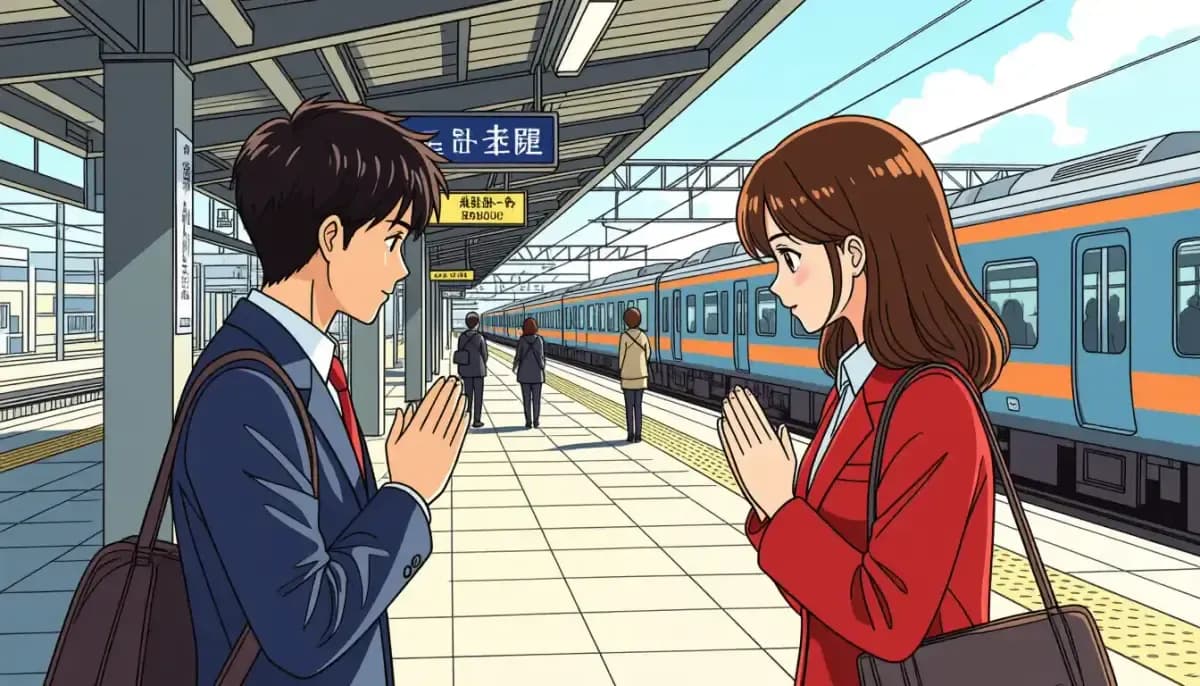
Learn Japanese farewell customs and how to say goodbye correctly in different situations. From casual 'mata ne' to workplace 'otsukaresama', master the art of Japanese goodbyes as a foreigner.
Japanese Farewell Customs and Saying Goodbye: A Complete Guide for Foreigners
If you've spent time in Japan, you've probably noticed that saying goodbye here is a lot more nuanced than a simple wave and a "see ya." Japanese farewell customs are layered with social context, hierarchy, and cultural values that can feel overwhelming at first. Whether you're leaving work, saying goodbye to a friend at a train station, or departing from someone's home, the way you say farewell in Japan signals respect, warmth, and social awareness.
This guide breaks down everything foreigners need to know about Japanese farewell customs — from casual phrases used between friends to formal expressions in the workplace, plus the body language and unwritten rules that make Japanese goodbyes unique.
Why "Sayonara" Isn't What You Think
Let's start with the biggest misconception. When most non-Japanese people think of saying goodbye in Japanese, the first word that comes to mind is さようなら (sayonara). It's the word you've heard in movies, on greeting cards, and in pop songs — but here's the surprising truth: Japanese people rarely use it in daily life.
According to a survey reported by Japan Today, about 70% of Japanese people don't use sayonara as a regular goodbye. The reason is its weight. Sayonara carries the deep connotation of a final, potentially permanent farewell — something like "Goodbye, and I don't know when I'll see you again." Using it with friends or colleagues can feel strangely dramatic or even hurtful, as if you're implying you never want to see them again.
So when do you use it? Sayonara is appropriate for genuine long-term separations — when someone is leaving the country, retiring, or when you're ending a relationship. Outside of these contexts, stick to the expressions below.
Casual Goodbyes: How Friends Say Farewell
In everyday social settings, Japanese people rely on a set of casual, warm phrases to part ways. These are the expressions you'll hear most often among friends, classmates, and close colleagues.
| Phrase | Reading | Meaning | Context |
|---|---|---|---|
| またね | Mata ne | See you later | Most common casual goodbye |
| じゃあね | Jaa ne | See ya / Bye | Very casual, close friends |
| またね~ | Mata ne~ | See you~! | Friendly, slightly elongated |
| バイバイ | Bai bai | Bye bye | Borrowed from English, very casual |
| またあした | Mata ashita | See you tomorrow | Between people who see each other daily |
| またいつか | Mata itsuka | See you sometime | When you're unsure of the next meeting |
| 気をつけてね | Ki wo tsukete ne | Take care | Said warmly when someone is leaving |
またね (mata ne) is the everyday workhorse of casual Japanese goodbyes. It's light, friendly, and implies you'll see the person again — making it the perfect alternative to sayonara in most situations. Young people in Japan also frequently use バイバイ (bai bai), directly borrowed from English, which has become fully naturalized into casual Japanese speech.
For more on navigating social customs in Japan, see our guide to Japanese culture and etiquette and our comprehensive overview on making friends and social life in Japan.
Workplace Farewells: Navigating Professional Goodbyes
The Japanese workplace has its own set of farewell customs, and getting these right is especially important for foreigners working in Japan. Office goodbyes follow social hierarchy closely and have specific phrases for different situations.
Leaving the office at the end of the day
When you finish work and head home, you don't just say "bye" to your colleagues. The standard farewell is:
お疲れ様でした (Otsukaresama deshita) — "Thank you for your hard work today."
This phrase acknowledges everyone's effort throughout the day and is used both when you're leaving and when someone else is finishing up. It's deeply embedded in Japanese work culture and shows respect for your team's efforts. A shorter version, お疲れ様 (Otsukaresama), works among colleagues of similar rank.
Leaving before your colleagues or boss
In Japan, there's a strong cultural norm around not leaving work before your superiors. If you do need to leave first, you must use a specific phrase:
お先に失礼します (Osaki ni shitsurei shimasu) — "Excuse me for leaving before you."
This phrase is critical. Leaving without saying it — or saying something too casual — can be seen as disrespectful. The phrase literally apologizes for the social awkwardness of departing first, acknowledging the hierarchy in the workplace. Your colleagues will likely respond with お疲れ様でした (Otsukaresama deshita) or お気をつけて (Okikitsukete) meaning "Take care."
Business meetings and client farewells
When concluding business meetings or saying goodbye to clients, more formal expressions are used:
ありがとうございました (Arigatou gozaimashita) — "Thank you very much." よろしくお願いします (Yoroshiku onegaishimasu) — Often said at the end of meetings, it expresses goodwill and anticipation of continued good relations. 失礼いたします (Shitsurei itashimasu) — A very polite way to excuse yourself when leaving.
For those navigating Japanese work culture, our full guide on working in Japan as a foreigner covers these professional norms in much more depth.
Home Farewells: The Ritual of Leaving and Returning
One of the most charming aspects of Japanese farewell culture is the ritual exchange that happens when someone leaves home. These phrases are used within families every single day and reflect the warmth and care embedded in Japanese domestic life.
行って来ます (Itte kimasu) — Said by the person leaving the house. It translates roughly to "I'll go and come back," implying that departure is temporary and return is expected.
The response from those staying home is:
行ってらっしゃい (Itte rasshai) — "Go safely" or "Go and come back safely."
This exchange is a daily ritual in Japanese households that foreigners find both touching and fascinating. It encapsulates the Japanese value of maintaining connection and expressing care even in small, everyday moments.
When returning home, the person coming back says:
ただいま (Tadaima) — "I'm home / I'm back."
And those at home respond:
おかえり (Okaeri) or おかえりなさい (Okaerinasai) — "Welcome back."
Bowing: The Non-Verbal Language of Farewell
No discussion of Japanese farewell customs is complete without addressing bowing. In Japan, the bow (お辞儀 / ojigi) is far more than a polite gesture — it's a sophisticated non-verbal language that communicates respect, gratitude, and social hierarchy.
When saying goodbye, the depth and duration of your bow conveys meaning:
| Bow Angle | Context | When Used |
|---|---|---|
| 5–10° | Quick nod | Informal, among close friends, brief acknowledgment |
| 15° | Casual respectful bow | Acquaintances, everyday polite situations |
| 30° | Standard formal bow | Business settings, superiors, clients, new acquaintances |
| 45° | Deep respectful bow | Showing great gratitude, deep apology, very important people |
| 90° | Extremely deep bow | Rare, expressing deepest respect or serious apology |
For foreigners, a sincere 30-degree bow when saying goodbye to someone in a business or formal setting will almost always be appropriate and appreciated. Japanese people are generally understanding of foreigners who are still learning these nuances — the effort itself is respected.
One thing to avoid: the "bowing battle," where two people keep bowing back and forth, each trying to out-respect the other. This can go on for an awkward length of time. A graceful exit after two or three bows is perfectly fine.
The concept of 名残惜しい (nagori oshii) — the cultural reluctance or sadness at having to say goodbye — is also worth knowing. It's a beautiful concept that explains why Japanese goodbyes at train stations or after a dinner can stretch on longer than expected. People may wave until the other person is completely out of sight, and it's considered perfectly natural.
Farewell Gifts and Parties: Customs Around Departure
Japanese farewell culture extends well beyond verbal exchanges. When someone is leaving a job, moving away, or heading abroad for a long time, there are established social rituals around marking that departure.
Soubetsukai (送別会) — Farewell parties
A 送別会 (soubetsukai) is a formal farewell party held to honor someone who is leaving a company, moving to a new city, or returning to their home country. These are common in Japanese workplaces and are organized by colleagues as a gesture of respect and appreciation for the departing person.
Expect speeches, toasts, possibly a gift, and a warm atmosphere. As the person being honored, it's important to express gratitude sincerely. A heartfelt speech thanking your colleagues for their support goes a long way.
Farewell gifts (餞別 / senbetsu)
It's customary in Japan to give a 餞別 (senbetsu) — a parting gift — when someone is leaving for an extended period. This can be money in a special envelope or a thoughtful item. If you're the one leaving, you'll typically bring omiyage (souvenirs) or sweets to share with your workplace on your last day as a gesture of thanks.
Tips for Foreigners: Navigating Japanese Farewells with Confidence
Here are practical tips for foreigners navigating Japanese farewell customs:
- Don't say *sayonara* to people you'll see again — stick to mata ne or jaa ne with friends.
- Always use *otsukaresama deshita* when leaving work — it's non-negotiable in most Japanese offices.
- Say *osaki ni shitsurei shimasu* if you leave before your boss — skipping this phrase can leave a bad impression.
- Learn the home farewell exchange — itte kimasu / itte rasshai signals respect for the family unit.
- Bow when saying goodbye in professional settings — a genuine 30° bow is always appropriate.
- Don't rush your goodbyes — Japanese farewells often take longer than Western ones, and that's intentional.
- Bring omiyage on your last day — if you're leaving a job, bringing sweets for the office is expected and appreciated.
For deeper context on daily social interactions in Japan, Living in Nihon provides excellent resources for expats adapting to life in Japan. You can also find workplace-specific guidance at For Work in Japan, which covers professional culture in detail for foreigners employed in Japanese companies.
Quick Reference: Japanese Farewell Phrases
| Situation | Phrase | Reading | Meaning |
|---|---|---|---|
| Casual, friends | またね | Mata ne | See you later |
| Casual, very close | じゃあね | Jaa ne | See ya |
| Leaving work (general) | お疲れ様でした | Otsukaresama deshita | Thanks for the hard work |
| Leaving work before boss | お先に失礼します | Osaki ni shitsurei shimasu | Excuse me for leaving first |
| Leaving home | 行って来ます | Itte kimasu | I'll go and come back |
| Response to leaving home | 行ってらっしゃい | Itte rasshai | Go safely |
| Returning home | ただいま | Tadaima | I'm home |
| Welcoming back | おかえり | Okaeri | Welcome back |
| Long separation | さようなら | Sayonara | Goodbye (final/long-term) |
| Formal business ending | 失礼いたします | Shitsurei itashimasu | Excuse me (formal leave-taking) |
| Expressing care when parting | 気をつけてね | Ki wo tsukete ne | Take care |
For more resources on farewell phrases and Japanese language learning, Ittenshoku and FluentU's Japanese blog offer in-depth guides to phrases and their cultural contexts.
Conclusion
Japanese farewell customs are a window into the culture's core values: respect for hierarchy, consideration for others, and the importance of maintaining relationships. From the workplace ritual of otsukaresama deshita to the touching home exchange of itte kimasu / itte rasshai, each farewell phrase carries meaning beyond its literal words.
As a foreigner in Japan, you won't be expected to master every nuance immediately. What matters most is the genuine effort to engage with these customs. A sincere bow, the right phrase in the right setting, and a willingness to learn will earn you enormous goodwill from your Japanese colleagues, friends, and neighbors.
For more guidance on life in Japan, explore our full guides on learning Japanese as a foreigner, Japanese culture and etiquette, and daily life in Japan for foreigners.

Originally from Vietnam, living in Japan for 16+ years. Graduated from Nagoya University, with 11 years of professional experience at Japanese and international companies. Sharing information about living in Japan for foreigners.
View Profile →Related Articles
How to Stay Connected to Japan After Leaving: The Complete Expat Guide
Moved away from Japan? Learn the best apps, communities, and strategies to stay connected to Japan after leaving — from LINE tips to rebuilding your expat network abroad.
Read more →
What Happens to Your Health Insurance When Leaving Japan
Everything foreigners need to know about health insurance when leaving Japan: how to cancel NHI or Shakai Hoken, get premium refunds, required documents, and avoid costly billing mistakes after departure.
Read more →
Japan Re-Entry Permit What You Need Before Leaving
Everything foreigners need to know about Japan re-entry permits before leaving the country. Covers special vs standard permits, airport procedures, permanent resident rules, fees, and consequences of forgetting.
Read more →
How to Sell Your Belongings Before Leaving Japan
Complete guide to selling your belongings before leaving Japan. Learn which platforms, recycle shops, and Sayonara Sale groups work best for expats clearing out their apartments.
Read more →
Transferring Money Out of Japan Before You Leave
Complete guide to transferring money out of Japan before leaving. Compare Wise, Western Union, Seven Bank, fees, customs rules, exit tax, and pension refund tips for foreigners.
Read more →
Canceling Services and Subscriptions Before Leaving Japan
Complete guide to canceling all services and subscriptions before leaving Japan: utilities, mobile phone, internet, NHK, streaming, gym memberships, and more. Includes cancellation timelines and checklist.
Read more →