
Japan Post International Money Transfer Guide

Complete guide to Japan Post Bank international money transfers for foreigners in Japan. Learn fees, limits, step-by-step process, and compare with Wise and other alternatives in 2025.
Japan Post International Money Transfer Guide for Foreigners
If you're a foreigner living in Japan and need to send money back home, Japan Post Bank (ゆうちょ銀行, Yucho Bank) has long been one of the most accessible remittance options — with post offices found in virtually every city, town, and rural area across Japan. However, the service has undergone significant changes in 2025, and understanding the current system is essential before you plan your next international transfer.
This comprehensive guide explains everything foreigners need to know about Japan Post international money transfers: how the service works today, fees and limits, step-by-step process, and how it compares to alternatives. Whether you're sending money to your family in Southeast Asia, the US, or Europe, this guide will help you make an informed decision.
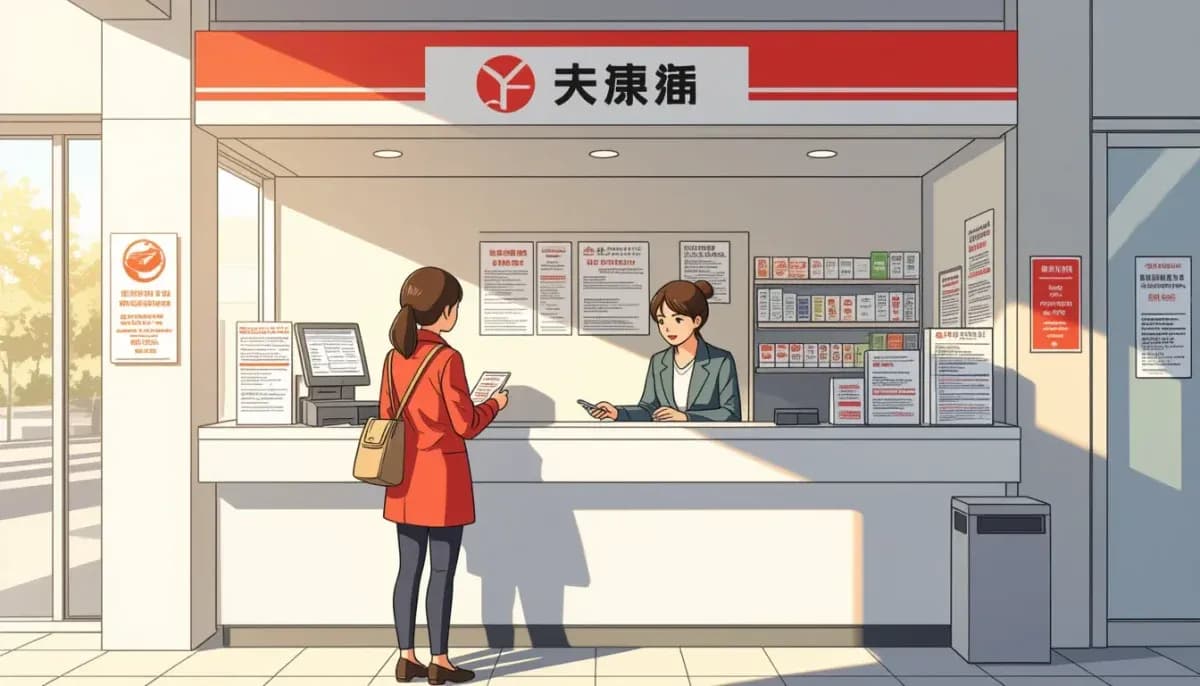
!Japan Post Bank international transfer at post office counter
What Is Japan Post Bank's International Remittance Service?
Japan Post Bank, known in Japanese as ゆうちょ銀行 (Yucho Bank), is one of the largest retail banks in Japan by assets and number of customer accounts. With post offices spread across every corner of Japan — including remote islands and mountain villages — it has historically been the most geographically accessible option for international money transfers.
The international remittance service, called 国際送金 (kokusai sokin), allows account holders to send money abroad in foreign currency. Japan Post Bank works with a network of correspondent banks worldwide to facilitate transfers to bank accounts in eligible countries.
Important 2025 Update: As of August 29, 2025, Japan Post Bank branches and post offices have terminated over-the-counter international remittance services. The service is now available exclusively online through the Yucho Direct (ゆうちょダイレクト) international remittance portal. If you were used to walking into a post office and filling out paper forms at the counter, that option no longer exists.
Japan Post International Transfer: Current Fees and Limits
Understanding the cost structure is crucial for budgeting your transfers. Here is a breakdown of current fees for the Yucho Direct online service:
| Fee Type | Amount | Notes |
|---|---|---|
| Transfer Fee (Online) | ¥3,000 per transfer | Previously ¥7,500 at branch window |
| Intermediary Fee (USD) | $10 fixed | Applied to USD transfers over $100 |
| Intermediary Fee (EUR) | €5 fixed | Applied to EUR transfers over €100 |
| Exchange Rate Margin | Varies | Japan Post Bank's in-house rate applies |
Accepted Currencies: Japan Post Bank's international remittance service currently accepts only USD (US Dollars) and EUR (Euros). If you need to send money in other currencies — such as Thai Baht, Philippine Peso, Vietnamese Dong, or Korean Won — you will need to use an alternative service.
Processing Time: International transfers through Yucho Direct typically take 4–7 business days for the exchange and delivery process. In cases where Foreign Exchange Act compliance documentation is required, it may take significantly longer — sometimes over a month.
Transfer Limits: The maximum amount per transfer varies depending on the destination country and the purpose of the remittance. Japan Post Bank also limits which countries can receive transfers — not all nations are eligible.
For a comprehensive overview of banking options in Japan, see our Complete Guide to Banking and Finance in Japan for Foreigners.
How to Use Japan Post Bank's Online International Remittance (Step-by-Step)
Since the in-person counter service has been discontinued, here is how to complete an international transfer using the Yucho Direct online platform:
Step 1: Open a Japan Post Bank Account
If you don't already have a Yucho Bank account, you'll need to open one at a post office. You will need:
- Resident Card (在留カード, Zairyu Card) or Special Permanent Resident Certificate
- MyNumber (個人番号) card or notification letter
- Your registered seal (印鑑, inkan) — optional depending on branch
Foreign residents can generally open a Yucho Bank account, though requirements may vary. Japan Post Bank offers a multilingual call center in English, Chinese, Korean, Vietnamese, and Indonesian to assist non-Japanese speakers.
Step 2: Register for Yucho Direct Online Banking
You must register for Yucho Direct (ゆうちょダイレクト) to access the international remittance portal:
- Visit the Yucho Direct website or pick up a registration form at a post office
- Set up your login ID and password
- Link your Yucho Bank account
- Enable the international remittance option (additional registration may be required)
Step 3: Register Recipient Information
Before initiating a transfer, you must register the recipient's bank account details:
- Recipient's full name (as it appears on their bank account)
- Recipient's complete address
- Recipient's bank name and branch name
- SWIFT/BIC code of the recipient's bank
- Account number or IBAN
- Daytime phone number of recipient
For USD transfers to the US, you'll also need the ABA routing number.
Step 4: Submit Your Transfer Request Online
Log in to Yucho Direct and navigate to the international remittance section:
- Select your registered recipient
- Enter the transfer amount in JPY
- Review the exchange rate and fees (note: Japan Post Bank does not offer a real-time rate calculator, so the exact rate will be confirmed during the process)
- Provide the reason for the transfer (required by law)
- Submit the transfer request
Step 5: Provide Required Documentation If Needed
Japanese law requires you to provide your MyNumber (個人番号) for international remittances. Additionally:
- For transfers over ¥1,000,000 (approximately $7,000 USD), you must provide documentation of the purpose — such as a contract, invoice, school tuition statement, or tax certificate
- Japan Post Bank reserves the right to request additional documents for regulatory compliance
!Completing international money transfer on smartphone
Japan Post International Transfer vs. Alternative Services
Japan Post Bank is no longer the cost-effective option it once appeared to be. Here is how it compares to popular alternatives used by foreigners in Japan:
| Service | Transfer Fee | Exchange Rate | Processing Time | Currencies | Best For |
|---|---|---|---|---|---|
| Japan Post Bank (Yucho Direct) | ¥3,000 + intermediary fees | Bank rate (margin applies) | 4–7 business days | USD, EUR only | Those with existing Yucho accounts |
| Wise (TransferWise) | ~0.5–1.5% of amount | Mid-market rate | 1–2 business days | 50+ currencies | Cost-conscious users, multi-currency |
| GoRemit (SBI Shinsei) | ¥2,000 flat | Competitive rate | 1–3 business days | Multiple currencies | No Shinsei account required |
| MUFG Bank (online) | ¥3,000 | Bank rate | 3–5 business days | Multiple currencies | MUFG account holders |
| Mizuho Bank (app) | ¥5,000 | Bank rate | 3–5 business days | Multiple currencies | Mizuho account holders |
| Western Union | Variable | Varies | Same day–2 days | Wide range | Speed, cash pickup options |
Key Takeaway: For most foreigners in Japan, especially those sending money regularly to Southeast Asia, Latin America, or Africa in local currencies, Japan Post Bank's USD/EUR-only limitation makes it unsuitable. Services like Wise offer significantly better exchange rates and support many more currencies, while GoRemit offers a flat low fee without requiring a Shinsei Bank account.
For more context on managing your finances as a foreigner, visit our guide on Cost of Living in Japan.
Who Should Use Japan Post Bank for International Transfers?
Despite its limitations, Japan Post Bank's international remittance service may still be suitable for certain users:
Japan Post Bank is a good fit if you:
- Already have a Yucho Bank account with significant savings
- Need to send USD or EUR specifically
- Live in a rural area where alternatives like Wise require smartphone or card setup that you haven't yet completed
- Are occasional senders who don't mind the ¥3,000 fee for a one-off transfer
Japan Post Bank is NOT a good fit if you:
- Need to send money in currencies other than USD or EUR
- Want real-time exchange rate transparency before committing
- Need same-day or next-day delivery
- Send money frequently (fees add up quickly)
- Don't speak Japanese and need English-language online support
Legal Requirements for International Transfers from Japan
Japan has specific legal requirements for international money transfers that all residents — Japanese and foreign — must comply with:
MyNumber Requirement: All international remittances require you to provide your MyNumber (個人番号). This is a unique 12-digit identification number assigned to all residents in Japan, including foreign nationals. Make sure your MyNumber is registered with your bank.
Purpose Declaration: When transferring money abroad, you must declare the purpose (e.g., family support, tuition payment, business payment). This is required by the Foreign Exchange and Foreign Trade Act (外国為替及び外国貿易法).
Large Transfer Documentation: For transfers exceeding ¥1,000,000 (approximately $6,600–$7,000 USD depending on exchange rates), Japanese financial institutions are required by law to confirm the purpose with supporting documents. Acceptable documents include:
- Employment contracts or salary statements
- School enrollment and tuition invoices
- Purchase contracts or invoices
- Real estate transaction documents
Reporting to Tax Authorities: Japan's tax authorities may review large or frequent international transfers. If you are a tax resident of Japan, ensure your remittances are consistent with your declared income and are not misinterpreted as unreported income.
For more information on tax obligations in Japan, see our Complete Guide to Taxes in Japan for Foreigners.
Tips for Foreigners Sending Money from Japan
Here are practical tips to make your international transfers smoother and more cost-effective:
- Compare rates before every transfer — Exchange rates fluctuate daily. Use services like Wise or Revolut to compare real-time rates against what Japan Post Bank offers.
- Use Yucho Direct for convenience — Even though in-person service is discontinued, the online portal is accessible 24/7 and avoids branch queues.
- Pre-register recipients — Register your family members' bank accounts in the system before you need to transfer. This speeds up future transfers significantly.
- Avoid weekend/holiday transfers — Processing begins on business days. A transfer submitted Friday evening may not start processing until Monday.
- Consider Wise for non-USD/EUR currencies — If your home country uses Thai Baht, Indonesian Rupiah, Philippine Peso, Vietnamese Dong, or similar currencies, Wise is typically far cheaper and faster.
- Keep records of all transfers — Maintain transfer confirmations for tax purposes, especially if you're transferring large amounts or sending money regularly.
- Check recipient country restrictions — Japan Post Bank has a list of eligible recipient countries. Verify your home country is on the list before registering.
For more guidance on daily financial life in Japan, visit our Complete Guide to Daily Life in Japan for Foreigners.
Useful Resources for International Transfers from Japan
For further research and comparison of international money transfer options:
- Japan Post Bank Official International Remittance Page: JAPAN POST BANK International Remittances — Official service information, eligibility, and online portal access.
- Living in Nihon Banking Guide: Banking & Financial Services for Foreigners in Japan — Comprehensive comparison of banking options and international transfer services available to foreign residents.
- For Work in Japan: ForWorkInJapan.com — Guidance on employment and financial matters for foreign workers in Japan.
- IT転職 (Ittenshoku): Ittenshoku.com — Resources for foreigners working in Japan's technology sector, including financial planning tips.
- Real Estate Japan's Remittance Guide: How to Send Money from Japan to Your Home Country — Detailed comparison including Japan Post Bank, Wise, and GoRemit.
- Japan Dev Money Transfer Guide: How to Transfer Money From Japan: What You Need to Know — Practical guide for English-speaking professionals working in Japan.
Frequently Asked Questions
Can foreigners use Japan Post Bank international transfer? Yes. Foreign nationals with a valid Yucho Bank account and a registered MyNumber can use the Yucho Direct online international remittance service.
Is Japan Post Bank international transfer safe? Yes. Japan Post Bank is regulated by the Financial Services Agency of Japan and is one of the most secure financial institutions in the country. Your funds are protected.
What is the maximum amount I can send via Japan Post Bank? Transfer limits vary by destination country and account verification level. Japan Post Bank does not publicly publish a universal maximum. Contact their multilingual support line for specifics.
Do I need to go to a post office to transfer money internationally? As of August 29, 2025, no. In-person international remittance at branches and post offices has been discontinued. All international transfers must now be done online via Yucho Direct.
How long does Japan Post Bank international transfer take? Typically 4–7 business days. Complex transactions requiring compliance documentation may take longer.
Conclusion
Japan Post Bank's international money transfer service remains a viable option for foreigners in Japan who already hold a Yucho Bank account and need to send USD or EUR. However, the 2025 shift to online-only service and the ongoing limitation of accepted currencies mean that many foreign residents — especially those from Southeast Asia — will find better value with fintech alternatives like Wise or GoRemit.
Japan's remittance market is evolving rapidly, driven by a record-high foreign resident population of over 3.41 million people who regularly send money to their home countries. Whether you stick with Japan Post Bank's Yucho Direct or choose a more flexible digital service, understanding your options ensures your hard-earned money reaches your family safely and affordably.
For a complete overview of financial life in Japan, don't miss our Complete Guide to Banking and Finance in Japan for Foreigners.

Originally from Vietnam, living in Japan for 16+ years. Graduated from Nagoya University, with 11 years of professional experience at Japanese and international companies. Sharing information about living in Japan for foreigners.
View Profile →Related Articles
Money Transfer Fees from Japan Complete Comparison
Compare money transfer fees from Japan: Wise, SBI Remit, Revolut, banks and more. Find the cheapest way to send money abroad as a foreigner in Japan with real fee data.
Read more →
GoRemit Shinsei Bank International Transfer Guide
Complete guide to GoRemit Shinsei Bank's international transfer service, its October 2025 discontinuation, and the best alternatives for expats in Japan including SBI Remit and Wise.
Read more →
Tips for Sending Money to Family from Japan
Practical tips for foreigners sending money to family from Japan. Compare Wise, bank transfers, SBI Remit. Save on fees, time transfers, claim tax deductions for overseas dependents.
Read more →
SBI Remit Japan International Transfer Guide
Complete guide to SBI Remit for foreigners in Japan. Learn how to register, compare fees by country (Philippines, Vietnam, China), transfer methods, and tips to save money on international transfers.
Read more →
Comparing Money Transfer Services Available in Japan
Compare the top money transfer services in Japan including Wise, SBI Remit, Western Union, and Revolut. Find the cheapest and fastest option for sending money abroad as a foreigner in Japan.
Read more →
Japan Remittance Tax Rules and Reporting Requirements
Understand Japan's remittance tax rules for non-permanent residents: the ¥1,000,000 reporting threshold, deemed remittance rules, FX gains, and how to file correctly as a foreigner in Japan.
Read more →