
Japan Permanent Residency Application Complete Guide

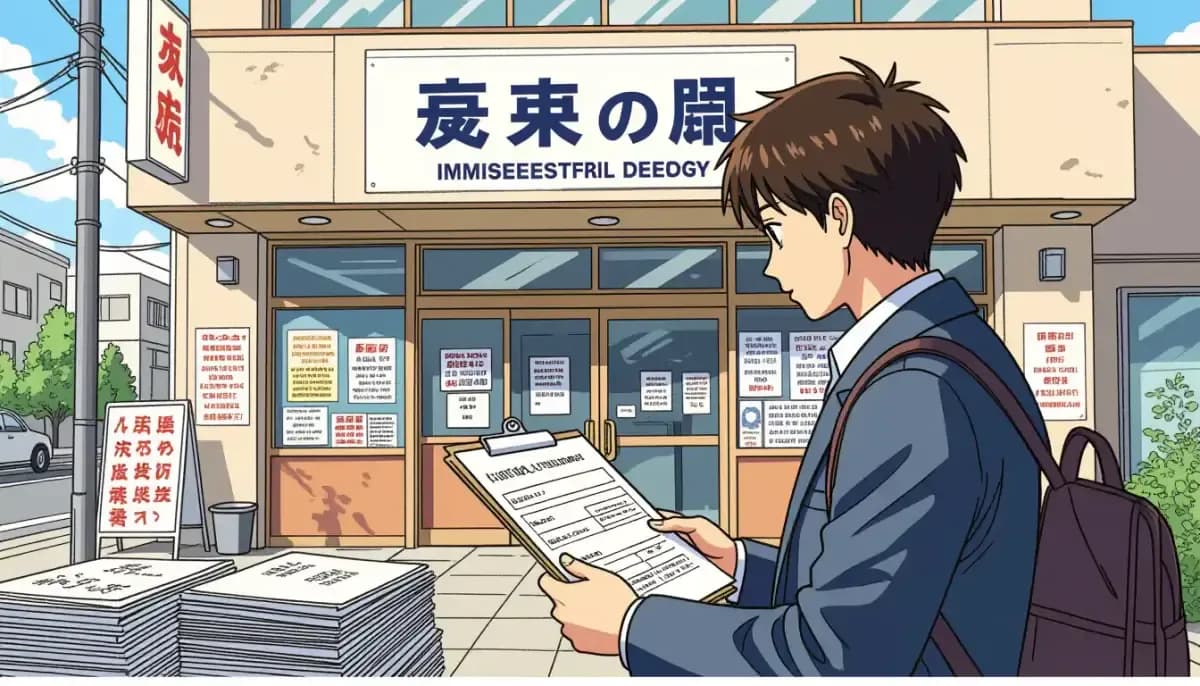
Complete guide to Japan permanent residency (eijuken): eligibility paths, required documents, financial requirements, approval rates, and tips to maximize your chances of success as a foreigner in Japan.
Japan Permanent Residency Application: The Complete Guide for Foreigners
Obtaining permanent residency (永住権, eijuken) in Japan is one of the most significant milestones for foreigners living in the country. It grants you the right to stay indefinitely, work in any field, and enjoy almost the same freedoms as Japanese citizens — without giving up your original nationality. However, the application process is notoriously strict, and approval rates have tightened in recent years. This guide walks you through everything you need to know: eligibility paths, required documents, financial requirements, timeline expectations, and how to maximize your chances of approval.
!Japan permanent residency application guide for foreigners

What Is Japan Permanent Residency?
Japan's permanent residency status (eijuken) allows foreign nationals to live and work in Japan without restrictions on employment type or duration. Unlike ordinary work visas that specify the kind of job you can hold, permanent residents can freely change jobs, start businesses, work freelance, or take on side work.
Key benefits of Japan PR:
- No employment restrictions — work in any field or industry
- No need to renew your visa status (only your residence card, every 7 years)
- Easier loan and credit card approvals from Japanese financial institutions
- More stable foundation for long-term life in Japan
- Your children born in Japan may qualify for PR more easily
However, PR does not grant Japanese citizenship. You remain a foreign national and cannot vote in Japanese elections. Japan also generally does not allow dual citizenship for naturalized citizens, but PR holders keep their original passport while gaining permanent residency rights.
For a broader overview of Japan's visa and immigration system, see our guide: The Complete Guide to Japan Visa and Immigration.
Eligibility Pathways: How Long Do You Need to Live in Japan?
The required length of residence depends heavily on your current visa type. There are several distinct pathways:
Standard Route (Work or General Visa)
The most common path for expats requires:
- 10 consecutive years of residence in Japan
- Of those, at least 5 years must be under a work-permitting status (e.g., Engineer/Specialist in Humanities, Business Manager)
- The final year must be on a 3-year or 5-year visa
Highly Skilled Professional (HSP) Fast-Track
Japan's point-based Highly Skilled Professional system offers significantly accelerated PR eligibility:
| Points | Required Residence Duration |
|---|---|
| 70+ points | 3 years |
| 80+ points | 1 year |
Points are calculated based on your academic background, professional experience, annual salary, age, Japanese language ability, research publications, and more. You can use the Japan PR Calculator to estimate your score.
Spouse of Japanese National or PR Holder
- 3 years of marriage AND 1 year of continuous Japan residence
- OR 1 year of marriage if you have already lived in Japan for 3+ years
Long-Term Resident
If you hold Long-Term Resident status (e.g., granted for humanitarian reasons or as a third-generation Japanese descendant), you may qualify after 5 years of continuous residence.
Special Permanent Resident
This status is for certain individuals whose families were originally from territories under Japanese jurisdiction before WWII (primarily Korean and Chinese nationals in Japan). It is a separate, protected status with distinct rules.
The Three Core Requirements for PR Approval
Regardless of which pathway you qualify under, all PR applicants are evaluated against three fundamental criteria:
1. Good Conduct (素行が善良であること)
You must demonstrate lawful, upstanding behavior in Japan:
- No criminal convictions or significant traffic violations
- No history of overstaying your visa
- Consistent compliance with residency rules and card renewal obligations
Even minor traffic violations don't necessarily disqualify you, but repeated offenses or serious violations (e.g., DUI) can severely damage your application. Unpaid parking tickets should also be resolved before applying.
2. Financial Independence (独立生計を営むに足りる資産または技能を有すること)
The immigration authority needs to be confident you can support yourself (and your dependents) without relying on public assistance:
- Single applicant: annual income of at least ¥3 million
- For each dependent: add approximately ¥500,000–¥700,000
- Consistent tax payment records for the past 3–5 years
- National pension and health insurance premium payments must be fully up to date
Tax and social insurance payment compliance is now one of the most scrutinized factors in the screening process. A single late payment may require additional explanation; consistent non-payment is grounds for rejection.
3. National Interest (日本国の利益に資すること)
This criterion is met when:
- You qualify under one of the recognized pathways (sufficient years of residence)
- You currently hold a visa valid for 3 or more years
- Your most recent visa renewal was granted without issues
Required Documents for Japan Permanent Residency Application
Document preparation is one of the most time-consuming parts of the application. All documents must be in Japanese, or accompanied by certified Japanese translations.
Universal Required Documents
| Category | Documents |
|---|---|
| Identity | Passport (all pages), Residence Card, ID photo (4cm × 3cm, taken within 3 months) |
| Residence | Certificate of Residence (住民票) for all household members |
| Tax compliance | Municipal tax payment certificate (納税証明書), national tax payment certificate |
| Income proof | Employment certificate, recent pay stubs, bank account statements |
| Insurance | National pension payment record (ねんきん定期便 or online printout), health insurance card |
| Guarantor | Letter of guarantee from a Japanese national or permanent resident willing to vouch for you |
Additional Documents by Visa Type
Work Visa Holders:
- Certificate of Employment (在職証明書)
- Annual income certificates for the past 3–5 years (源泉徴収票)
- Company registration documents (if self-employed or business owner)
Spouses of Japanese Nationals:
- Family register (戸籍謄本) of the Japanese spouse
- Marriage certificate with certified translation
- Evidence of cohabitation (joint utility bills, joint bank statements, etc.)
Highly Skilled Professionals:
- Point calculation sheet with supporting evidence for each claimed point
- Academic certificates, research papers, patent records as applicable
For a detailed document checklist, see: 2025 Complete List of Required Documents – Office Ishinagi
Step-by-Step Application Process
Step 1: Confirm Your Eligibility
Before gathering documents, confirm:
- You meet the minimum residence years for your pathway
- Your current visa is valid for 3+ years (or you just renewed it)
- Your tax and insurance payments are fully up to date
- You have no outstanding violations or legal issues
Step 2: Gather All Required Documents
Start collecting documents 2–3 months before you plan to apply. Key bottlenecks include:
- Obtaining pension payment records (request from the Japan Pension Service)
- Getting employer-issued income certificates (may take several weeks)
- Asking your guarantor to prepare their letter
Step 3: Submit at Your Regional Immigration Office
Applications are submitted in person at the Regional Immigration Services Bureau (出入国在留管理局) serving your registered address. There is no online submission option for PR as of 2025.
Bring originals AND copies of all documents. The immigration officer will confirm your submission is complete and issue a receipt slip.
Step 4: Wait for Processing
- Osaka / Nagoya: Approximately 4 months
- Tokyo: 12–18 months (due to application volume)
You will receive a notification letter to pick up your result. If approved, you will receive a new Residence Card stamped with 永住者 (Permanent Resident).
Step 5: Residence Card Renewal
Your PR status does not expire, but your Residence Card must be renewed every 7 years at your local municipal office or immigration bureau. Failure to renew can technically result in your PR being revoked.
For guidance on long-term life planning in Japan, check out our Complete Guide to Daily Life in Japan for Foreigners.
Approval Rates and Why Applications Get Rejected
Japan's PR approval rate has declined significantly over the past decade. In 2013, the approval rate exceeded 70%. By 2021, it had fallen to approximately 57%, and recent 2025 data suggests approximately 50% of reviewed applications are approved.
Top Reasons for Rejection
- Tax and insurance non-payment — This is the #1 cause of rejection. Even one missed payment or late payment can trigger a rejection.
- Insufficient income — Falling below the ¥3 million threshold, especially after having dependents.
- Job instability — Applying within 6 months of changing jobs is strongly discouraged. Immigration wants to see stable, continuous employment.
- Criminal or traffic violations — Serious or repeated violations weigh heavily against applicants.
- Excessive overseas absences — Extended time abroad (especially exceeding 3 months at a stretch) can break the "continuous residence" requirement.
- Weak guarantor — A guarantor with poor tax compliance or insufficient income may harm your application.
For a detailed breakdown of rejection reasons and how to address them, see: 7 Reasons for PR Denial in Japan – Office Ishinagi
Permanent Residency vs. Naturalization: Key Differences
Some long-term residents consider naturalization (帰化) instead of, or after, PR. Here's how they compare:
| Feature | Permanent Residency | Naturalization |
|---|---|---|
| Nationality | Remain foreign national | Become Japanese citizen |
| Passport | Keep original passport | Japanese passport only |
| Residence requirement | 10 years (standard) | 5 years (3 years employment) |
| Voting rights | None | Full voting rights |
| Dual citizenship | Allowed | Not allowed (Japan prohibits dual citizenship) |
| Status revocation | Possible (visa violations, extended absence) | Rarely revoked |
| Application fees | Currently low; rising to ~¥100,000 by FY2027 | Free (application) |
Most expats who plan to remain in Japan long-term choose PR as a first step, as it offers stability without requiring you to give up your home country's citizenship.
Tips to Strengthen Your Application
- Pay all taxes and insurance on time, every time. Set up automatic payments for residence tax, national pension, and health insurance premiums. Never miss a payment in the 2–3 years before applying.
- Maintain stable employment. Don't apply immediately after changing jobs. Try to have at least 1 year (ideally 3+ years) at your current employer.
- Don't overstay abroad. Keep overseas trips short and document your return dates carefully. Immigration counts the number of days you were physically in Japan.
- Choose a reliable guarantor. Ask a Japanese national or PR holder with good tax compliance, stable employment, and a willingness to write a detailed letter.
- Apply for a 5-year visa before your PR application. Getting approved for the maximum visa length signals that immigration already views you favorably.
- Consider using a certified administrative scrivener (行政書士). An experienced gyosei shoshi who specializes in immigration can review your documents, catch errors, and significantly improve your chances.
For more guidance on visa strategy and long-term planning, visit Living in Nihon's Permanent Residency & Naturalization Guide and For Work in Japan's Visa & Residence Status Guide.
Costs and Fees
As of 2025, the revenue stamp (収入印紙) fee for a permanent residency application is ¥8,000 — a relatively low amount compared to other countries' immigration fees. However, the Japanese government has announced plans to raise this fee significantly, potentially to around ¥100,000 by FY2027. If you are close to eligible, it may be worth applying sooner rather than later.
Additional costs to budget for:
- Certified translation fees: ¥5,000–¥20,000 per document
- Administrative scrivener fees: ¥50,000–¥150,000 (optional but recommended for complex cases)
- Document acquisition fees: ¥300–¥1,500 per certificate
For broader financial planning in Japan, see our Complete Guide to Banking and Finance in Japan for Foreigners.
Frequently Asked Questions
Can I work while my PR application is being processed? Yes. Your current visa status remains valid while the application is under review. You can continue working normally.
What happens if my visa expires during the review? If your current visa expires during processing, you must renew it. Apply for a visa renewal as normal — the pending PR application does not freeze your current status.
Can I include my family members in my PR application? Family members (spouse and minor children) must submit separate applications. However, they can submit at the same time as you and your approval may benefit theirs.
If rejected, can I reapply? Yes, there is no mandatory waiting period after rejection. However, it's important to understand why you were rejected (immigration officers can provide limited feedback) and address the issue before reapplying.
Does PR affect my taxes? Not directly. Tax obligations in Japan are based on your residency status and income sources, not your immigration status. See our Complete Guide to Taxes in Japan for Foreigners for more.
Conclusion
Japan's permanent residency application is a marathon, not a sprint. The key to success is preparation: maintaining spotless tax and insurance payment records, building stable employment history, minimizing time abroad, and assembling thorough documentation. With the right preparation and realistic timeline expectations, permanent residency is achievable for the vast majority of foreigners who have built their lives in Japan.
For additional resources and expert support:


Originally from Vietnam, living in Japan for 16+ years. Graduated from Nagoya University, with 11 years of professional experience at Japanese and international companies. Sharing information about living in Japan for foreigners.
View Profile →Related Articles

Dual Citizenship Rules in Japan What Foreigners Should Know
Japan officially prohibits dual citizenship for adults, but enforcement is inconsistent. Learn the rules, deadlines, naturalization requirements, and what this means for foreigners living in Japan.
Read more →
Benefits of Getting Permanent Residency in Japan
Discover the key benefits of Japan permanent residency — from employment freedom and mortgage access to family stability and no visa renewals. Full guide for foreigners planning long-term life in Japan.
Read more →
Common Japan PR Rejection Reasons and How to Avoid Them
Discover the most common Japan permanent residency rejection reasons and expert tips to avoid them. Covers income, taxes, residency, documentation, and 2025 immigration changes.
Read more →
Spouse Permanent Residency Application in Japan
Complete guide to applying for permanent residency in Japan as a spouse of a Japanese national or PR holder. Learn requirements, documents, income thresholds, and how to avoid rejection.
Read more →
Japan PR Interview Tips and What to Expect
Learn what to expect during Japan's permanent residency (PR) application process. Discover when an interview occurs, naturalization interview tips, common questions, and how to maximize your chances of approval.
Read more →
How to Maintain Your Permanent Residency in Japan
Learn the essential obligations for keeping your Japan permanent residency: residence card renewal, tax compliance, overseas stay rules, and the new 2027 revocation law. Complete guide for PR holders.
Read more →