
Hiking and Trail Running in Japan Complete Guide

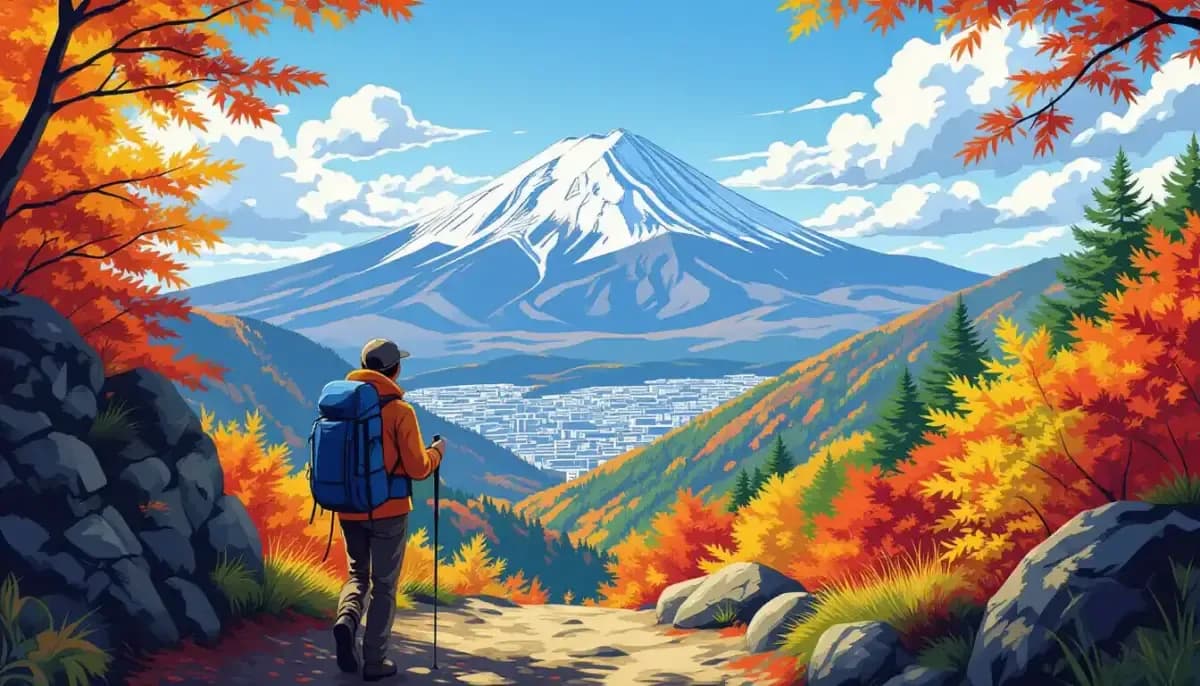
Complete guide to hiking and trail running in Japan for foreigners. Best trails, essential gear, safety tips, top races, seasonal advice, and how to join the running community in Japan.
Hiking and Trail Running in Japan: The Complete Guide for Foreigners
Japan is one of the world's premier destinations for hiking and trail running. With over 74% of its landmass covered in mountains, the country offers an extraordinary variety of trails — from gentle forest walks near Tokyo to extreme alpine challenges in the Japanese Alps. Whether you're a casual weekend hiker or a seasoned ultra-runner, Japan has something extraordinary to offer.
This guide covers everything you need to know about hiking and trail running in Japan as a foreigner: the best destinations, essential gear, safety tips, cultural etiquette, and how to join the thriving running community here.
Why Japan is a Hiker's Paradise
Japan's mountains are more than just scenic — they're deeply woven into the country's culture and spirituality. Ancient pilgrimage routes, Shinto shrines perched at mountain summits, and traditional mountain huts (yamagoya) make every hike feel like a journey through history.
Key reasons why Japan stands out for hikers:
- Accessibility: Most major trailheads are reachable by public transport, a rare luxury compared to other mountain nations
- Well-maintained trails: Paths are regularly maintained with clear signage in both Japanese and English on popular routes
- Safety infrastructure: Mountain huts, emergency rescue systems, and mandatory registration systems (in some areas) make hiking safer
- Seasonal variety: Each season brings a completely different experience — cherry blossoms in spring, lush greenery in summer, fiery foliage in autumn, and snow-covered peaks in winter
- Cultural richness: Ancient shrines, Buddhist temples, and hot springs (onsen) are integral parts of the mountain experience
For more context on living and getting around in Japan, check out our guide on Transportation in Japan.
Top Hiking Destinations for Foreigners
Japan's best hiking spots span all difficulty levels. Here's a regional breakdown of must-visit trails:
Near Tokyo
Mount Takao (高尾山) — The most accessible mountain in Japan, just 50 minutes from Shinjuku station on the Keio Line. Over 3 million people visit annually, making it the world's most visited mountain. Seven trails range from easy paved paths to more rugged forest routes. The summit offers views of Mount Fuji on clear days, and the descent leads past traditional restaurants serving local mountain cuisine.
Mount Mitake (御岳山) — About two hours from central Tokyo, this sacred mountain features waterfalls, ancient shrines, and trails through dense cedar forests. The summit village is unique — monks and guides live at the top year-round.
Okutama & Ome — For more challenging terrain within reach of Tokyo, Okutama and Ome offer steeper trails through the Chichibu-Tama-Kai National Park. Popular with trail runners for its technical singletrack.
Central Japan
Mount Fuji (富士山) — Japan's iconic 3,776m peak and a UNESCO World Heritage Site. The official climbing season runs from early July to mid-September. Entry to the mountain now requires a permit and fee (implemented in 2024 to manage overcrowding). Four main trails lead to the summit: Yoshida (most popular), Subashiri, Gotemba, and Fujinomiya.
Kamikochi (上高地) — One of Japan's most beautiful alpine valleys, nestled in the Northern Japan Alps at 1,500m elevation. Trails range from flat riverside walks to challenging multi-day routes through some of Japan's highest peaks. Private vehicles are banned — access is by bus or taxi only.
The Japanese Alps — The Hida, Kiso, and Akaishi mountain ranges collectively form the "Roof of Japan," with peaks exceeding 3,000m. Multi-day traverses through these ranges are bucket-list experiences for serious hikers.
Hokkaido
Daisetsuzan National Park — Japan's largest national park offers week-long traverses across Hokkaido's wildest terrain. The highlands bloom with wildflowers in summer and turn stunning shades of red and orange in early autumn. Brown bear territory — bear bells are essential.
Shiretoko Peninsula — A remote UNESCO World Heritage Area with trails winding through old-growth forests near dramatic sea cliffs. Famous for its wild population of brown bears.
Western Japan
Kumano Kodo — Ancient pilgrimage routes connecting sacred shrines across the Kii Peninsula. Walking these trails is a spiritual experience, and some sections are recognized as UNESCO World Heritage. The Nakahechi route is the most accessible for foreign visitors.
Fushimi Inari (伏見稲荷) — Technically a hike through thousands of iconic vermilion torii gates behind the famous Fushimi Inari shrine in Kyoto. The full circuit to the summit and back takes 2-3 hours.
Kyushu & Yakushima
Yakushima Island — A mystical island covered in ancient cedar forests, some trees over 7,000 years old. The Jomon Sugi trail to the oldest known tree (Jomon Cedar) is one of Japan's most famous hikes. Limited permits are required during peak season.
Trail Running in Japan: A Growing Sport
Trail running (トレイルランニング, toreru ranningu) has exploded in popularity in Japan over the past decade. Japanese runners have become competitive at the world's top ultra-trail races, and Japan now hosts some of the most challenging races on the global calendar.
Japan's Premier Trail Races
| Race | Distance | Elevation Gain | Difficulty |
|---|---|---|---|
| Ultra-Trail Mt. Fuji (UTMF) | 168 km | 6,200 m | Extreme |
| Hasetsune Cup | 71.5 km | 4,500 m | Very Hard |
| Trans Japan Alps Race (TJAR) | 415 km | 27,000 m | Legendary |
| Subaru Mt. Mitake Trail Race | 12 km | 700 m | Moderate |
| Mt. Fuji Summit Race | 21 km | 3,000 m | Hard |
| Hakone 100K | 100 km | 5,500 m | Hard |
Ultra-Trail Mt. Fuji (UTMF) is Japan's flagship event and part of the prestigious Ultra-Trail World Tour. Approximately 3,200 runners circle the base of Mount Fuji on a 168km loop with 6,200m of elevation gain.
The Hasetsune Cup is technically brutal — 71.5km through the mountains of the Tokyo region with 4,500m of climbing and a strict 24-hour cutoff. Entry is by lottery and extremely competitive.
Trans Japan Alps Race (TJAR) is perhaps the world's most extreme self-supported race: 415km across the Japanese Alps from the Sea of Japan to Suruga Bay, with a staggering 27,000m of elevation gain. Only invited athletes participate in this biennial event held since 2002.
For more on staying active and healthy in Japan, see our Daily Life in Japan guide.
Top Trail Running Spots
Mount Takao is the starting point for many Tokyo-based trail runners. The Inariyama trail (3.1 km) is the most challenging of the seven routes and provides a good workout. For those wanting more mileage, Mount Takao connects to the neighboring peaks of Mount Kobotoke-Shiroyama and Mount Jinba via ridge trail.
Hakone offers spectacular trail running with the Old Tokaido Road, Mount Kintoki, and a demanding 50km caldera loop with 3,000m of elevation gain. The area's volcanic terrain makes for dramatic scenery.
Ome and Okutama — Just west of Tokyo, these areas offer technical singletrack through dense forests with serious elevation changes. Popular training ground for competitive trail runners.
Essential Gear for Hiking and Trail Running in Japan
Hiking Essentials
- Footwear: Trail boots or approach shoes with ankle support for moderate to difficult trails; trail runners work for well-maintained paths
- Layers: Mountain weather changes rapidly; pack a waterproof jacket even on sunny days
- Navigation: Download offline maps via YAMAP (Japan's most popular hiking GPS app) or Geographica; paper maps available at most trailheads
- Water: Carry enough for the day; natural water sources exist but purification is recommended
- First aid kit: Basic supplies including blister care, pain relief, and emergency thermal blanket
- Bear bell: Required in Hokkaido and recommended in other areas with bear activity
- Cash: Many mountain huts and buses only accept cash
Trail Running Specific Gear
- Trail running shoes: Essential for technical terrain; grip and protection matter more than on roads
- Running vest: For water, nutrition, and emergency gear on runs over 90 minutes
- Trekking poles: Optional but helpful for steep ascents and descents; many Japanese trail runners use them
- Head torch: If starting before dawn or finishing after dusk
For gear shopping in Japan, including outdoor specialty stores, see our Shopping in Japan guide.
Hiking Safety in Japan
Japan takes mountain safety seriously. Here's what foreign hikers need to know:
Mountain Registration (Tozand届, tozan todoke)
For serious mountain hikes, submitting a mountain registration form is strongly recommended (and legally required in some prefectures). These forms notify authorities of your planned route and return time, enabling faster rescue if needed. Registration boxes are at most major trailheads; online registration is available via the COMPASS system.
Weather and Emergencies
- Check forecasts from Japan Meteorological Agency or mountain-specific services
- Afternoon thunderstorms are common in summer — start early and descend before 2 PM
- Emergency call: 110 (police/mountain rescue) or 119 (fire/ambulance)
- Many mountain areas have emergency huts (避難小屋, hinan goya) for shelter
Bears and Wildlife
Brown bears (Higuma) inhabit Hokkaido; Asian black bears (Tsukino waguma) are found across Honshu. Bear bells, bear spray, and making noise on trails reduce encounter risks. Never approach wildlife.
Trail Etiquette
- Downhill hikers yield to uphill hikers (a point of debate — some Japanese follow the opposite convention; be flexible)
- Pack out all trash — Japan's mountains are remarkably litter-free
- Stay on marked trails; shortcutting causes erosion
- Greet fellow hikers with Konnichiwa (こんにちは) — it's the mountain greeting culture
For more on Japanese customs and etiquette, see our Culture and Etiquette guide.
Seasonal Guide to Hiking in Japan
| Season | Conditions | Best Areas | Notes |
|---|---|---|---|
| Spring (Mar-May) | Cherry blossoms, mild temps | Lower elevations, mountain foothills | Trails can be muddy from snowmelt |
| Early Summer (Jun) | Rainy season | Higher alpine areas above cloud layer | Bring waterproofs |
| Summer (Jul-Aug) | Hot, humid, afternoon storms | High alpine (Mt. Fuji, Alps) | Start very early; hydrate |
| Autumn (Sep-Nov) | Spectacular foliage, ideal temps | All regions | Peak season, crowded weekends |
| Winter (Dec-Feb) | Snow, ice, cold | Specialized winter hiking only | Crampons and winter skills needed |
Autumn is widely considered the best season for hiking in Japan — the koyo (autumn foliage) transforms the mountains into a tapestry of red, orange, and gold, while temperatures are cool and comfortable.
Joining the Trail Running Community
Japan has a vibrant and welcoming trail running community, and connecting with local runners is one of the best ways to discover new trails and improve your Japanese.
Running Groups in Tokyo:
- Tokyo Trail Running (TTR) — Active group with regular weekend runs open to all levels
- Japan Trail Running (JTR) — Larger community with organized events
- Tama Trail Runners — Focused on the Tama area west of Tokyo
Race Registration:
- Runnet Global — English-language platform for registering in Japanese races
- Samurai Sports — Another English-friendly race registration service
- Japanese Runnet — The main domestic platform; Japanese language but manageable with translation tools
Online Resources:
- Check Living in Nihon for comprehensive guides on life in Japan, including recreational activities
- For Work in Japan has resources for expats managing work-life balance, including fitness and lifestyle
- Ittenshoku offers career and lifestyle information for foreigners navigating life in Japan
- Japan Guide - Hiking is one of the best English-language resources for hiking information across Japan
- Trail Runner Magazine - Japan covers Japan's vibrant trail running scene in depth
Practical Tips for Foreign Hikers
Language: Major popular trails (Mt. Takao, Mt. Fuji, Kumano Kodo) have English signage. Lesser-known trails may be Japanese only — download offline maps before heading out.
Permits and Fees: Mt. Fuji requires a permit and entrance fee. Yakushima has seasonal permit restrictions. Most other trails are free and open.
Transportation: Japan's public transport system makes trailhead access remarkably convenient. Use HyperDia or Google Maps to plan train and bus connections. Have cash for rural buses and mountain huts.
Mountain Huts: Japan's yamagoya (mountain huts) offer meals and accommodation on multi-day routes. Booking ahead is essential, especially in peak season. Most serve dinner and breakfast; some provide gear rental.
Fitness Note: Many Japanese mountains involve significant elevation gain over short distances — more than Western hikers might expect. Check elevation profiles before planning routes.
For help understanding Japan's healthcare system in case of trail injuries, see our Healthcare in Japan guide.
Getting Started: Your First Hike in Japan
If you're new to hiking in Japan, here's a simple progression:
- Start with Mount Takao — Easy access from Tokyo, well-marked trails, mountain food stalls at the summit, and the option of a cable car if you want an easier descent
- Progress to Mount Mitake or Ome — More trail, less pavement, and a taste of authentic Japanese mountain culture
- Attempt a full Alpine Day Hike — Choose a peak in Nikko, Kamikochi, or the Hakone area
- Multi-Day Route — The Northern Alps traverse, Kumano Kodo sections, or Shiretoko backcountry
- Enter a Race — Start with a local 10-15km trail race before attempting longer distances
Japan's mountains reward effort with extraordinary beauty, cultural depth, and a sense of accomplishment that few other places on earth can match. Lace up your shoes, download your maps, and head for the hills.
Related guides: Daily Life in Japan | Japanese Culture and Etiquette | Transportation in Japan | Healthcare in Japan

Originally from Vietnam, living in Japan for 16+ years. Graduated from Nagoya University, with 11 years of professional experience at Japanese and international companies. Sharing information about living in Japan for foreigners.
View Profile →Related Articles
Rock Climbing and Bouldering in Japan Guide
Complete guide to rock climbing and bouldering in Japan for foreigners. Discover 97+ gyms, top outdoor crags, costs, grading systems, and cultural etiquette tips.
Read more →
Playing Golf in Japan Guide for Foreign Residents
Complete guide to playing golf in Japan for foreigners. Learn about booking tee times, green fees (¥7,000–¥12,000), etiquette, dress codes, club membership, and the best golf courses across Japan.
Read more →
Best Fitness and Workout Apps Available in Japan
Discover the best fitness and workout apps available in Japan for foreigners. From FiNC to Nike Run Club, YAMAP to MyFitnessPal—a complete 2025 guide for expats.
Read more →
Winter Sports in Japan Skiing Snowboarding and More
Complete guide to winter sports in Japan for foreigners. Discover the best ski resorts, costs, tips for skiing and snowboarding, and unique winter activities like drift ice walking and onsen après-ski.
Read more →
Best Outdoor Fitness Activities in Japan
Discover the best outdoor fitness activities in Japan for foreigners — from free park workouts and running clubs to hiking trails, cycling routes, and water sports. Complete guide with costs and tips.
Read more →
Japanese Gym Etiquette Every Foreigner Should Know
Learn essential Japanese gym etiquette rules: tattoo policies, indoor shoes, towel requirements, locker room rules, and how to join a gym in Japan as a foreigner.
Read more →