
Residence Card Rules and Renewal Guide in Japan

Complete guide to Japan residence card (zairyu card) rules and renewal process for foreigners. Learn when and how to renew, required documents, fees, address change rules, and the 2026 integrated card changes.
Residence Card Rules and Renewal Guide in Japan
If you're living in Japan as a foreigner, your residence card (在留カード, zairyū kādo) is one of the most important documents you'll carry every day. It proves your legal right to be in Japan, and understanding the rules around it — especially how and when to renew it — is essential for staying on the right side of the law.
This guide covers everything you need to know about the Japanese residence card: what it is, who must carry it, how to renew it, what happens if you let it expire, and what's changing in 2026.
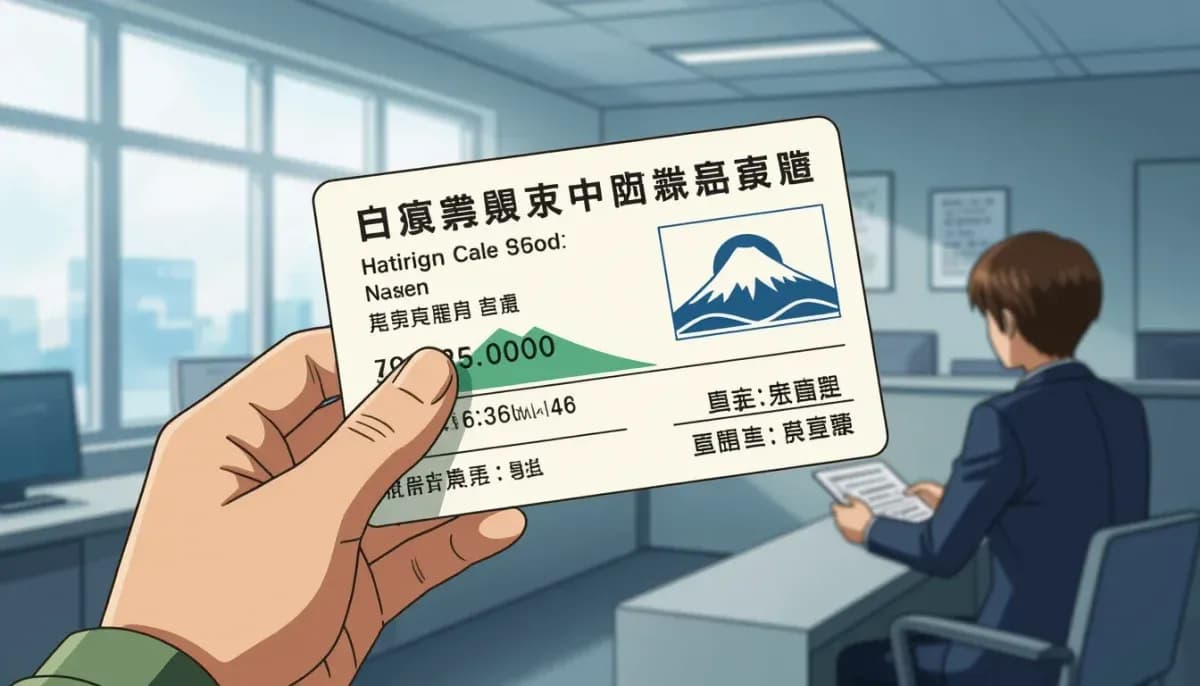
!Japanese residence card held by a foreigner at an immigration office in Japan

What Is the Residence Card (Zairyu Card)?
The residence card — officially called the zairyū kādo (在留カード) — is issued to mid-to-long-term foreign residents of Japan. If you have a qualifying visa and plan to stay in Japan for more than 90 days, you will receive one.
The card contains key personal information including your name, date of birth, gender, nationality, address, residency status, permission to work, and your allowed period of stay. It is issued by the Immigration Services Agency of Japan and is linked to the national residence management system.
Who receives a residence card? Most working, student, and family-based visa holders receive one automatically. Exceptions include holders of "diplomat," "official," or "temporary visitor" status, who are not issued a zairyū card.
Who must carry it? If you are 16 or older and have a residence card, you are legally required to carry it at all times. Failure to carry your card can result in a fine of up to ¥200,000. Residents under 16 are exempt from this requirement.
For more context on navigating Japan's immigration and visa system, see our Complete Guide to Japan Visa and Immigration.
How Long Is the Residence Card Valid?
The validity of your residence card depends on your residency status:
| Residency Status | Card Validity |
|---|---|
| Permanent resident | 7 years |
| Highly skilled professional (ii) | 7 years |
| Work visa holders (Engineer, IT, etc.) | Tied to period of stay (1, 3, or 5 years) |
| Student visa | Tied to period of stay |
| Spouse of Japanese national | Tied to period of stay |
| Long-term resident | Tied to period of stay |
Your card's expiration date is printed on the front. The key thing to remember: the card itself has an expiration date that may differ from your visa's period of stay expiration. Always check both.
When and How to Renew Your Residence Card
"Renewing your residence card" typically means applying for an extension of your period of stay or a change of status of residence at the regional immigration office. Here's how the timing works:
- Most foreign nationals can apply up to 3 months before their current status expires
- Permanent residents renewing the card itself can apply up to 2 months before expiration
- Minors turning 16 can apply up to 6 months before their 16th birthday
Do not wait until the last minute. Applications at busy regional immigration offices can require significant wait times, and processing takes approximately 2–3 weeks after submission.
Step-by-Step Renewal Process
- Check your expiration date — Note both when your period of stay ends and when your card itself expires
- Gather required documents — See the list below
- Go to the correct immigration office — You must apply at the immigration bureau with jurisdiction over your registered address; you cannot choose a different office
- Submit your application — Bring everything in person, or use the online system if eligible
- Wait for notification — The immigration office will send a postcard to your address when your new card is ready
- Pick up your new card — Return to the immigration office in person to collect it
Required Documents for Renewal
The exact documents depend on your visa type, but standard requirements include:
- Completed application form (available at immigration offices or online)
- Current passport
- Existing residence card
- One photograph (4cm × 3cm)
- Revenue stamp (for fee payment)
- Status-specific documents: employment certificate, recent pay stubs, tax payment certificate, marriage certificate (as applicable)
For detailed requirements specific to your visa category, check the Immigration Services Agency website.
For broader guidance on Japanese paperwork and bureaucracy, see our guide on Japanese bureaucracy and paperwork.
Renewal Fees (Updated April 2025)
Fees were revised starting April 1, 2025. Applications submitted after that date are subject to the new fees:
| Application Type | In-Person Fee | Online Fee |
|---|---|---|
| Extension of Period of Stay | ¥6,000 | ¥5,500 |
| Change of Status of Residence | ¥6,000 | ¥5,500 |
| Permanent Residence Application | ¥8,000 | N/A |
Fees are paid using revenue stamps (shūnyū inshi), which you can purchase at the immigration office or at convenience stores.
!Documents required for Japan residence card renewal at immigration office

Address Changes and Registration Rules
Your residence card is linked to your registered address in Japan. If you move, you must update your address — failing to do so can have serious consequences.
When you first arrive or move:
- Register your address at the local municipal office (ward office or city hall) within 14 days
- Bring your passport and residence card
- This creates your Certificate of Residence (juminhyō)
When you move within Japan:
- Submit a "Moving-Out Notification" (tenshutsu todoke) at your current ward office before moving
- Submit a "Moving-In Notification" (転入届) at your new ward office within 14 days of moving
Penalties for non-compliance:
- A fine of up to ¥50,000 for missing the 14-day deadline
- Leaving your address unregistered for more than 90 days risks potential visa revocation
- In severe cases, fines can reach ¥200,000
If you miss the deadline, you can submit a "Statement of Reasons for Delay" (chien riyūsho) at the city hall counter to recover.
For more on daily administration in Japan, our Complete Guide to Daily Life in Japan covers key bureaucratic requirements.
What Happens If Your Residence Card Expires?
An expired residence card is a serious problem. If your period of stay lapses without an approved renewal or extension, you are considered an illegal resident under Japanese law, which can result in:
- Detention by immigration authorities
- Deportation
- A ban on re-entering Japan (often 5 years or longer)
Even if your physical card expires before you receive your new one (for example, while your extension is being processed), you are covered as long as you have submitted your application before the expiration date. Always keep your application receipt — this proves you applied in time.
For related advice on navigating legal matters in Japan, see our Complete Guide to Japan Visa and Immigration.
Traveling Abroad While Your Renewal Is Pending
Good news for frequent travelers: you can travel abroad while your renewal application is being processed. However, you need a valid re-entry permit.
- Special Re-Entry Permission: If you plan to return to Japan within 12 months, you can mark "Departure With Special Re-Entry Permission" on your departure card at the airport — no advance permit required
- Standard Re-Entry Permit: If you plan to be away for more than 12 months, apply for a re-entry permit at the immigration office before you depart
Leaving Japan without re-entry permission while your application is being processed can result in your application being canceled and your residence status being forfeited.
For practical housing and lifestyle tips while living in Japan, check out our Complete Guide to Finding Housing in Japan.
Notifying Immigration of Personal Information Changes
Beyond address changes, you are also required to notify the immigration authorities within 14 days if any of the following information changes:
- Name
- Gender
- Nationality or region
- Date of birth
Failure to notify within the 14-day window can result in penalties and complications during future visa applications.
Big Change Coming in 2026: Integrated Residence Card + My Number Card
Japan is rolling out a major change starting June 14, 2026: the new Tokutei Zairyū Card (特定在留カード), which combines your residence card and your My Number Card (マイナンバーカード) into a single integrated card.
Key points about this change:
- The integration is gradual — existing cards will remain valid until their expiration dates
- The new card will include the My Number (Individual Number) on the same card as your residence status and address
- New and renewing applicants from June 2026 onward will receive the integrated card automatically
- This change is intended to simplify the ID card system and reduce the number of cards foreigners must manage
This is one of the most significant administrative changes to Japan's residence management system in years. For the latest official updates, see the Immigration Services Agency announcements.
Useful Resources for Residence Card Renewal
Here are reliable resources to help you navigate the process:
- Living in Nihon — Comprehensive guides on daily life and paperwork for foreigners in Japan
- For Work in Japan — Practical information on working legally in Japan, including visa and residence status guides
- Ittenshoku — Career and job-change resources for foreigners working in Japan
- MailMate Residence Card Guide — Detailed step-by-step breakdown of the renewal process
- Japan Living Guide – Residence Card — Overview of residence card rules and requirements
Summary: Key Rules at a Glance
| Rule | Details |
|---|---|
| Must carry card at all times | Yes (ages 16+); fine up to ¥200,000 |
| Register address within | 14 days of moving |
| Apply for renewal up to | 3 months before expiry (2 months for PR) |
| Processing time | ~2–3 weeks |
| Renewal fee (from Apr 2025) | ¥6,000 in-person / ¥5,500 online |
| Penalty for missed address update | Up to ¥50,000 fine |
| Permanent resident card validity | 7 years |
| New integrated card launch | June 2026 |
Understanding these rules isn't just about avoiding fines — it's about protecting your legal right to live and work in Japan. Stay on top of your renewal dates, register address changes promptly, and keep your documents in order.
For more on managing life as a foreigner in Japan, explore our Complete Guide to Working in Japan and our Complete Guide to Taxes in Japan.

Originally from Vietnam, living in Japan for 16+ years. Graduated from Nagoya University, with 11 years of professional experience at Japanese and international companies. Sharing information about living in Japan for foreigners.
View Profile →Related Articles

Power of Attorney and Legal Representation in Japan
Learn how to create, notarize, and use a Power of Attorney in Japan as a foreigner. Covers legal representation, apostille process, costs, and how to find the right attorney.
Read more →
Japan Re-Entry Permit Do You Still Need One
Everything foreigners in Japan need to know about re-entry permits in 2025. Learn the difference between Special Re-Entry Permission and regular permits, how to apply, fees, and what happens if you forget.
Read more →
How to Get a Certificate of Eligibility for Japan
Complete guide to Japan's Certificate of Eligibility (COE): who needs it, how to apply, required documents, processing time, costs, and tips to avoid common mistakes.
Read more →
Essential Japanese Paperwork Vocabulary for Foreigners
Master the Japanese vocabulary you need to fill out official forms and administrative documents in Japan. Covers personal info, visa terms, tax forms, banking, and municipal registration with kanji, readings, and meanings.
Read more →
Name Change Procedures in Japan for Foreigners
A complete guide to name change procedures in Japan for foreigners. Learn how to update your residence card, register a Japanese alias (tsushomei), and navigate name changes after marriage or divorce.
Read more →
Japan Postal Savings and Official Mail Procedures
Complete guide to Japan Post services for foreigners: send domestic and international mail, open a Yucho Bank savings account, handle official mail, and manage address changes in Japan.
Read more →