
Japan Postal Savings and Official Mail Procedures

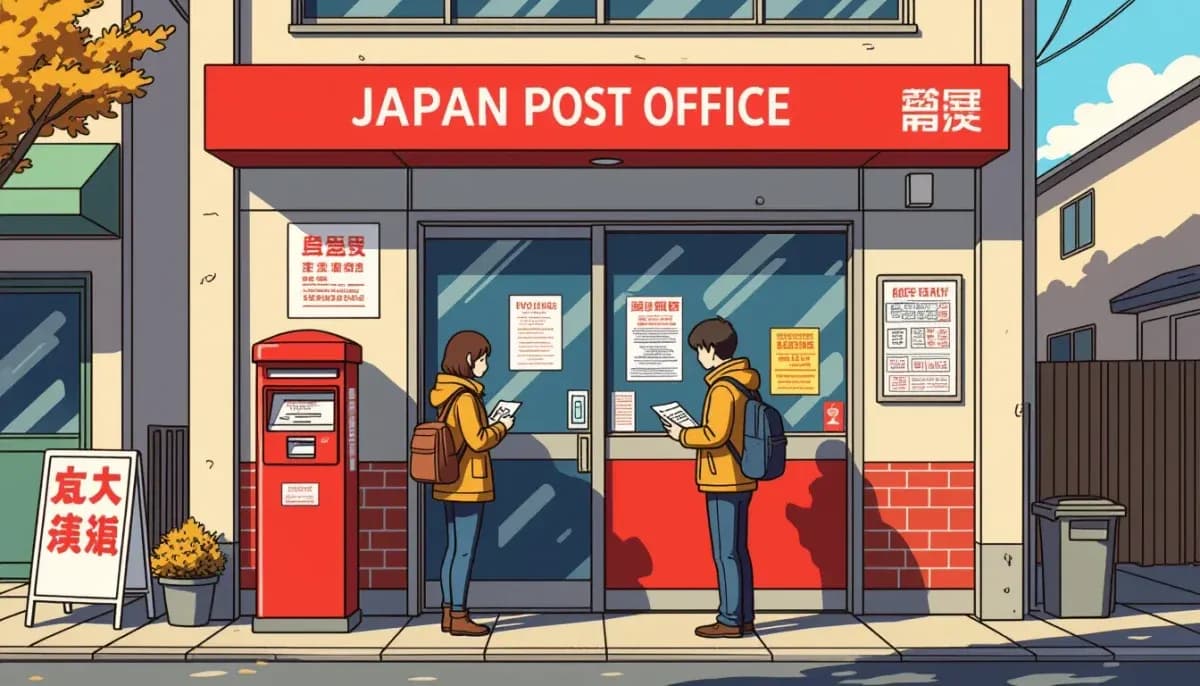
Complete guide to Japan Post services for foreigners: send domestic and international mail, open a Yucho Bank savings account, handle official mail, and manage address changes in Japan.
Japan Postal Savings and Official Mail Procedures: A Complete Guide for Foreigners
Living in Japan means navigating a postal system that is efficient, reliable, and surprisingly full of useful services—if you know how to use them. From sending a simple letter to opening a Yucho Bank savings account, Japan Post (日本郵便) offers an impressive range of services that every foreigner should understand. This guide walks you through everything you need to know about Japan's postal savings and official mail procedures.
!Japan Post office with characteristic red mailbox and signage

Understanding Japan Post: An Overview
Japan Post operates approximately 24,000 post office locations nationwide, making it one of the most accessible financial and postal networks in the country. You'll recognize post offices by their distinctive red-and-white "〒" symbol displayed prominently on buildings.
Standard post office hours are 9:00–17:00 on weekdays, though larger branches in urban centers often offer extended evening hours and weekend service. ATMs at post offices typically operate longer hours than the counters, including some holidays.
Japan Post provides three main categories of services:
- Postal services: Sending letters, parcels, and registered mail domestically and internationally
- Banking: Yucho Bank savings accounts, ATM access, and bill payments
- Insurance: Japan Post Insurance (Kampo) for life and medical coverage
For foreigners, particularly those new to Japan, understanding how to access these services efficiently can make daily life significantly easier. You can find your nearest branch using the Japan Post location search.
Domestic Mail: Rates, Types, and How to Send
Sending mail domestically in Japan is straightforward once you understand the address format and available services. Japan uses a 7-digit postal code system, and including the full code on every piece of mail is essential for timely delivery.
Standard Mail Rates (2024)
| Mail Type | Weight | Cost |
|---|---|---|
| Standard Letter | Up to 25g | ¥110 |
| Standard Letter | Up to 50g | ¥140 |
| Postcard | — | ¥85 |
| Letter Pack Light | Up to 4kg (A4 size) | ¥430 |
| Letter Pack Plus | Up to 4kg (A4 size) | ¥600 |
| Yu-Pack (small parcel) | Varies by size/weight | ¥870+ |
| Registered Mail surcharge | — | ¥350+ |
How to Address a Domestic Letter
Japanese addresses are written from largest to smallest unit, which is the reverse of Western conventions:
- Postal code (〒 followed by 7 digits, e.g., 〒100-0001)
- Prefecture (都道府県)
- City/ward/town (市区町村)
- Block and lot number (番地)
- Apartment name and room number (if applicable)
- Recipient's name
You can write the address in either Japanese or romaji (romanized letters), but Japanese is more reliable for rural areas. For convenience, use the Japan Post postal code search tool to verify addresses before sending.
Registered Mail (書留 - Kakitome)
Registered mail provides tracking and proof of delivery, essential for important documents. There are three levels:
- Ordinary Registered Mail (一般書留): Full tracking at every step, compensation up to ¥5,000,000
- Simplified Registration (簡易書留): Less costly, compensation capped at ¥50,000
- Express Registered Mail (速達書留): Priority delivery with full registration benefits
To send registered mail, bring your item to a post office counter. You cannot use a standard mailbox for registered services.
International Mail: Shipping Abroad from Japan
Japan Post offers comprehensive international shipping services reaching over 120 countries and regions. Important 2024 update: All international parcels for dutiable items must now use electronic labels through Japan Post's online portal—handwritten labels are no longer accepted.
International Service Options
| Service | Delivery Time | Tracking | Notes |
|---|---|---|---|
| EMS (Express Mail Service) | 2–4 days (Asia) | Full tracking | Fastest option |
| International Parcel (Air) | 1–2 weeks | Available | Mid-range cost |
| International Parcel (SAL) | 2–5 weeks | Limited | Economical |
| International Parcel (Sea) | 1–3 months | Limited | Cheapest for heavy items |
| International Letter | 6–10 days | No | Letters only |
EMS starts at approximately ¥1,500 for lightweight packages to Asian destinations, while larger packages to South America or Africa can cost up to ¥80,000 for 30kg.
When shipping internationally, you'll need to complete customs declaration forms (CN22/CN23) listing the contents, value, and purpose (gift, merchandise, etc.). Inaccurate declarations can result in delays or additional charges at the destination country.
For detailed guidance on using Japan's postal and delivery systems, Living in Nihon's postal guide provides comprehensive information for foreign residents.
Opening a Yucho Bank (ゆうちょ銀行) Savings Account
One of Japan Post's most valuable services for foreigners is Yucho Bank (Japan Post Bank), which is significantly more accessible to new residents than most private banks. Yucho Bank has over 23,000 ATM locations across post offices, convenience stores, and other locations nationwide.
Eligibility Requirements for Foreigners
To open a Yucho Bank account, you need:
- Residency card (在留カード) with at least 3 months of validity remaining
- If you hold technical intern training or student status, bring your employee or student ID as well
- Basic Japanese ability helps, but is not strictly required
You do not need to have lived in Japan for a minimum period—this makes Yucho Bank one of the most foreigner-friendly banking options in the country.
Account Opening Process
Option 1: In-person at a post office
- Visit any post office with post bank services (most have them)
- Request an account opening form (口座開設申込書)
- Present your residency card and fill out the form
- Choose between a bankbook-type account or paperless Yucho Direct+
- Receive your cash card within 7–10 business days
Option 2: Via the Yucho Tetsuzuki App The app supports account opening in English, Chinese, and Vietnamese, making it accessible for non-Japanese speakers. Download the app, follow the on-screen instructions, and upload photos of your documents.
Key Features of Yucho Bank
- No monthly maintenance fees for basic accounts
- Free ATM withdrawals at Japan Post ATMs (time-limited fees may apply at convenience store ATMs)
- International ATM access for withdrawals with overseas-issued cards
- Online banking via Yucho Direct service
- Bill payment for utilities, taxes, and other services
For more information on managing your finances as a foreign resident, see our guide on banking and finance in Japan.
Mail Forwarding and Address Change Procedures
When you move within Japan, notifying Japan Post ensures your mail follows you. The tenkyō todoke (転居届) service redirects mail from your old address to your new one.
How to Submit a Change of Address Notice
- In person: Fill out a forwarding form at any post office. Processing takes 3–7 business days.
- Online: Use Japan Post's "e-tenkyō" service via their website (requires yū-ID registration)
- By postcard: Mail the official postcard form to Japan Post
The forwarding service is completely free and lasts for one year from the date you submit the form. After one year, you'll need to resubmit if needed. Note that Japan Post cannot forward mail to overseas addresses—this service covers domestic moves only.
Important: Forwarding mail does not update your official residence registration. You must separately notify your municipal office within 14 days of moving by submitting a tenshutsu todoke (moving-out notice) at your old ward/city office and a tennyū todoke (moving-in notice) at your new one.
If you're planning your move to Japan, our complete moving guide covers all the administrative steps in detail.
Handling Missed Deliveries and Redelivery Requests
Japan uses an "absence notice" (不在票 - fuzai-hyo) system when you're not home for a delivery. The orange or red slip left in your mailbox contains tracking information and instructions for redelivery.
Redelivery Options
- QR code scan: Many modern absence notices have a QR code. Scan it to access an online redelivery request form.
- Online: Go to Japan Post's website and enter your tracking number
- Phone: Call the English support line at 0570-046-111 (weekdays 8:00–21:00, weekends 9:00–21:00)
- At the post office: Bring the absence notice to your local branch within the holding period (usually 7 days)
Creating a yū-ID account is highly recommended—it allows you to manage deliveries, receive English-language email notifications, and set delivery preferences online.
For general guidance on daily life practicalities including utilities, mail, and more, see our daily life guide for foreigners in Japan.
Official Mail and Government Correspondence
Living in Japan means receiving various official mail items that require prompt attention. Understanding these documents can prevent missed deadlines for tax payments, health insurance renewals, and other administrative matters.
Common Official Mail Types
| Document | Sender | What to Do |
|---|---|---|
| Residence tax notice (住民税通知書) | Municipal office | Pay at convenience store, bank, or post office |
| Health insurance renewal (保険証更新) | Municipal office / employer | Update your insurance card |
| Pension notice (年金通知) | Japan Pension Service | Review and pay if required |
| Tax return forms (確定申告) | Tax office (国税庁) | File annual tax return |
| Bank/utility statements | Various | Keep for records |
| Registered mail from courts/government | Courts, agencies | Sign and accept promptly |
Content-Certified Mail (内容証明郵便)
Content-certified mail (naiyō shōmei yūbin) is a special service where Japan Post certifies both that a letter was sent and exactly what it contained. This is commonly used for legal notices, contract terminations, and formal demands. If you receive this type of mail, it has legal significance and should not be ignored.
For foreigners navigating taxes and official government correspondence, our Japan taxes guide provides essential context.
Practical Tips for Using Japan Post as a Foreigner
Navigating the post office can be intimidating if your Japanese is limited. Here are practical strategies to make the process smoother:
- Write down your request: Before going to the counter, write down what you want (e.g., "書留でお願いします" for registered mail). Staff will appreciate the effort.
- Use the Japan Post website in English: The official Japan Post international services page is available in English for international shipping.
- Bring proper ID: Always carry your residency card when visiting the post office for any official service.
- Use self-service when possible: Automated stamp machines at post offices accept cash and credit cards with simple touch-screen interfaces.
- Track packages online: Japan Post's tracking system works with English-language results when accessed through the English version of their site.
- For large packages, call ahead: If you have an oversized or unusual item, calling the English helpline (0570-046-111) before visiting saves time.
For career support and practical resources for foreign workers in Japan, For Work in Japan provides helpful guides on working and living as an expat. If you're considering IT career opportunities in Japan, Ittenshoku specializes in tech industry transitions.
Additional resources that may be helpful:
Japan's postal system is a cornerstone of daily life, and mastering it will make your experience as a foreign resident significantly smoother. From sending registered documents to managing your Yucho Bank account, each of these services becomes second nature with practice. If you're still settling into life in Japan, our complete guide to daily life in Japan covers many more practical essentials.

Originally from Vietnam, living in Japan for 16+ years. Graduated from Nagoya University, with 11 years of professional experience at Japanese and international companies. Sharing information about living in Japan for foreigners.
View Profile →Related Articles

Power of Attorney and Legal Representation in Japan
Learn how to create, notarize, and use a Power of Attorney in Japan as a foreigner. Covers legal representation, apostille process, costs, and how to find the right attorney.
Read more →
Japan Re-Entry Permit Do You Still Need One
Everything foreigners in Japan need to know about re-entry permits in 2025. Learn the difference between Special Re-Entry Permission and regular permits, how to apply, fees, and what happens if you forget.
Read more →
How to Get a Certificate of Eligibility for Japan
Complete guide to Japan's Certificate of Eligibility (COE): who needs it, how to apply, required documents, processing time, costs, and tips to avoid common mistakes.
Read more →
Essential Japanese Paperwork Vocabulary for Foreigners
Master the Japanese vocabulary you need to fill out official forms and administrative documents in Japan. Covers personal info, visa terms, tax forms, banking, and municipal registration with kanji, readings, and meanings.
Read more →
Name Change Procedures in Japan for Foreigners
A complete guide to name change procedures in Japan for foreigners. Learn how to update your residence card, register a Japanese alias (tsushomei), and navigate name changes after marriage or divorce.
Read more →
Birth Registration in Japan for Foreign Parents
Step-by-step guide to birth registration in Japan for foreign parents. Learn about Shussho Todoke deadlines, visa for newborns, child allowance, koseki rules, and embassy registration.
Read more →