
Japan Utility Bills Average Costs and How to Reduce Them

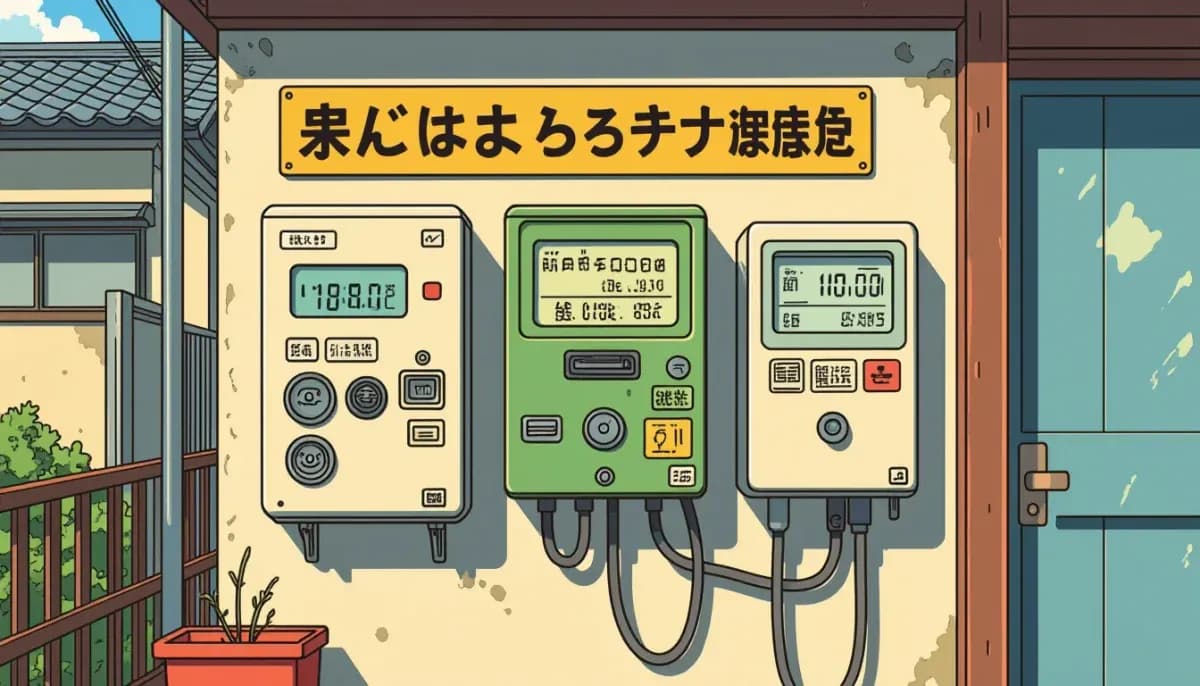
Complete guide to utility bills in Japan for foreigners. Learn average electricity, gas, water, and internet costs, plus 10 proven tips to reduce your monthly bills.
Japan Utility Bills: Average Costs and How to Reduce Them
Moving to Japan comes with many new experiences, and one practical reality is managing utility bills in a country with distinct seasonal extremes and unique billing systems. Whether you're renting your first apartment in Tokyo, Osaka, or a smaller city, understanding what to expect for electricity, gas, water, and internet costs will help you budget effectively and avoid unpleasant surprises.
This guide covers average utility costs in Japan, how the billing system works, and practical strategies foreigners use to keep their bills manageable throughout the year.
Average Monthly Utility Costs in Japan
For most foreigners living alone in Japan, total monthly utility expenses typically fall between ¥12,000 and ¥16,000, covering electricity, gas, and water. This figure rises significantly in summer (July–September) and winter (December–February) due to air conditioning and heating demands.
Here's a breakdown of average monthly costs by household size:
| Utility | Single Person | 2 People | 3+ People |
|---|---|---|---|
| Electricity | ¥6,726 | ¥10,000 | ¥14,000+ |
| Gas (city gas) | ¥3,359 | ¥4,971 | ¥6,000+ |
| Water & Sewage | ¥2,239 | ¥4,242 | ¥6,000+ |
| Total | ~¥12,300 | ~¥19,200 | ~¥26,000+ |
| Internet (fiber) | ¥2,475–¥5,940 | Same | Same |
Note: These are national averages. Tokyo and other large cities may be slightly higher, while rural areas may have lower costs. Seasonal peaks can push electricity bills 30–50% higher.
Understanding Your Electricity Bill in Japan
Electricity is your largest utility expense in most Japanese apartments, and the bill structure can seem complex at first.
How Electricity Billing Works
Japanese electricity bills include several components:
- Basic monthly fee (基本料金): A fixed charge based on the amperage (アンペア) of your contract, usually 20A, 30A, or 40A. For TEPCO (Tokyo area), this ranges from about ¥286 to ¥572/month.
- Usage charge (電力量料金): A tiered rate per kWh. TEPCO's standard rates: ¥29.80/kWh for the first 120kWh, ¥36.60/kWh for 120–300kWh, ¥40.49/kWh above 300kWh.
- Fuel cost adjustment: Monthly adjustment based on global fuel prices—can add or subtract a few hundred yen.
- Renewable energy surcharge: ¥3.98/kWh for FY2025, applied to all consumption.
The national average electricity rate as of early 2025 is approximately ¥35.87/kWh including taxes. A single person using 180–200kWh monthly pays roughly ¥6,000–¥8,000.
City Gas vs. Propane Gas
Many older or rural apartments use propane gas (プロパンガス) rather than city gas (都市ガス). This distinction matters enormously for your budget:
- City gas: ~¥3,000–¥4,000/month average for singles
- Propane gas: ~¥5,000–¥8,000/month average for singles (often 2x more expensive)
When apartment hunting, always check which type of gas the property uses. City gas is generally cheaper and more transparent in pricing.
For more on managing your budget in Japan, see our guide on cost of living in Japan.
Water Bills in Japan
Water and sewage services in Japan are municipal utilities—run by local governments rather than private companies. This means rates vary by city, but most areas follow a similar structure.
How Water Billing Works
- Water bills are typically issued every two months, not monthly
- Bills cover both water supply and sewage treatment
- In Tokyo, the basic monthly water fee is ¥860–¥1,460 depending on pipe diameter, plus volumetric charges
- Average single-person monthly cost: ~¥2,239 (or ~¥4,478 per bill issued every 2 months)
Water costs are relatively stable year-round, unlike electricity and gas which spike seasonally.
Internet and Mobile Phone Costs
While not technically "utility bills," internet and mobile are essential monthly expenses for foreigners in Japan.
Home Internet
Japan has excellent fiber optic infrastructure. Monthly costs:
| Plan Type | Provider | Monthly Cost |
|---|---|---|
| Standalone fiber (mansion/apt) | NTT, au Hikari | ¥2,475–¥3,410 |
| Standalone fiber (detached house) | NTT, au Hikari | ¥4,730–¥5,940 |
| Bundled with mobile (set discount) | Softbank, docomo | ¥2,000–¥4,500 |
| Pocket WiFi (portable) | Various | ¥3,000–¥5,000 |
Many apartments already have fiber optic lines installed (光回線), which reduces setup costs.
Mobile Phone
Japan's budget carriers (格安SIM/MVNO) offer competitive rates:
- LINEMO: ¥900/month for 3GB
- povo: ¥990/month for 3GB (30 days)
- ahamo (docomo): ¥2,970/month for 30GB
- Rakuten Mobile: ¥1,078–¥3,278/month depending on data usage
Switching from a major carrier to a budget provider can save ¥2,000–¥4,000/month.
For more on daily expenses, see the daily life in Japan guide for foreigners.
Seasonal Utility Cost Variations
Japan's climate creates significant seasonal swings in utility bills—one of the most important factors for foreigners to budget around.
| Season | Months | Main Driver | Expected Increase |
|---|---|---|---|
| Summer peak | July–September | Air conditioning | +30–50% electricity |
| Mild seasons | April–June, Oct–Nov | Minimal heating/cooling | Near baseline |
| Winter peak | December–February | Heating, hot water | +30–50% gas + electricity |
Practical example: A Tokyo resident paying ¥7,000 for electricity in May might see bills of ¥10,000–¥12,000 in August from running the air conditioner.
How to Set Up Utilities in Japan
When you move into a new Japanese apartment, most utilities need to be activated by you—they don't automatically transfer.
Electricity Setup
- Find your electricity provider's name on the distribution panel or ask your landlord
- Call or apply online to start service (many providers now have English support)
- Bring your address, move-in date, and bank account details
- Service typically begins within 1–2 days of application
Gas Setup
Gas activation requires an in-home appointment for a safety inspection—a technician must physically turn on the gas and test for leaks. You must be home for this.
- Contact the gas company (check the meter or ask your landlord)
- Schedule an appointment (allow 1–3 business days)
- Be present for the 15–30 minute inspection
Note: Gas appointments must be scheduled before your move-in date whenever possible.
Water
Water service typically begins automatically when you move in. You may need to register with the local municipal water office and update your address.
For broader guidance on moving into a Japanese apartment, see our complete guide to finding housing in Japan.
10 Practical Tips to Reduce Your Utility Bills in Japan
Lowering utility costs doesn't require major lifestyle changes. These strategies are effective and widely used by both locals and foreigners in Japan.
1. Optimize Your Air Conditioner Settings
The single biggest lever for electricity costs. Set your air conditioner to 28°C in summer and 20°C in winter. Every 1°C adjustment saves approximately 10% on related electricity consumption. Use the timer function to avoid running AC while you sleep or when away.
2. Switch Your Electricity Provider
Japan liberalized its electricity retail market in 2016, meaning you can freely choose your provider. Switching from the regional incumbent (like TEPCO) to a competitive supplier can save 4–6% on average, with some plans saving ¥1,000–¥2,000/month depending on your usage. Use comparison services like ENECHANGE or Selectra to compare plans.
3. Switch to a Time-of-Use Plan
Some providers offer plans with cheaper nighttime electricity rates. TEPCO's "Night Tokuwari" plan charges ~¥31.84/kWh at night vs. ~¥42.80/kWh during peak daytime hours—a 25% difference. If you can shift laundry, dishwashing, and device charging to evenings, this plan can reduce your bill meaningfully.
4. Reduce Standby Power (Phantom Load)
Many Japanese households waste 5–10% of electricity on standby power from TVs, game consoles, rice cookers, and other devices. Unplugging devices you don't use daily or using power strips with switches can reduce this hidden drain.
5. Upgrade to LED Lighting
If your apartment has older fluorescent bulbs (特に古いアパート), replacing them with LED alternatives uses 60–80% less electricity. LED bulbs are widely available at electronics stores like Yamada Denki or online at Amazon Japan for under ¥1,000 per bulb.
6. Use Your Bath Lid (風呂フタ)
Japan's deep soaking tubs lose heat quickly. Using the bath lid (furobuta) after bathing keeps water warm for other household members and reduces the energy needed to reheat it—saving both gas and water heating costs.
7. Reduce Water Heater Temperature
Many Japanese water heaters (給湯器) are factory-set to 60°C or higher. Adjusting to 40–42°C for daily use reduces gas consumption without sacrificing comfort. You can usually do this via the control panel near the water heater.
8. Wash Clothes in Cold Water
Modern detergents work well in cold water. Switching from warm/hot cycles to cold washing reduces electricity consumption from your washing machine and can be gentler on clothes.
9. Bundle Internet with Mobile
Many Japanese carriers offer significant discounts when you bundle home fiber internet with your mobile plan (セット割). Softbank, docomo, and au offer ¥1,000–¥1,100/month discounts per line, which can save a couple ¥2,000–¥4,000/month combined.
10. Use Convenience Store or App Payments
While this doesn't reduce the bill amount, setting up automatic bank withdrawal (口座振替) or credit card autopay ensures you never miss a payment and may earn card rewards points on utility spending.
How to Pay Utility Bills in Japan
Japan offers multiple payment options for utilities:
| Payment Method | How It Works | Best For |
|---|---|---|
| Automatic bank withdrawal (口座振替) | Bill deducted monthly from your bank account | Most convenient, no effort needed |
| Credit card auto-pay | Set up via utility's website | Earns points/cashback |
| Convenience store (コンビニ) | Bring paper bill with barcode to any 7-Eleven, FamilyMart, Lawson | For those without Japanese bank accounts |
| Online bank transfer | Via internet banking | One-time payments |
Most foreigners set up automatic bank withdrawal at their bank after opening an account. For help with Japanese banking, see our complete guide to banking in Japan.
Resources for Managing Utilities in Japan
For comprehensive information on navigating life in Japan, these resources are particularly helpful:
- Living in Nihon — A detailed guide covering visa, housing, banking, and daily life essentials for foreigners in Japan
- For Work in Japan — Practical guides for working foreigners, including take-home pay calculations and financial planning
- Ittenshoku — Resources for IT professionals and job seekers making a career move to Japan
- Japan Handbook - Utility Costs — In-depth breakdown of Japanese utility pricing and savings strategies
- Japan Living Guide - Utility Prices — Expat-focused overview of electricity, gas, and water costs with average figures
Final Thoughts
Japan's utility costs are manageable once you understand how the system works. The key numbers to keep in mind: ¥6,000–¥8,000 for electricity, ¥3,000–¥4,000 for gas, and ¥2,000–¥2,500 for water per month as a single person. These rise significantly in peak summer and winter months.
The biggest savings opportunities are switching electricity providers, optimizing your air conditioner usage, and potentially switching from propane gas to a city-gas apartment. Small behavioral changes—LED bulbs, cold water washing, avoiding standby power—can collectively reduce consumption by 10–15%.
For broader financial planning in Japan, don't miss our guides on taxes in Japan for foreigners and the complete cost of living guide.

Originally from Vietnam, living in Japan for 16+ years. Graduated from Nagoya University, with 11 years of professional experience at Japanese and international companies. Sharing information about living in Japan for foreigners.
View Profile →Related Articles

Retirement Cost of Living in Japan Estimate
How much does it really cost to retire in Japan as a foreigner? Get realistic monthly budget estimates, expense breakdowns, visa options, and savings targets for retiring in Japan in 2025-2026.
Read more →
Student Cost of Living in Japan Complete Guide
Complete guide to student cost of living in Japan. Learn about tuition fees, housing costs, monthly budgets, part-time work rules, and scholarships for international students.
Read more →
Hidden and Unexpected Costs of Living in Japan
Discover the hidden and unexpected costs of living in Japan that shock most foreigners — from key money and second-year tax surprises to mandatory pension and insurance fees. Budget properly for Japan.
Read more →
Japan Cost of Living Compared to Other Countries
How does Japan's cost of living compare to the USA, UK, Europe, and Asia? Get real numbers for rent, food, transport, and healthcare in this complete expat guide.
Read more →
Healthcare Costs in Japan for Foreign Residents
A complete guide to healthcare costs in Japan for foreigners: insurance premiums, clinic fees, hospital costs, NHI vs Shakai Hoken, and money-saving tips for expats.
Read more →
How Much Does It Cost to Raise Children in Japan
How much does it cost to raise children in Japan? A complete breakdown of childcare, education, and government subsidies for foreign residents — including free childcare and child allowance.
Read more →